

GearAndFish is reader-supported. As an Amazon Associate I earn from qualifying purchases. When you buy through links on our site, we may earn an affiliate commission, at no extra cost to you. Learn more.
For most crappie fishing, a small jig-and-plastic combination should be the first thing in the box, not the tenth. The best lure changes with depth, cover, water clarity and how active the fish are, so this list favors seven lures that solve different presentation problems instead of seven versions of the same bait.
Start with a 1.5 to 2 inch soft plastic, then change the presentation before chasing colors
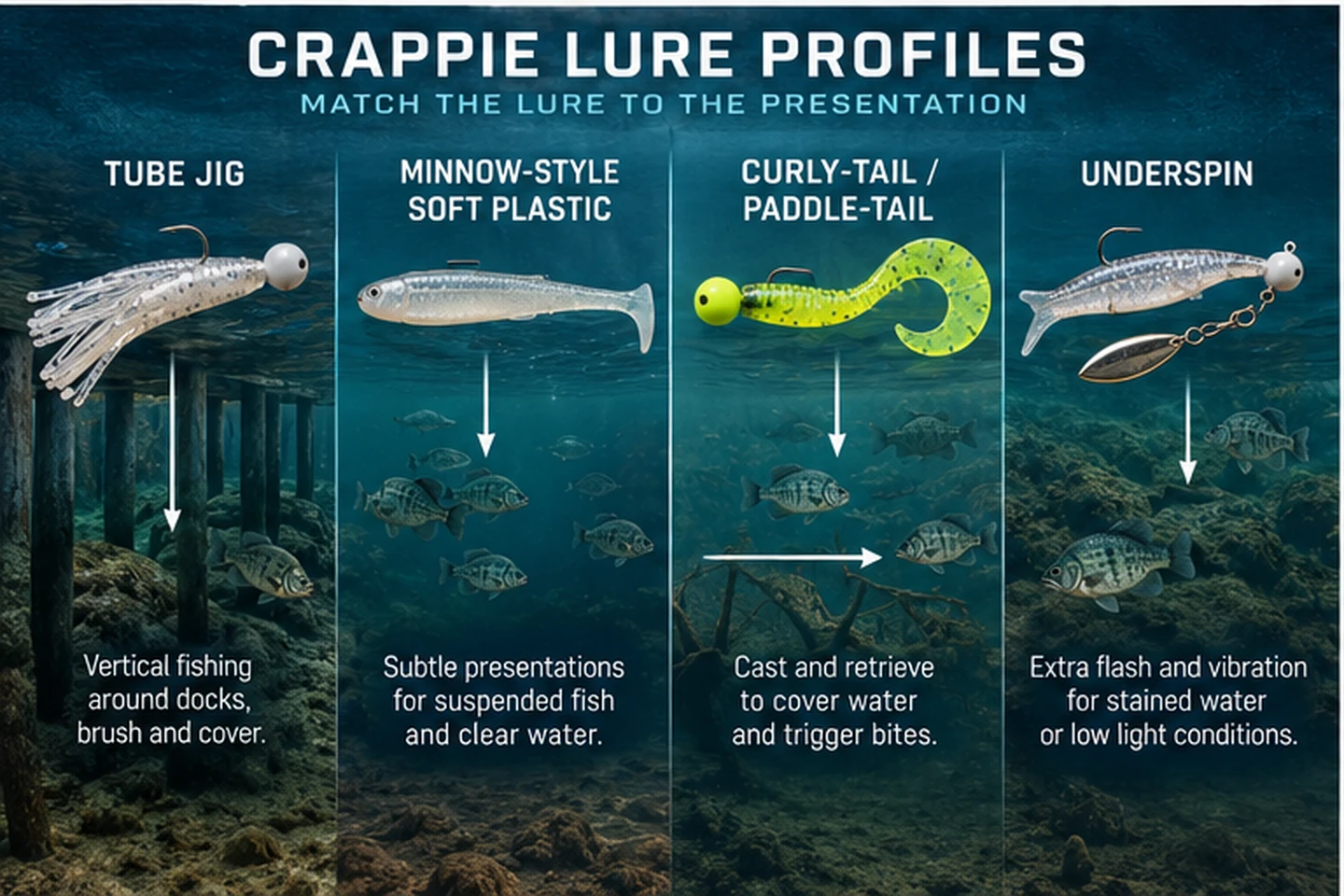
The Southern Pro Lit’l Hustler Tube is our best all-around starting point because a compact tube can be fished vertically, under a float, around docks or on a slow retrieve. If you need a more obvious minnow profile, use the Bobby Garland Baby Shad. Add a Road Runner when you need flash, a Slabalicious when active fish respond to a stronger tail kick, and a compact hard bait or spinner when covering water matters more than hovering in one spot.
Southern Pro Lit’l Hustler Tube
Simple, compact and adaptable to slow presentations around cover.
Bobby Garland Baby Shad
A useful straight-tail option for suspended fish and controlled jigging.
Blakemore Road Runner
Underspin blade adds visibility and vibration when plain jigs disappear.
Rapala Ultra Light Shad 04
A compact 1/8 oz crankbait for covering water and targeting active fish.

Best crappie lures compared
The biggest difference is not brand. It is how each lure moves, how slowly you can keep it in the strike zone, and whether it adds vibration or flash. Use the table to pick a presentation, then fine-tune color and jig weight.
| Lure | Best for | Size / weight | Presentation | Main trade-off | Buy |
|---|---|---|---|---|---|
| Southern Pro Lit’l Hustler Tube | All-around jig fishing | 1.5 in | Vertical, float, slow swim | Needs a separate jig head | Amazon |
| Bobby Garland Baby Shad | Suspended fish | 2 in | Jig, twitch, slow fall | Less built-in tail action | Amazon |
| Z-Man GrubZ | Slow swimming retrieve | 2 in | Cast and retrieve | Curly tail can be too busy for inactive fish | Amazon |
| Blakemore Road Runner | Stained water, search fishing | 1/16 oz | Slow retrieve, trolling | Blade can snag more than a plain jig | Amazon |
| Mr. Crappie Slabalicious | Active fish, casting | 2 in | Swim, pitch, troll | Stronger action is not always best for neutral fish | Amazon |
| Rapala Ultra Light Shad 04 | Hard-bait trolling and covering water | 1.5 in, 1/8 oz | Cast or troll | Trebles are less cover-friendly | Amazon |
| Worden’s Rooster Tail | Bank fishing and active fish | 1/16 oz | Steady retrieve | Needs forward motion to keep the blade working | Amazon |
How we picked these crappie lures
This is an evidence-based buyer guide, not a GearAndFish field test. We compared the current US search results, manufacturer specifications, current Amazon US listings and recurring angler feedback. We prioritized lures that cover genuinely different presentation jobs and removed options that added little beyond another color or body shape.
Our picks for the best crappie lures
Southern Pro Lit’l Hustler Tube
A simple 1.5 inch tube is still one of the best ways to build a crappie box because you can change depth, fall rate and retrieve without changing the body style.
Pick #1
The Lit’l Hustler is the least specialized lure here, which is exactly why it earns the top spot. Rig it on a light jig head and you can fish vertically beside brush, suspend it below a float, shoot it under docks or swim it slowly through open water. The hollow tube body and tentacles give movement without needing the stronger kick of a paddle tail.
The main limitation is that the body alone does not solve your weighting decision. You still need to pair it with a jig head that keeps the bait at the right depth without making it fall too fast. That extra setup step is worthwhile if you want one lure family that can adapt to multiple seasons and locations.
Pros
- Compact profile fits typical crappie forage
- Works for vertical, float and slow-swim presentations
- Easy to change fall rate by changing jig-head weight
Cons
- Requires a separate jig head
- Less built-in swimming action than a paddle tail
Bobby Garland The Original Baby Shad
Choose the Baby Shad when you want a 2 inch minnow-shaped plastic that can hover, twitch and fall with less tail thump than a curly tail or paddle tail.
Pick #2
The Baby Shad gives you a cleaner baitfish outline than a tube, but it still stays subtle. That matters when fish are suspended around brush, docks or drop-offs and you want to keep the lure in place instead of forcing constant forward movement to make a tail work.
Rigging quality matters more with a straight-tail bait. Thread it on straight so the body does not rotate during the retrieve. If the fish want more vibration, move to the Slabalicious or Road Runner rather than trying to make this bait do a different job.
Pros
- Natural minnow profile
- Subtle tail movement at slow speeds
- Useful for suspended fish and controlled jigging
Cons
- Does not create much vibration on its own
- Needs to be rigged straight to track correctly
Z-Man GrubZ 2 Inch
A durable curly-tail option for anglers who want a bait that creates its own swimming action on a simple cast-and-retrieve presentation.
Pick #3
A curly tail is useful when you want the lure to keep working during a steady retrieve. The GrubZ tail moves at low speed, so you can count the bait down, reel it slowly through the zone and cover more water than you would with a nearly stationary vertical presentation.
Its durable material is a practical advantage if small panfish are tearing up softer plastics. The trade-off is that a curly tail always broadcasts more movement than a straight-tail minnow. When crappie are neutral and inspecting the bait closely, less action can be the better choice.
Pros
- Tail works on a simple steady retrieve
- Durable material reduces bait changes
- Easy way to search a depth band
Cons
- More action than some inactive fish want
- Soft ElaZtech needs normal care around some other soft-plastic materials
Blakemore Road Runner 1/16 Ounce Panfish Jig
The Road Runner adds a small underspin blade to a crappie-scale jig, making it useful when plain plastics are hard to see in stained water or when you need to search.
Pick #4
The blade is the point. A plain jig depends mostly on silhouette and body movement. The Road Runner adds flash and vibration without jumping all the way to a large spinnerbait, so it still fits a light crappie setup.
It is especially useful when the water has enough stain that a subtle plastic disappears or when you are moving along a bank and need fish to notice the lure. Around dense brush, though, the extra hardware creates more opportunity to snag than a simple single-hook jig.
Pros
- Adds flash and vibration to a compact jig
- Useful for casting or slow trolling
- 1/16 oz is a practical general-purpose crappie weight
Cons
- More snag-prone around dense cover than a plain jig
- Extra flash can be unnecessary in clear, calm water
Strike King Mr. Crappie Slabalicious
A 2 inch paddle tail that makes sense when you want more swimming vibration from a crappie plastic, especially for casting, pulling or trolling.
Pick #5
Compared with the Baby Shad, the Slabalicious is a more active bait. The paddle tail starts working as the lure moves forward, giving the fish both a baitfish outline and more noticeable vibration. That makes it easier to fish like a tiny swimbait when crappie are roaming or feeding more aggressively.
The same feature can become the downside. If fish are hovering and barely moving to eat, you may get more control from a tube or straight-tail plastic that can stay nearly still. Think of the Slabalicious as the movement pick, not the default answer for every bite.
Pros
- Strong tail action on a simple retrieve
- Works for casting and trolling
- Crappie-specific 2 inch profile
Cons
- More action than neutral fish may want
- Still requires a jig head or compatible rig
Rapala Ultra Light Shad 04
A compact crankbait for times when crappie are spread out and you would rather cover water than keep a jig hovering beside one target.
Pick #6
Hard baits are not where most crappie anglers should start, but they solve a real problem: efficiently contacting fish that are scattered or suspended away from obvious cover. The Ultra Light Shad is small enough to remain panfish-friendly while giving you a defined running depth and a more aggressive search presentation.
The limitation is cover. Two small treble hooks are not what you want to drag through brush piles. Use this where the route is relatively clean, especially along open-water edges, shallow flats or trolling passes.
Pros
- Compact hard-bait profile
- Defined 4 to 5 foot running depth
- Good for casting or trolling open water
Cons
- Trebles are less friendly around brush and wood
- Less useful for precise vertical presentations
Worden’s Original Rooster Tail 1/16 Ounce
A compact spinner for bank anglers and anyone who needs a simple cast-and-retrieve lure to locate active crappie.
Pick #7
The Rooster Tail is the easiest lure here to fish like a true search bait: cast, let it settle to the intended zone, then retrieve fast enough to keep the blade turning. That makes it useful from shore when you are covering points, riprap, creek mouths or shallow flats and do not know exactly where the school is holding.
It is less precise than a jig. Once you slow down too much, the blade may stop working properly, so it is not the best answer for crappie that want a bait held nearly motionless. Use it to find or trigger active fish, then switch to a jig if the school needs a slower presentation.
Pros
- Simple cast-and-retrieve presentation
- Flash and vibration help cover water
- 1/16 oz fits light panfish tackle
Cons
- Needs forward movement for the blade to work
- Not as precise around vertical cover
How to choose a crappie lure
Choose the presentation before the color
A lure color cannot fix the wrong presentation. Start by deciding whether the fish need a bait held nearly in place, slowly swum, or moved fast enough to search. Tubes and straight-tail plastics give the most control at slow speed. Curly tails and paddle tails create more movement during a retrieve. Underspins and inline spinners add flash and vibration. Small hard baits make sense when you are covering clean water instead of dropping into cover.
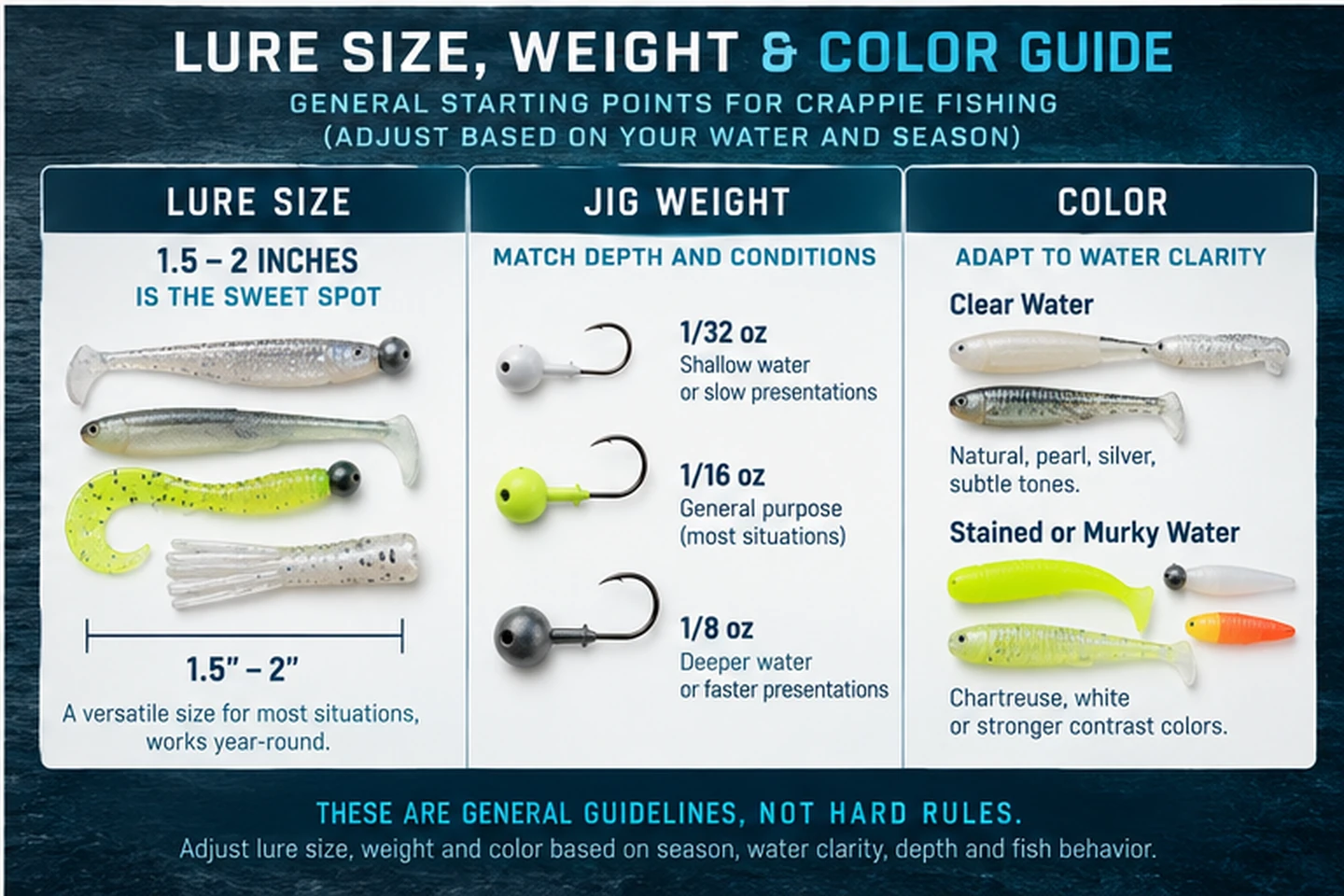
Use 1.5 to 2 inches as a practical starting range
Most of the soft plastics in this guide sit between 1.5 and 2 inches, which matches the compact forage profile that appears repeatedly across current crappie recommendations. That does not mean bigger or smaller never works. It means you can build a useful starter box without carrying every size on the wall.
Match jig-head weight to depth and control
For small plastics, 1/32 oz is useful when a slow fall matters in shallow water, 1/16 oz is a strong general-purpose starting point, and 1/8 oz can help when you need to reach deeper fish or maintain control in more wind. These are starting points, not fixed rules. Line diameter, current, wind and the bulk of the plastic all change the actual fall.
Use color to manage visibility and contrast
Natural pearl, silver, translucent and baitfish tones are sensible starting points in clearer water. In stained water, chartreuse, white, darker silhouettes or strong contrast combinations are easier to justify. The useful rule is not that one color always wins. It is that you should change visibility and contrast deliberately when the fish stop reacting.
A simple crappie lure box is enough
You do not need dozens of body styles. A compact tube, a straight-tail minnow, one curly or paddle tail, and one flash-producing lure will cover most artificial-lure decisions. Add a small hard bait only if trolling or open-water search fishing is part of how you actually fish.
- Slow and precise: Lit’l Hustler Tube or Baby Shad.
- Steady swimming: Z-Man GrubZ or Slabalicious.
- Stained water or search: Road Runner or Rooster Tail.
- Open-water hard bait: Rapala Ultra Light Shad.
FAQ
What is the best all-around lure for crappie?
A 1.5 to 2 inch soft plastic on a light jig head is the most versatile starting point. We prefer a compact tube such as the Southern Pro Lit’l Hustler because you can fish it vertically, under a float or on a slow retrieve without changing lure families.
What size lure is best for crappie?
For artificial lures, 1.5 to 2 inches is a practical starting range for many crappie situations. Smaller profiles can help when fish are finicky, while larger baits can make sense when bigger forage or aggressive fish justify them.
What jig-head weight should I use for crappie?
Start around 1/32 oz for shallow water and a slow fall, 1/16 oz for general use, and 1/8 oz when you need more depth or control. Adjust for wind, current, line diameter and how quickly the fish want the lure to fall.
What color crappie lure works best?
In clear water, natural baitfish colors such as pearl, silver and translucent shades are sensible starting points. In stained or dirty water, chartreuse, white, darker silhouettes and high-contrast combinations can be easier for fish to track.
Are crankbaits good for crappie?
Yes, especially when crappie are scattered or suspended in relatively open water. Small crankbaits can cover water efficiently, but treble hooks make them less convenient around brush and dense wood than a single-hook jig.