GearAndFish is reader-supported. As an Amazon Associate I earn from qualifying purchases. When you buy through links on our site, we may earn an affiliate commission, at no extra cost to you. Learn more.
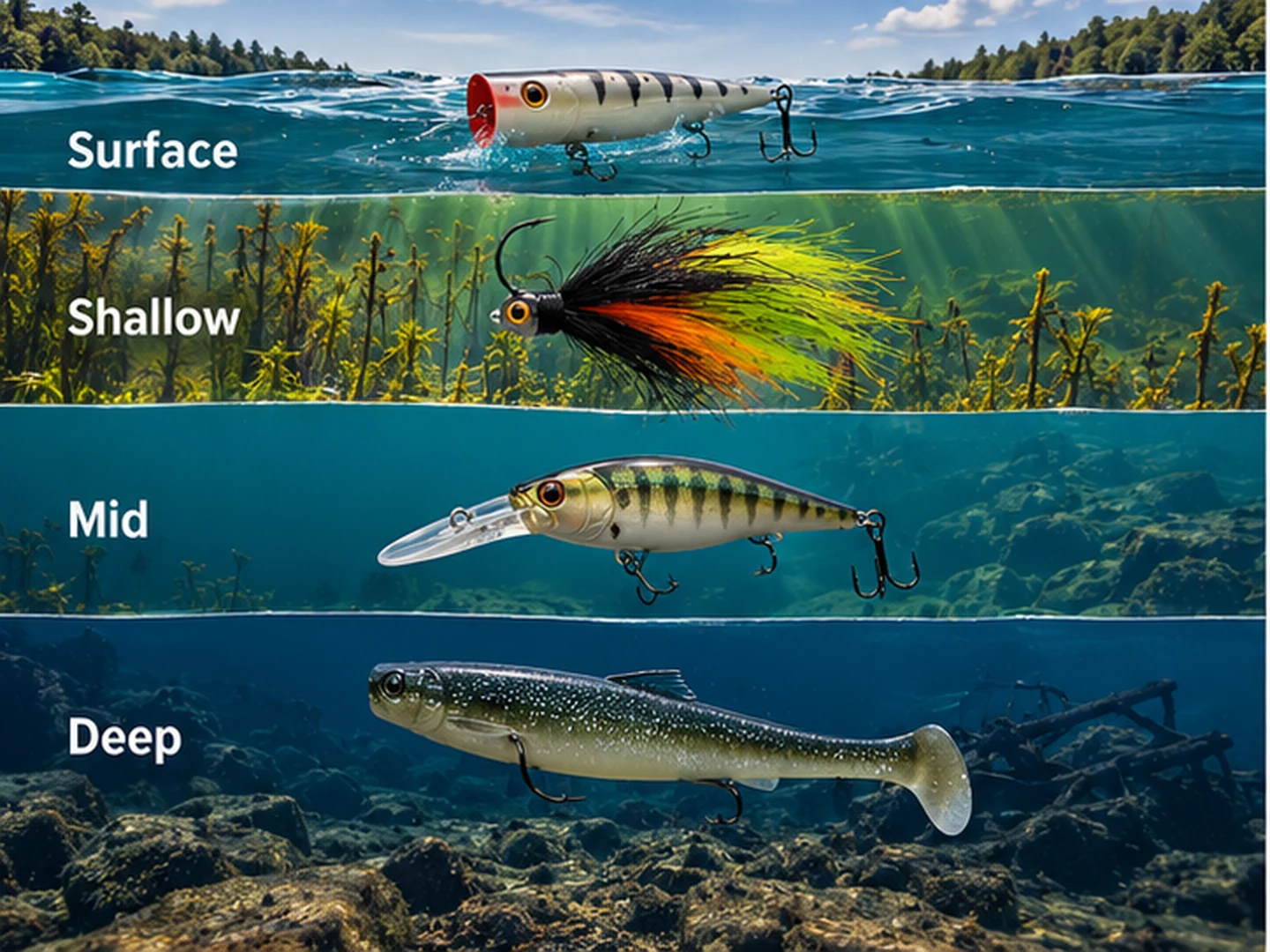
Musky lures are oversized because the job is different from ordinary bass or walleye fishing. You are often trying to make one big predator notice, follow, and finally commit. The smartest starter box is not a pile of similar baits. It is a small group that lets you cover speed, depth, structure, and mood.
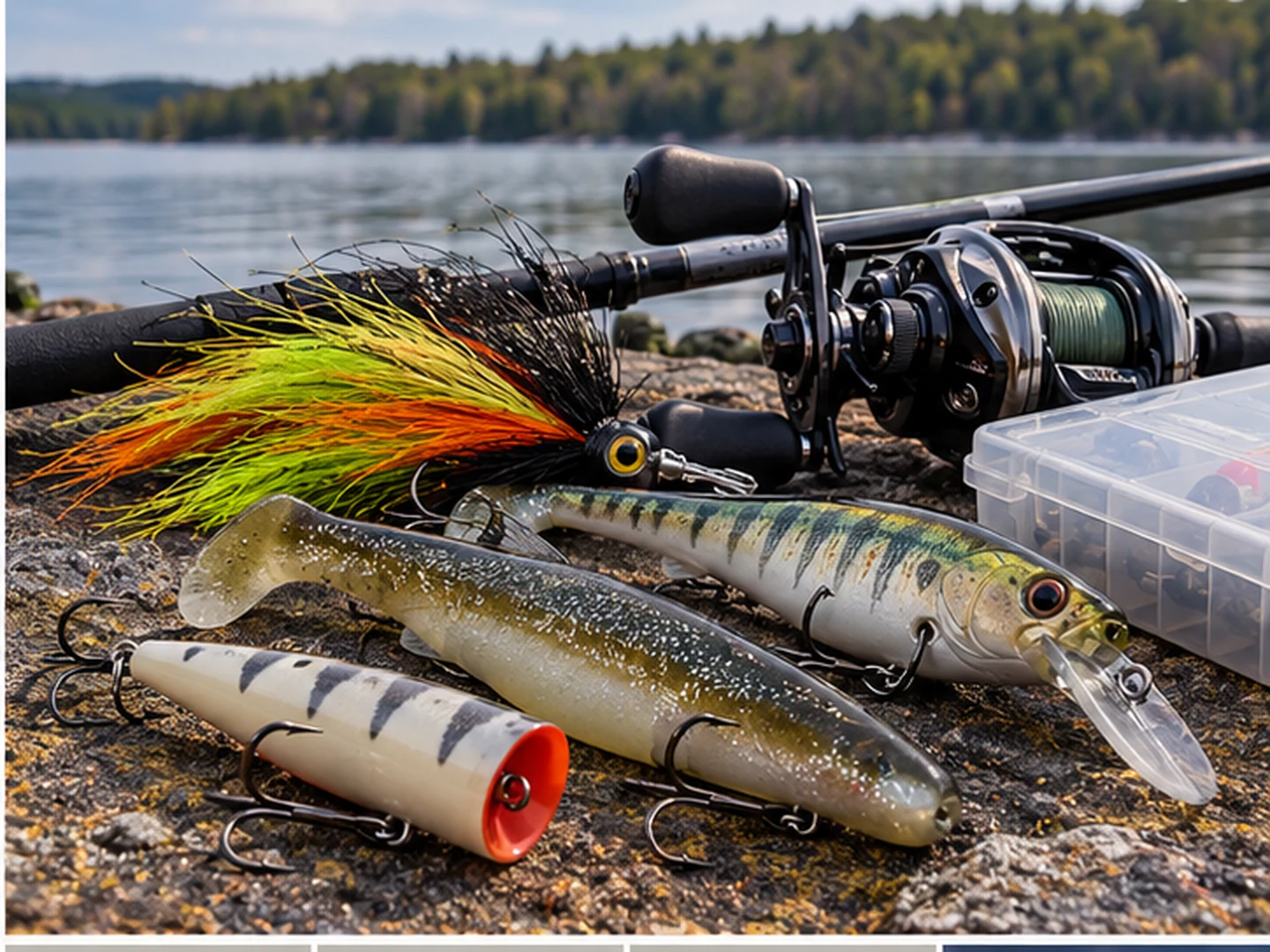
For most anglers, that means one bucktail for covering water, one surface bait, one crankbait, one slower hybrid or soft bait, and one pull-pause option for fish that follow without eating. The six lures below fill those roles with current models that are easy to identify and buy in the US.
Best musky lures at a glance
| Lure | Best for | Why it earns a spot |
|---|---|---|
| Mepps MuskyKiller | Covering shallow to mid-depth water | Compact, manageable bucktail with steady flash and vibration |
| River2Sea Whopper Plopper 190 | Topwater search fishing | Large surface profile and consistent plopping action |
| Rapala Super Shad Rap SSR14 | Casting or trolling a hard bait | Heavy-duty 5.5-inch balsa crankbait with a 5 to 9 foot running depth |
| Rapala X-Rap Otus 25 | Slow, shallow presentations | Large curl-tail hybrid that sinks slowly and fishes over weed tops |
| Savage Gear 3D Real Eel 8 | Affordable soft-plastic option | Pre-rigged eel profile with a large swimming tail |
| DeLong Flying Witch 11 | Pull-pause presentations | Heavy rubber jerkbait that dives and falls with a different cadence |
Best all-around bucktail: Mepps MuskyKiller
Best for: covering weed edges, flats, and open lanes with a simple retrieve.
The MuskyKiller is a sensible first musky lure because it does not demand specialized cadence. Cast it, get the blade turning, and keep it moving. The 3/4-ounce version is far lighter than many modern double-blade bucktails, which makes it less punishing for anglers who are still learning dedicated musky tackle.
Mepps builds the Musky Killer around a heavy-duty 5/0 treble and a traditional spinner profile. The smaller blade and compact package also make it useful when fish follow bigger baits without committing, or when early-season forage is relatively small.
Choose it when: you want to cover water quickly without throwing a 3 to 6 ounce bait all day. Skip it when: you specifically need the extra lift and thump of a large double-8 or double-10 bucktail.
Best topwater: River2Sea Whopper Plopper 190
Best for: active muskies over shallow cover, weed tops, points, and low-light water.
The 190 is the musky-scale Whopper Plopper, not the smaller bass version. River2Sea lists it at 7.5 inches and 2 3/4 ounces. Its rotating tail creates the surface disturbance that makes this bait easy to track visually and easy to fish at a steady pace.
Its main advantage is simplicity. You do not need to walk it or constantly snap the rod. That makes it a practical surface bait when you want to cover a long weedline or shoreline while keeping the lure moving. A recent musky community thread also singled out the 190 as a productive topwater choice, which matches its long-standing role as a dedicated big-predator plopper.
Choose it when: muskies are willing to look up and you can keep treble hooks clear of heavy floating vegetation. Skip it when: fish are holding deep or the surface is choked with weeds.
Best crankbait for casting and trolling: Rapala Super Shad Rap SSR14
Best for: working mid-depth water with a durable hard bait.
The Super Shad Rap is one of the easier musky crankbaits to understand because Rapala publishes the core numbers clearly. The SSR14 is 5.5 inches, weighs 1 5/8 ounces, and is rated to run 5 to 9 feet. It uses a balsa body, stainless through-wire construction, and two 3/0 hooks.
That combination makes it useful for both casting and trolling without forcing you into an extreme lure weight. It is also a good fit when you want a baitfish profile rather than the large blade flash of a bucktail or the slow fall of rubber.
Choose it when: fish are relating to weed edges, breaks, suspended forage, or trolling passes in that middle depth band. Skip it when: you need to probe much deeper than its normal running range.
Best slow shallow hybrid: Rapala X-Rap Otus 25
Best for: cooler water, pressured fish, and slower work above weeds.
The 25 cm X-Rap Otus combines a hard body with a large soft curl tail. Rapala lists the XROU25 at 25 cm, 90 g, slow sinking, with a 0.5 to 1 meter running depth and two 2/0 hooks. The tail keeps moving at a slower pace than a typical crankbait, while the body rolls on the retrieve.
This is the pick for anglers who need to slow down without giving up a large silhouette. It can stay in the shallow zone longer than a heavy rubber bait and can be paused around weed openings or the edge of visible structure.
Choose it when: you are getting follows on faster baits or want a large profile that can be worked deliberately. Skip it when: you need to reach deep fish quickly.
Best value soft plastic: Savage Gear 3D Real Eel 8
Best for: anglers who want a pre-rigged soft bait without stepping immediately into the heaviest musky rubber.
Savage Gear offers the 3D Real Eel in 8 and 12 inch sizes. The pre-rigged version uses an integrated top hook plus a secured belly treble, and the company describes the tail as active across retrieve speeds. The 8-inch size gives you a substantial profile while remaining easier to manage than many 10 to 15 ounce trophy plastics.
This is not the only rubber shape that catches muskies, but it fills a useful slot in a small tackle box: a softer, swimming presentation that can be counted down and retrieved at different speeds.
Choose it when: you want a soft bait with a pronounced tail kick and a moderate profile. Skip it when: you need a true deep-jigging bait or an ultra-heavy fall presentation.
Best pull-pause rubber bait: DeLong Flying Witch 11
Best for: working a spot slowly with long pulls and pauses.
The 11-inch Flying Witch weighs about 6 ounces and uses a weighted head that drives the whole bait through a dive-and-fall cycle. DeLong rigs it with a 150-pound braided Kevlar internal harness and two 6/0 Mustad trebles. The manufacturer recommends a pull-pause retrieve rather than simply winding it back like a paddle tail.
That makes it the most specialized lure in this list, but also the one that gives fish a distinctly different look after they have followed a bucktail or crankbait. It demands a rod that is actually rated for its weight, so check your lure rating before buying.
Choose it when: you are willing to slow down and work a key break, point, weed edge, or suspended target carefully. Skip it when: your rod is not rated for roughly 6-ounce lures.
How to choose a musky lure
Start with presentation, not color
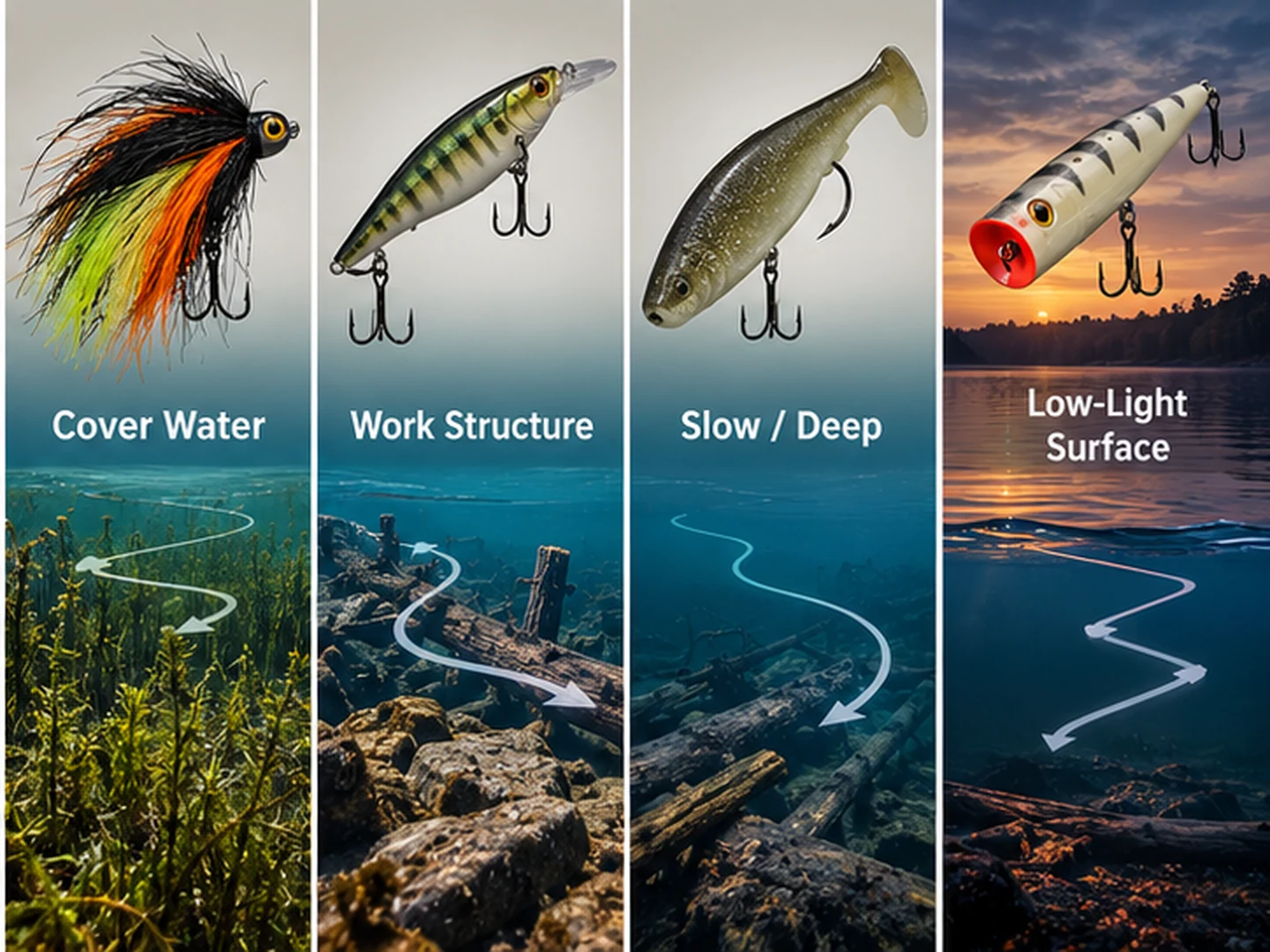
First decide whether you need to cover water fast, stay high over weeds, work a specific piece of structure, or reach deeper fish. Lure category changes the way you can fish a spot far more than a small color change.
Match lure weight to your rod
Dedicated musky lures vary from under an ounce to well over half a pound. Check the lure-weight range printed on your rod. Repeatedly casting beyond that rating is hard on both the tackle and the angler.
Build a small system before buying duplicates
A six-lure starter box with different jobs is more useful than six bucktails that all fish the same depth. Add duplicate colors and sizes after you know which presentations fit your water.
Plan for safe fish handling
Large trebles and large fish demand proper tools. A musky-capable net, long-nose pliers, hook cutters, and an appropriate leader are part of the system, not optional extras after the lure purchase.
Simple seasonal shortcuts
Spring and early summer: start smaller and slower when fish are shallow or recovering from the spawn. A MuskyKiller, X-Rap Otus, or controlled pull-pause bait makes sense here.
Summer: bucktails and topwaters are efficient for covering active water, while crankbaits and soft plastics let you reach fish that drop deeper during bright periods.
Fall: larger soft plastics and deliberate hard-bait presentations become more useful as forage size and feeding windows change. The key is not simply using the biggest lure you own, but giving fish a profile and speed that fit their current depth and activity level.
FAQ
What is the best musky lure for a beginner?
A manageable bucktail is the easiest place to start because it covers water with a simple steady retrieve. The Mepps MuskyKiller is lighter than many oversized double-blade bucktails and works well as a first dedicated musky lure.
Do I need giant lures to catch musky?
No. Musky anglers often use very large baits, but smaller bucktails and mid-size crankbaits remain useful, especially early in the season or when fish are following large offerings without committing.
What lure types should be in a basic musky tackle box?
A practical starter set includes a bucktail, topwater, crankbait, soft plastic or hybrid bait, and a jerkbait or pull-pause lure. That combination lets you change speed, depth, and action instead of only changing colors.
Can I use a bass rod for these lures?
Only if the rod is actually rated for the lure weight. Several baits in this guide weigh 2 to 6 ounces, which is beyond the safe working range of many bass rods. Always follow the lure-weight rating printed on the rod.
Bottom line
If you are building a musky box from scratch, buy for coverage rather than collecting similar baits. Start with a bucktail, add a real musky-size topwater, then cover mid-depth water with a crankbait and slower conditions with a hybrid or soft bait. The six picks here give you distinct jobs with no need to pretend that one lure is best in every season and depth.