
GearAndFish is reader-supported. As an Amazon Associate I earn from qualifying purchases. When you buy through links on our site, we may earn an affiliate commission, at no extra cost to you. Learn more.
The best saltwater lure is the one that reaches the right zone, matches the local forage closely enough, and can be fished cleanly around the cover in front of you. For a versatile box, start with a bucktail jig, a hard minnow, a scented soft bait, a walking topwater, a casting metal and a shrimp imitation rather than six versions of the same presentation.
Start with three presentations, then add specialists
If you want the shortest useful shopping list, buy a 1 oz SPRO Prime Bucktail Jig for bottom and current, a Rapala X-Rap Saltwater SXR12 for an active baitfish presentation, and a Berkley Gulp! Saltwater Swimming Mullet 4 in when you want a soft bait with scent. Add the Super Spook Jr. for topwater, the 1 oz Kastmaster for distance, and the D.O.A. 3 in Shrimp for slower inshore work.
Quick picks
SPRO Prime Bucktail Jig, 1 oz
A compact sinking presentation that can be cast, hopped or worked vertically around current and structure.
Rapala X-Rap Saltwater SXR12
A 4 3/4 in suspending minnow with a verified 4 to 8 ft running range and saltwater hardware.
Berkley Gulp! Swimming Mullet, 4 in
A paddle-tail soft bait for jigheads and other rigs when bottom contact and a softer profile make sense.
Heddon Super Spook Jr.
A 3.5 in walking bait that gives you a surface option without jumping to an oversized offshore plug.
Acme Kastmaster, 1 oz
A dense metal lure that is easy to send into surf, wind and fast-moving open water.
D.O.A. Shrimp, 3 in
A compact 1/4 oz shrimp profile for inshore water where a slower, crustacean-shaped presentation fits the forage.
Saltwater lure comparison
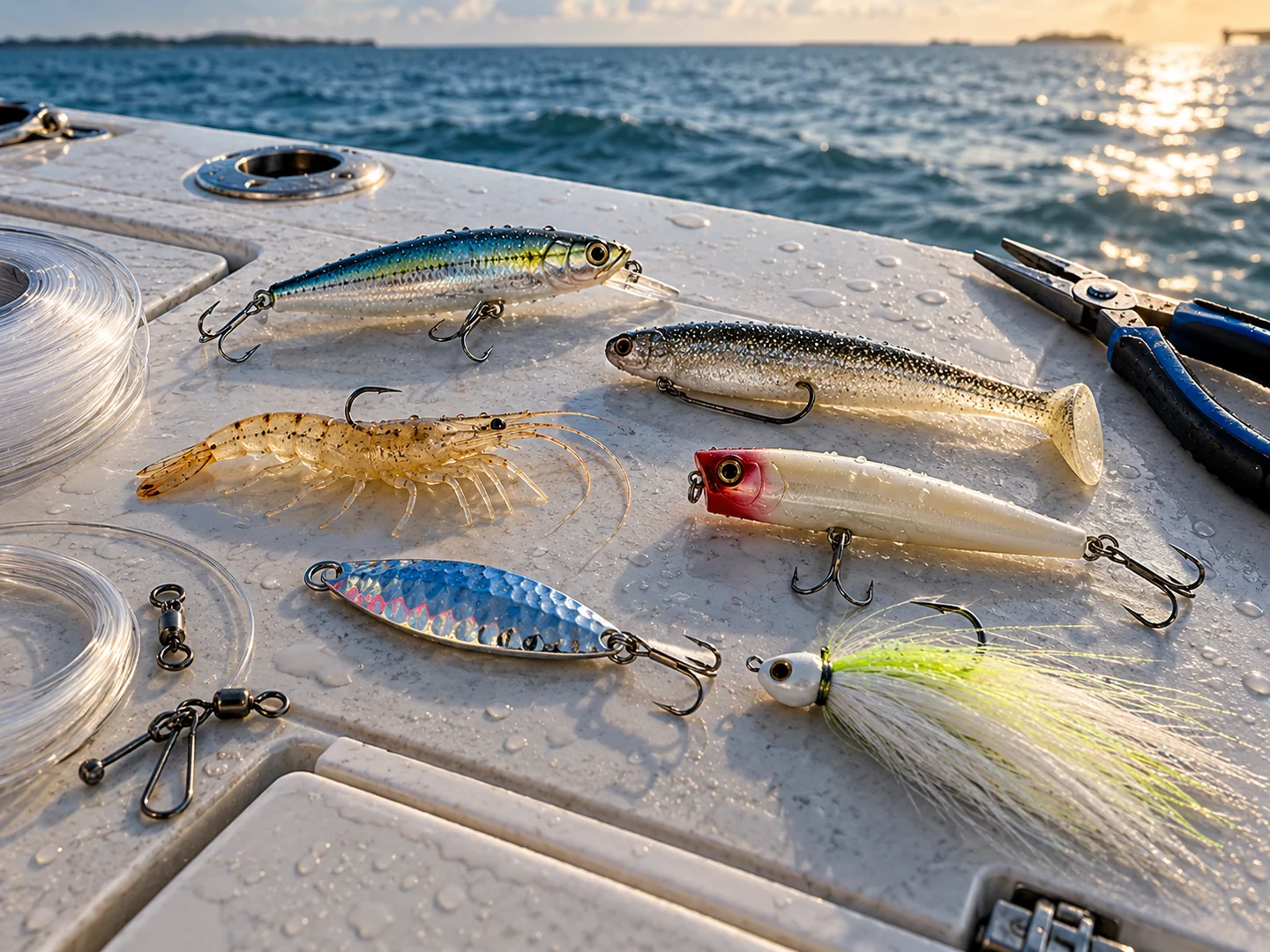
These picks are not interchangeable. The table is designed around the decision that matters on the water: where the lure fishes and what kind of presentation it gives you.
| Lure | Best for | Type | Size / weight | Zone | Trade-off | Amazon |
|---|---|---|---|---|---|---|
| SPRO Prime Bucktail Jig | Current, jetties, bottom work | Bucktail jig | 1 oz | Sinking | Exposed hook can snag around heavy cover | Check availability |
| Rapala X-Rap Saltwater SXR12 | Active baitfish presentation | Suspending hard bait | 4 3/4 in, 3/4 oz | 4 to 8 ft | Treble hooks are less friendly around grass and snaggy cover | Check availability |
| Berkley Gulp! Swimming Mullet | Flounder, redfish, bottom-oriented inshore use | Scented soft bait | 4 in | Rig dependent | Requires separate terminal tackle and soft baits are consumable | Check availability |
| Heddon Super Spook Jr. | Surface feeding inshore fish | Walking topwater | 3.5 in, 1/2 oz | Topwater | Not a depth tool once fish stop feeding at the surface | Check availability |
| Acme Kastmaster | Surf, piers, schooling fish, wind | Casting spoon | 1 oz | Variable | Less subtle than soft plastics or suspending plugs | Check availability |
| D.O.A. Shrimp | Flats, marsh edges, slower inshore work | Preweighted shrimp imitation | 3 in, 1/4 oz | Shallow to mid-depth | Less casting weight and flash than metal or hard baits | Check availability |
SPRO Prime Bucktail Jig
Rapala X-Rap Saltwater SXR12
Berkley Gulp! Swimming Mullet
Heddon Super Spook Jr.
Acme Kastmaster
D.O.A. Shrimp
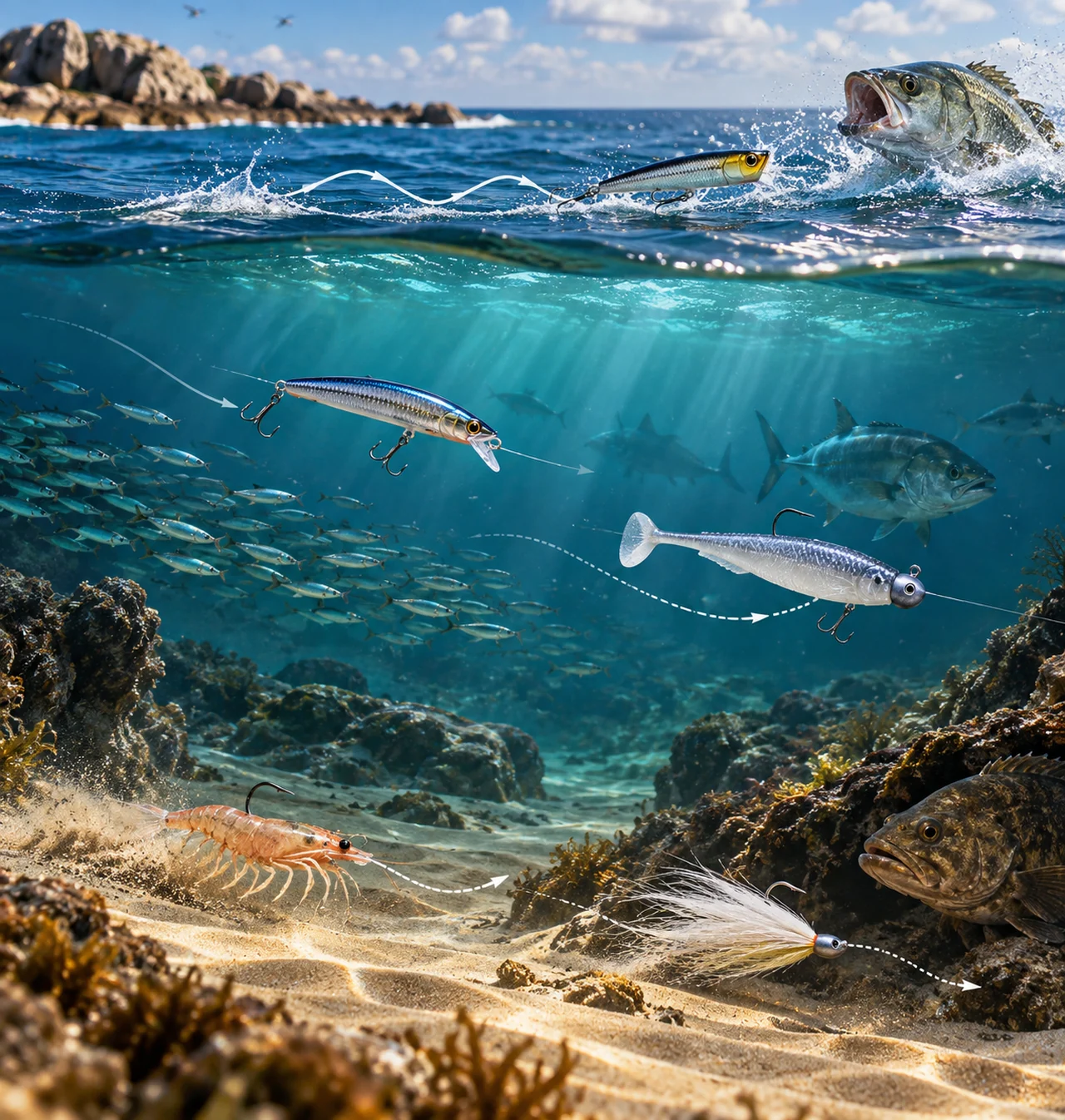
The best saltwater lures by job
SPRO Prime Bucktail Jig, 1 oz
Pick this when you need a compact lure that can get down, stay useful in current and work around jetties, channels or open bottom.
Bucktails stay relevant because the angler controls most of the presentation. You can cast and swim one, hop it along bottom, swing it through current or work it vertically. That flexibility is why this is the closest thing in this list to a general-purpose saltwater tool.
The 1 oz size is a middle-ground choice, not a universal weight. In shallow, protected water it can be too heavy, while strong inlet current or deep water may call for more weight. The advantage is that the same lure style scales easily once you know how much weight you need to maintain contact.
Why it earns a spot
- Works across multiple retrieves and depths
- Single-hook format is simple to unhook and maintain
- Dense enough for current and structure work
What to know
- Exposed hook can hang up in grass or heavy cover
- Correct weight changes with depth and current
- Bucktail dressing needs freshwater rinsing after salt exposure
Rapala X-Rap Saltwater SXR12
A better fit than a generic freshwater jerkbait when you want a suspending baitfish plug with saltwater-specific hardware.
The SXR12 fills the classic baitfish role: cast it around points, channels, open shoreline or bait activity, then use steady retrieves, pauses or sharper rod input to change the action. Its biggest value in a mixed lure box is that it occupies the midwater zone that neither a topwater nor a bottom jig covers as naturally.
The trade-off is hardware exposure. Two trebles provide multiple hook points, but they are also less convenient around submerged grass, shell and other snag-prone cover. If your water is full of vegetation, move to a weedless soft plastic rather than forcing a hard bait through it.
Why it earns a spot
- Specific 4 to 8 ft running window is easy to plan around
- Can be cast or trolled
- Saltwater-specific hook package
What to know
- Treble hooks collect grass and can snag structure
- More expensive to lose than a jig or soft plastic
- Not a true shallow-grass or deep-bottom solution
Berkley Gulp! Saltwater Swimming Mullet, 4 in
A soft bait that gives you flexible rigging plus Berkley’s scent system, especially useful when you want to slow down and keep a bait near bottom.
This is the most configurable lure in the list because the body does not dictate the terminal tackle. Put it on an appropriate jighead to work bottom, change weight to match current, or use another rig that suits the cover and species you are targeting. That makes it useful for flounder-style bottom presentations and general inshore fishing where fish are following small baitfish.
The downside is exactly the same flexibility: the package is not a complete presentation by itself. You still need the right hook or jighead, and soft baits are consumable. Keep the Gulp material in its intended packaging and avoid mixing different soft-plastic materials in the same compartment.
Why it earns a spot
- Rig weight can be changed without changing the lure family
- Paddle tail provides motion on a steady retrieve
- Scented material offers a different trigger than hard baits
What to know
- Needs separate terminal tackle
- Soft bait bodies get damaged or lost
- Rigging choice matters as much as the bait itself
Heddon Super Spook Jr., 1/2 oz
A compact walking topwater for redfish, speckled trout, stripers and other predators when fish are feeding high in the water column.
Topwater is a separate job, not a universal upgrade. Use it when bait is visibly nervous, fish are pushing bait to the surface, or low-light conditions make a surface presentation practical. The Jr. size is large enough to cast on typical inshore gear without forcing you into a much bigger plug.
Once fish drop deeper, stop trying to make the topwater solve the wrong problem. That is where the X-Rap, bucktail or soft bait becomes the better tool. A topwater earns its box space because it covers a zone the other lures cannot, not because it should stay tied on all day.
Why it earns a spot
- Distinct surface presentation
- Compact size for common inshore gamefish
- Walk-the-dog action can cover water quickly
What to know
- Only works in the surface zone
- Treble hooks demand care around fish, weeds and gear
- Wind and rough water can make subtle cadence harder to control
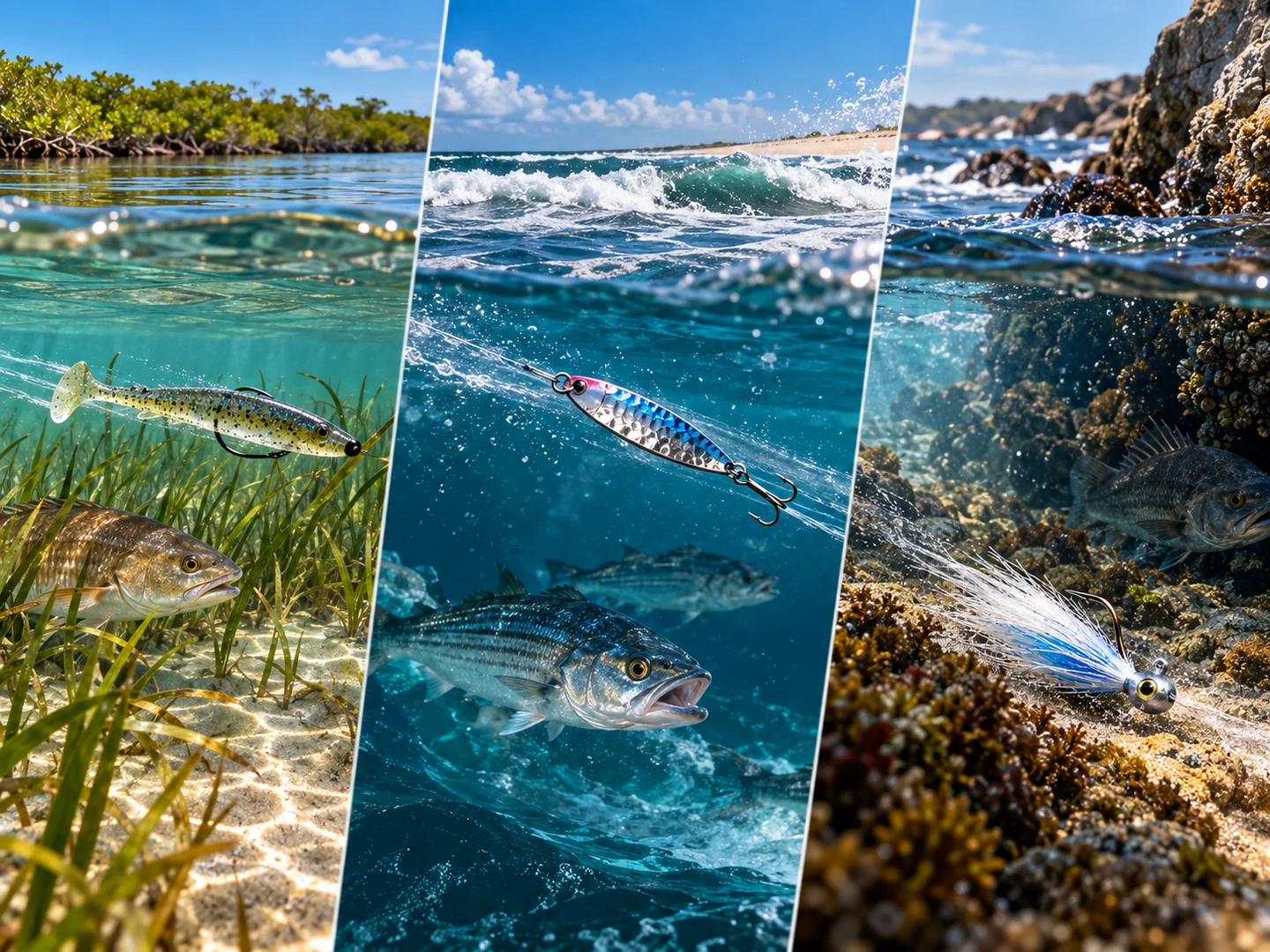
Acme Kastmaster, 1 oz Chrome
A dense metal option for surf, piers, wind and schooling fish when reaching the fish matters more than a slow, subtle presentation.
A 1 oz metal lure solves a very specific saltwater problem: getting a compact presentation far enough into wind, surf or moving bait. That makes it especially useful from beaches and piers, or when fast pelagic fish are pushing small bait beyond comfortable plug range.
It is less subtle than a shrimp or soft plastic, and the exposed treble is not what you want around thick grass. Its role is reach and speed. Let it sink to change depth, then vary retrieve speed based on where fish are holding.
Why it earns a spot
- Dense 1 oz package is easy to cast a long way
- Can cover several depths by changing sink time and retrieve
- Metal body is simple to rinse and inspect
What to know
- Not weedless
- Less natural at slow speeds than a soft bait
- Fast retrieve can be the wrong presentation for inactive fish
D.O.A. Shrimp, 3 in
A preweighted shrimp profile for shallower inshore water where a crustacean presentation fits the forage better than a fast baitfish lure.
A shrimp imitation gives the box a slower, smaller profile for marshes, flats, creek mouths and other inshore water where shrimp are a major food source. It is especially useful when fish are not responding to a fast hard bait or when you want to work a target area more deliberately.
The 1/4 oz weight is also a limitation. It will not replace a 1 oz spoon or bucktail when you need to punch into wind or maintain bottom contact in strong current. Treat it as a shallow-to-mid-depth specialist.
Why it earns a spot
- Different forage profile from every baitfish lure in the list
- Preweighted 3 in format keeps rigging simple
- Useful for slower presentations around inshore targets
What to know
- Limited casting weight compared with metal lures
- Not the first choice for heavy current or deep water
- Soft body can be damaged by fish and structure
How to choose a saltwater lure
Do not start with color. Start with zone, current, cover and forage. Once those four variables are reasonably close, color becomes a smaller adjustment instead of the entire decision.
1. Choose by depth and presentation zone
If fish are visibly feeding on top, use a topwater. If they are chasing bait a few feet down, use a suspending or swimming hard bait. If you need bottom contact, use a jig or a weighted soft bait. This sounds basic, but it prevents the common mistake of changing colors while still fishing the wrong part of the water column.
2. Add enough weight for current and wind
A lure that cannot reach or stay in the target zone is not fishing effectively. Surf, inlets and jetties often reward denser metal or heavier jigs, while protected flats let you use lighter shrimp and soft-plastic presentations. Increase weight only as much as needed to control the lure.
3. Match hook exposure to cover
Open water gives you freedom to use treble-hooked plugs and spoons. Grass and snag-prone bottom push the decision toward single-hook jigs or weedless soft-plastic rigs. The best action on paper does not help if the lure reaches you covered in grass every cast.
4. Match the dominant food shape
Saltwater predators frequently eat baitfish, shrimp and other compact prey. Carrying one baitfish hard bait, one soft bait and one crustacean profile covers more situations than carrying several nearly identical minnows. You can then adjust size and color based on local forage and water clarity.
A practical six-lure saltwater starter kit
If you are building from an empty box, buy one lure for each role first. A 1 oz bucktail covers current and bottom. The X-Rap covers midwater baitfish. The Gulp! Mullet gives you a soft, scented option. The Super Spook Jr. handles the surface. The Kastmaster solves distance. The D.O.A. Shrimp gives you a slower crustacean profile.
Saltwater lure care
Rinse hard baits, metal lures and hooks with fresh water after salt exposure, then let them dry before sealing them into a tackle box. Inspect hook points, split rings and eyelets for corrosion or damage. Keep soft baits in compatible storage and follow the manufacturer’s packaging guidance, especially for materials that can react with other plastics.
How we chose these lures
The current US search results for “best saltwater lures” are dominated by roundups and beginner guides that organize the category around lure types, species and fishing conditions. We used that intent, then narrowed the article to six complementary jobs instead of ranking multiple products that solve the same problem.
FAQ
What is the most versatile saltwater lure?
A bucktail jig is one of the most versatile starting points because you can cast it, jig it vertically, swim it or work it near bottom. The correct weight still depends on depth and current.
What color lure is best for saltwater fishing?
There is no single best color across all saltwater. Start by matching the local forage and visibility, then use brighter or higher-contrast options when water or light conditions make a subtle natural pattern hard to see.
Are soft plastics or hard lures better in saltwater?
Neither is universally better. Soft plastics give you more rigging flexibility and can be easier to fish around cover. Hard lures provide a fixed action and running behavior that can cover water efficiently in open areas.
What lure should I use from the surf?
When distance and wind are the main constraints, dense casting metals and heavier jigs are usually easier to control than light shrimp imitations. Match the final weight to current, wave action and your rod’s lure rating.
Do saltwater lures need special hooks?
Saltwater exposure is hard on metal hardware. Lures built for saltwater commonly use corrosion-resistant or saltwater-oriented hooks and split rings, but they still need rinsing, drying and inspection after use.