
GearAndFish is reader-supported. As an Amazon Associate I earn from qualifying purchases. When you buy through links on our site, we may earn an affiliate commission, at no extra cost to you. Learn more.
The Ned rig is a small soft plastic on a light mushroom-style jighead, but the useful part is not the name. It is how easily the setup can stay subtle, move naturally, and keep catching fish when a larger or faster presentation gets ignored. The key is to keep the bait straight, choose the lightest head that still gives you control, and change the retrieve before you change the whole rig.
A simple Ned rig setup that works in most bass water
Start with a roughly 2.5 to 3 inch finesse plastic on a light mushroom-style jighead and fish it on spinning tackle with light line. A 1/10 ounce head is a practical middle starting point for many situations. Go lighter in shallow, calm water and heavier only when depth, wind, current, or casting distance makes the lighter head hard to control.
Make your first cast before overthinking the retrieve. Let the bait fall on a semi-slack line, watch for a jump or sideways movement, then try a slow swim, glide, subtle shake, short drag, pause, or deadstick. Ned fishing does not require grinding the bait across the bottom on every cast.
What is a Ned rig?
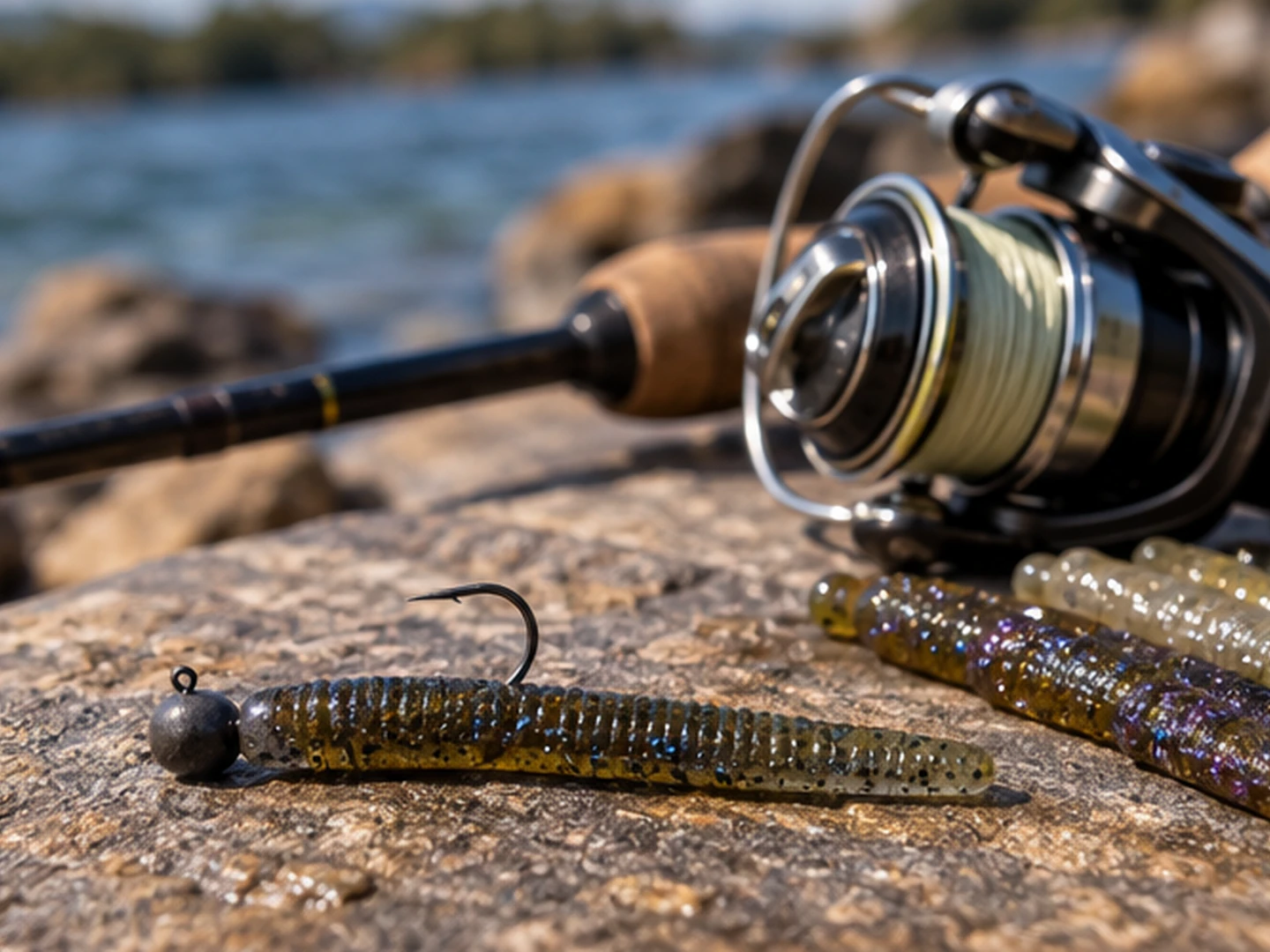
A modern Ned rig is usually a short finesse soft plastic threaded onto a small mushroom-style jighead. The presentation grew out of Midwest finesse fishing and is commonly associated with Ned Kehde. Current Ned rig fishing has expanded well beyond a single bait or retrieve, but the core idea is still simple: a compact profile, light tackle, and restrained movement.
That simplicity is why the rig fits so many situations. It can be cast from shore or a boat, worked around rock and sparse vegetation, swum above bottom, dropped beside cover, or left nearly motionless. It is most often discussed as a bass technique, especially for largemouth, smallmouth, and spotted bass, but the same compact presentation can interest other species too.
Ned rig setup: the four parts that matter
1. Jighead
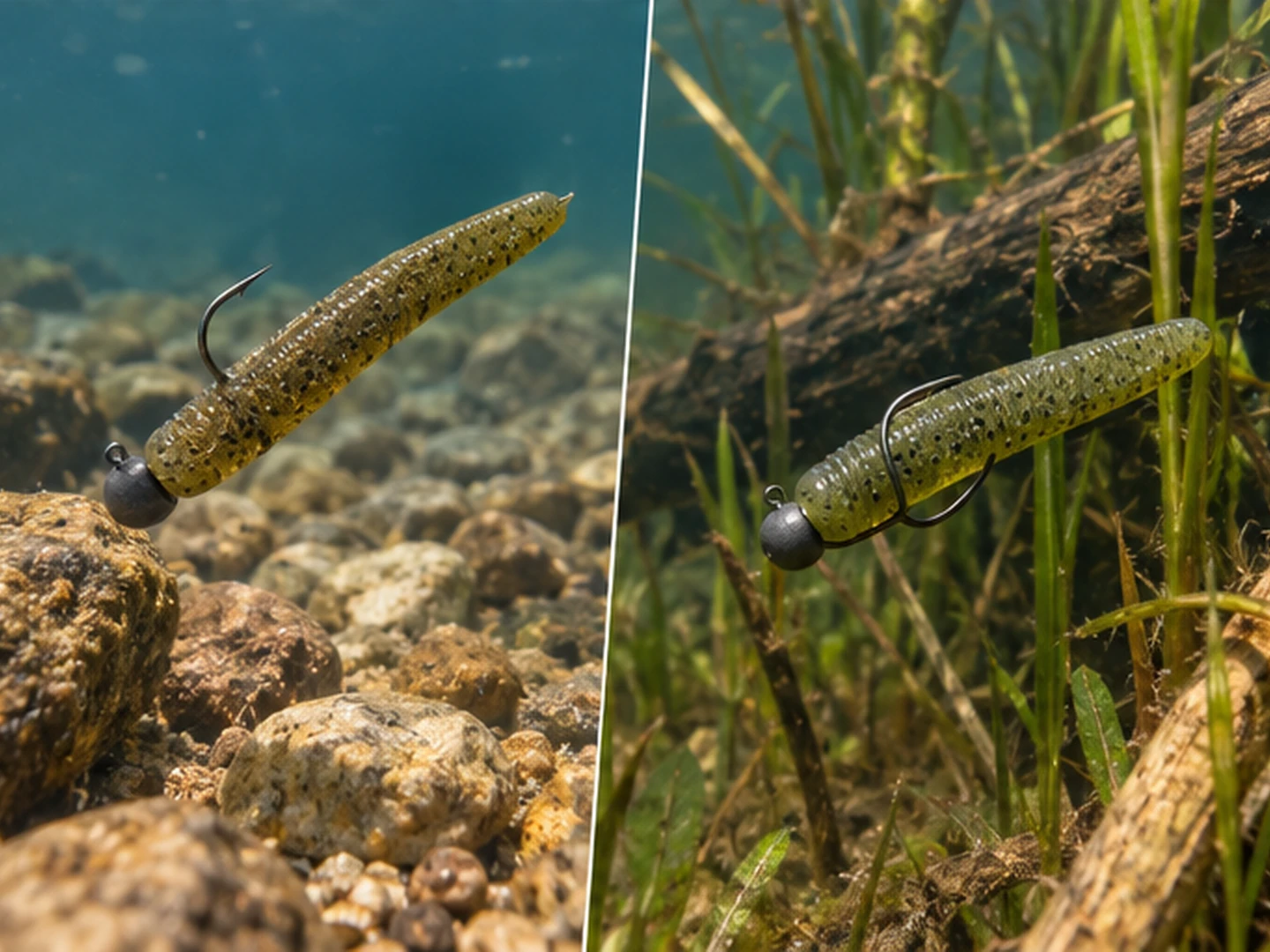
Choose a mushroom-style head light enough to preserve the finesse presentation but heavy enough to keep the bait where you want it. Exposed hooks are clean and efficient around open rock and sparse cover. Weedless versions make more sense when grass, brush, or wood would constantly catch an open hook.
2. Soft plastic
A short stick bait is the classic starting point, but craw, creature, and small minnow profiles also work. Straight rigging matters more than decorative detail. If the plastic sits crooked on the hook, the bait may spiral, twist line, or lose the clean fall that makes the setup useful.
3. Spinning tackle
Light Ned heads are easiest to cast and control on spinning gear. A light or medium-light rod with a responsive tip is a common fit. Exact rod power depends on lure weight, cover, line, hook style, and how much authority you need after the bite.
4. Light line
Keep line diameter modest enough to let a light head fall and move naturally. Many anglers use light braid to a fluorocarbon leader, while straight fluorocarbon or mono can also work. The right pound test depends on cover, water clarity, fish size, and the rest of the setup.
What Ned rig weight should you use?
The most useful rule is to use the lightest jighead that still lets you place and control the bait. There is no universal best Ned rig weight because wind, depth, current, line diameter, casting distance, and bottom composition all change how the same head behaves.
Lean light
Light heads around the 1/20 to 1/10 ounce range keep the fall subtle and are a good fit when the bait does not need to fight wind or current.
About 1/10 ounce
This is a practical middle choice when you want enough feedback and casting control without immediately turning the rig into a heavy bottom bait.
Step up only as needed
A 1/6 or 1/5 ounce head can make depth and line control easier. Some Ned-style jig families go heavier, but adding weight also speeds the fall and changes the presentation.
If you are unsure, begin lighter than your instincts suggest. Make a few casts. If you cannot reach the target, maintain depth, or understand what the bait is doing, move up one step rather than jumping straight to the heaviest head in the box.
How to rig a Ned rig step by step
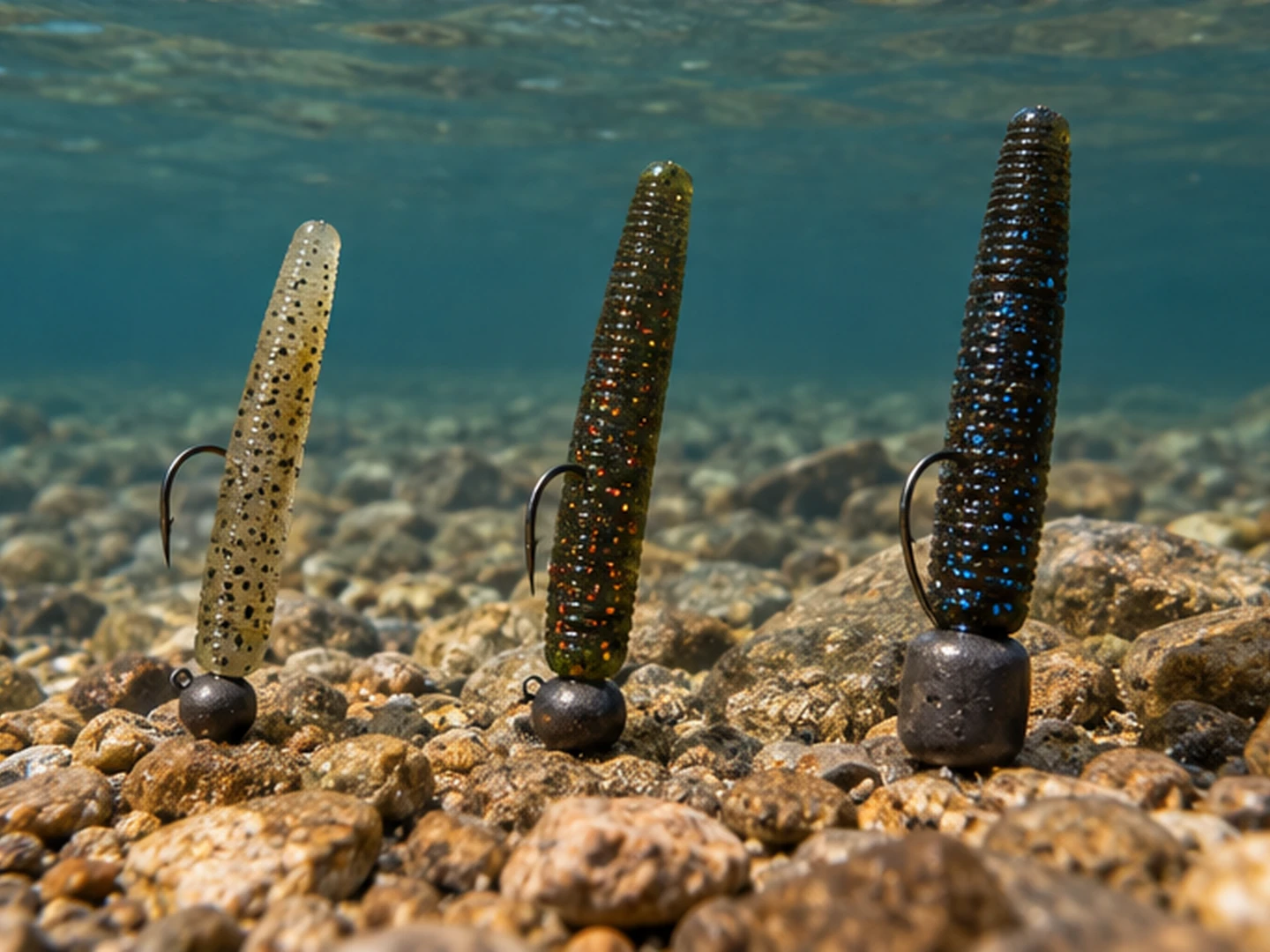
- Pick the head for the cover. Use an exposed hook around clean rock, gravel, docks, and relatively open water. Choose a weedless or protected hook when snag resistance matters more.
- Center the hook point in the nose of the plastic. Push the hook straight down the bait rather than entering at an angle.
- Thread the plastic onto the shank. Stop where the hook needs to exit, then bring the point through the centerline of the bait.
- Seat the plastic against the jighead and keeper. The body should be straight, not bowed or twisted.
- Check the rig before casting. Hold it by the line and make sure the bait hangs straight. A ten-second correction is better than fishing a corkscrewed bait for the next hour.
With a weedless head, follow the manufacturer-specific rigging method for that hook design. Some use a wire guard, some use an offset or EWG-style hook, and some let you lightly skin-hook the plastic. Those designs do not rig exactly the same way.
How to fish a Ned rig
Think in terms of speed, depth, and contact instead of searching for one magic retrieve. Current Midwest finesse reports still document several productive presentations, including the initial drop, swim-glide-and-shake, drag-and-shake, drag-and-pause, deadstick, and simple swimming retrieves. That variety is a useful reminder that a Ned rig is not limited to hopping along the bottom.
1. Fish the initial fall
Many bites happen before the retrieve starts. Cast past the target, follow the bait down with controlled slack, and watch the line where it enters the water. If it jumps, stops early, or moves sideways, reel down and apply steady pressure.
2. Swim, glide, and shake
Turn the reel slowly enough to keep the bait moving without racing it back. Add small rod-tip shakes, then let the lure glide. This is especially useful when fish are holding around sparse vegetation, rock edges, docks, or just above the bottom.
3. Drag and pause
Move the rig a short distance with the rod or reel, then stop. The pause gives the bait time to settle while keeping the presentation compact. Around rock, use enough tension to understand where the bait is without forcing the head into every crack.
4. Deadstick it
After a short move, leave the bait alone for several seconds. This is one of the easiest ways to slow down when fish are pressured or inactive. A buoyant plastic may stand or lift differently at rest than a conventional sinking soft plastic, so material choice changes what the bait does during the pause.
5. Hop and bounce
Short lifts and controlled drops can cover a little more water while keeping the profile small. Avoid turning every hop into a sharp snap. The rig usually works better as a finesse tool than as an aggressive jig presentation.
Exposed hook or weedless Ned rig?
There is no single hook style that wins everywhere. Match the hook to what it has to pass through.
Choose an exposed hook when
- You are fishing open rock, gravel, clean points, or relatively sparse cover.
- You want the simplest rigging and direct hook exposure.
- Snags are occasional rather than constant.
Choose a weedless style when
- Grass fouls the hook on repeated casts.
- You are pitching beside laydowns, brush, or other snag-heavy cover.
- You are losing enough open-hook heads that snag resistance matters more than maximum simplicity.
Z-Man Ned Rig Kit, Green Pumpkin
This is a convenient one-box starting point if you want several proven Ned-style plastic shapes plus two useful jighead weights without building the assortment piece by piece.
What the exact kit includes
The current Amazon.com US listing for ASIN B08KYHL1GX identifies the Z-Man KIT-NED-GP Green Pumpkin kit. The listing specifies 8 Finesse TRD softbaits, 8 TRD TicklerZ softbaits, 6 TRD CrawZ softbaits, plus five 1/10 ounce and five 1/6 ounce Finesse ShroomZ jigheads.
Best fit: a beginner who wants a compact Ned assortment with two head weights. Skip it if: you already know the exact head weight, hook style, and plastic profile you prefer, since buying those pieces separately gives you more control.
Where a Ned rig makes the most sense
Ned rigs are especially useful when fish are present but larger or faster presentations are not getting committed bites. Rock banks, gravel flats, points, transitions, docks, sparse grass, and clean edges are natural places to start. The compact bait can also be useful from the bank because it casts on light tackle and does not require a boat-specific presentation.
Cover changes the setup. Around clean bottom, an exposed hook keeps things simple. In heavier vegetation and wood, use a weedless head or keep the bait above the worst snags with a swimming retrieve. In strong current or deep water, add enough head weight to maintain the depth and line angle you need, but remember that a heavier head also changes the fall rate.
How to detect a bite and set the hook
A Ned bite can feel like a tap, extra weight, a mushy loss of contact, or nothing more than the line moving in the wrong direction. Watch the line as carefully as you feel the rod. When something changes, reel up slack and use a firm sweep or steady pull rather than an oversized snap hookset. Light-wire hooks do not need the same violent hookset as a heavy flipping hook.
Keep pressure on the fish once it is hooked, especially with light line. A balanced drag and smooth rod load are more useful than trying to overpower the fish with tackle that was selected for finesse.
Seven common Ned rig mistakes
- Starting too heavy. Extra weight may feel easier, but it can make the bait fall faster and reduce the subtle behavior you chose the rig for.
- Rigging the plastic crooked. A bowed bait can spin and look unnatural.
- Ignoring the initial fall. The first few seconds after the cast are part of the retrieve.
- Fishing only on bottom. Swimming and gliding the rig can be just as important as dragging it.
- Working it too aggressively. Small movements and pauses are often enough.
- Using an exposed hook in cover that eats jigs. Change the hook style instead of donating heads cast after cast.
- Changing baits before changing cadence. Try slowing down, swimming higher, deadsticking longer, or changing head weight before assuming the entire bait is wrong.
If you have never fished a Ned rig, do this
- Rig a short finesse plastic straight on a light mushroom head.
- Start around 1/10 ounce unless wind, depth, or current clearly calls for a different weight.
- Cast to rock, a point, a dock edge, or sparse cover.
- Watch the bait on the fall.
- Make five slow swim-glide casts, five drag-and-pause casts, and five casts with longer deadstick pauses.
- Change only one variable at a time so you can tell what improved the presentation.
Ned rig FAQ
What is the best weight for a Ned rig?
There is no single best weight. Use the lightest head that still gives you the casting distance, depth, and control you need. Around 1/10 ounce is a useful general starting point, with lighter heads for calm shallow water and heavier heads when wind, depth, or current demands it.
Can you fish a Ned rig from the bank?
Yes. A Ned rig is well suited to bank fishing because it works on spinning tackle, can be fished through a wide depth range, and does not require a boat-only retrieve. Rock banks, points, riprap, docks, and clean transitions are good places to start.
Does a Ned rig have to stay on the bottom?
No. Bottom contact is useful in many situations, but a Ned rig can also be swum, glided, shaken, paused, deadsticked, or fished on the initial fall. The best retrieve depends on where the fish are positioned and how active they are.
Should a Ned rig be weedless?
Use an exposed hook around relatively clean rock, gravel, and open water. A weedless or protected hook is more practical when grass, brush, or wood repeatedly snags an exposed point.
Do you need a special rod for a Ned rig?
No special Ned-specific rod is required, but light jigheads are usually easiest to cast and control on spinning tackle with a light or medium-light rod. Match the rod to the actual lure weight, line, cover, and hook style rather than buying by the technique label alone.


