
GearAndFish is reader-supported. As an Amazon Associate I earn from qualifying purchases. When you buy through links on our site, we may earn an affiliate commission, at no extra cost to you. Learn more.
The best fishing sunglasses are not simply the darkest pair you can buy. The right choice combines polarization, a lens color that matches your typical light, enough wrap to control side glare, and a frame that actually fits your face for a full day on the water.
For bright offshore sun, our top pick is the Costa King Tide 8 with Blue Mirror 580G glass. It pairs a high-coverage wrap with removable side shields, ventilation, and a lens made for harsh open-water light. If you have a larger head and want strong peripheral light control, the Bajio Cocho is the better fit-first alternative. Kayak anglers should look hard at the floating Hobie Hull Float.
GearAndFish did not physically test these sunglasses. This shortlist is based on current manufacturer specifications, exact Amazon.com US listings, current 2026 fishing-sunglasses roundups, and fit/use-case differences that matter on the water.
Best fishing sunglasses for most serious anglers
Costa King Tide 8 is our Best Overall pick for anglers who regularly fish in strong sun. The Blue Mirror 580G version uses polarized glass, a wide full-wrap frame, removable side shields, and ventilation aimed at reducing light leak and fogging. Its main trade-offs are simple: it is expensive, the glass lens is not the lightest option, and the wide fit will not suit every face.
If you want a roomier XL fit, choose the Bajio Cocho. If dropping sunglasses overboard is your bigger concern, the Hobie Hull Float is the more practical choice.
Quick picks
Costa King Tide 8
Maximum-coverage premium pick for bright open water and offshore sun.
Maui Jim Southern Cross
HCL Bronze glass lens for variable light with an XL wrap fit.
Leupold Switchback
Polarized polycarbonate eyewear with ANSI Z87.1+ impact protection.
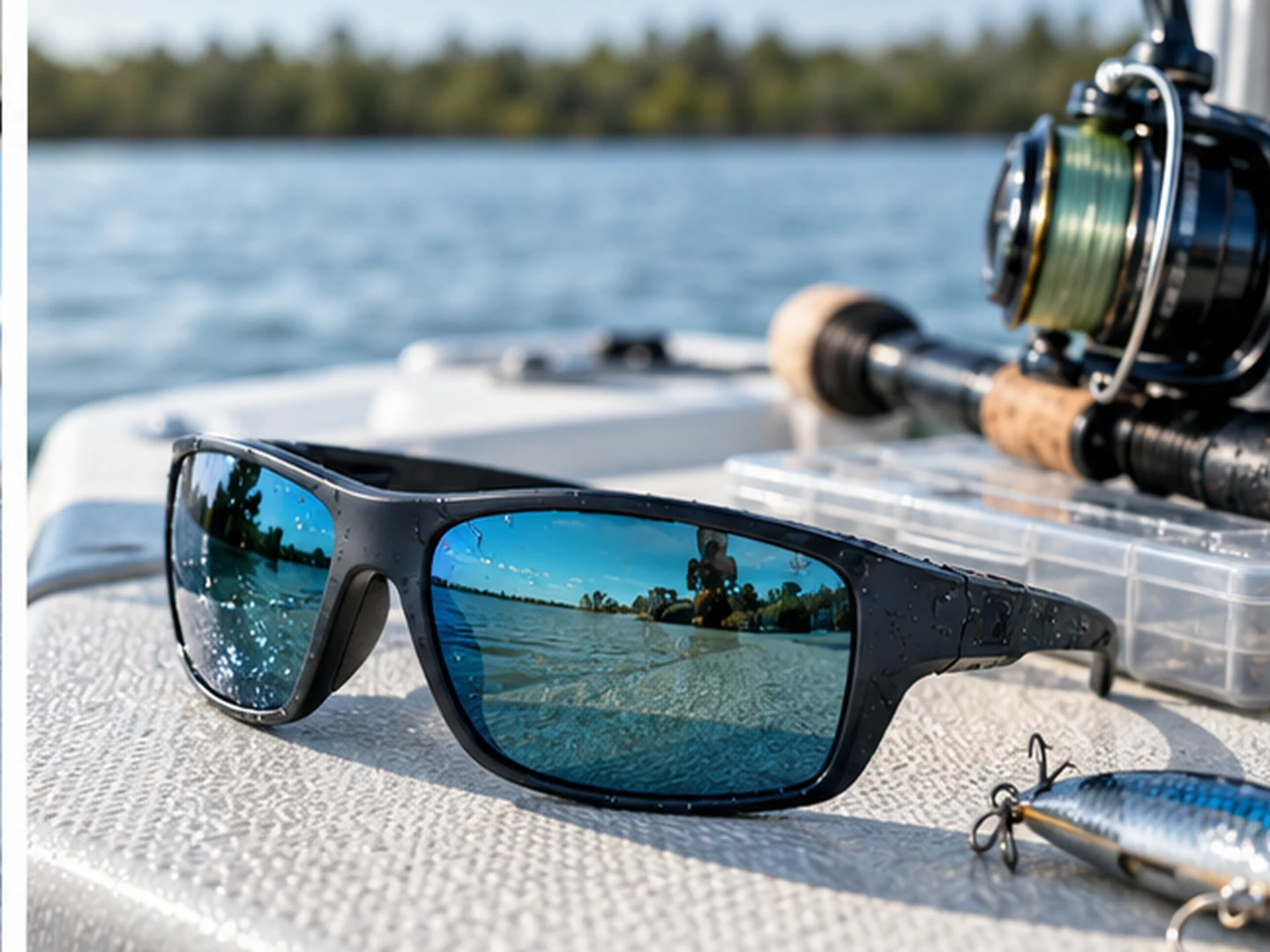
Fishing sunglasses comparison
Fit and lens choice matter as much as brand. Use the table to narrow the field by the conditions you actually fish most often.
| Sunglasses | Best for | Lens | Fit / wrap | Standout feature | Main trade-off | Amazon |
|---|---|---|---|---|---|---|
| Costa King Tide 8 | Bright open water | Blue Mirror 580G glass | Wide, full wrap | Removable side shields and venting | Premium price and heavier glass | Check availability on Amazon |
| Bajio Cocho | Large faces and high glare | Blue Mirror glass | Extra large, medium wrap | Removable vented side shields | Too roomy for small faces | Check availability on Amazon |
| Hobie Hull Float | Kayak and paddle fishing | Copper with Sea Green Mirror, nylon | Medium-large | Floatable upcycled frame | No premium glass option in this pick | Check availability on Amazon |
| Maui Jim Southern Cross | Changing light | HCL Bronze SuperThin Glass | XL, base 8 wrap | Warm contrast-oriented bronze tint | XL fit and glass weight | Check availability on Amazon |
| Leupold Switchback | Impact-focused use | Emerald Mirror polycarbonate | Regular-wide | ANSI Z87.1+ rating | Less side coverage than shielded fishing frames | Check availability on Amazon |
| KastKing Skidaway | Budget buyers | Smoke polarized TAC | Sport wrap | PuriVex coating and Grilamid frame | More basic optics and fit refinement | Check availability on Amazon |
Costa King Tide 8
Blue Mirror 580G glass
Bright open water
Wide, full wrap
Bajio Cocho
Blue Mirror glass
High glare
Extra large
Hobie Hull Float
Copper / Sea Green Mirror
Kayaks and paddle craft
Medium-large
Maui Jim Southern Cross
HCL Bronze glass
Variable light
XL, base 8
Leupold Switchback
Polycarbonate
Impact-focused use
ANSI Z87.1+
KastKing Skidaway
Smoke polarized TAC
Low-cost everyday fishing
Grilamid
The best fishing sunglasses we recommend
Costa King Tide 8
Best
Overall
A high-coverage choice for anglers who spend long hours in harsh sun and want strong control of light coming from the front and sides.
Verified configuration: Black Pearl frame, Blue Mirrored Polarized 580G, Amazon US ASIN B0CBHVK4ZM. Costa lists the King Tide 8 as a wide, base-8 wrap with removable side shields and Blue Mirror glass intended for very bright open-water conditions.
The King Tide 8 earns the top spot because the whole package is built around glare management rather than just adding a dark lens to a casual frame. The 580G glass lens is polarized, the frame wraps deeply around the face, and removable shields help block light that would otherwise sneak in from the sides. Costa also integrates venting and sweat-management details that make sense when the sun is high and the boat is moving.
The Blue Mirror lens is the important part of this exact recommendation. Costa specifies a gray base and 10% light transmission for the Blue Mirror option, with open water, deep water, and harsh sun as its target use. That makes it a logical fit for offshore and big-water anglers. If you mostly fish shaded rivers or dawn sessions, a brighter copper or green-oriented lens can be a better match.
Why it stands out
- High-coverage base-8 wrap
- Removable side shields
- Polarized 580G glass
- Blue Mirror lens is matched to harsh sun
What to know
- Premium-priced
- Glass is heavier than many polycarbonate options
- Wide fit can overwhelm smaller faces
Bajio Cocho
XL
Fit
An extra-large fishing-specific frame with removable side shields for anglers who struggle to get enough coverage from standard-size sunglasses.
Verified configuration: Dark Blue Camo Matte frame, Blue Mirror glass, Amazon US ASIN B0GH2CHYGX. Bajio lists a 140 mm frame width, 59.5 mm lens width, 16 mm bridge, and removable/folding vented side shields.
The Cocho is the fit-first pick in this list. Its extra-large geometry gives larger heads more room, while the side shields compensate for the fact that it is a medium wrap rather than an extreme full wrap. That combination can be more comfortable for buyers who dislike strong temple pressure but still want to cut peripheral glare.
Bajio offers the Cocho in both glass and polycarbonate. We mapped the Blue Mirror glass child listing here because it suits high-glare water and gives the model a premium optics option. The frame also includes vented rubber nose pads, rubber temple tips, flex hinges, and an integrated brow ledge.
One independent 2026 review specifically liked the coverage and comfort but noted that the removable shields can occasionally pop off. That is not a reason to reject the frame, but it is a useful reminder that detachable parts add versatility and one more thing to keep track of.
Why it stands out
- True extra-large fit
- Removable vented side shields
- Glass or polycarbonate lens options
- Grippy contact points and flex hinges
What to know
- Too large for many small or narrow faces
- Detachable shields can be misplaced
- Premium price in glass configuration
Hobie Hull Float
Floats
The practical choice for kayak and paddle anglers who care as much about not losing their sunglasses as they do about cutting glare.
Verified configuration: Copper with Sea Green Mirror lens, Amazon US ASIN B0DSWH4JLZ. Hobie lists the Hull Float with a floatable frame made from upcycled kayak plastic, polarized bio-based nylon lenses, and HydroClean 360 coating.
Plenty of fishing sunglasses can survive spray. Far fewer are designed to stay on the surface after they leave your face. That is the Hull Float’s defining advantage. For kayak fishing, SUP fishing, wading from a paddle craft, or working around a small skiff, that can matter more than squeezing the last increment of optical performance from a glass lens.
The fit is medium-large, with a 63 mm lens, 17 mm bridge, and 129 mm temple. The mapped Copper with Sea Green Mirror version is a contrast-oriented choice that makes sense around inshore water and mixed backgrounds. The lens is nylon rather than glass, which helps keep the frame light enough to float.
Why it stands out
- Frame is designed to float
- Polarized nylon lenses
- Water-focused coating
- Medium-large fit works for many adult faces
What to know
- Not the choice for buyers specifically seeking glass optics
- Fit may still be large on narrow faces
- Floating ability does not replace a retainer in rough water
Maui Jim Southern Cross
Variable
Light
A premium XL wrap with a warm bronze glass lens that is better suited to changing conditions than a very dark offshore-specific blue mirror.
Verified configuration: Matte Tortoise Rubber frame, HCL Bronze polarized lens, Amazon US ASIN B0851JG6LC. Maui Jim describes HCL Bronze as a warm tint for changing conditions and uses SuperThin Glass in this configuration.
The Southern Cross is the pick for anglers whose day moves from early light to sun, from open water to shaded shoreline, or from cloud cover to clear sky. A bronze base increases perceived contrast compared with a neutral gray view, so it is a more versatile direction when maximum darkness is not the only goal.
This is still a substantial frame. Maui Jim lists it as XL with a base-8 wrap, 63 mm eye size, 15 mm bridge, and 120 mm temples. The glass lens is a reason to buy it for clarity and scratch resistance, but also a reason to look elsewhere if you are highly sensitive to lens weight.
Why it stands out
- Bronze tint for variable light
- Premium glass lens
- Strong wrap coverage
- XL fit for larger faces
What to know
- Too large for narrow faces
- Glass is heavier than polycarbonate or nylon
- Premium price
Leupold Switchback
ANSI
Z87.1+
A polarized polycarbonate option for anglers who want documented high-velocity impact protection alongside glare reduction.
Verified configuration: Matte Black frame with Emerald Mirror polarized lenses, Amazon US ASIN B0845V9JNM. Leupold lists this exact model with ANSI Z87.1+ protection, polarized polycarbonate lenses, Guard-ion hydrophobic coating, and a no-slip bridge.
The Switchback makes this list for a different reason than the premium fishing-first frames above. Hooks, sinkers, jig heads, branches, and flying debris all create situations where impact resistance matters. Leupold documents an ANSI Z87.1+ rating for the Emerald Mirror Switchback, giving buyers a specific safety standard rather than vague “tough lens” language.
Its polycarbonate lens also keeps the material choice practical for active use. The trade-off is coverage: this is not a side-shielded fishing frame like the King Tide 8 or Cocho. If controlling every bit of peripheral light is your top priority, those designs are better suited to that job.
Why it stands out
- Documented ANSI Z87.1+ protection
- Polarized polycarbonate lens
- Hydrophobic coating
- No-slip bridge and flexible frame material
What to know
- No removable side shields
- Less fishing-specific light blocking than deep wraps
- Regular-wide geometry can still be broad
KastKing Skidaway
Budget
A low-cost polarized sport frame that covers the essentials without pretending to be a premium glass-lens fishing system.
Verified configuration: Matte Black frame with Smoke lens, Amazon US ASIN B07P46H21X. The current KastKing Skidaway family uses polarized 1.0 mm TAC lenses, Grilamid frames, UV protection, and a PuriVex protective coating.
The Skidaway is here because not every angler wants to spend premium-sunglasses money. It still gives you the core feature that matters most on reflective water: polarization. The smoke base keeps color presentation relatively neutral and works best when light is already strong.
What you give up is refinement. A budget TAC lens and mass-market sport frame should not be expected to match the optical clarity, fit tuning, or specialized side-light control of premium glass models. But as a spare pair, starter pair, or everyday pair you will not be afraid to use hard, the value proposition is straightforward.
Why it stands out
- Low entry cost
- Polarized TAC lens
- Lightweight Grilamid frame
- Protective water- and oil-repelling coating
What to know
- More basic optics than premium glass
- No removable side shields
- Fit and finish are less specialized
How to choose fishing sunglasses
Start with polarization, then choose the lens tint
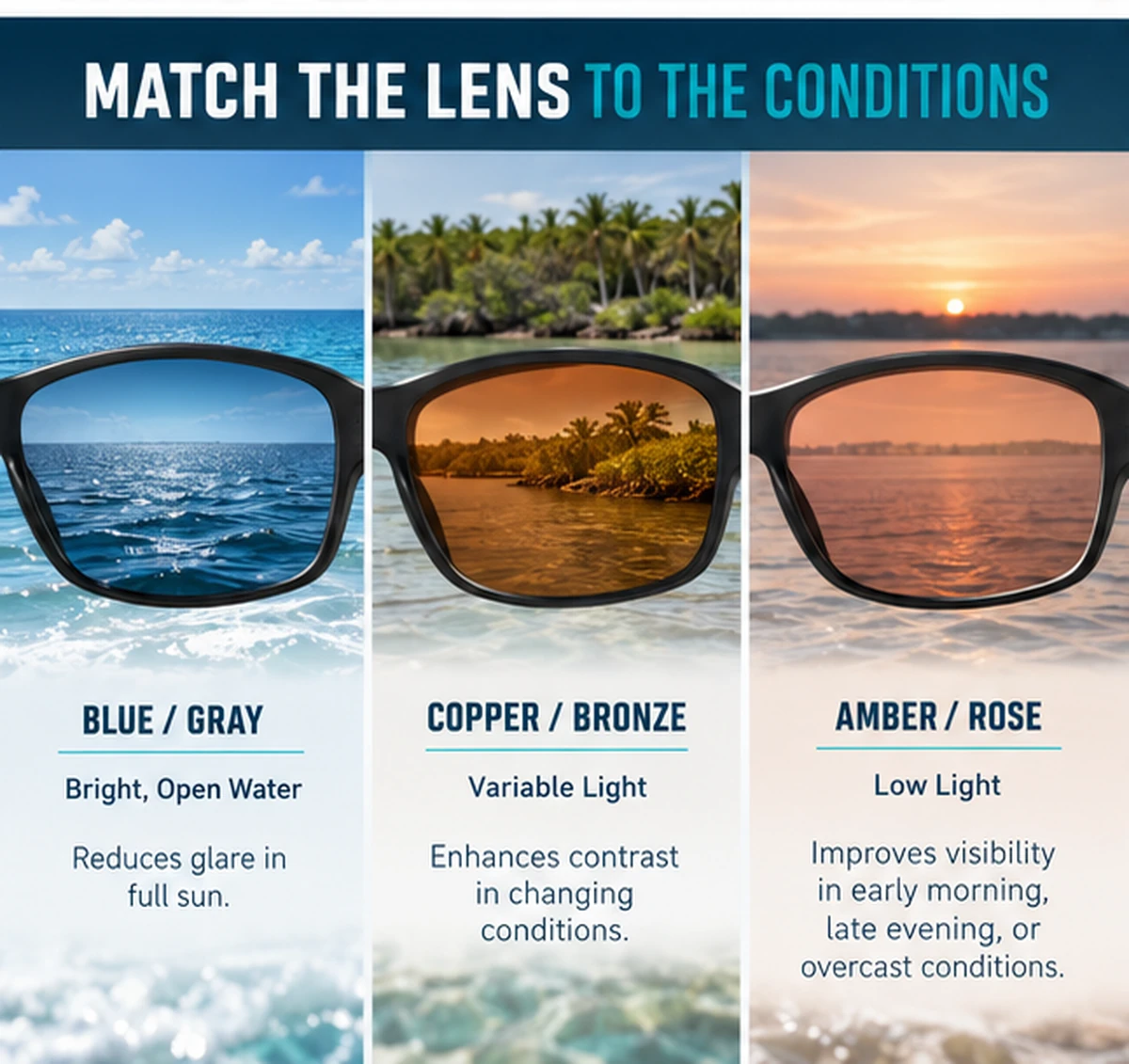
Polarization is the baseline feature for fishing because it reduces reflected glare from the water’s surface. After that, tint is the bigger decision. Very dark gray or blue-mirror lenses make the most sense in bright open water. Copper, bronze, and many green-mirror combinations are useful when you want more contrast in variable light. Amber and rose directions can help in lower light, but the exact transmission varies by manufacturer, so do not shop by color name alone.
Match the frame to your face before chasing features
A premium lens is wasted if the frame pinches your temples, slides down your nose, or leaves a large gap that lets sunlight in from the sides. Check the manufacturer’s stated fit and actual frame dimensions when they are available. The King Tide 8 is wide, the Cocho is extra large, the Southern Cross is XL, and the Hull Float is medium-large. Those labels are not interchangeable.
Glass vs polycarbonate vs nylon
Glass is attractive when optical clarity and scratch resistance are priorities, which is why it appears in several premium picks here. Its downside is weight. Polycarbonate is lighter and is a natural choice when impact resistance matters; the Leupold Switchback also adds a documented ANSI Z87.1+ rating. Nylon can be light and durable enough to support specialized designs such as the floating Hobie frame. There is no universal winner. Choose the material around the risk and comfort profile of your fishing.
Wrap, side shields, and ventilation
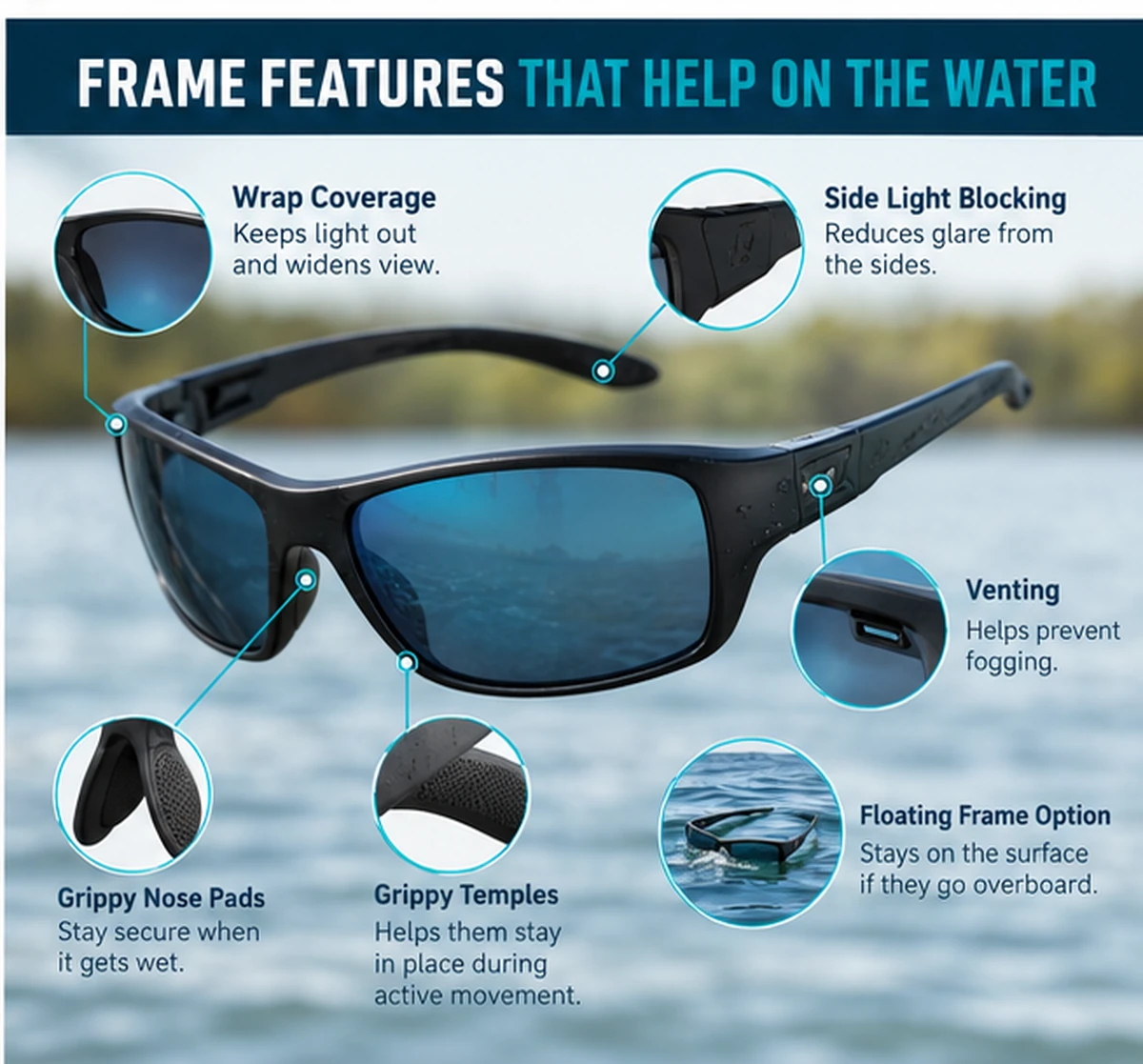
Deep wrap and side shields can reduce light leaking around the edges of the lens. That is useful on open water and when sight fishing. The trade-off is that more coverage can trap heat and moisture, so ventilation matters. Frames like the King Tide 8 and Cocho use venting as part of their coverage strategy. If you fish in humid heat, pay attention to this feature instead of treating it as cosmetic.
Do not ignore flotation and retainers
If you fish from a kayak or paddle craft, a floating frame can be more valuable than a small optics upgrade. The Hull Float is designed around that problem. Even with floating sunglasses, a simple retainer still makes sense in rough water because finding a small dark frame in chop is not guaranteed.
How we chose these sunglasses
This is a research-based buying guide. GearAndFish did not physically evaluate these sunglasses. We started with the current US search results for “best fishing sunglasses” to confirm that buyers are looking for a comparative shortlist. We then checked current manufacturer specifications and re-opened the exact Amazon.com US child listings used by every CTA.
Fishing sunglasses FAQ
What color polarized lens is best for fishing?
For harsh full sun and open water, gray-base or blue-mirror lenses are common choices because they control brightness without heavily changing color. Copper, bronze, and some green-mirror lenses can improve contrast in variable light and inshore environments. Amber or rose options can be useful in lower light. The manufacturer’s light-transmission guidance matters more than the color name by itself.
Are glass or polycarbonate lenses better for fishing?
Glass is a strong choice when clarity and scratch resistance are priorities, but it is heavier. Polycarbonate is lighter and better suited to impact-focused designs. Neither material is automatically better for every angler. Match the lens material to your comfort, impact risk, and fishing conditions.
Do fishing sunglasses need side shields?
No, but side shields can help when glare enters from the edges of the frame, especially on open water or during sight fishing. A well-fitting wrap frame without shields can still work very well. If you choose shields, ventilation becomes more important in hot and humid weather.
Are floating sunglasses worth it for kayak fishing?
They can be. A floating frame gives you a better chance of recovering sunglasses after a drop, which is a realistic problem on kayaks, paddle boards, and small boats. A retainer is still useful because flotation does not guarantee you will spot the frame immediately in chop or current.
How should fishing sunglasses fit?
They should stay secure without painful temple pressure, sit high enough to limit light leaking around the lenses, and remain stable when your face is wet. Use actual frame dimensions when possible, especially if you already know you need a narrow, wide, or extra-large fit.