
GearAndFish is reader-supported. As an Amazon Associate I earn from qualifying purchases. When you buy through links on our site, we may earn an affiliate commission, at no extra cost to you. Learn more.
Learning how to use a baitcaster reel is easier when you treat it as a system, not just a casting trick. The thumb bar releases the spool, the brakes help manage spool speed, the tension knob controls spool side play, and the star drag matters when a fish pulls back. Here is a practical sequence for getting comfortable with all four, from the first setup through your first retrieve and fish.
This is an instructional guide based on manufacturer documentation and established angling instruction, not a first-person account of using the equipment mentioned.
How to use a baitcaster reel in seven steps
- Attach it to a compatible casting rod and make sure the line is properly spooled.
- Learn where the thumb bar, spool, braking control, spool-tension knob, star drag and handle are located.
- Choose a practice weight that falls within the rod’s printed lure rating, and start with strong braking.
- Use the tension procedure specified for your reel rather than overtightening the knob.
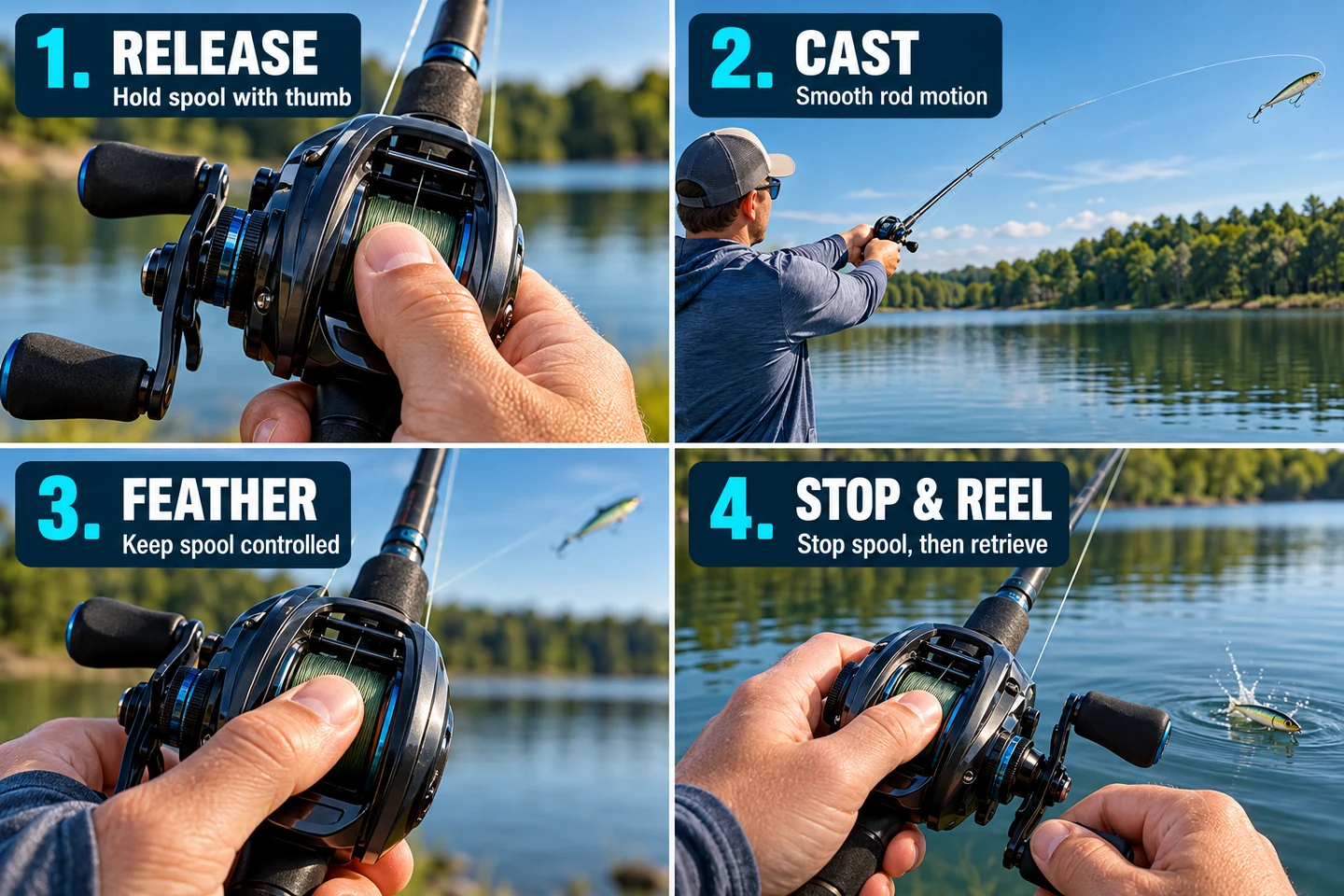
- Press the thumb bar with your thumb controlling the spool, then make a smooth cast and stop the spool as the weight lands.
- Turn the handle to engage the reel, then retrieve at a pace suited to the lure.
- When a fish takes the lure, set the hook appropriately and let the drag give line under a strong pull.
Know the controls before you make the first cast
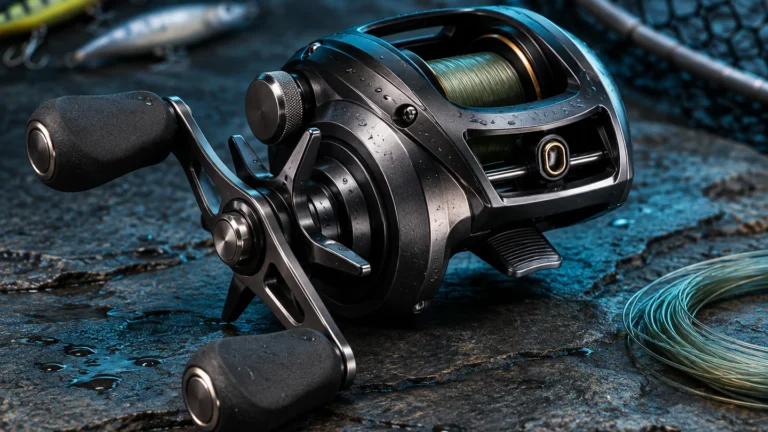
A baitcaster rides above a casting rod. The spool rotates to feed line during a cast, unlike a spinning reel’s fixed spool. Understanding which control does what prevents most beginner mix-ups.
| Control | What it actually does | When you use it |
|---|---|---|
| Thumb bar / clutch | Disengages the drive so the spool can release line. | Immediately before a cast or controlled drop. |
| Spool-tension knob | Adjusts mechanical pressure or spool side play, depending on reel design. | Initial mechanical setup according to your model manual. |
| Magnetic or centrifugal brakes | Help reduce unwanted spool rotation during the cast. | When adapting to a lure, wind conditions and your skill. |
| Star drag | Sets how much resistance the reel gives when a fish pulls line out. | Before fishing and while fighting fish, when adjustment is needed. |
| Handle and level wind | Retrieve line and distribute it across the spool. | During lure presentation, slack pickup and the fight. |
Thumb bar / clutch
What it actually does: Disengages the drive so the spool can release line.
When you use it: Immediately before a cast or controlled drop.
Spool-tension knob
What it actually does: Adjusts mechanical pressure or spool side play, depending on reel design.
When you use it: Initial mechanical setup according to your model manual.
Magnetic or centrifugal brakes
What it actually does: Help reduce unwanted spool rotation during the cast.
When you use it: When adapting to a lure, wind conditions and your skill.
Star drag
What it actually does: Sets how much resistance the reel gives when a fish pulls line out.
When you use it: Before fishing and while fighting fish, when adjustment is needed.
Handle and level wind
What it actually does: Retrieve line and distribute it across the spool.
When you use it: During lure presentation, slack pickup and the fight.
Keep these separate: tightening the star drag does not cure a backlash, and increasing the casting brake does not set fish-fighting drag. The control layout and adjustment method vary by reel, so check the exact manual before using a generic rule.
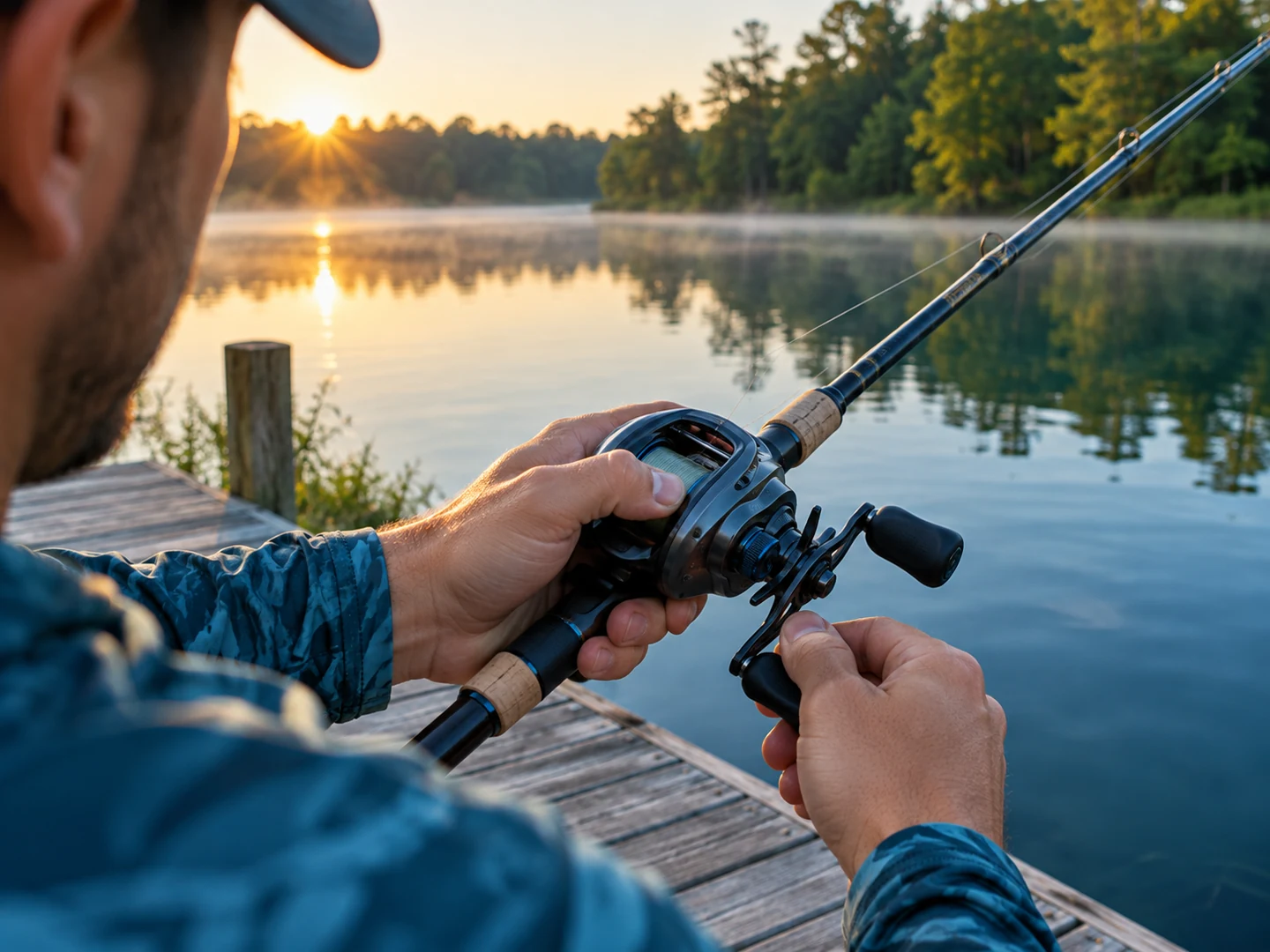
Set up the rod, line and practice weight
Match the reel to a casting rod
Use a rod labeled for casting, with its trigger grip and guide arrangement designed for a reel mounted on top. A conventional low-profile baitcaster is easiest to learn with a lure or casting plug that comfortably loads the rod. Very light finesse weights can be frustrating on ordinary baitcasting spools; specialized BFS tackle is a separate case.
Start with manageable line
Supple monofilament is often a forgiving practice material because it is relatively easy to handle and does not require braid-specific arbor precautions. A 12 lb mono is one plausible freshwater practice choice only if it fits the rod and reel ratings. It is not a universal prescription. If you already have suitable line on the reel, learn on that instead of buying another spool.
For the full threading, knot, backing and fill procedure, see the live GearAndFish guide on how to spool a baitcaster. This article focuses on what to do once the reel is ready to operate.
Optional line example: Berkley Trilene XL monofilament is sold in a 12 lb Fluorescent Clear/Blue 300-yard variant. Check the exact strength and spool length shown on the listing, since XL comes in many sizes and colors.
Practice somewhere safe
Choose an open area clear of people, power lines, vehicles, windows and branches. Use a hookless casting plug or remove hooks from a suitable practice weight. Wear eye protection if needed, keep bystanders out of the casting arc and never practice with an exposed hook around others.
How to set baitcaster brakes, tension and drag
1. Set the brake conservatively
If you have a magnetic brake dial, begin toward its stronger-braking end. If the reel has internal centrifugal pins or a digital control, use the beginner-oriented setting in its own instructions. A higher brake setting is a sensible starting point for consistency, even if it reduces distance. Some reels combine different systems; not every model has an external dial.
2. Adjust spool tension the way your reel requires
Older and many basic reels use a lure-drop adjustment: with the rod pointed into a safe open area and your thumb poised to stop the spool, release the clutch and fine-tune tension until the practice weight drops under control without an extended spool overrun when it stops. However, this is not a universal rule. Some newer baitcasters specify minimal side play or a factory-calibrated zero-adjust setting. On those reels, forcing a slow drop may only add unnecessary friction. Follow the current manual for your exact model.
3. Set fish-fighting drag separately
Turn the star drag to increase or decrease resistance as indicated by your reel. A sensible starting point allows line to slip under a strong, steady pull without giving it away during normal lure work. If you measure drag with a scale, adjust for the weakest link in the rod, line, leader and knot system, not for the reel’s advertised maximum. Do not crank the drag down simply to make the spool stop during a cast.
Remember: brakes and spool tension manage a cast; drag protects line when a fish pulls.

Make your first cast without fighting the reel
- Reel your practice weight to a safe, manageable distance from the rod tip. A short drop below the tip gives the rod room to load.
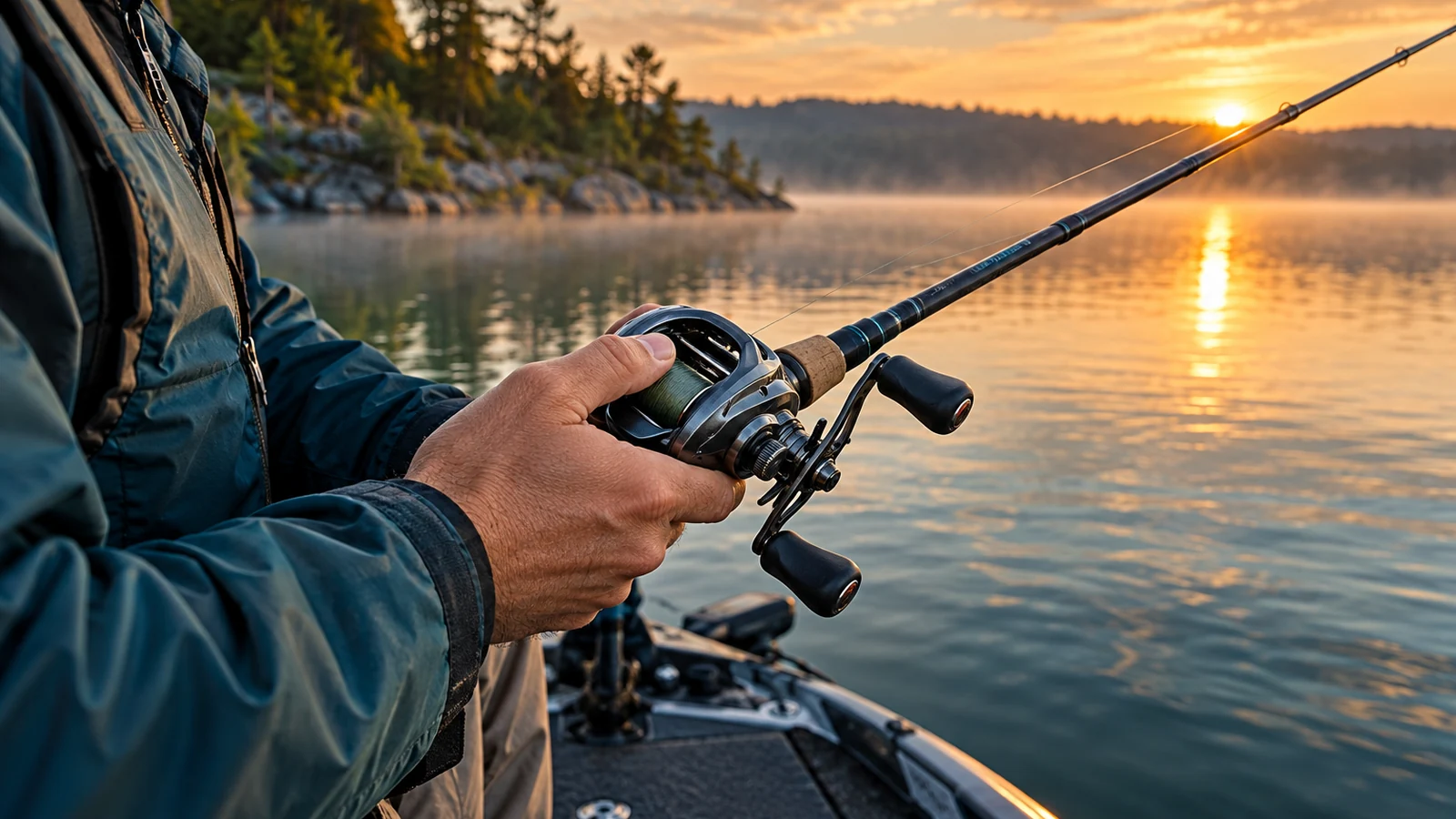
- Grip the rod comfortably. Press the thumb bar and keep the pad of your thumb on the spool so no line runs out yet.
- Make a smooth, controlled motion. Let the rod bend and release thumb pressure as the rod accelerates forward; do not whip the rod as hard as possible.
- Keep your thumb close enough to feather the turning spool. As the weight approaches the target, add pressure and stop the spool when it lands.
- Turn the handle to re-engage the drive, check that the line is settled and retrieve the plug.
Work on a clean, repeatable short cast first, not maximum distance. If you are repeatedly backlashing, increase braking, reduce casting force and restart with a weight the rod can cast properly. Because this article covers the whole reel, the detailed no-backlash casting sequence is intentionally kept brief.
What changes when the wind picks up?
A headwind slows the lure earlier while the spool still wants to turn. Cast lower and smoother where safe, and increase braking before trying to gain back distance. With a lighter lure, use a rod and line combination suited to its weight; tightening every setting cannot make an unsuitable setup cast well.
What to do after the lure hits the water
Engage the reel and collect slack
After landing the lure, press the spool firmly with your thumb, turn the handle to re-engage the clutch and begin retrieving. If a line loop sits loose on the spool, pause and correct it before reeling over it. Check that the level wind is laying line evenly.
Choose a retrieve that makes the lure work
A baitcaster is not a single-speed tool. Spinnerbaits and many crankbaits generally call for controlled, consistent pickup; soft plastics often involve a lift, pause and careful slack pickup. The reel’s gear ratio changes how quickly the spool turns per handle revolution, but actual line pickup also depends on spool diameter and how full it is. The technique matters more than chasing a specific ratio for beginner practice.
See fishing reel gear ratios explained for a more complete look at retrieve speed.
Use your thumb for more than casting
When a lure is sinking after you release the spool, your thumb can regulate the descent and keep slack from spilling off the reel. For a normal cast, stop the spool before the lure settles; for a short vertical drop, control line release deliberately and re-engage the reel when you are ready to work the bait.
Using a baitcaster when a fish bites
Keep a secure grip, collect slack quickly and make a hookset suited to your lure’s hook and rod action. Maintain pressure while letting the rod absorb surges. If the fish pulls hard enough to exceed your drag setting, let line slip rather than thumb-locking the spool. The drag system is intended to release line under load.
Keep hands clear of the level wind and rotating spool. Never wrap fishing line around fingers to gain leverage. When the fish is close, guide it with steady rod pressure and use an appropriately sized landing net when practical. Avoid lifting a heavy fish straight out of the water with the rod tip.
Baitcaster troubleshooting: diagnose the symptom, not just the reel
| What happens | Likely cause to check | First useful fix |
|---|---|---|
| Loose coils burst up during the cast | Spool overruns the outgoing line. | Stop spool with thumb, increase brakes, slow down the cast. |
| Short casts with no obvious backlash | Too much brake/tension, poor rod loading or unsuitable lure weight. | Confirm rod rating and reel-specific adjustment before reducing brake gradually. |
| Spool spins but line stays loose | Slack, incorrect line packing or line slip at the arbor. | Inspect the spool and re-spool correctly when needed. |
| Handle turns but lure barely moves | Drag slipping, line pack slipping around spool or clutch not engaged. | Check drag and arbor grip; do not disassemble on the water. |
| Reel clicks or feels rough after grit or water | Contamination or a mechanical issue. | Stop forcing it, consult service instructions and clean appropriately. |
Loose coils burst up during the cast
Likely cause to check: Spool overruns the outgoing line.
First useful fix: Stop spool with thumb, increase brakes, slow down the cast.
Short casts with no obvious backlash
Likely cause to check: Too much brake/tension, poor rod loading or unsuitable lure weight.
First useful fix: Confirm rod rating and reel-specific adjustment before reducing brake gradually.
Spool spins but line stays loose
Likely cause to check: Slack, incorrect line packing or line slip at the arbor.
First useful fix: Inspect the spool and re-spool correctly when needed.
Handle turns but lure barely moves
Likely cause to check: Drag slipping, line pack slipping around spool or clutch not engaged.
First useful fix: Check drag and arbor grip; do not disassemble on the water.
Reel clicks or feels rough after grit or water
Likely cause to check: Contamination or a mechanical issue.
First useful fix: Stop forcing it, consult service instructions and clean appropriately.
How to untangle a basic backlash
Do not yank the lure and tighten the loops into knots. Stop the spool, ease out the loose coils and pull the main line steadily. When a loop catches, work the crossing strand free rather than pulling harder. If necessary, cut away damaged line and re-spool enough to restore a safe, even line pack. A deeply buried braid dig-in or frayed line may require more line removal than a loose mono overrun.
A current baitcaster that illustrates the controls
You do not need to purchase a new reel to learn these steps. If you are starting from scratch, the Abu Garcia Max X Low Profile Baitcast Reel, MAX5XLP-L is one current example of the basic control layout: left-hand retrieve, an externally adjustable MagTrax magnetic brake, star drag and a 6.8:1 gear ratio. The exact mapped variant matters: this is the left-hand reel, not a generic link to the entire Max family or an older Max 4 model.
It is a useful example for this lesson because the brake dial is accessible. It will not eliminate the need to learn thumb control, and no reel should be called backlash-proof.
Before buying, check retrieve-hand preference, reel seat fit, intended water environment and current listing details. If your current reel already works, spend time practicing before upgrading.
A simple 20-minute first practice session
- Minutes 0-5: identify the controls with the reel stationary; set brake and tension according to the manual.
- Minutes 5-10: release and stop a hookless casting plug gently, learning how little thumb movement changes spool speed.
- Minutes 10-15: aim short casts at a wide, safe target, stopping the spool as the plug lands.
- Minutes 15-20: retrieve smoothly, deliberately collect slack and repeat without changing more than one setting at a time.
Once you can repeat short casts with minimal tangles, reduce braking a small amount if your reel permits it. Make one adjustment at a time so you understand the result. Control and consistency are more useful than an impressive first-session distance.
How to use a baitcaster: FAQ
Do you hold your thumb on the spool the whole time?
Keep your thumb close enough to feather spool speed during the cast, then stop the spool as the lure lands. Beginners may use very light contact during flight; with practice, the exact pressure becomes more subtle.
What is the difference between baitcaster brakes and drag?
Brakes manage spool speed during a cast to reduce overrun. Star drag controls resistance when line is pulled out under load, especially by a fish. They solve different problems.
Should I set spool tension so the lure falls slowly?
That is a common starting procedure on many traditional baitcasters, but not every modern reel uses it. Some call for minimal spool side play or a preset zero-adjust position. Always prioritize the exact reel manual.
Can I use a baitcaster with a spinning rod?
Use a casting rod for a baitcasting reel. Rod layout, reel position, grip and guides are designed as a system. A spinning rod is not an appropriate substitute for normal baitcasting use.
What is easier for a first fishing reel, spinning or baitcasting?
Spinning gear is generally more forgiving for a complete beginner and for very light presentations. Baitcasting makes sense when you want direct spool control and repeated target casting and are willing to practice. See the full baitcaster vs spinning reel comparison.
Does a magnetic brake mean I cannot backlash?
No. A brake helps control the spool, but overly forceful casts, wind, poor line lay, unsuitable lures and late thumb pressure can still cause tangles.
Sources and editorial approach
This guide separates general reel mechanics from model-specific setup because baitcaster brake and tension systems vary. Technical reference points include Zebco Academy’s baitcast instruction, KastKing’s thumb-control explainer, and Abu Garcia’s Max X specifications. Product examples are tied to specific US Amazon ASINs, not a claim of personal performance testing. Always defer to the supplied manual for your exact reel.