
GearAndFish is reader-supported. As an Amazon Associate I earn from qualifying purchases. When you buy through links on our site, we may earn an affiliate commission, at no extra cost to you. Learn more.
Learning how to spool a spincast reel is mostly about doing things in the right order. Remove the nose cone, feed the new line through its front opening, attach the line to the spool arbor, reinstall the cover, and wind slowly under light tension. The easy-to-miss detail is threading the cone before tying the line to the arbor.
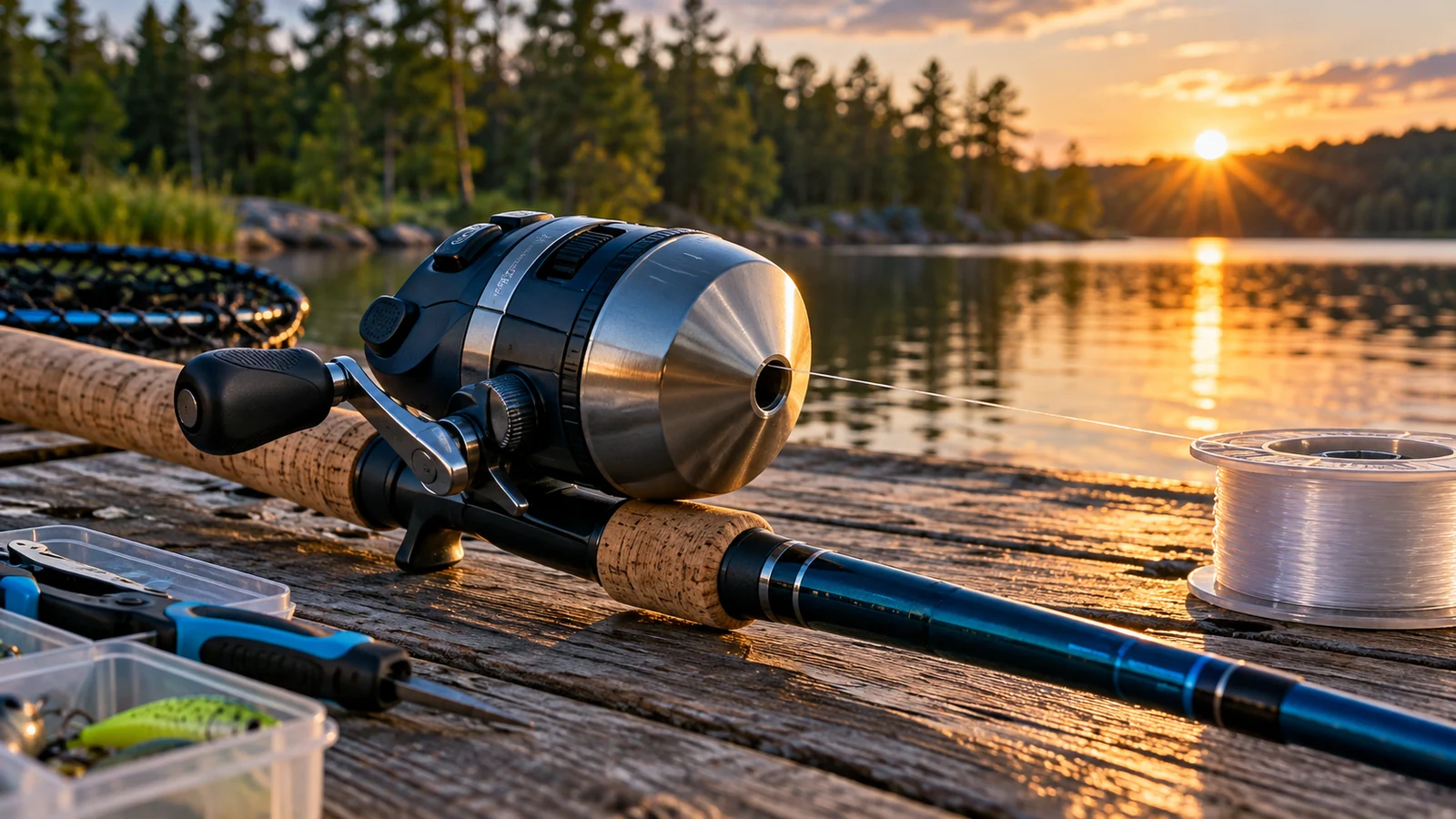
A spincast reel is the closed-face, push-button reel that sits on top of the rod. Its spool is hidden, so you cannot watch the line level while the cover is installed. A few short checks make the difference between a clean refill and a jammed reel. These steps apply to common front-cover spincasters, including many Zebco models; follow your reel’s manual if the cover release or line capacity differs.
How to spool a spincast reel in 7 steps
- Mount the reel on its rod and remove the old line.
- Turn the nose cone counterclockwise to remove it, or use your model’s bayonet release.
- Feed fresh monofilament through the cone’s front hole, then tie it to the spool arbor.
- Reinstall the front cover without pinching the line.
- Apply light, steady tension to the incoming line and turn the reel handle slowly.
- Stop periodically, remove the cover, and check line lay and twist.
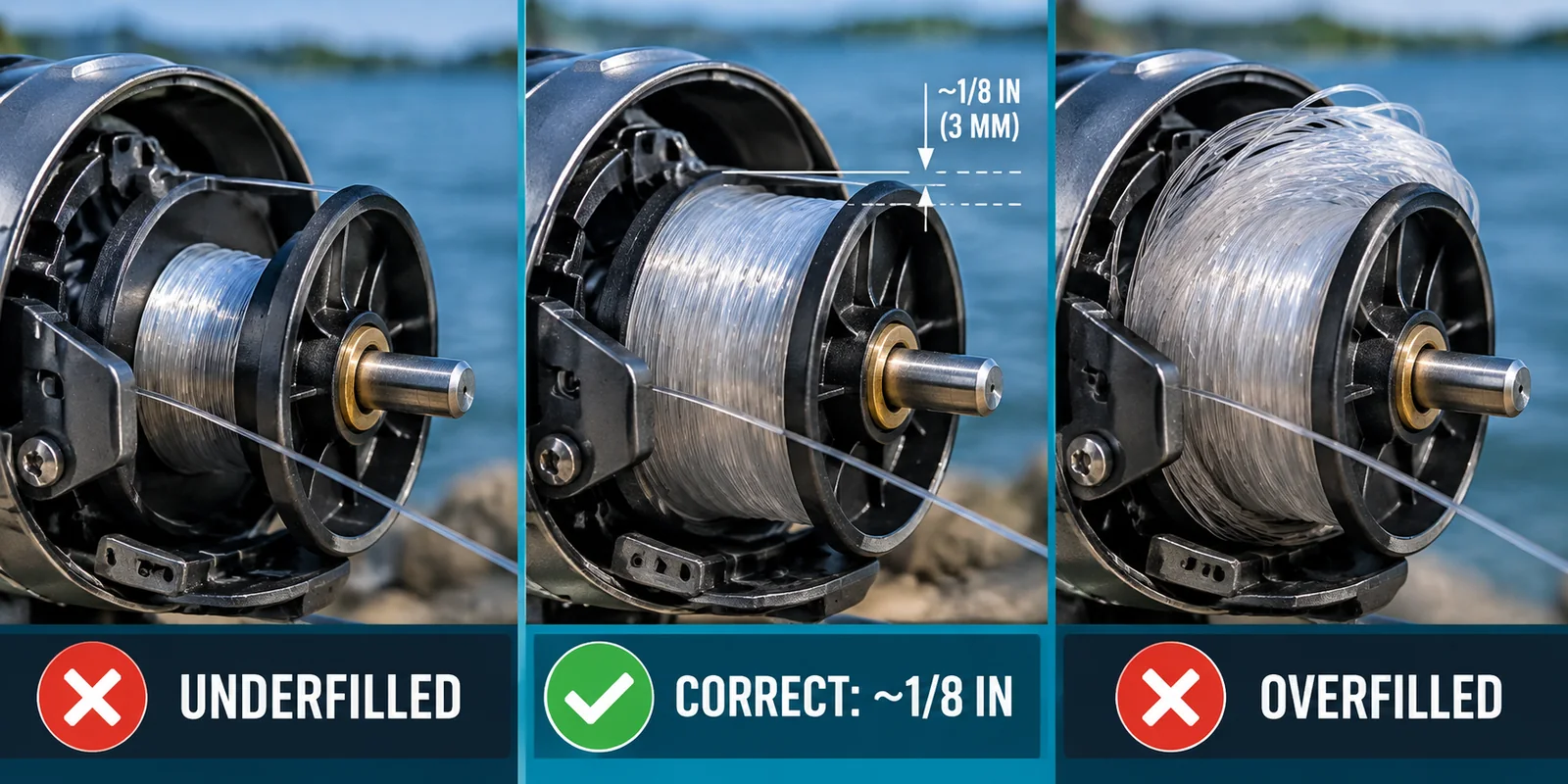
- Stop filling when the line is approximately 1/8 inch below the spool lip, or at your manufacturer’s fill mark.
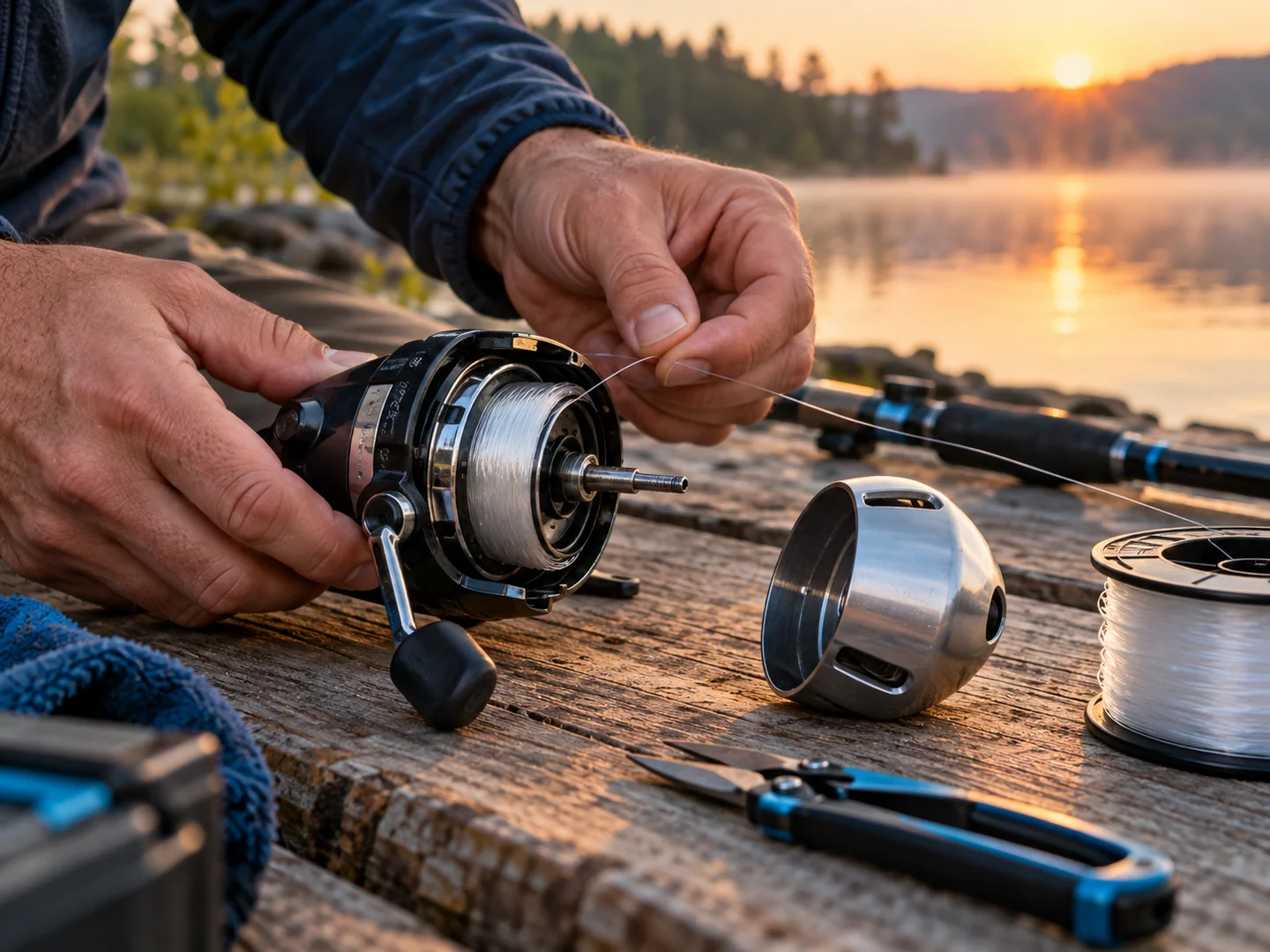
What you need before you start
- A spincast reel mounted securely on its rod.
- Fresh fishing line in the diameter and pound-test range printed for that exact reel. Supple monofilament is the safest default for many basic closed-face reels.
- Scissors or line cutters, plus a clean cloth for controlling tension.
- A clear tabletop or bench so the nose cone and small parts cannot roll away.
You do not need a powered line spooler. A helper can hold the filler spool or you can lay it on a clean, level surface and check for twist as you wind. The important factors are line path, controlled tension, and the manufacturer’s capacity recommendation.
For a general freshwater spincast model rated for 8-pound mono, Berkley Trilene XL Clear, 8 lb, 330 yd is a concrete refill option. The 330-yard refill spool supplies more line than many spincast reels will hold, so fill only to your reel’s rated capacity. Confirm its rating before using it. Check Trilene XL on Amazon
Choose the right line before removing the cover
Matching line to the actual reel matters more than following a universal ‘best pound test’ rule. A compact panfish spincaster may be designed for lighter mono than a larger bait-oriented model. Heavier or stiffer line takes up more space, creates tighter coils, and can jam against the pickup mechanism.
| Line choice | When it makes sense | Watch for |
|---|---|---|
| Supple monofilament | Best starting point for most ordinary freshwater spincasters. | Stay within the reel’s stated capacity and diameter. |
| Fluorocarbon main line | Only if your reel’s manufacturer permits the specific diameter. | Stiff coils and extra memory in small covered spools. |
| Braided line | Only if the exact reel is approved to use braid. | Pickup-pin compatibility and tangles inside the cover. |
Not every spincast reel accepts braid. Zebco specifically warns that braided or overly heavy line can cause casting trouble in some models, so the fact that a line fits through the front hole is not proof it is compatible. Some modern spincasters have different line guidance: the model manual takes precedence.
For a reel rated for 10-pound mono, Zebco Cajun Smooth Cast 10 lb, 330 yd is another relevant replacement-line example. It is not a recommendation to put 10-pound line on a smaller reel. Check Cajun Smooth Cast on Amazon
How to put line on a spincast reel, step by step
1. Secure the reel and strip the old line
Mounting the reel on its rod gives you something stable to hold while winding. Cut off any lure or terminal tackle and pull off the existing line. If the old line is wrapped behind the spinnerhead, do not simply reel harder. Remove the front cover and consult the manual before disassembling additional parts. Look for grooves, rough edges, or damaged pickup pins before loading fresh line.
2. Remove the nose cone
On a threaded Zebco-style front cover, turn the cone counterclockwise. Some reels use a bayonet-style fitting: turn until it releases, then slide the cover forward. Avoid tools and force. You usually do not need to remove the metal spinnerhead just to replace line.
3. Pass line through the front-cover opening
Take the free end from your filler spool and pass it through the small central hole in the removed nose cone from the outside toward the reel. Slide the cover a short distance up the line so you have enough room to tie a knot. This ordering matters. If you attach the line to the reel first and forget the front cover, you will have to untie it and start again.
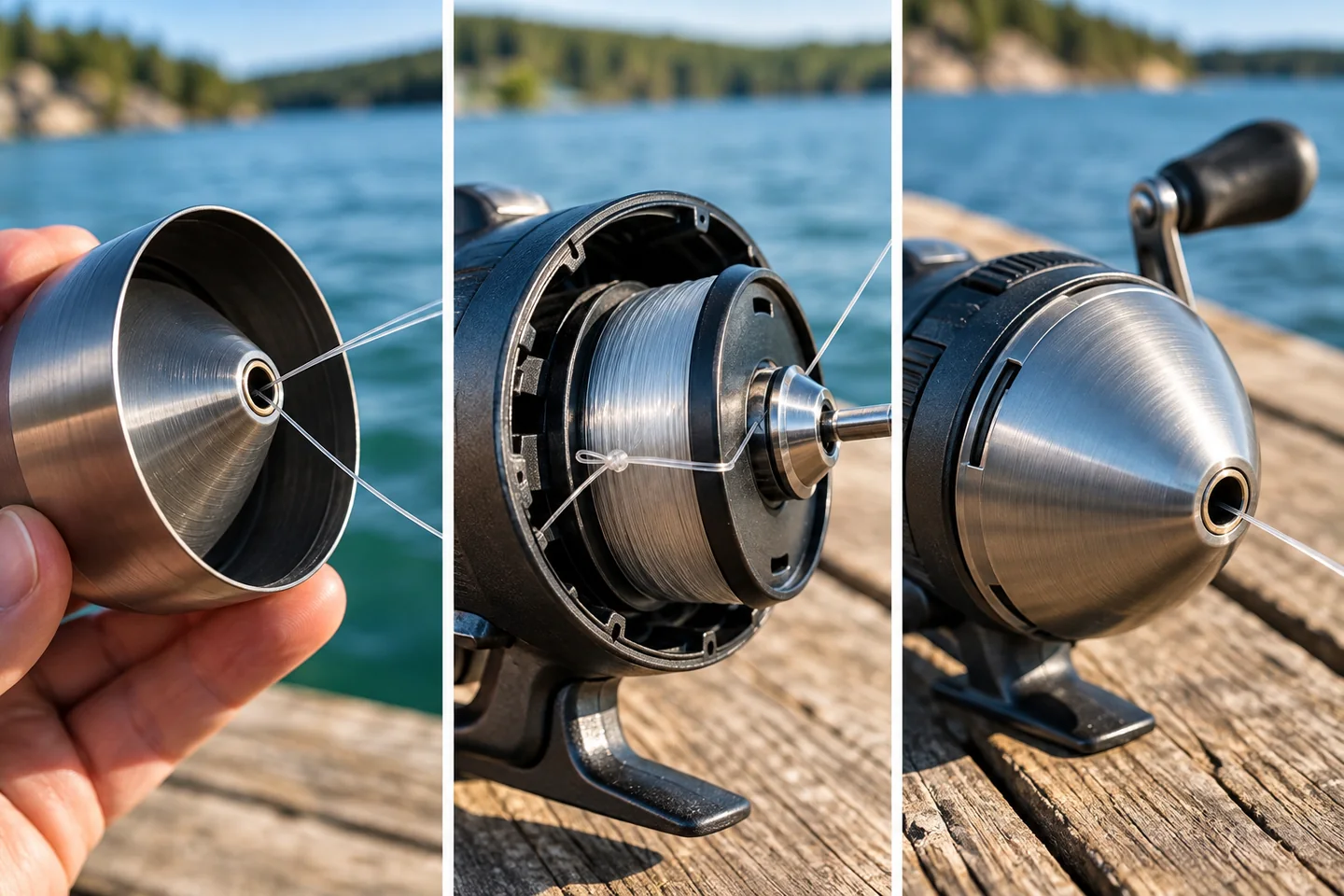
4. Tie an arbor knot around the spool
Wrap the line around the exposed spool arbor, then tie an arbor knot: tie an overhand knot around the standing line, and a second small overhand stopper knot at the loose tag end. Pull the standing line until the first knot slides down and cinches around the arbor, then trim the excess. Check that the line is anchored and not wrapped around the spinnerhead, drag components, or reel shaft.
Some small spincast spools are awkward to reach. If the knot cannot be placed without removing the spinnerhead, follow the disassembly instructions for your specific model instead of prying at the pickup mechanism.
5. Reinstall the cone and start winding
Thread the front cover back into position with the line passing freely through its hole. Reattach it gently; do not cross-thread the cover or trap the mono under the rim. Pinch the incoming line lightly through a clean cloth and turn the handle at a moderate, steady pace. The cloth should create just enough resistance for tidy wraps, not enough to stretch or heat the line.
6. Check twist and line level as you go
After a short run of handle turns, stop and look at the loose line between the refill spool and your rod. If it builds into tight corkscrew loops, change the orientation of the filler spool and try again. Zebco’s spincast manual explicitly recommends flipping the supply spool if significant twist appears. Because the reel spool is covered, remove the nose cone periodically to inspect the line level.
7. Stop just below the spool lip, then thread the guides
For many Zebco spincast reels, the manufacturer’s target is within about 1/8 inch of the spool’s upper lip. The goal is a full but not bulging spool. Do not keep cranking until line presses against the underside of the nose cone. Replace the cover and run the line through each rod guide from the reel toward the tip, checking that it is not wrapped around the blank. Add a hook, practice plug, or lure only after confirming the line feeds smoothly.
Do this quick check before your first cast
- With the rod pointed somewhere safe, press the thumb button and gently pull a little line from the rod tip. It should pay out without grinding or binding.
- Release the button, then crank the handle to reengage the pickup mechanism. Check that the reel retrieves line normally.
- Inspect the exposed portion for tight loops or twists, and make a short test cast with a safe practice plug outdoors.
If the reel retrieves nothing, do not immediately add more line. The pickup pin may not have engaged, the line may be trapped under the cover, or the old line may still be tangled behind the spinnerhead.
Common spincast spooling problems and fixes
The handle turns, but no line comes in
Remove the cover and check the line path. The line should come off the spool and pass through the opening in the front cone, not through a random hole in the spinnerhead. Check whether the pickup pin extends when the handle is turned. If the mechanism does not engage, consult the reel’s model-specific instructions; adding extra turns of line will not fix a damaged pickup pin.
Fresh line jams inside the nose cone
Check first for overfilling or excessively thick line. Remove enough line to restore the manufacturer’s fill gap and inspect the wraps. Replace kinked or nicked sections instead of hiding them beneath new layers. Tighten a loose cover only by hand.
Line forms corkscrews or coils
Stop winding and test the supply-spool orientation. Severe memory can also be a sign of old, stiff mono or line that is too large for the spool. Pull off the badly twisted section and reload slowly with gentle tension. Do not expect the closed front cover to eliminate twist already introduced during spooling.
The new line is too loose or casts poorly
Loose wraps suggest that the refill went on without enough tension. Strip off the loose section and rewind it firmly but gently. If the spool is significantly underfilled, add line only up to the reel’s permitted fill level. Poor casting can also stem from a lure too light for the rod, worn line, or a rough front-cone opening; line quantity is not the only variable.
Can I just tie fresh mono to the old line?
You can join line in some fishing setups, but a bulky connection buried inside a small spincast reel may snag during payout. For an ordinary low-capacity spincaster, replacing old damaged mono completely is often simpler than joining a short top-up section to unknown line.
Sources and editorial approach
This research-based instructional guide does not imply original equipment testing by GearAndFish. The removal, threading, winding, twist-check, and fill-level sequence was checked against Zebco’s spincast troubleshooting guidance and the official Zebco spincast manual. Amazon examples are model-specific line listings, not blanket compatibility promises. Check your actual reel’s line-capacity marking and manual before ordering.
Spincast line-spooling FAQ
Do I have to remove the front cover to spool a spincast reel?
For most common closed-face spincasters, yes. Remove the cone to access the spool arbor and tie the line. Thread the new line through the cone’s front hole before attaching it, then reinstall the cover before winding.
How full should a spincast reel be?
Many Zebco spincast reels call for a fill level about 1/8 inch below the spool lip. Use your exact manufacturer’s fill mark or written instructions if they differ.
Can I put braided line on my spincast reel?
Not automatically. Some spincast pickup systems do not handle braid properly, and Zebco warns that braided line may not work with certain spincast reels. Confirm your exact model supports the braid and diameter you want.
What line should a beginner use in a spincast reel?
A manageable monofilament in the pound-test and diameter range recommended for the reel is a sensible starting point. The correct number depends on the particular model, not just the fact that it is a spincast.