
GearAndFish is reader-supported. As an Amazon Associate I earn from qualifying purchases. When you buy through links on our site, we may earn an affiliate commission, at no extra cost to you. Learn more.
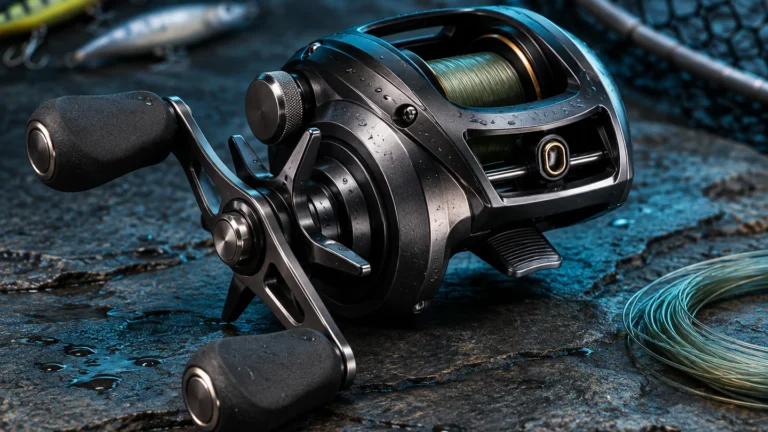
If your baitcaster feels gritty, casts less freely than it used to, or has picked up dust and spray, start with a careful exterior clean. A basic service does not require taking the gearbox apart. The important part is knowing which surfaces to clean, which accessible bearings may need a tiny drop of oil, and which mechanisms to leave alone.
How to clean a baitcaster reel without overdoing it
Wipe dirt from the reel, open the spool-side cover only as your model’s manual allows, remove the spool, clean accessible dry surfaces with a lint-free cloth or swab, and let everything dry. Apply a single small drop of reel oil to a serviceable spool bearing only when the manufacturer specifies it. Reassemble, check the brakes and spool rotation, and back off the drag for storage. Keep penetrating sprays, excess grease, and oil out of the drag and one-way clutch.
What you need for a basic clean
- A clean towel or tray so small parts cannot roll away.
- Two lint-free microfiber cloths, a soft toothbrush, and cotton swabs.
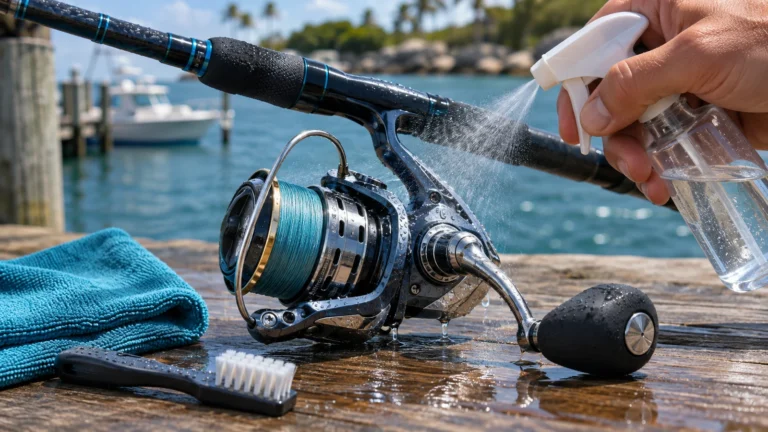
- A little fresh water for a damp exterior wipe; use a gentle rinse only if your reel manual permits it.
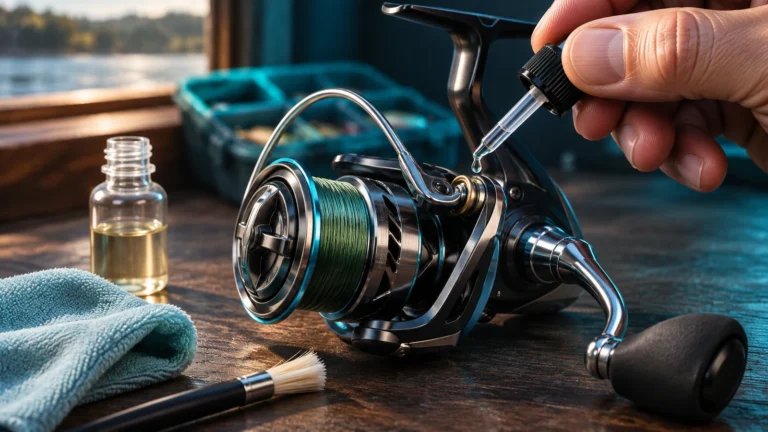
- Reel-specific light oil with a precision tip, if your model has serviceable oil points.
- The model-specific manual or exploded diagram, especially for the brake-side cover and spool.
- Optional reel grease for a documented service point, not as a substitute for oil in spool bearings.
Keep the spool’s line secured with a small piece of tape or a soft band if you remove it. Do not let the exposed spool shaft snag line or collect grit.
How to clean a baitcaster reel: 7 practical steps
1. Check the reel before opening anything
Turn the handle slowly, disengage the spool and check that it rotates freely, then re-engage and test the drag. Note any scraping, clicking, uneven level-wind travel, or sticky spool release. This gives you a baseline after cleaning. A badly grinding or corroded reel needs diagnosis, not just more oil.
2. Remove surface dirt first
Wipe the frame, handle, star drag, thumb bar and line guide with a lightly dampened cloth. Lift dried mud or debris using a soft brush. Avoid driving dirt through the level-wind slot, brake openings or around the spool. If you fish in saltwater, follow the exact low-pressure rinse instructions for that reel; a powerful hose or immersion is not a universal cleaning method.
3. Open the palm-side plate and lift out the spool only if permitted
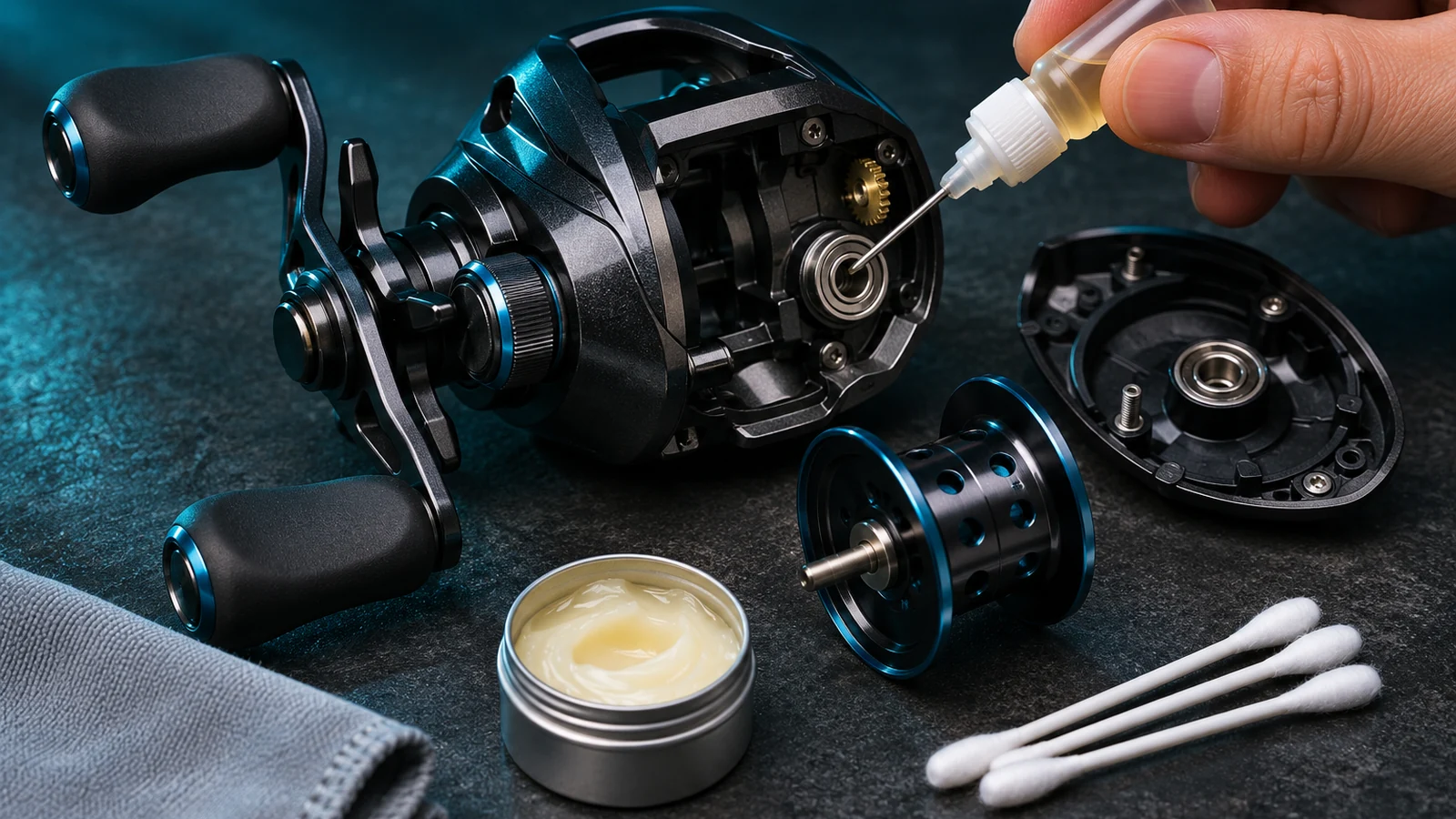
Many modern low-profile baitcasters have a latch or twist-off side plate, but others use a different design. Turn the reel off the rod if that gives better control, place it over the parts tray, and follow the model’s release sequence. Keep track of the orientation of the spool and any loose retainers. Do not force a cover that will not release.
4. Clean the spool compartment and line guide
Use a dry microfiber cloth or swab to lift debris from the spool cavity, spool shaft, and accessible side-plate surfaces. Clean the exposed level-wind guide with a soft brush, paying attention to trapped sand and plant fibers. If an accessible metal surface has stubborn grime, check whether your maker permits a cleaner there; do not flood the assembly with solvent. A spool bearing packed with grease, shielded, sealed or otherwise designated as low-maintenance may not be suitable for DIY flushing.
5. Clean the braking system according to its design
A magnetic brake does not get the same treatment as a centrifugal brake. Keep magnet faces and adjacent friction surfaces free of loose dirt and excess lubricant. For certain Shimano SVS systems, Shimano describes swabbing the brass brake pipe and brake blocks with alcohol, then applying a very light film of Bantam oil with a clean swab. That is a model-specific procedure, not permission to oil every brake assembly. For other systems, follow the original manual.
6. Oil only the approved service points
A serviceable spool support bearing may need only one small drop of reel oil; Abu Garcia and Daiwa both identify spool support bearings as common oil points on applicable baitcasters. Some models use factory-greased or sealed bearings, so check your specific reel before adding anything. Avoid soaking bearings or coating the entire spool shaft by default. If the handle-knob bearing or level-wind mechanism has a documented lubrication point, use the lubricant and amount called for in its manual.
Grease is different: gear teeth and certain sliding components use reel grease during a deeper service. You do not need to expose the main gear merely to perform routine cleaning. Drag washers may require a dedicated manufacturer-approved drag grease, while other drag materials must not be greased. Never put general oil onto the drag stack or one-way anti-reverse clutch as a catch-all fix.
7. Reassemble and check the reel
Put the spool back without forcing the shaft, secure the cover, and restore spool tension and brake settings. Make a few careful test turns and a short, safe practice cast when appropriate. The level wind should track normally, the thumb bar should engage and release cleanly, and the spool should not rub the frame. Loosen the star drag for longer storage after the reel is fully dry.
Where to use oil, grease, or no lubricant
| Part | What to do | Why it matters |
|---|---|---|
| Serviceable spool bearing | A tiny drop of reel oil if the reel maker approves | Too much lubricant can add resistance or contaminate nearby parts. |
| Level-wind / worm gear | Clean exposed debris; lubricate with model-specified oil or grease | Open mechanisms collect grit, but lubricant choice varies. |
| Main and pinion gears | Model-approved reel grease during deeper service | Gear grease should not be sprayed blindly into an assembled reel. |
| Brake assembly | Follow the exact system instructions | Some friction brakes need a specific treatment; others must remain clean and dry. |
| Drag stack / anti-reverse clutch | Do not apply general reel oil | Wrong lubricant can impair grip or drag consistency. |
Even reels in the same brand can use different lubricants and lubrication schedules. The schematic or manual for your exact model wins over a universal reel-care chart.
Three useful Amazon US supplies for reel maintenance
You do not need to buy all three. Choose an oil if your reel calls for light bearing lubrication, a care kit if you also need a cleaning product, or grease if you plan an approved deeper service. These are maintenance supplies, not a claim that every formula is compatible with every reel.
Lucas Oil 10690 Fishing Reel Oil, 1 oz
A compact bottle with a needle-style applicator for placing a small drop exactly where a reel manual calls for oil. The maker lists it for freshwater and saltwater fishing reels. It is not a replacement for the specific brake-system oil required on some reels.
Ardent Freshwater Reel Care 3-Pack, 5079-A
Combines Reel Kleen cleaner, Reel Butter Oil and Reel Butter Grease. It is a convenient way to keep the cleaning and lubrication products together for freshwater equipment. For saltwater use or sealed components, check the reel manual and choose an appropriate product.
PENN Precision Reel Grease, 2 oz
Reel-specific grease intended for applicable gear-service points, particularly useful when doing a documented internal service. It is not meant to be packed into spool bearings or spread over brake faces. For an ordinary wipe-and-oil session, you may not need grease at all.
If the reel still feels rough after cleaning
It casts poorly but retrieves smoothly
Recheck the spool tension, brake setting, line fill and spool contact points before blaming the gear train. An oily or dirty brake surface can also affect a model that relies on friction brakes. If a bearing sounds gritty or looks corroded, replacement or professional service is often more appropriate than repeated oiling.
The handle feels gritty or the level wind binds
Debris around the worm gear or pawl may be the issue. Clean accessible dirt, but do not force the handle if the guide is jammed. Worn gears or a damaged pawl may need parts rather than lubricant.
The drag slips or the handle turns backward
Stop adding oil. Contamination of the drag stack or the anti-reverse mechanism is a possible cause, and the repair is model-specific. Seek service if the symptom persists.
There is visible corrosion or the reel was submerged
Saltwater immersion and internal corrosion deserve prompt service even if the reel still turns. Wiping and oiling the outside cannot confirm that internal bearings and gearing are undamaged.
How often should you clean and oil a baitcaster?
Wipe off visible dirt after every trip. After salt or sandy conditions, follow the reel maker’s approved rinse-and-dry instructions promptly. Inspect accessible parts when casting or retrieve feel changes; lubricate only at the model’s indicated intervals or when an approved service point needs it. Heavy use may justify professional annual servicing, but there is no single safe oil-every-X-trips rule for all baitcasters.
If you remove line during a deeper cleaning, use our guide to spooling a baitcaster before getting back on the water. Keeping the line evenly packed and correctly routed through the level wind helps you distinguish line trouble from mechanical problems.
Baitcaster cleaning FAQ
Can I use WD-40 to clean a baitcasting reel?
Avoid spraying general-purpose penetrating products inside the reel. Such sprays can displace factory grease or reach the drag and brake system. Use a cloth and the cleaner or lubricant approved for your specific reel instead.
Do I need to take my baitcaster completely apart?
No. Basic upkeep usually consists of an exterior clean plus accessible spool-side maintenance, if the manual allows it. Internal gearbox disassembly is a separate service with small parts and model-specific steps.
Should baitcaster spool bearings get oil or grease?
Many serviceable spool bearings take a very small amount of reel oil, but some factory-greased, shielded or sealed bearings have different instructions. Check the exact reel model before adding lubricant.
Can I rinse my baitcaster under a faucet?
Only when your model’s instructions allow it, and then at low pressure. Do not immerse it or blast water through openings. A damp exterior wipe is a safer default when the reel’s water-cleaning instructions are unknown.
About this guide
This is an instructional synthesis of reel-manufacturer maintenance guidance, not a claim of GearAndFish field testing or teardown of a specific model. Shimano, Daiwa and Abu Garcia instructions differ in important details. Check the manual for your exact baitcaster before removing components or applying lubricant.