
GearAndFish is reader-supported. As an Amazon Associate I earn from qualifying purchases. When you buy through links on our site, we may earn an affiliate commission, at no extra cost to you. Learn more.
Here is how to clean a fishing reel after saltwater use: remove surface salt with a gentle freshwater rinse or wipe as your reel’s manual directs, dry the outside, and let it air-dry before storage. Do not blast the reel with a hose or soak the assembled reel. A quick after-trip routine matters more than buying an elaborate cleaning kit.
This is a model-aware after-saltwater care guide, not a universal teardown procedure. We compared manufacturer maintenance instructions for different reel types; if your reel’s manual calls for a different cleaning sequence, follow that instruction.
The safe routine: gentle freshwater, dry thoroughly, inspect
For an ordinary salt-spray day: remove visible grit, secure the drag if your manufacturer specifies it, rinse with a light freshwater mist, wipe away droplets, air-dry fully, then loosen the drag for storage if your reel’s manual recommends it. If the reel was dunked, is grinding, or has a suddenly sticky drag, stop and arrange model-specific service rather than rinsing harder.
Before you clean: was it splashed, sandy, or submerged?
Not every saltwater exposure calls for the same response. A spinning reel that took a little sea spray needs a different level of attention from a conventional reel that fell into the surf or a fly reel with a removable spool.
| What happened | First move | What to avoid |
|---|---|---|
| Normal spray, no grit | Follow the approved gentle rinse or damp-wipe routine; dry fully. | Pressure washing, soaking the assembled reel. |
| Sand around spool, rotor, or levelwind | Keep the handle still, remove loose grit gently, check the model’s access instructions. | Cranking grit into the mechanism. |
| Reel fell into saltwater | Check the manufacturer’s immersion instructions and arrange prompt inspection or professional service when required. | Assuming an exterior rinse has cleaned internal bearings, gears, or drag washers. |
| Gritty feel, corrosion, or uneven drag | Stop using it until the affected parts can be inspected. | Flooding the reel with oil to hide a problem. |
A reel sold as sealed, water-resistant, or saltwater-capable still has care limits. Those labels are not permission to pressure-wash it. Fly-reel designs can differ especially: for example, some manufacturers specifically allow cleaning a detached spool in water. Use the exact instructions for your reel.
What you actually need
- Clean freshwater in a spray bottle, a soft-flow faucet, or a hose set to a gentle mist.
- Two clean, soft cloths, ideally microfiber: one for damp cleaning and one for drying.
- A soft brush or cotton swab for accessible exterior crevices, used without pushing sand inward.
- Your reel’s service manual and any model-approved lubricant for occasional maintenance.
Plain freshwater and a cloth are enough for many normal after-trip cleanups. Specialized products are optional, and cleaner or lubricant should never be sprayed into the internals just because a bottle says it is intended for fishing gear.
How to clean a fishing reel after saltwater use: 7 steps
1. Keep the reel out of sand and check for trapped grit
Set the rod on a clean, stable surface. Look around the spool lip, line roller, bail hinge, handle, reel foot, and accessible body seams. On a baitcaster, inspect the levelwind opening and spool area without forcing any covers. If a part is full of sand, resist the urge to crank the handle to see whether it will clear.
2. Set the drag for rinsing only if the manual calls for it
Many spinning-reel maintenance instructions, including Okuma’s, tell users to tighten the drag before rinsing to limit water entry around the drag stack. Follow your specific reel’s procedure rather than using one rule for every design. A fly reel may have the opposite spool-removal sequence. Remember to reset the drag for storage after everything is dry.
3. Rinse with low-pressure freshwater
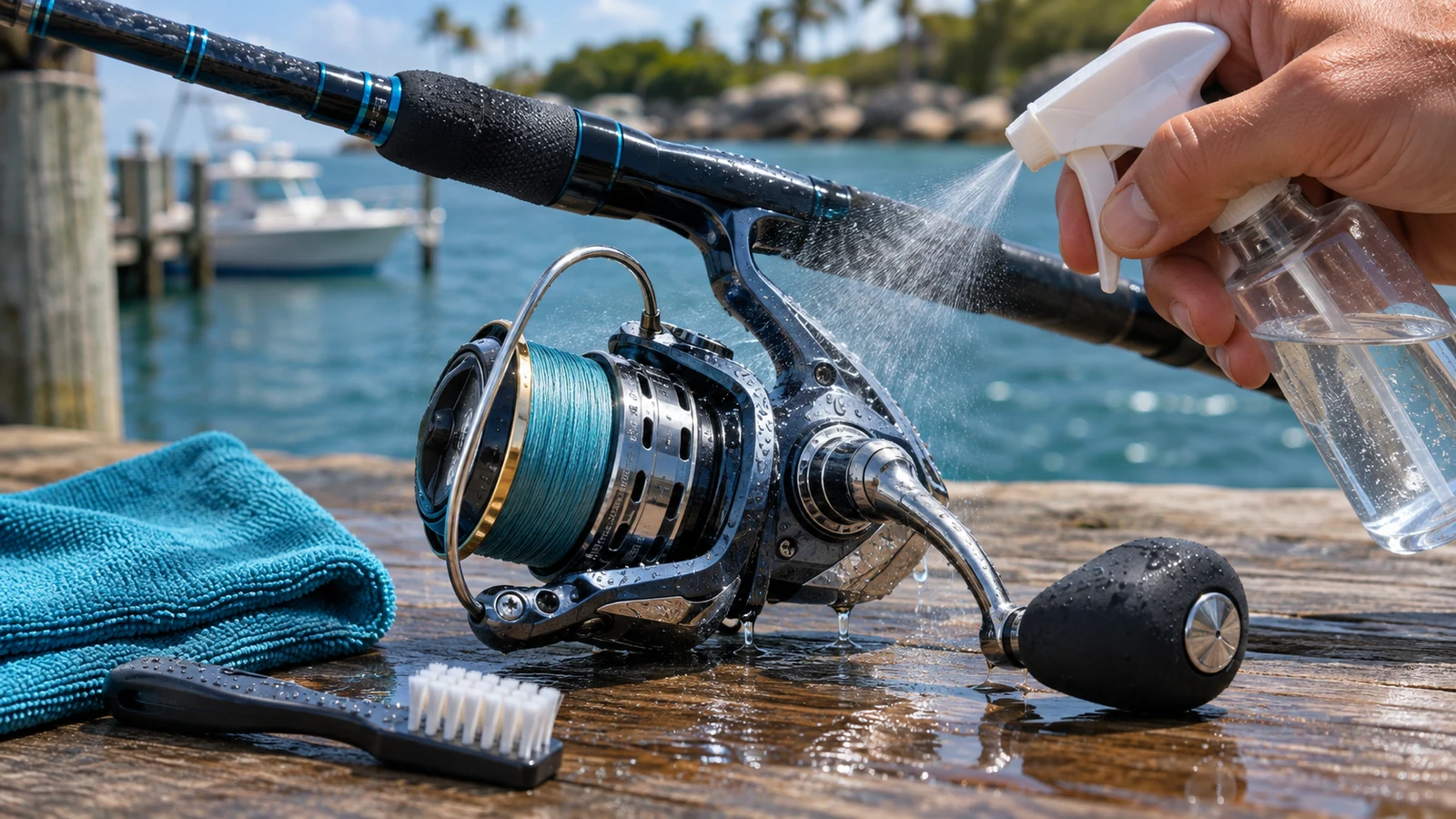
Use a light mist or gentle stream to wash salt from the outer surfaces. Pay attention to the spool, exposed line, handle, reel foot, and any places salt dries into crust. Keep the flow moving rather than concentrating water on a sideplate seam, bearing opening, or drag knob. Never use a pressure washer or a concentrated jet.
Do not immerse the assembled reel unless the exact manufacturer’s instructions expressly permit the procedure. Avoid hot water. A mild soap can help with exterior grime on some reels, but confirm material compatibility and rinse away residue without directing water into openings.
4. Clean the outer line, bail, and reel seat
Salt can remain on the line wraps and around hardware even when the reel body looks clean. Give the exposed spool surface and line a gentle rinse. On spinning tackle, wipe accessible deposits around the bail arm and line roller. On conventional and baitcasting reels, carefully clean the external levelwind guide if present. Rinse the rod guides and reel-seat threads too, since salt at the seat can eventually make the reel difficult to remove.
5. Wipe dry, then air-dry before storage
Use a dry cloth to remove visible water, then leave the tackle in a well-ventilated, shaded place. Do not put a damp reel straight into a neoprene cover, closed tackle bag, or rod locker. Avoid hot-air guns and direct heat that could affect lubricants and components. Complete drying matters more than a particular number of minutes.
6. Inspect movement without forcing it
Once the exterior is clean and dry, check for a smooth retrieve, normal bail operation, and a consistent drag. New grinding, binding, scraping, or a line roller that will not rotate normally can point to contamination or a part that needs service. A light rinse cannot repair a corroded bearing or contaminated drag assembly.
7. Reset for storage and check again before the next trip
Where recommended, ease off the drag after cleaning and drying so it is not left heavily compressed. Store the reel dry, away from salt spray and damp bags. Before the next session, confirm the drag and anti-reverse work correctly and check the final few feet of line and leader for abrasion.
Should you oil or grease the reel after every saltwater trip?
No. Cleaning after each trip does not mean opening the gearbox and adding grease after each trip. An external rinse and thorough drying are routine; oiling and greasing depend on the model, its designated service points, and frequency of use. Too much lubricant can attract grit, migrate where it does not belong, or affect a drag system.
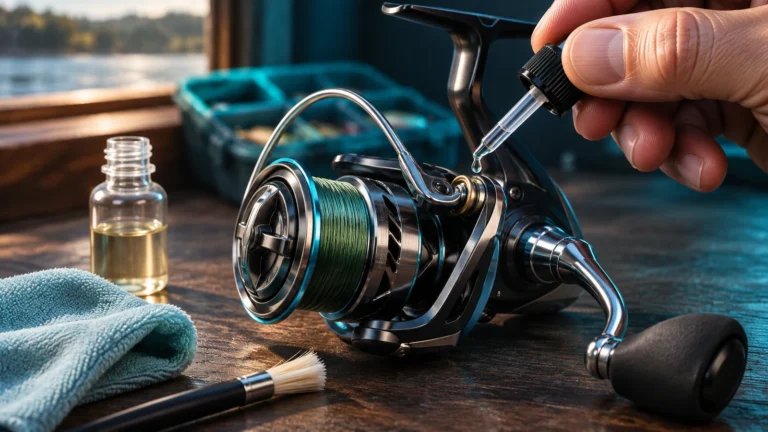
For models that authorize light external oiling, a single small drop at a designated pivot or line-roller service point may be enough. Some modern sealed reels have parts that should not be user-lubricated. Do not treat drag washers, sealed bearings, a baitcaster’s brake system, or the spool shaft as interchangeable lubrication targets.
Three optional maintenance supplies, and when each makes sense
PENN Rod and Reel Cleaner, 4 oz. A reel-oriented exterior cleaner for anglers who want something beyond fresh water for permitted surface cleaning. Rinse first and follow the bottle instructions; it is not a substitute for opening and servicing a contaminated reel. Check availability on Amazon
Lucas Oil 10690 Fishing Reel Oil, 1 oz. A precision-application oil for exposed maintenance points only when your reel’s service guidance permits oil at that location. It is not intended as a flush for an unknown internal problem. Check availability on Amazon
PENN Precision Reel Grease, 2 oz. A separate option for scheduled mechanical maintenance where the reel manufacturer specifies grease. This is not something most anglers need to smear on the outside after each trip. If a teardown is beyond your experience, use a qualified reel-service technician. Check availability on Amazon
These products address different jobs: exterior cleaning, point lubrication, and internal or accessible mechanical greasing. You may need none of them for a normal rinse-and-dry day.
Spinning, baitcasting, conventional, and fly reels: what changes?
Spinning reels
Pay attention to the line roller and bail, the underside of the spool where the manual allows access, and salt trapped in line wraps. Do not assume removing the spool automatically makes the drag stack safe to spray. For general line management, see our spinning reel spooling guide.
Baitcasting and conventional reels
Salt and grit often collect around the levelwind, sideplate seams, handle and star drag. Avoid forcing the spool or gears if there is sand. Service procedures for conventional star-drag, lever-drag, and baitcasting reels differ, so use the correct exploded diagram or factory service guidance before disassembly.
Fly reels
Many fly reels make spool removal comparatively easy, but allowed wash and soak procedures vary. Galvan, for example, publishes instructions for removing and soaking certain reel components after regular saltwater exposure. That is a manufacturer-specific exception, not a reason to soak any fully assembled reel.
Electric or powered reels
Follow the electronics-specific manual. Keep power connectors, battery packs and ports out of a general spray routine unless the manufacturer explicitly allows it. Dry connectors as instructed before reconnecting power.
Six saltwater reel cleaning mistakes worth avoiding
- Hitting a reel with a hose jet. High pressure can drive salt and water inward.
- Soaking the assembled reel. Most general maintenance guidance forbids this, although certain models have specific spool-cleaning exceptions.
- Reeling hard with sand in the mechanism. Grinding the handle can make contamination damage worse.
- Applying oil to every visible opening. More oil is not better and the wrong lubricant can contaminate sensitive parts.
- Putting a still-wet reel inside its cover. A closed, humid space delays drying.
- Treating a rough or submerged reel as a normal rinse job. Interior contamination needs diagnosis and possibly professional service.
When a basic rinse is not enough
Plan an inspection or professional service if the reel was fully submerged, has visible corrosion on functional parts, makes a new grinding sound, has an inconsistent drag, or feels unusually stiff after cleaning. Do not use the reel under load until the cause is understood. A repair shop can evaluate bearings, drive gears and drag washers without risking an incomplete home teardown.
Saltwater durability is not maintenance-free operation. The goal of after-trip cleaning is to prevent avoidable damage, not to disguise an existing problem.
How we researched this guide
We compared current US how-to search intent with the reserved GearAndFish reel-maintenance topics, then checked guidance from Shimano, Zebco, Okuma, Galvan and state angler-education sources. Their recommendations agree on removing salt and minimizing pressure, but differ in spool removal and specialty procedures. We checked the three named maintenance supplies against their exact Amazon.com US ASIN listings. No personal testing, disassembly or performance measurements are claimed. Research checked October 31, 2026.
Saltwater reel cleaning FAQ
Do I have to rinse my fishing reel after every saltwater trip?
Yes, unless your reel’s manual specifies a different cleaning method. Salt residue can remain on external parts and line. Use a gentle freshwater rinse or model-approved wipe-down and dry the reel thoroughly.
Can I soak a fishing reel in freshwater to remove salt?
Do not soak an assembled reel by default. Some manufacturers allow soaking certain detached parts, particularly some fly-reel spools. Follow the instructions for your exact model.
Should the drag be tight or loose when rinsing?
Many spinning-reel manufacturers recommend tightening it for the rinse and loosening it afterward for storage. Other reel designs require different handling, so check your owner’s manual before rinsing.
Is WD-40 a substitute for fishing reel oil or grease?
No general-purpose spray should replace the lubricant your reel maker specifies. Use only the approved product and service points, and keep chemicals away from drag washers or other sensitive parts unless the manufacturer directs otherwise.
What if my reel fell into the ocean?
Do not rely on an outside rinse. Check the manufacturer’s immersion guidance, avoid operating a gritty or seized mechanism, and seek prompt inspection or service if water may have entered the reel.