
GearAndFish is reader-supported. As an Amazon Associate I earn from qualifying purchases. When you buy through links on our site, we may earn an affiliate commission, at no extra cost to you. Learn more.
For most anglers buying a first reel, a spinning reel is the easier place to start. Choose a baitcaster when repeated target casting, direct spool control, and fishing around cover matter enough to justify a steeper learning curve. Neither design is universally better, and many experienced anglers keep both because they solve different problems.
Baitcaster or spinning reel: the short version
Start with spinning if you want a forgiving setup for light lures, finesse presentations, mixed-species fishing, or a first rod and reel. Choose a baitcaster if you already cast comfortably and want more direct control for repeated casts to docks, laydowns, grass edges, or other tight targets.
You want the simpler all-around setup
It is easier to learn, handles light presentations naturally, and does not have a rotating spool that can overrun during the cast.
You want direct casting control
A trained thumb can slow the spool and stop the lure at the target, which is useful when you make the same accurate cast over and over.
Baitcaster vs spinning reel at a glance
| Decision point | Spinning reel | Baitcaster |
|---|---|---|
| Spool during the cast | Fixed; line peels off the spool lip | Rotates as line leaves the reel |
| Learning curve | Usually easier for a new angler | Requires brake setup and thumb control |
| Light lure use | Very natural fit for finesse and lighter presentations | Possible, but conventional baitcasters are less forgiving; BFS reels are the specialist exception |
| Target casting | Capable, especially with practice | Direct spool control makes mid-cast speed changes and stopping intuitive once learned |
| Common line issue | Line twist and wind knots can occur | Backlash can occur if spool speed outruns line leaving the reel |
| Typical first use | First reel, finesse, open water, mixed-species fishing | Repeated target casts, cover fishing, many bass techniques |
| Rod pairing | Spinning rod | Casting rod |
Spinning reel
Cast: fixed spool
Learning: easier
Best fit: finesse, lighter lures, first reel
Watch for: line twist and wind knots
Baitcaster
Cast: rotating spool
Learning: steeper
Best fit: target casting and cover
Watch for: backlash
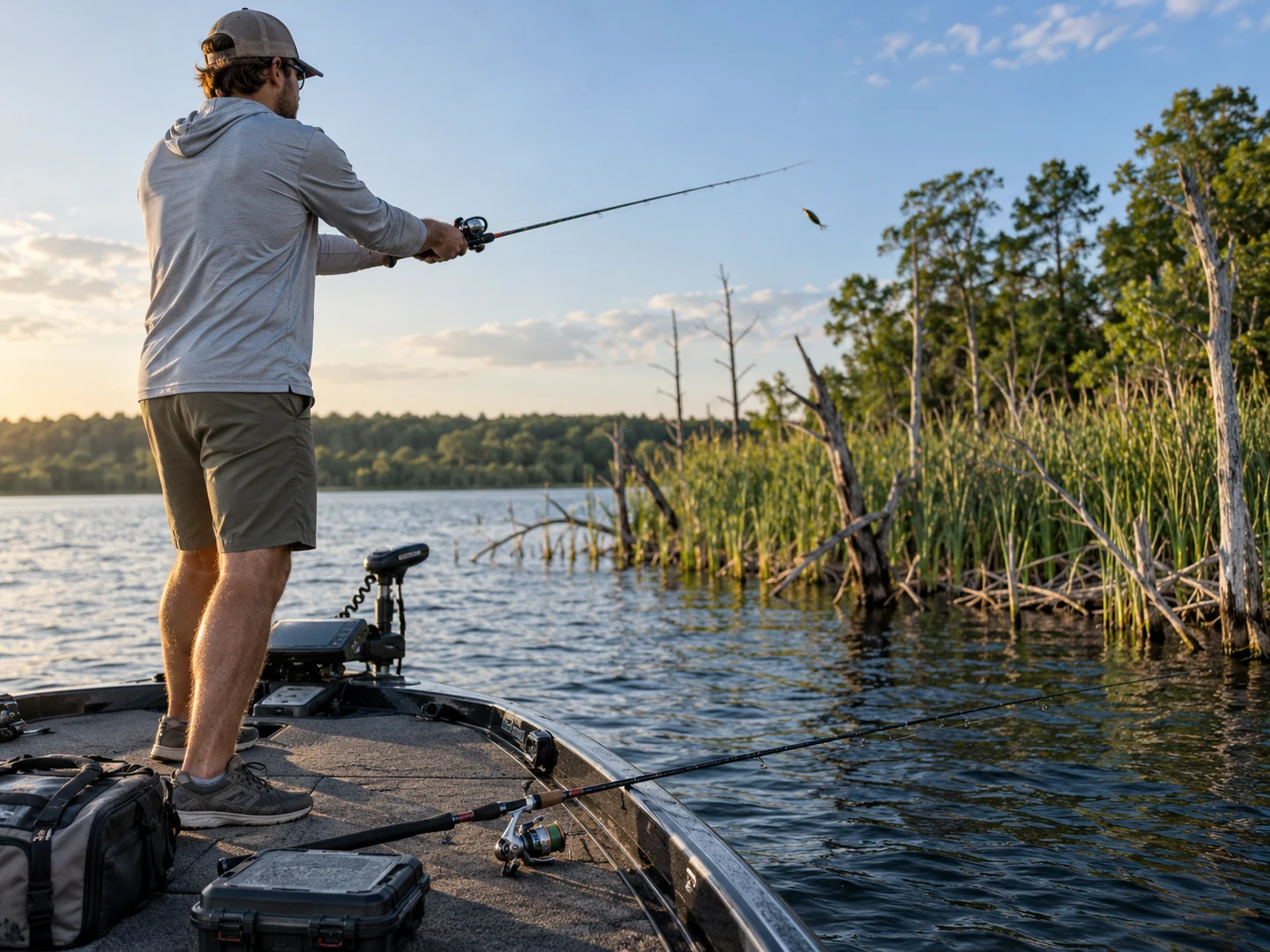
The mechanical difference changes the whole casting experience
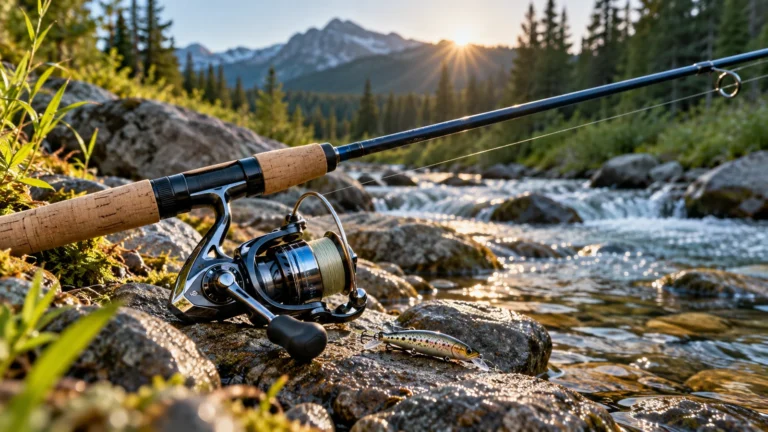
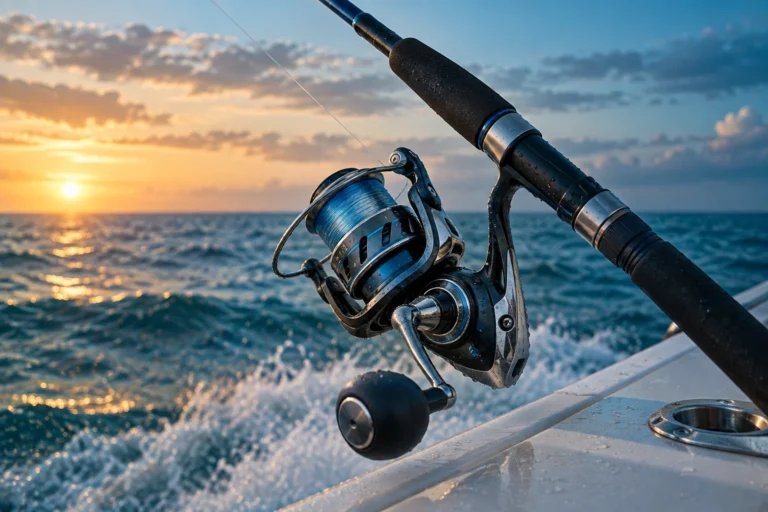
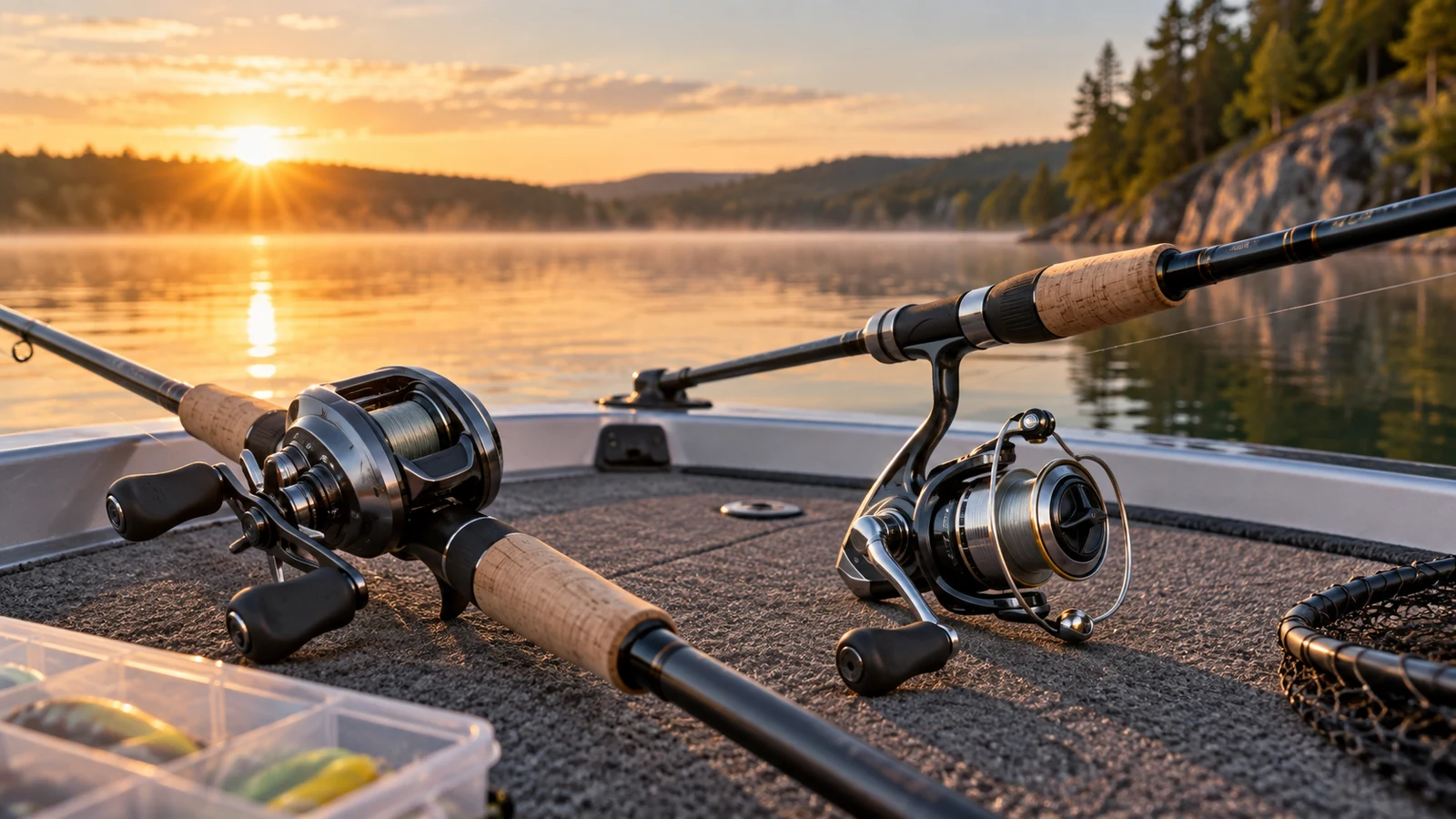
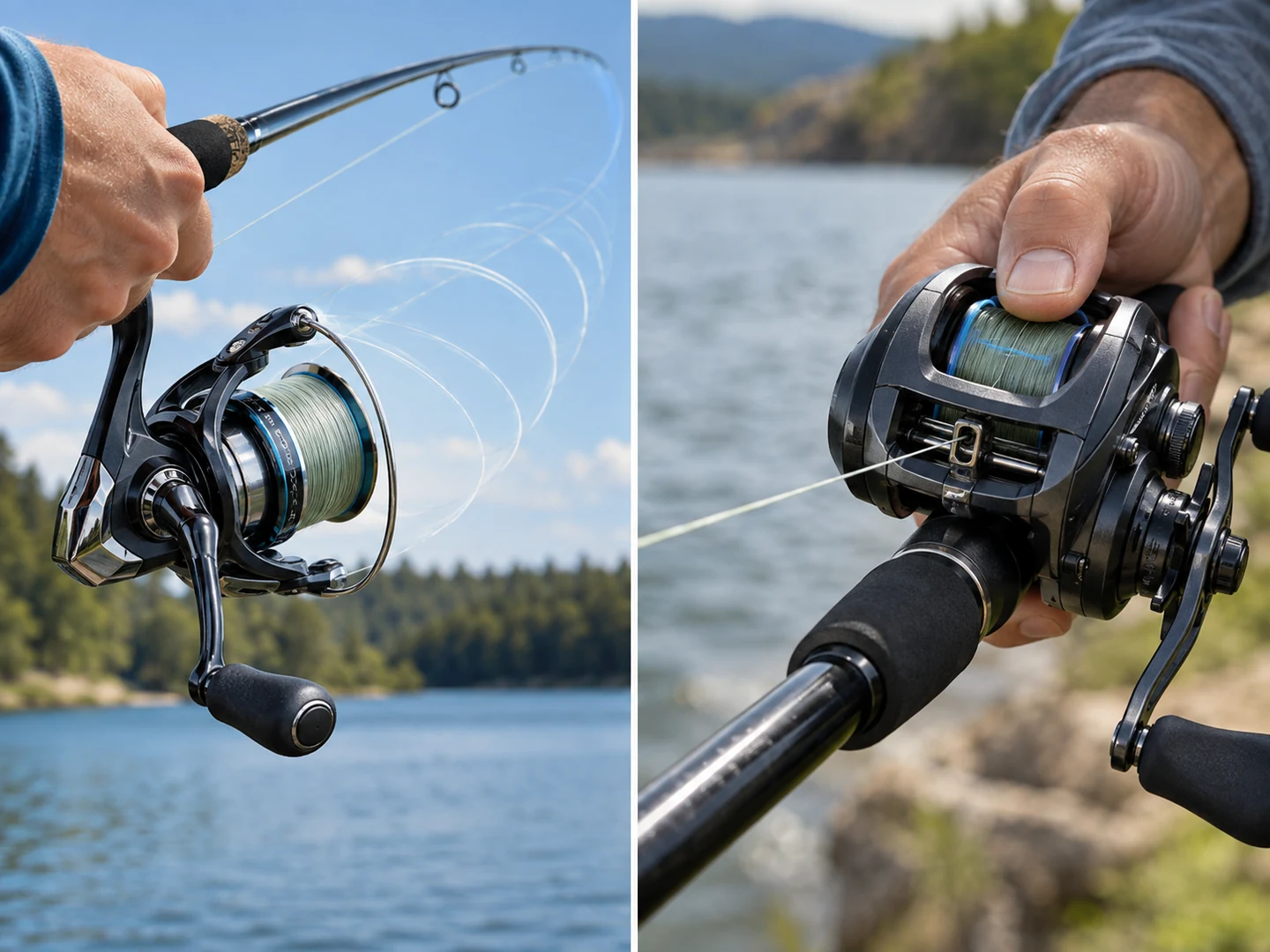
A spinning reel hangs below the rod. Its spool stays in place during the cast, while line leaves in coils around the spool lip after you open the bail and release the line from your finger. Because the spool itself is not accelerating with the lure, there is no rotating spool to overrun when the lure suddenly slows.
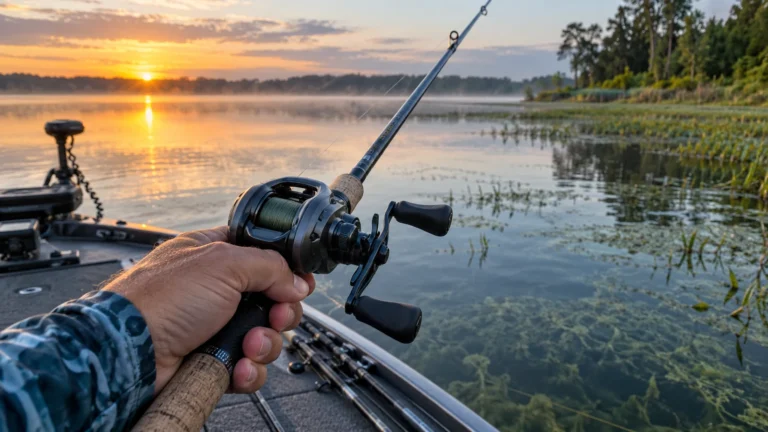
A baitcaster sits on top of a casting rod. Pressing the clutch frees the spool, and that spool rotates as the lure pulls line away. Modern braking systems help control spool speed, but the angler still needs to match brake settings to the lure and use thumb pressure when needed. If the spool keeps spinning faster than line can leave, loose loops build into a backlash.
That rotating spool is also what gives a baitcaster its distinctive control. Your thumb is directly over the spool, so you can add pressure as the lure approaches a dock post, branch, grass edge, or other target. The advantage is not automatic accuracy. It is an extra control input that becomes useful after practice.
When a spinning reel makes more sense
You are learning to fish or building one versatile setup
Spinning tackle removes one major variable from the cast: you do not have to manage rotating spool speed. That lets a new angler focus on loading the rod, releasing at the right point, controlling slack, and learning drag without stopping to pick out overruns.
You fish lighter lures and finesse presentations
A fixed spool lets light lures pull line away without first having to accelerate a baitcasting spool. That is why spinning gear remains such a practical match for small jigs, drop-shot rigs, light soft plastics, trout presentations, and many other finesse techniques.
You move between species and techniques
A sensible spinning setup can cover a wide range of freshwater fishing, from panfish and trout to bass and walleye, depending on rod power, reel size, line, lure, and the water you fish. The reel style itself does not set a fish-size ceiling; the exact reel, rod, line, drag, and terminal tackle matter more.
You want fewer casting setup adjustments
Spinning reels still require good line management. Overfilling the spool, spooling line with excessive twist, or fishing loose coils can create wind knots and tangles. But you generally do not need to retune a casting brake when switching between lures.
When a baitcaster makes more sense
You make repeated casts to specific targets
Dock corners, grass pockets, laydowns, riprap seams, and isolated cover reward repeatable lure placement. With practice, the baitcaster’s thumb-on-spool layout makes it easy to slow a cast late and stop the lure before it sails past the target.
You often fish medium to heavier presentations
Baitcasters are a natural fit for many crankbaits, spinnerbaits, jigs, Texas rigs, topwaters, and other presentations commonly fished on casting rods. That does not mean every baitcaster is a heavy-lure reel. Spool design, rod rating, line, and reel model still set the useful range.
You fish cover where an efficient casting rhythm matters
Low-profile baitcasters are easy to palm, and the casting controls sit under the thumb. Anglers who spend hours making short to medium target casts often like that compact, direct workflow. The benefit shows up most when you are comfortable enough with the reel that setup and backlash management are no longer distracting.
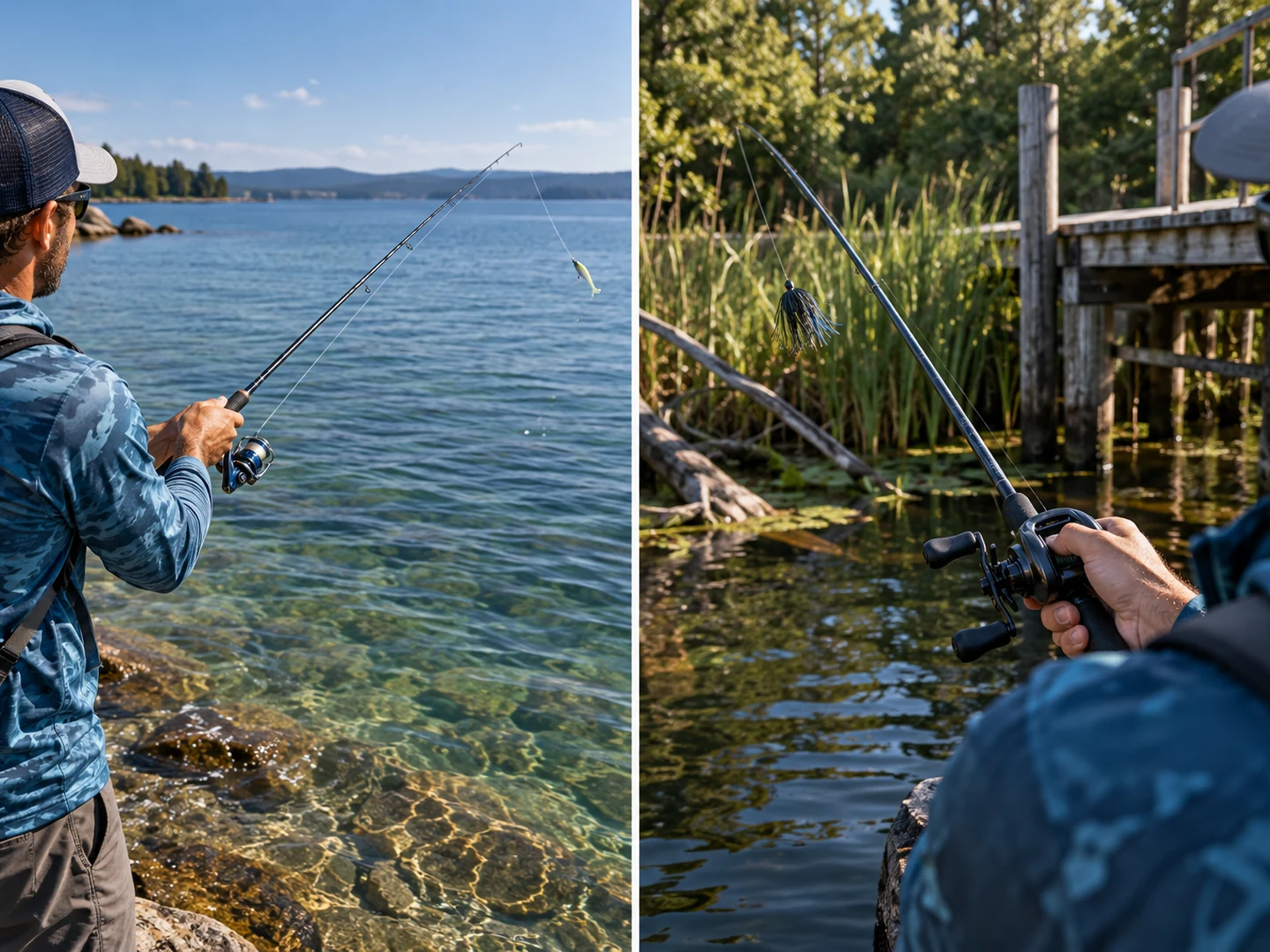
The trade-offs that matter more than internet rules
Accuracy is partly a reel feature and mostly a skill
A baitcaster gives you a direct way to feather the spool, but a skilled angler can place a spinning lure accurately too. Rod length and action, lure aerodynamics, casting style, wind, and practice all affect where the lure lands.
There is no universal distance winner
Spinning tackle is often easier with light lures because line can leave the fixed spool without accelerating a rotating spool. A well-matched baitcaster can cast efficiently too, and modern low-inertia spool designs have expanded what baitcasters can do with lighter lures. Treat blanket distance claims with caution.
Baitcasters are not automatically more powerful
Power comes from the complete setup. A large spinning reel can carry heavy line and substantial drag, while a compact baitcaster may be designed for a much narrower range. Compare the actual reel’s drag, line capacity, gearing, frame, rod rating, and intended use instead of judging by reel category alone.
Saltwater capability depends on the exact reel
Both spinning and baitcasting reels are sold for saltwater use. Corrosion resistance, sealing, bearing design, maintenance requirements, and manufacturer guidance vary by model. Do not assume a reel is salt-ready only because another reel of the same type is.
Can a baitcaster cast light lures?
Yes, but this is where an old rule needs a modern footnote. Conventional baitcasters are generally less forgiving as lure weight drops because the lure must accelerate the spool. Specialized bait finesse system, or BFS, reels use very light, low-inertia spools and braking systems specifically to make light-lure baitcasting practical.
If your main goal is simple, low-fuss finesse fishing, spinning gear is still the straightforward answer. If you specifically want the feel and control of a baitcaster with light presentations, look at BFS as its own subcategory rather than assuming any standard baitcaster will behave the same way.
Which should you buy as your first reel?
If you do not yet know exactly what techniques will dominate your fishing, buy a spinning reel first. It covers more beginner situations with less setup friction and makes it easier to learn casting fundamentals.
If you already know you will spend most of your time bass fishing around cover with casting-rod techniques, starting on a baitcaster can make sense. Just budget practice time. Begin with conservative brake settings, use a lure that loads the rod comfortably, and learn to stop the spool with your thumb before chasing maximum distance.
If you already own a spinning setup and are wondering whether a baitcaster should replace it, the better question is whether it adds a job your current setup handles poorly. For many anglers, the useful answer is a two-reel system: keep spinning gear for finesse and lighter work, then add a baitcaster for target-oriented casting and cover.
Two current reel examples that make the difference concrete
These are not category winners. They are current, mainstream examples of each platform so you can see what the two designs look like in real product terms.
Daiwa Crossfire LT 3000-C
The current Crossfire LT family uses Daiwa’s AIRDRIVE design, TOUGH DIGIGEAR, LC-ABS spool, and ATD Type-L drag. The 3000-C variant is a useful example of the familiar fixed-spool layout for general freshwater spinning setups.
Abu Garcia Max SX Low Profile Reel, MAX5SXLP
The right-hand MAX5SXLP uses a 6.8:1 gear ratio, 15-pound maximum drag, eight bearings, and Abu Garcia’s MagTrax braking system. It shows the compact low-profile format and adjustable braking that define a modern mainstream baitcaster. Verify retrieve hand before ordering because the left-hand version uses a different model number.
Common mistakes when choosing between them
- Buying the reel before the rod. Spinning reels belong on spinning rods; baitcasters belong on casting rods. Match the whole setup to lure weight, line, and technique.
- Choosing by status instead of use. A baitcaster is not an upgrade from spinning. It is a different tool.
- Expecting reel type alone to fix casting distance. Rod loading, lure weight, line, spool fill, wind, and technique all matter.
- Ignoring lure changes on a baitcaster. A big change in lure weight may call for brake or spool-tension adjustment.
- Assuming all baitcasters struggle with light lures. BFS designs exist specifically to push baitcasting into lighter presentations.
- Assuming one reel type is automatically better in saltwater. Check the exact model’s intended environment and care instructions.
How we built this comparison
GearAndFish reviewed the current US search results for this comparison, current manufacturer documentation for spinning and baitcasting reel mechanics, current product pages, and current Amazon US product mappings. We did not claim personal field testing. The goal is to separate durable design differences from rules of thumb that break as soon as reel size, spool design, lure weight, or technique changes.
FAQ
Is a baitcaster better than a spinning reel?
No reel type is better across every technique. Spinning is usually easier and more forgiving with light presentations. Baitcasting offers direct spool control that many anglers prefer for repeated target casts and cover-oriented techniques.
Which reel is easier for a beginner?
A spinning reel is usually easier because the spool stays fixed during the cast, so the angler does not have to control spool overrun and backlash.
Can a baitcaster cast light lures?
Yes. Conventional baitcasters can become less forgiving as lure weight drops, but low-inertia spool designs and specialized BFS baitcasters are built specifically for lighter presentations.
Is a baitcaster more accurate?
It can offer more direct mid-cast control because the angler can feather and stop the spool with a thumb. Actual accuracy still depends heavily on skill, rod, lure, line, wind, and casting style.
Can a spinning reel handle big fish?
Yes. Fish size is not determined by spinning versus baitcasting alone. Use a reel, rod, line, drag system, and terminal tackle sized for the species and environment.