
GearAndFish is reader-supported. As an Amazon Associate I earn from qualifying purchases. When you buy through links on our site, we may earn an affiliate commission, at no extra cost to you. Learn more.
A good baitcasting reel should make a specific job easier, not simply stack more bearings or drag pressure onto the spec sheet. For most bass anglers, spool control, a useful gear ratio, a rigid frame, sensible line capacity and a reel that matches the lure range matter more than headline numbers. These picks cover the main reasons to buy a baitcaster now, from an all-around 150-size reel to a slower moving-bait option and a premium digital-control model.
The Shimano Curado 150 M is the strongest all-around starting point
The Curado 150 M combines a compact 150-size platform, MGL III spool, external SVS Infinity brake adjustment and a rigid HAGANE body. The exact Amazon-linked variant here is the right-hand CU150MGM with a 6.2:1 ratio. Choose it when you want one baitcaster for a broad mix of bass techniques and do not need an ultra-fast retrieve.
Quick picks
Shimano Curado 150 M
Balanced 150-size platform with strong spool control and a rigid body.
Shimano SLX XT A
SVS Infinity braking and a metal HAGANE body without stepping into premium pricing.
Abu Garcia Revo SX
High published drag, broad line capacity and a 7.3:1 high-speed left-hand setup.
Shimano Metanium DC A
Light magnesium construction with I-DC5 digital braking for anglers who value refined cast control.
Lew’s Speed Spool RX 5.6
A deliberately slower 5.6:1 ratio for controlled retrieves with crankbaits and other resistance-heavy moving baits.

Best baitcasting reels compared
Specifications below refer to the exact variant linked in this article, not every reel in the product family. That matters because hand orientation, gear ratio, weight and line capacity can change between SKUs.
| Reel | Best for | Exact variant | Gear ratio | Weight | Max drag | Retrieve | Amazon |
|---|---|---|---|---|---|---|---|
| Shimano Curado 150 M | All-around bass fishing | CU150MGM | 6.2:1 | 6.7 oz | 13 lb | Right | Check Amazon |
| Shimano SLX XT A | Value and external brake control | SLXXT150HGA | 7.2:1 | 7.2 oz | 11 lb | Right | Check Amazon |
| Abu Garcia Revo SX | Power and fast line pickup | REVO5 SX-HS LP-L | 7.3:1 | 7.4 oz | 25 lb | Left | Check Amazon |
| Shimano Metanium DC A | Premium digital cast control | METDC71HGA | 7.1:1 | 6.2 oz | 11 lb | Left | Check Amazon |
| Lew’s Speed Spool RX | Crankbaits and controlled retrieves | SSRX1S | 5.6:1 | 6.8 oz | 20 lb | Right | Check Amazon |
Shimano Curado 150 M
Abu Garcia Revo SX
Shimano Metanium DC A
Shimano Curado 150 M
The most balanced choice here for anglers who want one current 150-size baitcaster to cover a wide range of bass techniques.
The Curado 150 M sits in a useful middle ground. It is not a shallow-spool BFS reel and it is not a large-capacity swimbait reel. Instead, the 150-size spool and 6.7-ounce body make sense for common bass applications where you may move between spinnerbaits, jigs, Texas rigs and moderate moving baits during the same day.
The linked CU150MGM is the 6.2:1 right-hand version. That ratio favors control and torque over rapid line pickup. Shimano also sells faster variants in the same family, but those are separate SKUs, so do not assume the Amazon button here represents every ratio.
What stands out
- MGL III spool is designed to reduce startup inertia.
- SVS Infinity gives external brake adjustment.
- Rigid HAGANE body helps keep the drivetrain aligned under load.
- 150-size capacity works for a broad range of bass line choices.
Watch for
- The linked 6.2:1 version is slower than many anglers prefer for frogs or pitching.
- It costs more than the SLX XT A while sharing some Shimano braking concepts.
- It is a generalist, not a specialized BFS or big-swimbait reel.
Shimano SLX XT A
A sensible step into adjustable centrifugal braking and a metal reel body without paying for Shimano’s premium platforms.
The exact SLXXT150HGA linked here is a 7.2:1 right-hand reel. That ratio is a useful general-purpose speed when you want quicker line pickup than a low-6 ratio without jumping into an 8.x:1 specialist. Official capacity is 10-pound/120-yard, 12-pound/110-yard or 14-pound/90-yard mono, with 20-pound/150-yard, 30-pound/135-yard or 40-pound/105-yard PowerPro capacity.
The trade-off is refinement rather than core function. The SLX XT A is heavier than the Curado 150 M and Metanium DC A, and its 4+1 bearing count is not a headline spec. That is not automatically a problem: frame rigidity, braking behavior and setup matter more than bearing count alone.
What stands out
- External SVS Infinity brake adjustment.
- 7.2:1 ratio works across many jig, worm and moving-bait jobs.
- HAGANE aluminum body at a value-oriented position.
- Current left- and right-hand versions exist in the family.
Watch for
- Heavier and less premium than the Curado and Metanium picks.
- 11-pound published max drag is enough for normal bass use but not a reason to choose it for oversized tackle.
- The linked ASIN is specifically the right-hand 7.2:1 model.
Abu Garcia Revo SX
A strong fit for anglers who want fast pickup, broad line capacity and substantially more published drag headroom than the Shimano 150-size picks here.
The Revo SX makes the most sense when you care about fast pickup and a more forceful platform. A 7.3:1 ratio is useful for jigs, Texas rigs, topwater and presentations where picking up slack quickly matters. The published 25-pound maximum drag is unusually high for this group, but maximum drag is a ceiling, not a target setting for normal bass fishing.
Pay close attention to hand orientation. The exact Amazon ASIN verified for this article is REVO5 SX-HS LP-L, a left-hand high-speed version. If you reel with your right hand, choose the corresponding right-hand SKU only after confirming the model on the retailer page.
What stands out
- 32-inch line pickup suits fast presentations and slack-line techniques.
- 25-pound published max drag gives substantial headroom.
- IVCB-6 braking provides fine adjustment.
- Line capacity supports heavier braid and cover-oriented setups.
Watch for
- The verified Amazon variant in this package is left-hand retrieve.
- At 7.4 ounces, it is not the lightest choice here.
- High drag capacity does not replace matching the rod, line and hook to the technique.
Shimano Metanium DC A
A lightweight premium choice for anglers who specifically want Shimano’s I-DC5 digital braking and are willing to pay for refinement rather than more raw capacity.
This is not the choice to buy because it has the biggest drag number or deepest spool. It is the premium option for anglers who place more value on compact weight, refined gearing and electronically managed cast control. The exact METDC71HGA is a 7.1:1 left-hand model with 30 inches of line retrieve per crank.
Its 10-pound/105-yard, 12-pound/85-yard and 14-pound/70-yard mono capacities are shallower than the Curado and SLX 150-size reels. That can be perfectly reasonable for typical bass casting, but it makes the Metanium DC A a poor choice if deep capacity is the core requirement.
What stands out
- I-DC5 digital braking adds active spool-control logic.
- 6.2-ounce weight keeps the setup compact.
- MGL Spool III and magnesium body emphasize low inertia and rigidity.
- 7.1:1 ratio is a versatile fast-middle speed.
Watch for
- Premium cost is the obvious trade-off.
- Shallower line capacity than 150-size general-purpose reels.
- The verified ASIN is specifically the left-hand 7.1:1 model.
Lew’s Speed Spool RX 5.6
A purposefully slower baitcaster for anglers who want controlled retrieves and more mechanical advantage with resistance-heavy moving baits.
Many roundups default to faster reels, but a lower ratio still has a real place. Deep crankbaits and other resistance-heavy moving baits can feel easier to keep at a deliberate pace when the reel is not trying to recover more than 30 inches of line every turn. The 5.6:1 SSRX1S is the most specialized pick in this list for that reason.
The same Speed Spool RX family also includes 6.8:1, 7.5:1 and 8.3:1 versions, but the Amazon mapping here is specifically SSRX1S. If you need a faster general-purpose reel, the Curado, SLX or Revo SX choices above are a cleaner fit.
What stands out
- 5.6:1 ratio and 23-inch pickup favor slower, controlled retrieves.
- One-piece aluminum frame and aluminum gearing.
- ParaMag RX braking is externally adjustable.
- 20-pound published max drag provides ample headroom for common moving-bait use.
Watch for
- Too slow for anglers who want instant slack pickup.
- Not the reel to choose for frogs, fast pitching cycles or burning baits.
- This exact linked model is a right-hand 5.6:1 specialist.
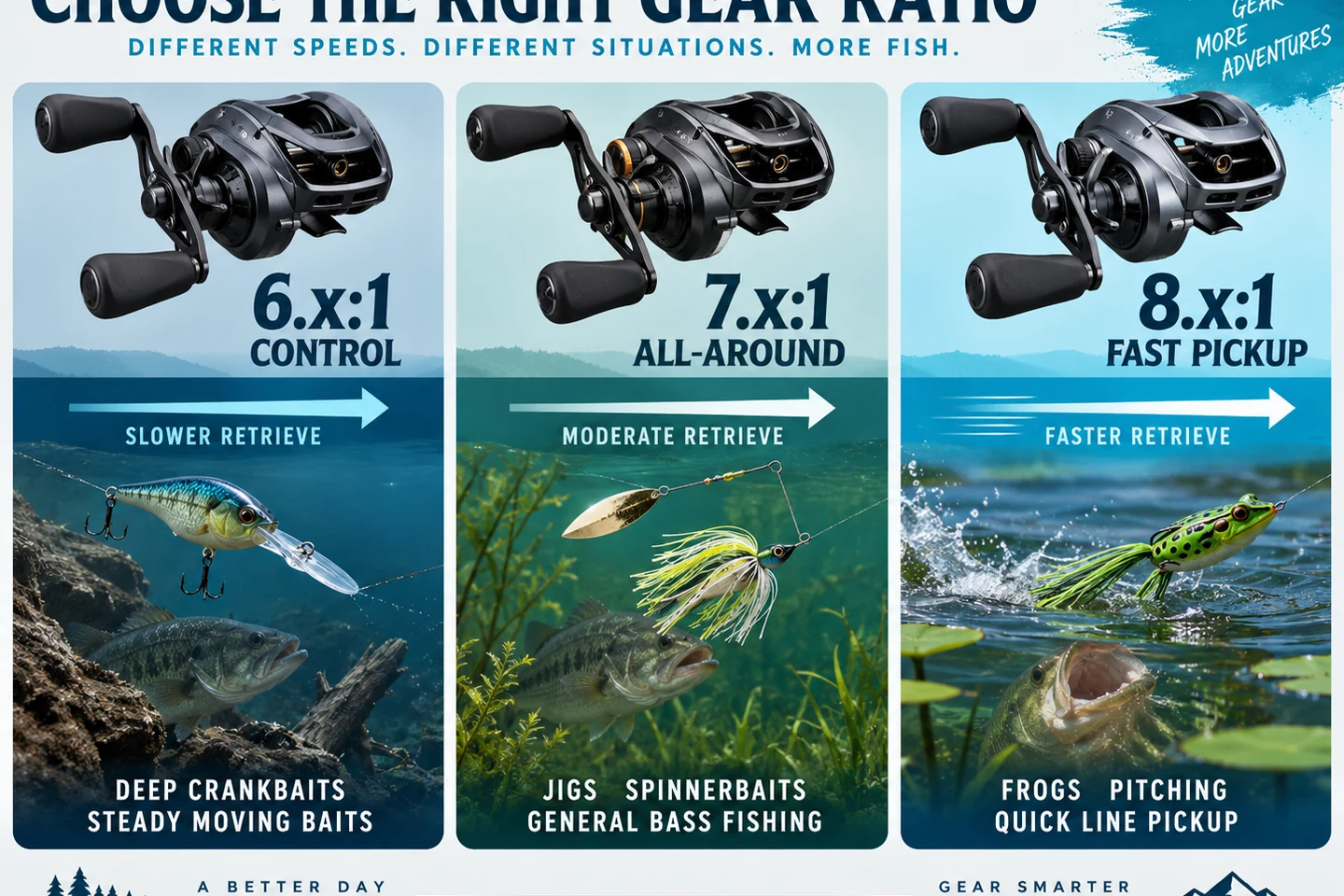
How to choose a baitcasting reel
Start with gear ratio, not bearing count
A reel in the low-6 range retrieves less line per handle turn than a 7.x or 8.x reel. That changes how naturally the setup handles different presentations. Lower ratios suit controlled moving-bait retrieves and can offer a more relaxed feel under resistance. Ratios around 7:1 are the versatile middle ground. Faster 8.x reels excel when fast slack pickup or repeated short presentations matter.
Do not compare ratios in isolation. Spool diameter affects inches-per-turn, so the manufacturer’s published line retrieve is the better way to compare actual pickup speed between two different reel families.
Match spool capacity to line and technique
A standard 150-size bass reel usually carries substantially more line than a shallow BFS platform, but size labels are not universal across brands. Compare the exact mono or braid capacity for the SKU you are buying. Heavy braid around vegetation, long casts with moving baits and compact finesse presentations can all point to different ideal spool depths.
Braking system matters most while the spool is accelerating
Baitcasters control a free-spinning spool during the cast. Centrifugal, magnetic and digital systems approach that job differently, but all are trying to keep spool speed closer to the rate at which line is leaving the reel. A broad external adjustment range is useful when you change lure weight or face a headwind. Digital control can add refinement, but it does not remove the need for setup and thumb control.
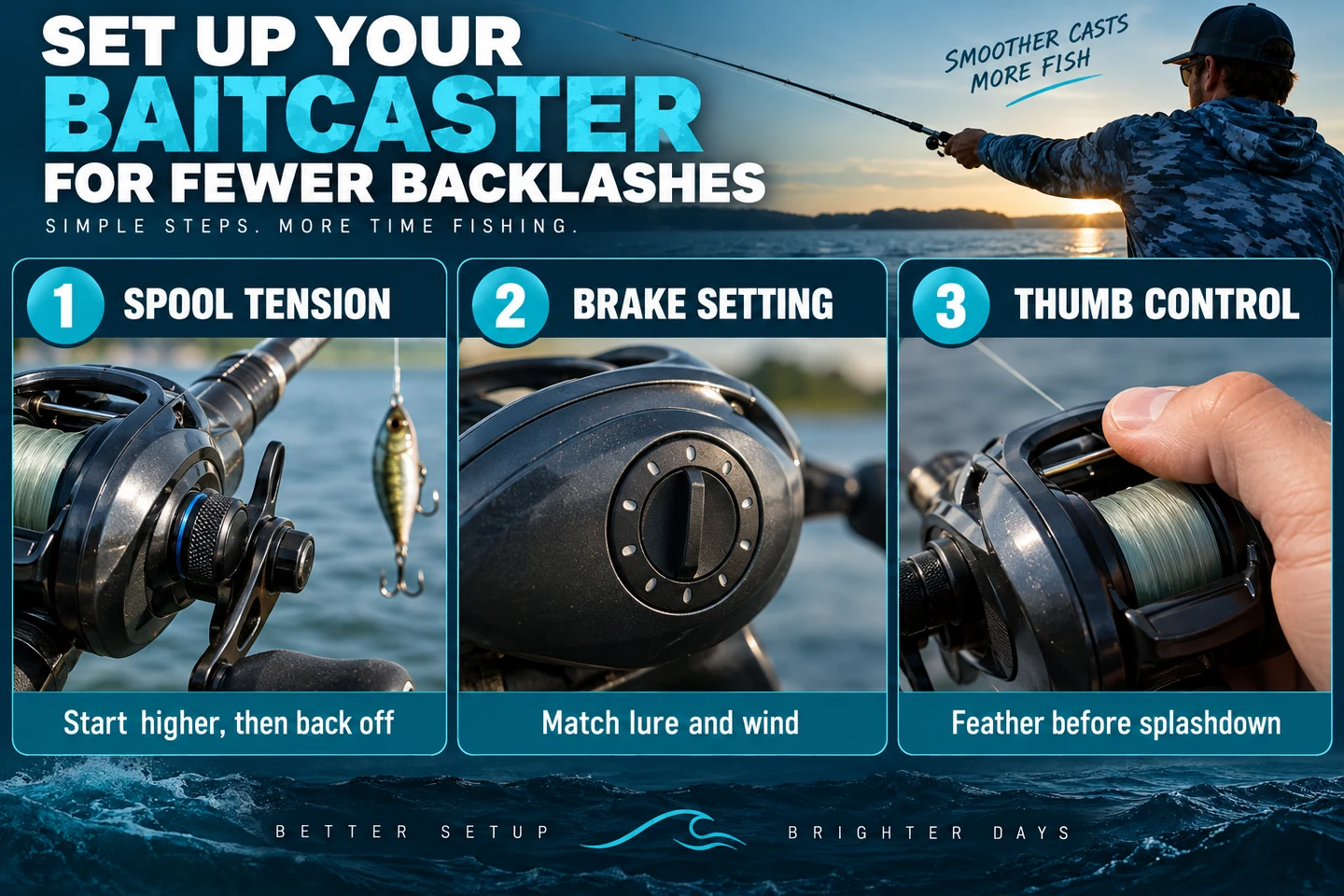
How to reduce backlashes without killing casting distance
Begin with conservative spool control and braking for the lure you are actually casting. Make smooth casts, especially into wind, and use your thumb to manage the spool as the lure slows near splashdown. Once the reel is predictable, reduce braking gradually rather than chasing maximum distance immediately.
There is no single universal dial setting because reel design, lure aerodynamics, spool fill, line diameter and wind all change spool behavior. Follow the manual for the exact reel before applying generic setup advice from another platform.
Right-hand vs left-hand baitcasters
Handedness describes the side of the reel handle, not the hand you cast with. Many right-handed anglers prefer a left-hand retrieve so they can cast with the right hand and begin winding without switching the rod. Others prefer the traditional right-hand retrieve. Neither is inherently better, but it is one of the easiest purchasing mistakes to make online. Confirm the SKU before ordering.
How we selected these reels
GearAndFish does not claim first-person product testing unless it actually occurred. This roundup was built from the current US search landscape, current manufacturer specifications, current exact-model retailer data and exact Amazon.com US product mapping. We prioritized distinct buyer roles rather than filling the page with near-duplicate models.
Each pick was verified as a current or actively sold model, not a discontinued reel carried over from an old roundup.
Gear ratio, hand orientation, weight and drag refer to the model code named in the comparison table.
Every recommendation in this article has a clean Amazon.com US ASIN mapping. The site plugin adds the affiliate tag at publish time.
The shortlist covers all-around use, value, power, premium cast control and slow moving-bait retrieval without drifting into the separate BFS category.
FAQ
What gear ratio is best for a baitcasting reel?
For one general-purpose bass reel, a ratio around 7:1 is an easy starting point. Lower ratios can suit crankbaits and controlled moving baits, while faster 8.x ratios are useful when quick line pickup matters. Compare inches per turn as well as the stated gear ratio.
Are baitcasting reels good for beginners?
Yes, but they require more setup and spool control than spinning reels. Start with a forgiving lure weight, conservative braking and smooth casting. A reel with accessible external brake adjustment can make the learning process easier.
Is more max drag always better?
No. Maximum drag is only one specification. For most bass fishing, frame rigidity, line capacity, spool control, gearing and how the reel matches the rod and line matter at least as much. Your working drag should also match the line, hook, rod and cover rather than simply using the reel’s maximum rating.
Should I buy a right-hand or left-hand baitcaster?
Choose the handle side that lets you fish comfortably. If you cast with your right hand and dislike switching the rod after the cast, a left-hand retrieve may feel more natural. Always confirm the exact SKU because many reel families offer both versions.
Do digital brakes prevent every backlash?
No. Digital braking can actively manage spool speed, but lure shape, wind, line, spool fill, settings and thumb control still matter. Treat digital braking as added control, not an automatic casting system.