
GearAndFish is reader-supported. As an Amazon Associate I earn from qualifying purchases. When you buy through links on our site, we may earn an affiliate commission, at no extra cost to you. Learn more.
The best braided fishing line is not simply the thinnest or the slickest spool on the shelf. The useful choice comes down to how the braid handles on your reel, how much structure you fish around, and whether you want a direct-to-lure setup or a leader.
For most anglers who want one dependable all-around braid, Sufix 832 Advanced Superline is the strongest starting point in this group. Its current construction is unusually well documented, with eight fibers, 32 weaves per inch, and a full published diameter chart. If thick vegetation is the priority, classic PowerPro remains the more purposeful coarse four-carrier option. For spinning reels and repeated casting, Daiwa J-Braid x8 Grand and Berkley x9 put more emphasis on a smoother, rounder feel.
GearAndFish does not claim first-person product testing. This shortlist is based on current manufacturer specifications, exact Amazon.com US listings checked for the linked variants, current US search results, and recent owner discussions. Prices, ratings, and stock are intentionally excluded because they change.
Best braided fishing line for most anglers
Sufix 832 Advanced Superline is the best overall pick for a mixed freshwater setup because it combines a documented eight-fiber construction, a published small-diameter chart, and a design aimed at balancing abrasion resistance with consistent handling. The main trade-off is that it is not the slickest-feeling braid in this group. If your priority is a smoother spinning-reel line, look first at Daiwa J-Braid x8 Grand. If you fish frogs or heavy vegetation, classic PowerPro is the more specialized choice.
Quick picks
Sufix 832 Advanced Superline
A balanced eight-fiber braid with unusually transparent construction and diameter specs.
PowerPro Spectra
A four-carrier workhorse with a coarser profile that makes sense around grass and demanding cover.
Daiwa J-Braid x8 Grand
An eight-carrier Izanas braid built to stay supple and lay smoothly on the spool.
Berkley x9
A nine-carrier PE braid focused on smooth, quiet casting without moving into a specialist line.
Seaguar Smackdown Stealth Gray
An eight-strand micro-weave braid with a round profile and a restrained gray color option.
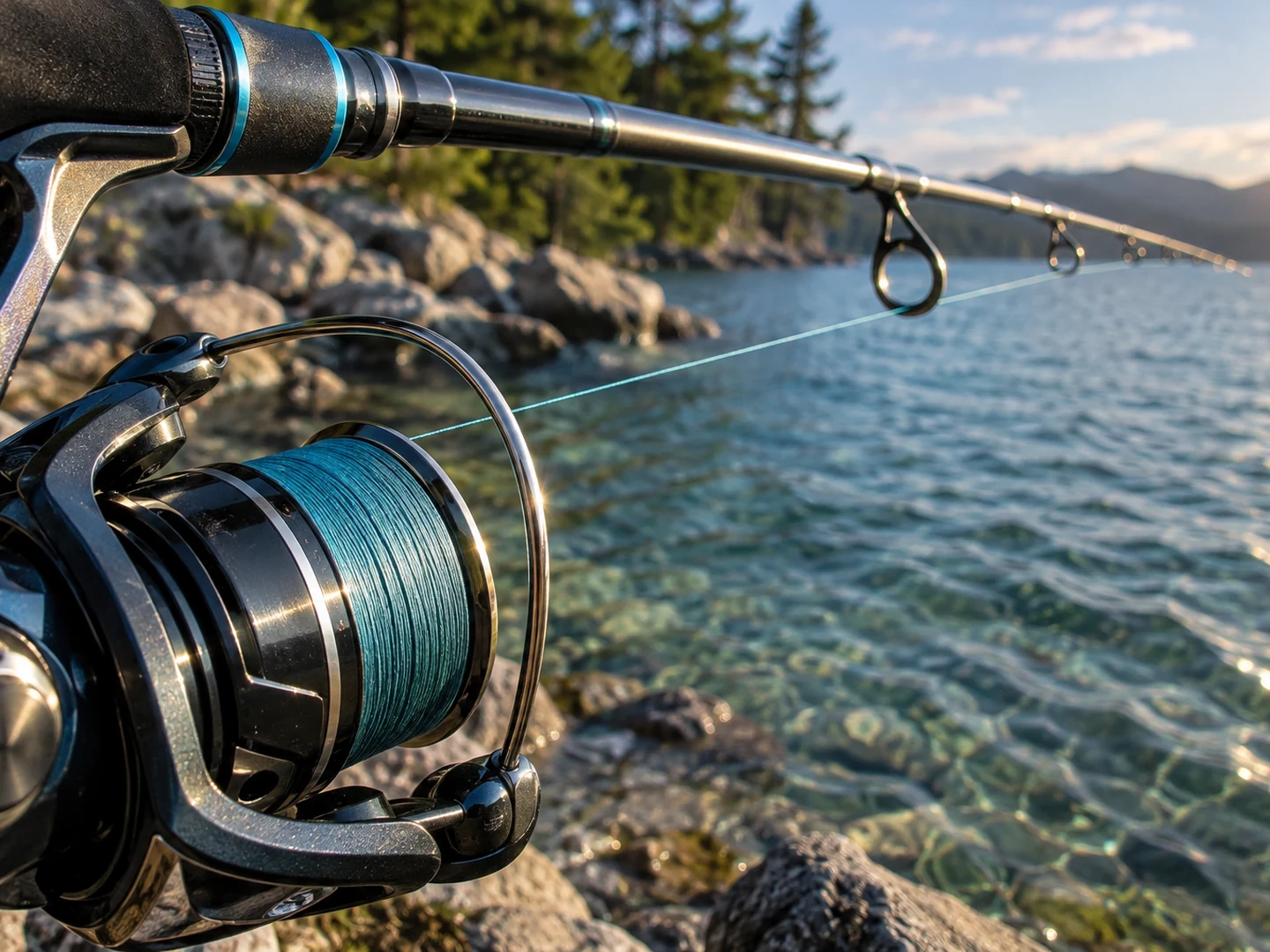
Braided fishing line comparison
The exact Amazon variants below are the children mapped to the CTA buttons in this article. Treat the pound test as the linked buying example, not as the only size that makes sense for the product family.
| Line | Best for | Build | Linked variant | Main trade-off | Amazon |
|---|---|---|---|---|---|
| Sufix 832 | Mixed use, rock, wood, all-around rigs | 8 fibers: 7 HMPE + 1 GORE | 30 lb, 150 yd, Low Vis Green | Not the slickest-feeling option | Check availability on Amazon |
| PowerPro Spectra | Frogs, grass, heavy cover | 4-carrier Spectra | 20 lb, 300 yd, Moss Green | Rougher and louder through guides | Check availability on Amazon |
| Daiwa J-Braid x8 Grand | Spinning reels, open water, repeated casting | 8-carrier Izanas | 30 lb, 150 yd, Dark Green | Less reason to choose it if a coarse cover line is the goal | Check availability on Amazon |
| Berkley x9 | Value-focused smooth casting | 9-carrier PE | 20 lb, 328 yd, Low-Vis Green | Not the most purpose-built choice for thick vegetation | Check availability on Amazon |
| Seaguar Smackdown | Low-visibility, smooth spinning setups | 8-strand micro-weave | 20 lb, 150 yd, Stealth Gray | 20 lb is better suited to general and spinning use than true heavy-cover work | Check availability on Amazon |
Sufix 832
8 fibers
30 lb / 150 yd
Mixed use
Low Vis Green
PowerPro Spectra
4 carrier
20 lb / 300 yd
Grass and cover
Moss Green
Daiwa J-Braid x8 Grand
8 carrier
30 lb / 150 yd
Smooth handling
Dark Green
Berkley x9
9 carrier
20 lb / 328 yd
Smooth casting
Low-Vis Green
Seaguar Smackdown
8 strand
20 lb / 150 yd
Spinning and clear water
Stealth Gray
The best braided fishing lines
Sufix 832 Advanced Superline
The easiest all-around recommendation here when you want one braid for mixed freshwater work instead of a highly specialized line.
That specification transparency matters because braid shopping can otherwise become a wall of vague claims about strength and smoothness. Sufix 832 gives you a concrete picture of what you are buying. The 30 lb version linked here is listed at 0.011 inch in diameter by Sufix, and the exact Amazon child is the Low Vis Green 150-yard spool.
The GORE fiber is the unusual part of the construction. Sufix says it is used to improve abrasion resistance, casting consistency, and line vibration. The rest of the braid uses HMPE fibers for strength, sensitivity, and small diameter. GearAndFish treats those performance statements as manufacturer claims, but the construction itself is clear and verifiable.
Recent owner discussions also repeatedly put 832 in the small group of dependable mainstream braids, especially when durability and mixed-cover use matter. That does not make it universally better than a slicker eight-carrier line. It does make it a strong one-spool answer for an angler who does not want to rebuild the setup around a niche braid.
Why it makes the shortlist
- Detailed published construction and diameter chart
- Balanced profile for mixed cover and general casting
- Wide pound-test and spool-size range
What to know
- Not as slick-feeling as the smoothest casting-focused braids
- Do not choose pound test only from fish weight
- A leader can still be useful in clear water or around sharp structure
PowerPro Spectra Fiber
A classic four-carrier braid that still makes sense when a tougher, more textured workhorse is more useful than maximum smoothness.
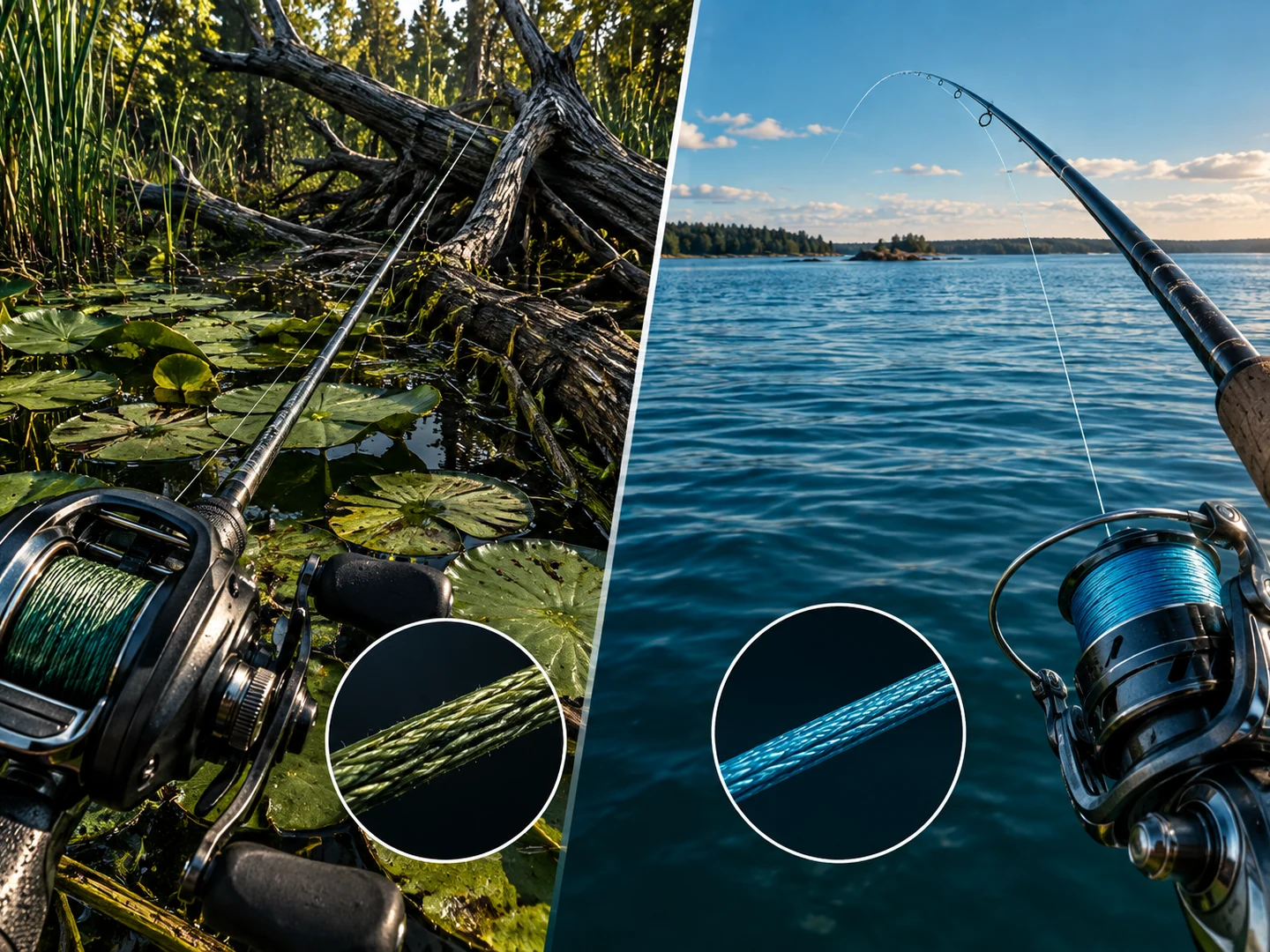
Many braid roundups default to the smoothest line as the winner, but that misses a real use case. A coarse four-carrier braid can be desirable when you are throwing frogs, working jigs through vegetation, or generally prioritizing cover management over quiet guide flow.
Standard PowerPro uses Spectra fiber and Shimano’s Enhanced Body Technology. The company describes that process as creating a rounder, smoother, more structurally stable line than untreated braid, while the four-carrier construction still keeps a more textured personality than the eight and nine-carrier lines below.
The exact Amazon child linked here is 20 lb, 300 yards, Moss Green. For true frog work or very heavy vegetation, many anglers will move to a higher pound test than this linked example. The CTA is an exact listing, not a recommendation that 20 lb is the right strength for every heavy-cover setup.
Why it makes the shortlist
- Purposeful four-carrier construction
- Long-running mainstream product family
- Broad current range of pound tests and spool lengths
What to know
- More guide noise and texture than smoother multi-carrier braid
- Not the first pick for anglers obsessed with ultra-smooth spinning performance
- Choose heavier test when your cover and tackle demand it
Daiwa J-Braid x8 Grand
A supple eight-carrier braid with a smooth-spooling design that fits anglers who make lots of casts on spinning tackle.
That combination is exactly what makes it interesting on spinning gear. Line that comes off the spool cleanly is easier to live with when you are making repeated casts, and the Grand version is positioned above standard J-Braid in Daiwa’s family.
The current Amazon listing used here is unusually specific: 30 lb, 150 yards, Dark Green, model JBGD8U30-150DG, with a listed diameter of 0.011 inch. That lets the CTA map to a real child variation instead of a vague parent page.
Daiwa also makes a manufacturer claim that the Izanas construction improves abrasion resistance relative to typical four-carrier braid. Because that is a brand comparison rather than independent testing by GearAndFish, it is not used here as the reason to rank the line. The more defensible buying reason is the documented eight-carrier, supple-spooling design.
Why it makes the shortlist
- Eight-carrier Izanas construction
- Built around supple, smooth spool behavior
- Exact linked Amazon child includes model, length, test, color, and diameter
What to know
- Not a coarse four-carrier line if vegetation cutting is the main job
- Dark Green is not a substitute for a leader when visibility matters
- 30 lb may be more than a light finesse spinning setup needs
Berkley x9 Braid
A straightforward way to get a smooth multi-carrier braid with a long-spool Amazon option and without turning the purchase into a niche-tech decision.
That makes x9 easy to understand. It is not trying to be the roughest line for cutting grass or a specialty sinking braid. It is a mainstream PE braid that prioritizes roundness and castability, and the current exact Amazon child gives you 328 yards of 20 lb Low-Vis Green.
The reason it gets the value slot is not a temporary price comparison. It is the combination of a long linked spool, broad size availability, and a construction that competes directly with other smooth multi-carrier braids. That is a more durable value argument than quoting today’s price.
Why it makes the shortlist
- Nine-carrier PE construction
- Designed for smooth and quiet casting
- Long 328-yard exact Amazon child in the linked 20 lb option
What to know
- Not as purpose-built for vegetation as classic PowerPro
- Do not assume more carriers automatically means more abrasion resistance
- Low-Vis Green still remains visible enough that a leader can matter
Seaguar Smackdown Stealth Gray
A tightly woven eight-strand braid for anglers who want a round, smooth profile and a subdued gray color in a mainstream US line.
Smackdown is a good fit when line handling and a restrained color matter more than having the cheapest possible bulk spool. The 20 lb Stealth Gray child linked here is exact on Amazon, and Seaguar lists the matching model as 20SDSG150.
One caution: do not read the gray color as invisibility. Braid is still braid, and in clear water many anglers use a fluorocarbon or monofilament leader for presentation, abrasion management, or both. The point of Stealth Gray is a lower-visibility color choice, not a reason to skip leader decisions entirely.
Why it makes the shortlist
- Eight-strand micro-weave construction
- Published diameter for the exact 20 lb family size
- Stealth Gray option for anglers who dislike bright braid
What to know
- 20 lb is not the automatic choice for heavy frog or punching tackle
- Low visibility does not mean invisible underwater
- A thin smooth braid can be less ideal than a coarser option in some cover
How to choose braided fishing line
Start with the job, not the carrier count
Carrier count changes how a braid can feel, but it is not a quality score. A four-carrier line is usually more textured, while eight and nine-carrier braids tend to feel rounder and smoother through the guides. Material, weave, coating, diameter, and quality control still matter, so choosing only by the biggest strand count is a shortcut that can point you at the wrong line.
If you spend the day around lily pads, grass, and wood, a tougher-feeling workhorse can be more useful than a silky line. If you make hundreds of casts from a spinning reel in open water, smooth spool behavior becomes a much bigger part of the buying decision.
Choose pound test for tackle and cover, not just fish size
Braid has a high strength-to-diameter ratio, so pound test should match the entire system: reel, rod power, lure weight, hook gauge, cover, leader, and target species. A light spinning setup can benefit from thin braid, while frog and heavy-cover gear often uses much heavier braid because the line must handle vegetation, shock, and hard pulling around structure.
A useful rule is to avoid treating a single pound-test recommendation as universal. If you are moving from mono, check the reel’s capacity guidance and the braid maker’s diameter chart. The exact 20 lb and 30 lb Amazon variants in this article are easy-to-buy reference sizes, not blanket prescriptions.
Direct braid or braid-to-leader?
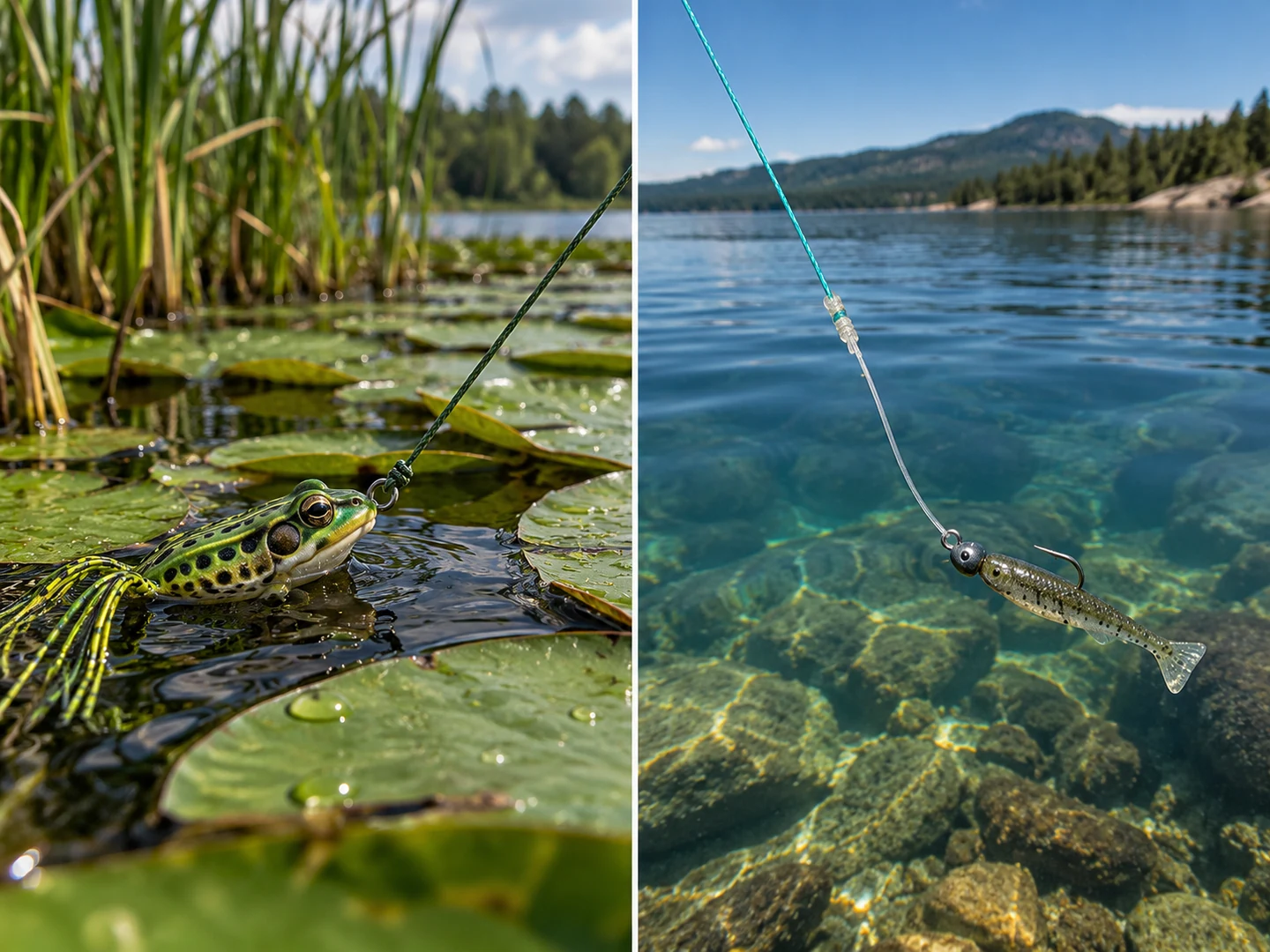
Direct braid is simplest when visibility is less important and the line needs to work through vegetation, as with many frog setups. A leader becomes more useful when you want lower visibility near the lure, a different abrasion profile, or a controlled amount of stretch. That is common on spinning tackle in clear water.
The leader material is a separate decision. Fluorocarbon is popular when low visibility and abrasion behavior matter. Monofilament can make sense when you want more stretch or a leader that tends to float more readily. Whichever you use, the connection knot becomes part of the system, so a clean, compact braid-to-leader knot matters more than chasing a tiny difference between two good braids.
Color is a visibility tool, not camouflage magic
Low-vis green and gray are common because they look subdued in many fishing environments. High-vis colors can be useful when watching the line is part of detecting a bite. Neither choice makes braid disappear. If the presentation requires less visible line near the lure, use a leader rather than relying on color alone.
Do not buy braid from diameter claims alone
Diameter numbers are useful when they are published for a specific pound test, but cross-brand comparisons can still be imperfect because labels and measurement conventions differ. Use diameter mainly to estimate spool capacity and to compare documented sizes within a product family. It is one input, not the final verdict.
How GearAndFish chose these braided lines
This page is an editorial research roundup, not a first-person product test. The shortlist started with the current US search results for “best braided fishing line,” then narrowed the product universe to lines that still have current manufacturer support, distinct buyer roles, and exact Amazon.com US child listings that can be mapped to the article.
Manufacturer performance language is treated as manufacturer-supplied information unless independently established. GearAndFish does not convert brand marketing claims into testing claims.
Frequently asked questions
What is the best braided fishing line for most anglers?
Sufix 832 Advanced Superline is the best all-around starting point in this roundup because its eight-fiber construction, 32-weave build, and diameter chart are clearly documented, while the line still fits a wide range of freshwater uses. Daiwa J-Braid x8 Grand is the stronger alternative when smooth spinning-reel handling is the priority.
Is 4-strand or 8-strand braid better?
Neither is automatically better. Four-carrier braid is generally more textured and can be useful in vegetation and heavy-cover work. Eight-carrier braid is generally smoother and quieter through guides. The best choice depends on technique, cover, line diameter, and the specific product construction.
What pound test braid should I use on a spinning reel?
There is no single correct pound test for every spinning reel. Match braid diameter and strength to reel capacity, rod power, lure weight, cover, leader, and target species. Light freshwater setups often use thinner braid than inshore or heavy-cover setups, so check the reel and line specifications before spooling.
Do I need a leader with braided fishing line?
No, but a leader is often useful. Direct braid is simple around vegetation or when line visibility is not a concern. Fluorocarbon or monofilament leaders can help with presentation, abrasion management, or adding some stretch, depending on the setup.
How often should braided fishing line be replaced?
Replace braid based on condition rather than a calendar alone. Cut back or replace line that is badly frayed, flattened, damaged by a rough guide, or repeatedly compromised near the working end. Braid deeper on the spool can often remain serviceable longer than the most heavily used section.