

GearAndFish is reader-supported. As an Amazon Associate I earn from qualifying purchases. When you buy through links on our site, we may earn an affiliate commission, at no extra cost to you. Learn more.
A drop shot rig keeps a soft plastic above the bottom while the sinker stays below it, which lets you hold a finesse bait in the strike zone without dragging the bait itself through every rock and piece of cover. The setup is simple, but hook orientation, leader length and sinker weight make a major difference in how naturally it fishes.
A dependable drop shot setup for bass
Start with a spinning rod, light line, a small drop shot hook, a 3.5 to 5 inch finesse worm or minnow bait, and a 1/8 to 1/4 ounce drop shot weight. Tie the hook so the point rides up, then leave about 12 to 18 inches of line between the hook and the weight. Let the sinker stay on bottom while the bait moves with small shakes, short drags and long pauses.
What a drop shot rig actually does
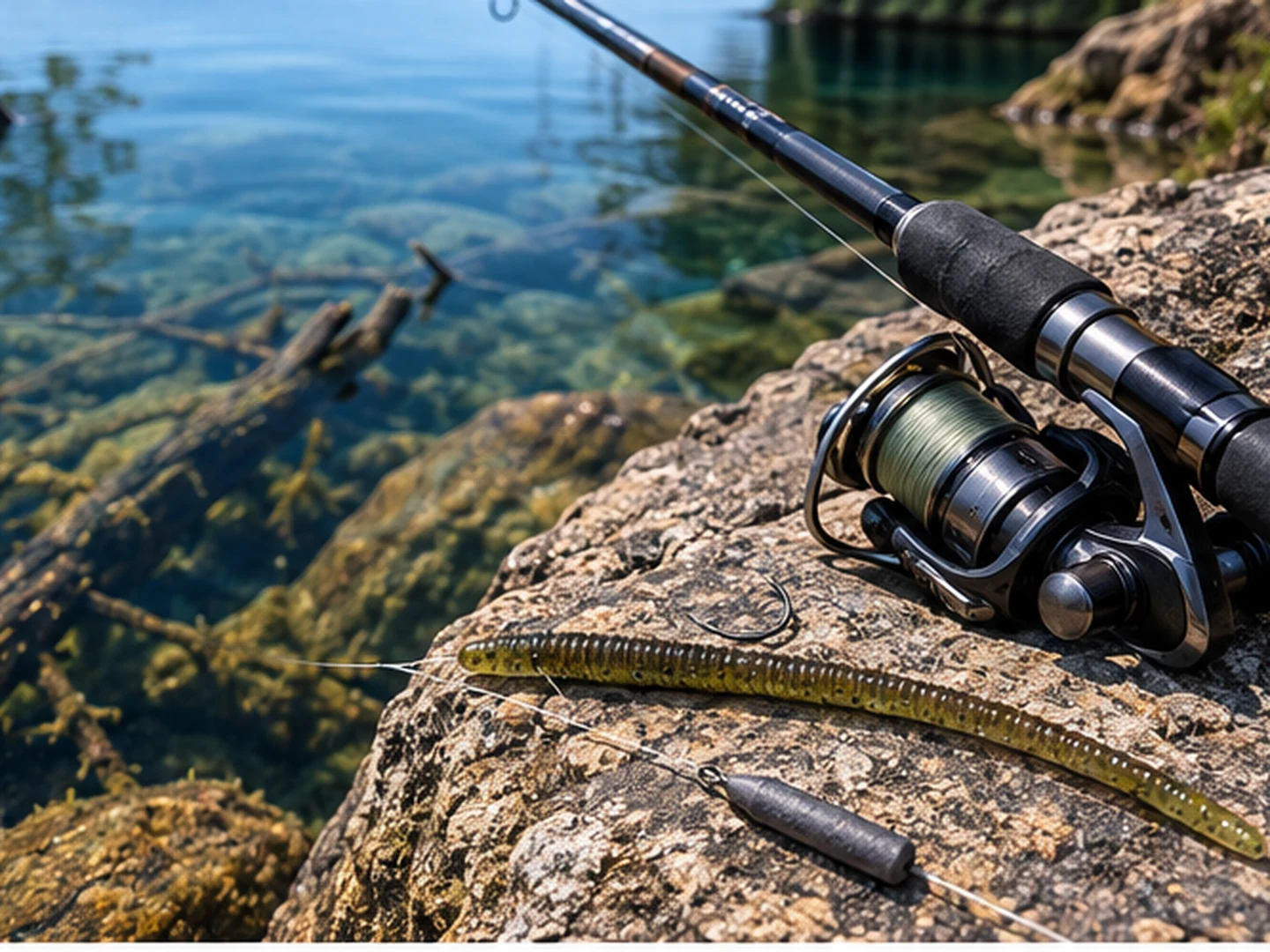
The defining feature is the order of the components. The hook sits on the line above the sinker, and the bait is attached to that hook. When the sinker touches bottom, the bait remains suspended at the height set by the distance between hook and weight.
That separation is why the rig is useful for pressured bass, clear water, deep structure and fish that are reluctant to chase. You can keep the lure almost in one place while still giving it movement. It can also be cast and worked back from shore, not just fished vertically from a boat.
Clear water, pressured fish, offshore structure, points, rock, sparse grass, docks and situations where bass are holding close to a specific depth.
Heavy vegetation or wood constantly fouls an exposed hook. In that situation, use a weedless hook style or Texas-rig the drop shot bait instead of forcing a nose-hooked presentation through cover.
How to tie a drop shot rig step by step
- Leave a long tag end. Start with enough extra line below the hook to create the final hook-to-weight distance. Eighteen to 24 inches of tag end gives room to adjust.
- Tie the hook with a Palomar knot. A standard Palomar is a common choice for this rig. Keep the hook close to the knot rather than leaving a loop.
- Run the tag end back through the hook eye. Feed the tag end through the eye so the hook stands out from the line with the point facing up when the rig hangs vertically.
- Set the leader length. For a versatile starting point, leave roughly 12 to 18 inches between the hook and the sinker.
- Attach the drop shot weight. Clip the line into a pinch-style drop shot sinker or tie on a sinker designed for a direct knot.
- Add the bait. Nose-hook a finesse worm or minnow-style bait for maximum movement in open water. Use a weedless presentation when cover demands it.
Before fishing, hold the rig by the line and check the hook. If the point hangs down instead of up, rethread the tag end through the eye from the opposite direction. That small correction is one of the easiest ways to improve bait position.
Rod, reel and line for a drop shot
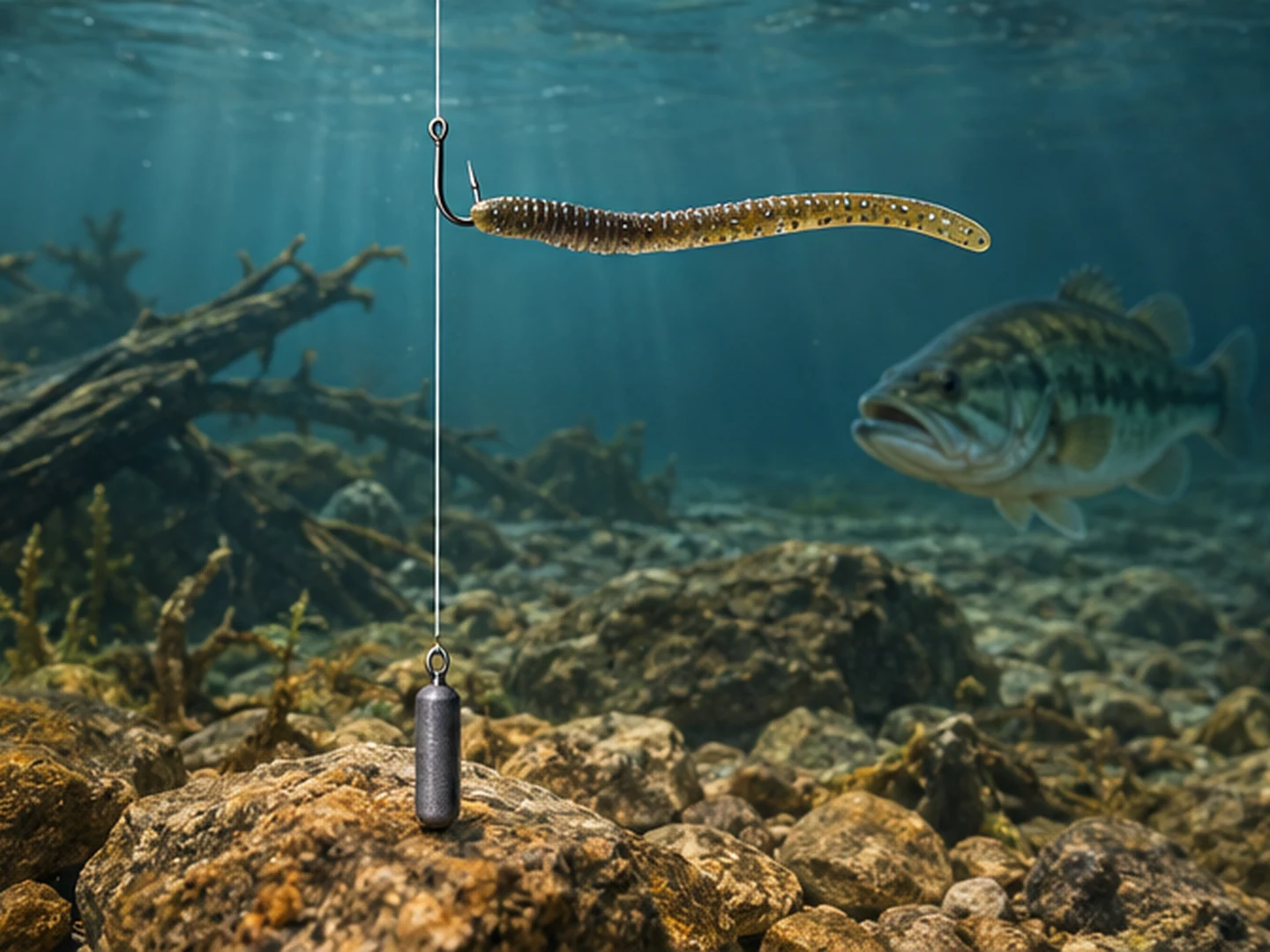
A dedicated drop shot rod is not required, but a light spinning setup makes the technique easier. A medium-light to medium spinning rod around 6 feet 10 inches to 7 feet 2 inches with a responsive tip gives enough sensitivity for light bites while keeping the setup manageable for casting and vertical work.
For line, two approaches are common: straight light fluorocarbon, or thin braid with a fluorocarbon leader. A useful starting range is 6 to 8 pound fluorocarbon when abrasion and fish size allow it. With braid, 10 to 15 pound main line connected to a 6 to 8 pound fluorocarbon leader is a practical finesse combination. Move heavier around cover or larger fish rather than treating one line size as universal.
The hook should match the bait. For small nose-hooked worms and minnow profiles, light-wire drop shot hooks from roughly size 2 through 1/0 cover many bass applications. A 1/0 VMC SpinShot is a current Amazon-listed option with an integrated rotating system intended to reduce line twist.
How long should the drop shot leader be?
The leader in this context is the distance between the hook and the sinker. There is no single correct length because the goal is to position the bait where fish are feeding.
Useful when fish are tight to bottom, when a compact presentation is easier to control, or when you want the bait close to rock and hard spots.
The best general starting zone for many bass situations. It keeps the bait clearly above the sinker without making the rig awkward to cast.
Useful when fish are visibly holding farther off bottom or when low grass needs to be cleared by the bait.
A specialized option for suspended fish or taller vegetation. It can work, but longer droppers are harder to cast and control.
Decision rule: set the hook-to-weight distance to the fish, not to a memorized number. If sonar, visible cover or repeated bites show fish are one foot above bottom, keep the bait close to that zone.
Choose drop shot weight by depth, wind and bottom
Use the lightest sinker that still lets you feel bottom and control the bait. A lighter weight can look more natural, but going too light causes a different problem: you lose contact and no longer know whether the rig is where you think it is.
| Situation | Starting weight | Why | Adjustment |
|---|---|---|---|
| Shallow, calm water | 1/8 oz | Keeps the presentation light and subtle | Move up if wind or current hides bottom contact |
| General purpose | 3/16 to 1/4 oz | Balances feel, castability and finesse | A strong starting range when depth is moderate |
| Deep water or wind | 3/8 oz | Gets down faster and maintains contact | Use only as heavy as needed to stay controlled |
| Strong current or very deep water | 1/2 oz or more | Holds position when lighter sinkers drift | Match line, rod and cover before moving this heavy |
Start at 1/8 oz
Subtle presentation
You lose bottom contact
Start at 3/16 to 1/4 oz
Balance feel and finesse
Moderate depth and light wind
Start at 3/8 oz
Maintain bottom contact
Overweighting the presentation
Use 1/2 oz or more only when needed
Hold the rig in place
Line, rod and cover
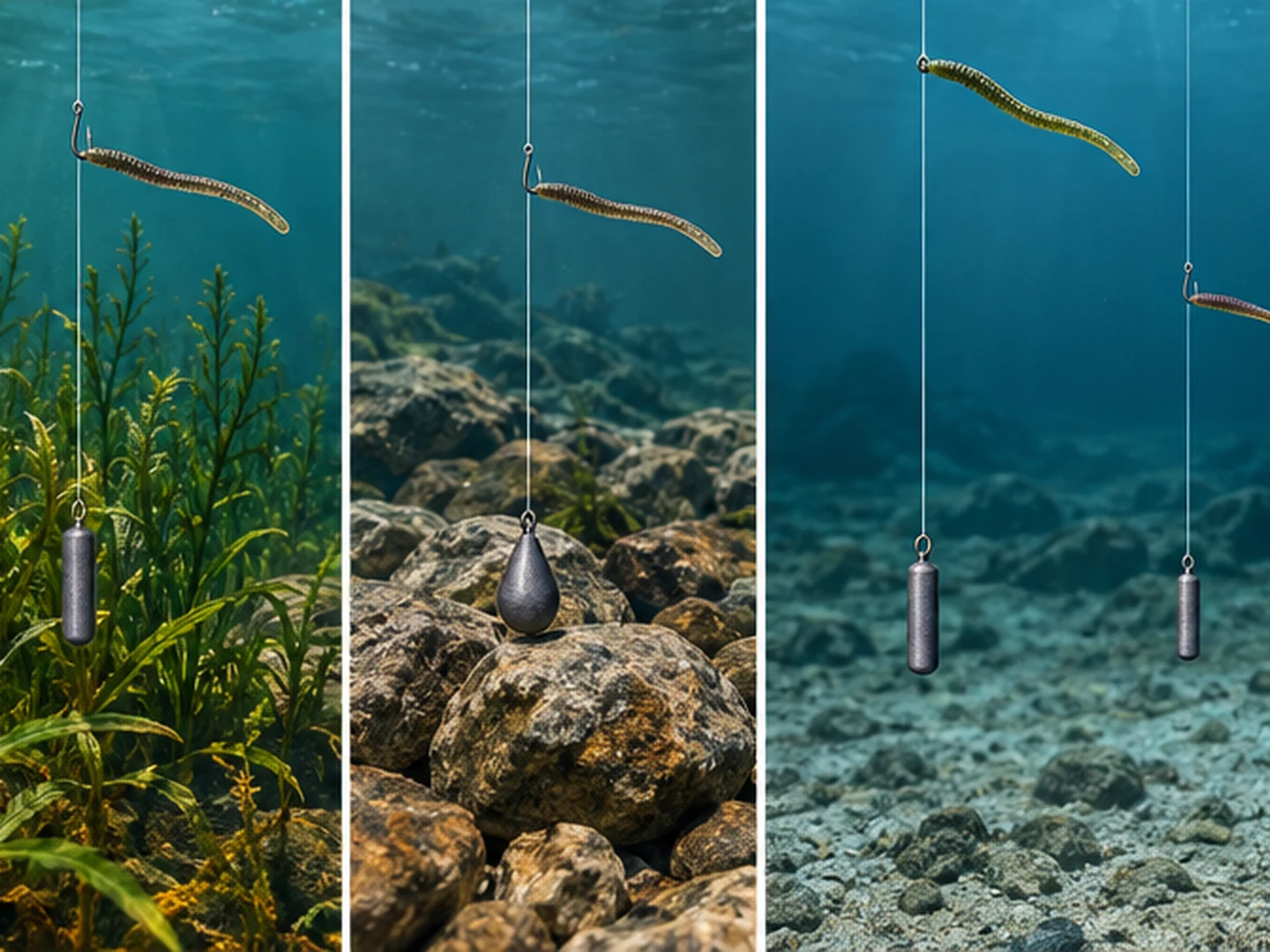
Cylinder or skinny weights are a practical choice around vegetation and when you want a compact profile that can slip through gaps. Rounder or teardrop shapes often hold hard bottom well and give a clear feel on rock. Bottom composition matters more than brand name, so carry at least two shapes if you regularly fish both grass and rock.
A multi-size sinker kit is more useful for learning the technique than buying one fixed weight because the correct weight changes with depth and conditions.
Best bait styles for a drop shot rig
Finesse worms and small minnow-shaped soft plastics are the most straightforward choices because they move with very little rod input. A 3.5 to 5 inch bait is a versatile bass range, but smaller or larger profiles can make sense when forage size or fish mood changes.
Nose hooking
Push the hook through the very front of the bait and leave most of the body free. This gives the soft plastic maximum movement and is a strong choice for open water, rock and situations with relatively little snagging cover.
Texas-rigged drop shot bait
Thread the bait onto an offset or weedless hook so the point is protected. The presentation loses some freedom of movement, but it is much easier to work through brush, grass and other cover that grabs an exposed hook.
Start with a straight-tail worm
A straight-tail finesse worm is easy to rig, works both vertically and on a cast, and does not need aggressive rod movement. Roboworm’s 4.5 inch Straight Tail Worm is a long-running drop shot style bait with a current Amazon listing.
How to fish a drop shot without overworking it
The biggest beginner mistake is trying to make the bait move constantly. The sinker gives you an anchor point. Use that anchor to control the lure instead of turning the presentation into a hopping jig.
1. Cast, settle and pause
Cast beyond the target, let the weight reach bottom, then reel enough slack out of the line to feel the sinker without pulling it toward you. Hold the rig in place and use small rod-tip movements. The bait can move while the weight barely moves.
2. Drag a short distance, then reset
After a pause, pull the sinker a few inches to a foot, stop and let the bait settle again. This is effective for points, rock transitions, dock edges and isolated hard spots because you can work one target slowly.
3. Fish it vertically
When the boat is over fish or structure, lower the rig to bottom and keep the line controlled. Vertical fishing makes it easier to keep the bait at an exact distance above the sinker and is especially useful in deeper water.
4. Let current move the bait
In current, the water often provides enough bait movement by itself. Keep the sinker in contact with bottom and resist the urge to shake constantly. If the weight will not stay controlled, increase sinker weight before adding more rod action.
How to set the hook on a drop shot bite
A light-wire drop shot hook usually does not need a hard, sweeping hookset. When the line feels heavy, starts moving or gives a clear tick, reel quickly until the line is tight and lift the rod into the fish. This reel-set approach keeps steady pressure without yanking a small hook away from the fish or overloading light line.
If fish are repeatedly coming off, check hook sharpness, bait position and line tension before assuming the solution is a harder hookset.
Common drop shot problems and quick fixes
Run the tag end back through the eye from the opposite direction and recheck the hanging orientation.
Rig the bait straighter, avoid excessive spinning retrieves, and consider a rotating drop shot hook such as a SpinShot design.
Increase the sinker one step. Wind, current and depth can make a finesse weight too light even when the water is otherwise ideal for a drop shot.
Try a slimmer sinker, shorten the hook-to-weight distance, switch to a weedless hook presentation, or reduce how far you drag each move.
Use less rod movement. A soft plastic often has enough action from water movement and line tension without constant shaking.
Lengthen the drop from hook to sinker so the lure rides higher. Do not keep changing bait color if the bigger issue is vertical position.
A simple starter setup to copy
For a first dedicated drop shot rig, use a medium-light spinning rod, light spinning reel, 10 to 15 pound braid with a 6 to 8 pound fluorocarbon leader, a size 1 or 1/0 drop shot hook, a 4 to 5 inch straight-tail worm, and several sinkers from 1/8 through 3/8 ounce. Start with a 12 to 18 inch hook-to-weight distance and a 1/4 ounce sinker, then change only one variable at a time.
The most useful adjustment order is usually: first depth and leader length, then sinker weight, then bait size or style. That keeps the rig controlled and makes it easier to understand why a change helped.
Drop shot rig FAQ
How far should the hook be from the weight on a drop shot rig?
About 12 to 18 inches is a versatile starting range. Shorten it when fish are tight to bottom and lengthen it when bass are suspended higher or when the bait needs to clear low vegetation.
What size weight should I use for a drop shot?
Start around 1/8 ounce in shallow calm water, 3/16 to 1/4 ounce for general use, and 3/8 ounce when depth, wind or current makes lighter weights hard to control. Use the lightest sinker that still gives reliable bottom contact.
Does the hook point face up on a drop shot rig?
Yes. When the rig hangs vertically, the hook point should normally face up. If it points down, rethread the tag end through the hook eye from the opposite direction.
Can you fish a drop shot from shore?
Yes. Cast it past points, rock, weed edges, docks or other targets, let the sinker reach bottom, then work it back with short drags and pauses. The technique is not limited to vertical boat fishing.
Do you need fluorocarbon for a drop shot?
No, but fluorocarbon is commonly used because light line and a subtle presentation are central to the technique. Many anglers use straight fluorocarbon or braid as the main line with a fluorocarbon leader.


