

GearAndFish is reader-supported. As an Amazon Associate I earn from qualifying purchases. When you buy through links on our site, we may earn an affiliate commission, at no extra cost to you. Learn more.
The best saltwater fishing rod is not one universal rod. A 7-foot inshore spinner built to throw jigs around docks has a very different job from a 50-100 lb offshore rod or a short trolling stick. The useful question is not which rod is strongest. It is which rod matches the water, reel, lure or bait, and fish you actually plan to target.
For most anglers fishing bays, estuaries, jetties, and light nearshore water with a spinning reel, the PENN Prevail III Inshore 7-foot Medium is the most balanced starting point in this group. If your saltwater fishing is genuinely offshore, skip the inshore compromise and move to a rod built for heavier line and sustained load, such as the Shimano Terez TZS72H.
Scope: this roundup covers inshore, boat, offshore spinning, popping, heavy casting, and trolling rods. It does not try to rank long surf rods, fly rods, or travel rods, because those are different buying decisions.
Quick Answer
Which saltwater fishing rod should you buy?
For the widest group of saltwater anglers: choose the PENN Prevail III Inshore 7-foot Medium if you mainly cast artificials or bait in bays, passes, docks, and light nearshore water. Its medium power and extra-fast action are a useful match for common inshore work without turning the setup into a broomstick.
For rougher treatment and a two-piece format: the Ugly Stik Bigwater 7-foot Medium gives up some crispness for a graphite-and-fiberglass construction, one-piece stainless guides, and a more durability-first personality.
For offshore spinning: the Shimano Terez 72H is in another class entirely. It is a 7-foot-2 heavy spinning rod rated for 50-100 lb PowerPro in Shimano’s current specification chart. It is expensive, but it is also designed for loads that would be inappropriate for an inshore rod.
Quick picks
PENN Prevail III Inshore 7′ Medium
A sensible balance of lure control, sensitivity, and saltwater-ready hardware for the way many coastal anglers actually fish.
Ugly Stik Bigwater 7′ Medium
A toughness-first two-piece rod for anglers who prioritize durability, transport convenience, and simple hardware over maximum blank crispness.
KastKing Kong 7’6″ Heavy Casting
A heavy 2-piece casting option for big baits and hard-pulling fish when you want more leverage without moving to premium offshore pricing.
Shimano Terez TZS72H
A purpose-built heavy spinning rod with Shimano’s Spiral X and Hi-Power X blank construction and Fuji Alconite guides.
Okuma PCH Custom PCHP-S-761MH
A 7’6″ popping rod rated for 40-60 lb line and 1-6 oz lures, built around a carbon blank and saltwater-oriented components.
Fiblink 6′ 30-50 lb
A low-cost conventional trolling option with roller guides and an aluminum reel seat for anglers building a dedicated boat setup on a budget.
Saltwater fishing rod comparison
Do not read this table as a strength ranking. The important columns are technique, line class, and whether the rod matches a spinning or conventional reel.
| Pick | Exact variant | Best use | Power / action | Line or lure class | Pieces |
|---|---|---|---|---|---|
| PENN Prevail III Inshore | PREINIII1017S70, 7′ | Inshore spinning | Medium / Extra Fast | 10-17 lb line, 1/4-1 oz lure | 1 |
| Ugly Stik Bigwater | 7′ Medium | Rugged general saltwater spinning | Medium | 10-20 lb line | 2 |
| KastKing Kong | KRDCSTKG-76H2, 7’6″ Cast | Heavy casting / big baits | Heavy / Fast | 60 lb listed line weight, 12 oz listed lure weight | 2 |
| Shimano Terez | TZS72H, 7’2″ | Heavy offshore spinning | Heavy / Fast | 50-100 lb PowerPro | 1 |
| Okuma PCH Custom | PCHP-S-761MH, 7’6″ | Popping / offshore casting with spinning gear | Medium Heavy / Moderate Fast-Fast | 40-60 lb line, 1-6 oz lure | 1 |
| Fiblink Offshore Trolling | 6′ 30-50 lb | Trolling / conventional boat use | Medium / Fast listing | Selected 30-50 lb size | 1 |
Best saltwater fishing rods in detail
Best Overall for Inshore
PENN Prevail III Inshore Spinning Rod, PREINIII1017S70
Inshore pick
A straightforward 7-foot medium spinning rod for anglers who throw jigs, plugs, soft plastics, or bait around coastal structure and do not need offshore line ratings.
PENN’s current Prevail III inshore lineup uses a 100% 24-ton carbon blank on the inshore models, PENN Dura-Guides, a graphite reel seat, and cork grips. The exact Amazon child listing mapped here is the 7-foot Medium version, not a visually similar heavier Prevail variant.
The reason it leads this list for typical coastal fishing is fit rather than brute strength. Medium power and an extra-fast action make more sense for common inshore presentations than a 50-100 lb offshore blank. You get a responsive tip for lure control while keeping enough backbone for many redfish, snook, striped bass, school-size blues, flounder, and similar inshore targets when the line and drag are matched appropriately.
Best for
- Inshore spinning with artificials or bait
- Anglers who want a crisp carbon blank
- Bays, docks, jetties, passes, and light nearshore work
Skip if
- You need heavy offshore braid ratings
- You routinely fish very heavy sinkers or giant baits
- You want a 2-piece rod for travel or storage
Best Rugged All-Rounder
Ugly Stik Bigwater Spinning Rod, 7′ Medium 2-Piece
Durability pick
The pick for anglers who care more about toughness, simple hardware, and transport-friendly construction than getting the lightest or crispest blank.
Ugly Stik builds the Bigwater around its graphite-and-fiberglass Ugly Tech construction, one-piece stainless Ugly Tuff guides, a Fuji reel seat, and EVA grips. On the current Amazon family, the mapped ASIN is the new-model 7-foot Medium, 10-20 lb, 2-piece variant.
This is not the choice for an angler chasing the lightest possible inshore setup. It is the choice for rod lockers, pickup beds, shared family gear, piers, boats, and mixed saltwater duty where the rod may live a harder life. The two-piece construction is also easier to transport than the one-piece Prevail and most of the offshore rods here.
Best for
- Rugged general saltwater use
- Anglers who want a 2-piece rod
- Pier, jetty, boat, and utility setups
Skip if
- Your priority is maximum blank sensitivity
- You need heavy offshore line classes
- You are building a specialized popping or trolling setup
Best Heavy-Duty Value
KastKing Kong KRDCSTKG-76H2, 7’6″ Heavy Casting
Heavy value
A powerful two-piece conventional-style casting rod for big baits and hard-pulling fish when you want more backbone than a typical inshore stick without paying premium offshore prices.
The exact Amazon selection is the 7-foot-6 Heavy, 2-piece casting version, model KRDCSTKG-76H2. The listing specifies an S-Curve graphite blank reinforced with nano resin, stainless double-foot guides with titanium-oxide rings, and a fighting-butt style grip.
Its value is not that it can replace every offshore rod. It cannot. The value is that it gives anglers a heavy casting tool for larger baits, stout line, bridge or pier work, and hard-pulling species while retaining a break-down 2-piece format. That is a useful niche between a medium inshore spinner and a dedicated trolling rod.
Best for
- Heavy casting from boats, piers, or structure
- Big bait and stout line setups
- Anglers who need a 2-piece heavy rod
Skip if
- You primarily throw light inshore lures
- You want a premium offshore spinning system
- Your technique is dedicated trolling
Best Premium Offshore Spinning
Shimano Terez TZS72H / Terez SPN 72 H
Premium offshore
A serious heavy spinning rod for anglers who need a true offshore braid class, strong blank control, and premium components rather than an up-rated inshore rod.
Shimano lists the TZS72H at 7-foot-2, Heavy power, Fast action, and 50-100 lb PowerPro. The Terez family uses Shimano’s Spiral X and Hi-Power X construction, EVA grips, an aluminum reel seat, and Fuji Alconite guides. The Amazon mapping is specifically for the Terez SPN 72 H child listing.
This is the rod to look at when your definition of saltwater means offshore spinning for substantial fish, not 1/2-ounce jigs around mangroves. Its line class alone tells you that it belongs in a different category from the Prevail III and Bigwater Medium. The premium price only makes sense if you will use that capability.
Best for
- Heavy offshore spinning
- High braid classes and strong fish
- Anglers willing to pay for premium blank construction and hardware
Skip if
- You mostly fish inshore with light lures
- You need a compact 2-piece rod
- You want the lowest-cost saltwater setup
Best for Popping
Okuma PCH Custom PCHP-S-761MH
Popping pick
A purpose-built 7-foot-6 medium-heavy popping rod for throwing larger surface lures with spinning gear instead of asking a short boat rod to do a casting job.
Okuma’s current catalog lists the PCHP-S-761MH as a 7-foot-6 Medium Heavy popping rod for 40-60 lb line and 1-6 oz lures. The PCH Custom platform uses a 24-ton carbon blank, 3K woven carbon outer wrap, reinforced tip construction, machined aluminum reel seats, and saltwater-oriented guides depending on model.
That longer 7-foot-6 format matters. Popping and casting large surface plugs require a rod that can load and launch a substantial lure while still giving the angler leverage. A short 6-foot trolling rod and a 7-foot medium inshore rod solve different problems.
Best for
- Offshore popping with spinning gear
- Large surface plugs and 1-6 oz lures
- Anglers who want a technique-specific carbon rod
Skip if
- You mostly cast small inshore lures
- You need a trolling setup
- You need a 2-piece rod for compact transport
Best Budget Trolling Rod
Fiblink Offshore Trolling Rod, 6′ 30-50 lb
Budget trolling
A dedicated conventional trolling rod with roller guides for anglers who need a low-cost boat rod rather than a do-everything casting setup.
The exact Amazon page maps to the selected 6-foot, 30-50 lb size and shows a qualified buy box at our final verification. The listing describes an E-glass/graphite-composite blank, stainless roller guides, an aluminum-alloy reel seat, and EVA handles.
The reason this rod is here is simple: trolling imposes different loads from repetitive casting. A compact conventional boat rod with roller hardware and a stout reel seat is built around that use. It is also the most budget-oriented product in this shortlist, which makes it useful for secondary trolling positions or anglers trying the technique without committing to premium tackle.
Best for
- Entry-level conventional trolling setups
- Boat anglers who want a dedicated rod
- Budget-conscious multi-rod spreads
Skip if
- You want to cast lures all day
- You prioritize a light, sensitive blank
- You are building a premium heavy-tackle system
How to choose a saltwater fishing rod
The fastest way to buy the wrong saltwater rod is to start with a species name or a vague idea that heavier is better. Start with the technique and the terminal tackle, then make sure the rod’s line and lure range fit the reel and the job.
1. Choose the technique before the brand
Inshore casting: a 6-foot-6 to 7-foot-6 spinning rod in light through medium-heavy power covers many coastal lure and bait applications. Length helps casting distance and line control, while a faster action can improve lure response and hook-setting feel.
Offshore spinning and popping: line class and lure rating climb quickly. A popping rod also needs enough length to load and cast heavy plugs. This is why the Okuma PCH Custom is 7-foot-6 while the heavy Shimano Terez is a 7-foot-2 offshore spinning rod.
Trolling: you are no longer choosing primarily for casting performance. A shorter, stout conventional rod, secure reel seat, durable grips, and appropriate guide system make more sense.
2. Match rod power to the lure and line, not the fish story
Power labels are not standardized perfectly across brands. A Medium from one company can feel different from another. The more useful comparison is the full set of published specifications: lure range, line range, length, action, and technique.
A medium inshore rod that is happy with 1/4- to 1-ounce lures should not be forced to cast a 6-ounce popper. Likewise, a 50-100 lb offshore rod is a poor tool for working small plastics all day. More power is not automatically more capability. It can simply mean less useful feedback and worse loading for the lure you are throwing.
3. Spinning vs. conventional matters
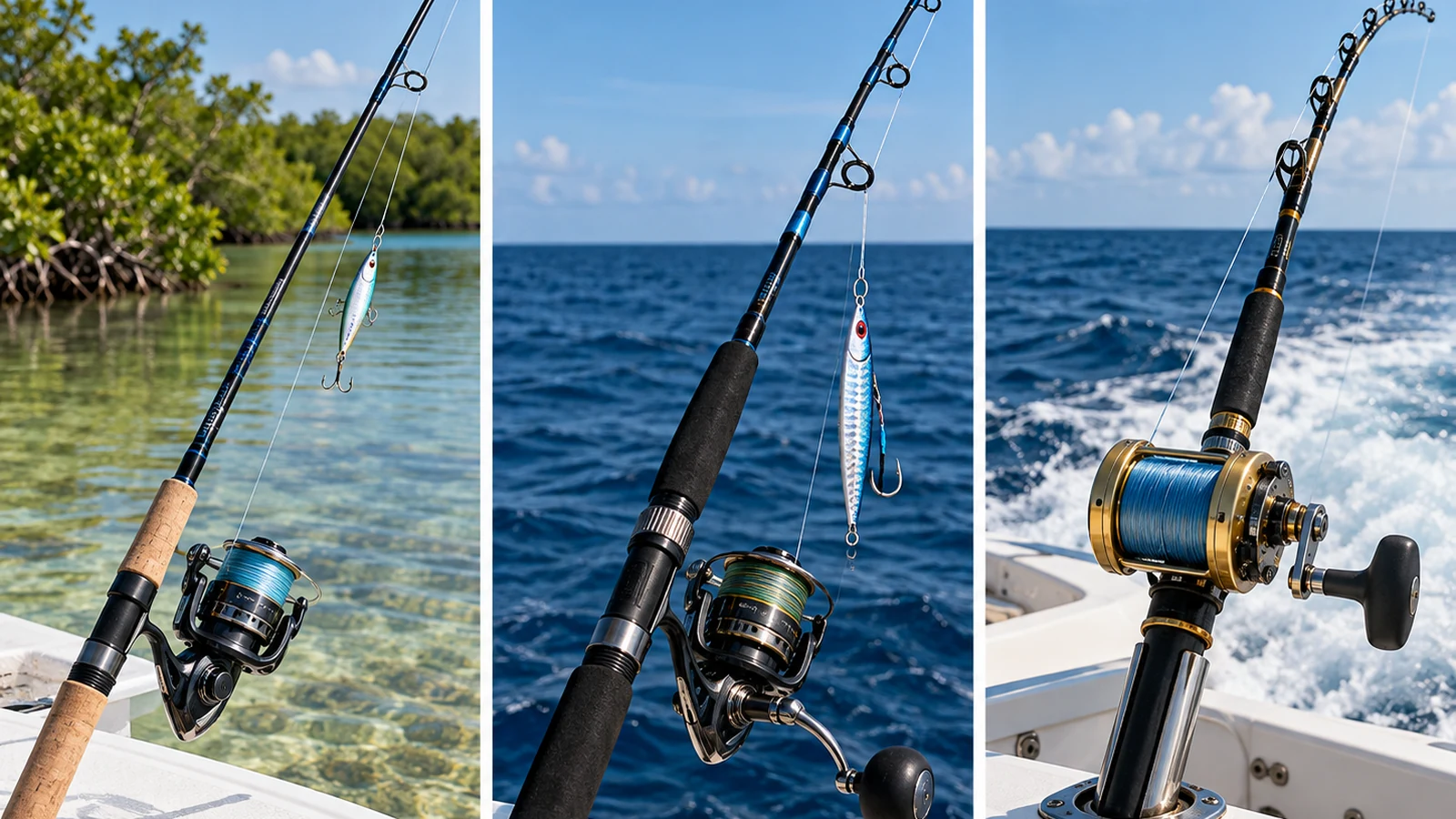
Make sure the rod matches the reel type. Spinning rods place the reel below the blank and use a guide train designed for line coming off a spinning spool. Conventional or casting rods place the reel above the blank. The KastKing Kong variant in this package is specifically the casting child ASIN; the Shimano Terez and PENN Prevail picks are spinning configurations.
4. Look closely at guides, reel seat, grip, and butt
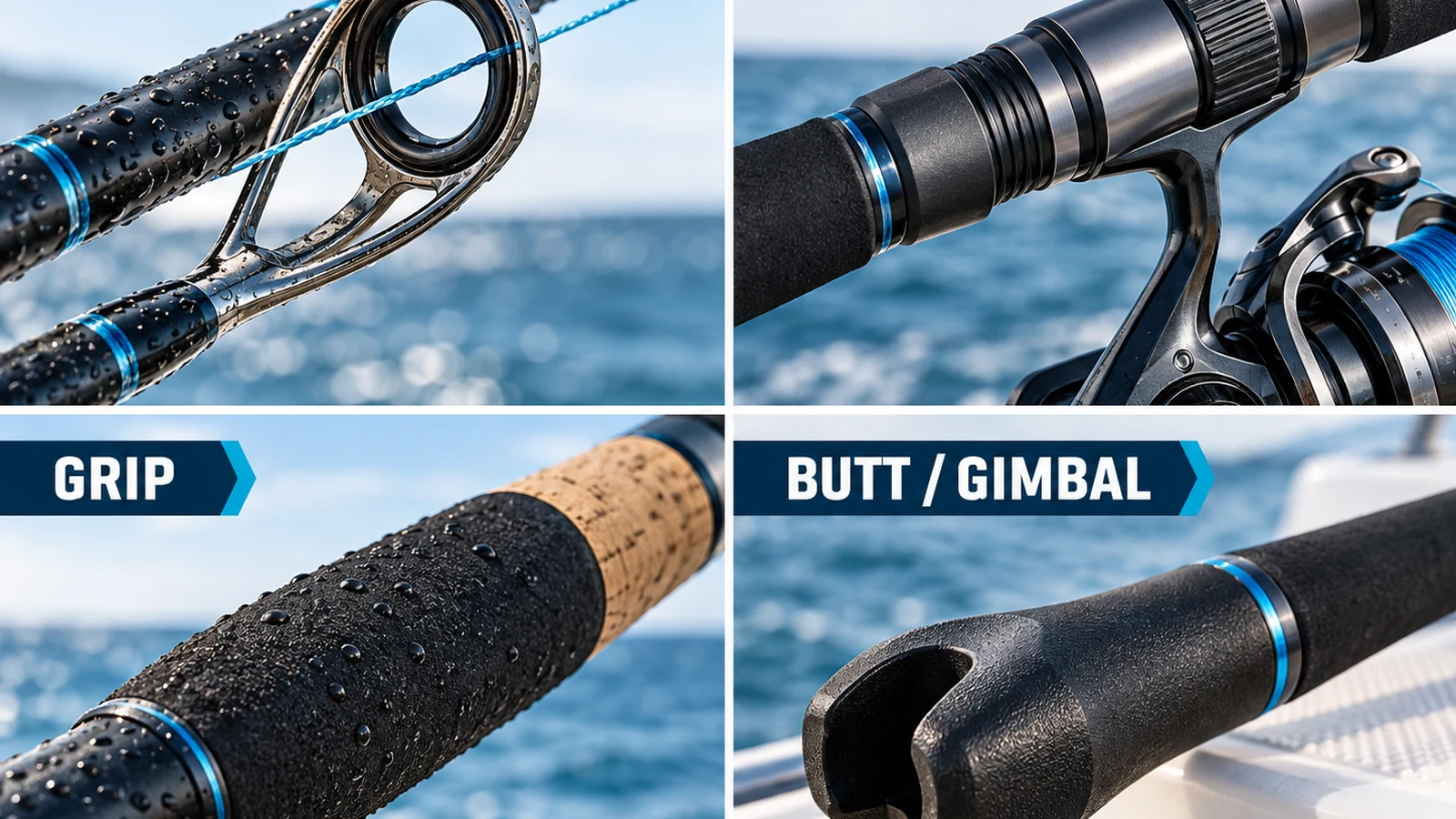
Saltwater reaches every exposed component. One-piece stainless guides, corrosion-resistant frames and inserts, aluminum or graphite reel seats, EVA or cork grips, and a gimbal or fighting butt can all be appropriate depending on the technique. None of them make a rod maintenance-free.
After saltwater use, rinse the rod with fresh water, avoid blasting high-pressure water directly into joints or hardware, wipe it down, and let it dry before storage. Pay attention to guide rings and frames for chips, grooves, or corrosion because line damage often begins at a guide problem.
5. One piece vs. two piece is a real trade-off
One-piece rods dominate many performance-focused saltwater categories because there is no ferrule break in the working blank. Two-piece rods are easier to fit in vehicles, apartments, small boats, and storage spaces. Modern two-piece construction can be very capable, but you still need to seat the sections correctly and check the joint during use.
6. Do not buy a surf rod by accident
Surf fishing usually pushes rod length much farther because casting distance, line clearance over breakers, sinker weight, and shore-based leverage become central. A 10- to 12-foot surf rod may be excellent from the beach and awkward on a center-console or around mangroves. That is why surf rods are intentionally outside this roundup.
How we chose these rods
GearAndFish did not perform physical field use for this roundup. We built the shortlist from the current US search results, current manufacturer specifications, exact Amazon.com US child listings and ASINs, and cross-checks against the intended technique. We also rejected the idea that one rod should win every saltwater scenario.
FAQ
What length rod is best for saltwater fishing?
For many inshore spinning setups, roughly 7 feet is a practical starting point because it balances casting distance, accuracy, and boat or bank handling. Offshore popping can benefit from more length, while trolling rods are often shorter and built around leverage instead of casting.
Is medium or medium-heavy better for saltwater?
Neither is universally better. Medium power is useful for lighter inshore lures and line classes, while medium-heavy gives more backbone for heavier tackle and stronger fish. Compare the exact rod’s published lure and line range because power labels vary by manufacturer.
Can I use a freshwater rod in saltwater?
You can use some freshwater rods in saltwater if the power, action, line and lure ratings fit the technique, but hardware and maintenance matter. Salt exposure can accelerate corrosion, so rinse and inspect the rod after use and pay particular attention to guides and reel-seat hardware.
Do I need a special rod for offshore fishing?
For heavy offshore work, usually yes. Offshore line classes, drag loads, large lures or baits, and sustained pressure can exceed what a typical inshore rod is designed to handle. Match the rod to the reel, line class, technique, and target size rather than relying on a generic saltwater label.
What is the difference between a saltwater rod and a surf rod?
A surf rod is a specialized saltwater rod built around shore casting, usually with substantially more length for distance and line control beyond the breakers. General inshore and boat rods are typically shorter and easier to handle around docks, mangroves, jetties, or on a boat.


