

GearAndFish is reader-supported. As an Amazon Associate I earn from qualifying purchases. When you buy through links on our site, we may earn an affiliate commission, at no extra cost to you. Learn more.
The Texas rig is a simple way to make a soft plastic much easier to fish through bass cover. The basic setup is a bullet weight, a worm hook and a soft plastic rigged straight with the hook point protected by the bait. The details that matter most are hook fit, weight size and whether the sinker should slide or stay pegged against the bait.
How to set up a Texas rig
Slide a bullet weight onto the line with the narrow end facing the rod, tie on an offset or EWG worm hook, then rig the soft plastic so it hangs straight and the hook point rests just inside or against the bait. Start with the lightest weight that still gives you control. Leave the weight free-sliding in open water or light cover, and peg it when you need the weight and bait to move together through thick grass, brush or wood.

What is a Texas rig?
A Texas rig is a soft-plastic presentation built around a weedless hook position. The hook point is tucked into, or lightly against, the plastic so the rig can work through grass, wood, docks, rock and other cover with fewer snags than an exposed-hook presentation.
The classic weighted version uses a bullet-shaped sinker on the line ahead of the hook. The weight can slide freely, or it can be held close to the bait with a rubber stop. Anglers also use the same weedless hook arrangement without a sinker when they want a slower fall.
If the plastic is bunched, twisted or stretched along the hook, it can spin, fall awkwardly and reduce the clearance the hook needs when a fish bites.
What you need for a basic Texas rig
- Bullet weight: lead or tungsten, sized for depth, cover, wind and the fall rate you want.
- Worm hook: offset round bend, EWG or straight shank depending on the plastic and cover.
- Soft plastic: worm, stick bait, craw, creature bait, lizard or another bait that can sit straight on the hook.
- Optional bobber stop: used when you want to peg the weight close to the bait.
You do not need a special Texas-rig knot. Use a strong knot you can tie consistently and match it to your line and hook eye.
How to rig a Texas rig step by step
- Add a bobber stop first if you plan to peg the weight. If you want a sliding sinker, skip this step.
- Thread on the bullet weight. The narrow end should point up the line toward the rod. The wider base faces the hook and bait.
- Tie on the hook. An offset worm hook is the default for many plastics. An EWG gives bulky baits more room to move past the hook gap.
- Start the plastic on the hook. Push the hook point into the nose of the bait, then bring it out through the side after a short distance.
- Slide the plastic up to the offset and rotate it. The nose should sit snugly near the hook eye without being crushed.
- Measure where the hook should re-enter. Lay the hook beside the bait before pushing it through. This helps keep the plastic straight instead of bowed.
- Finish weedless. Push the hook through and lightly bury the point back into the surface, or let the point rest flush against the plastic when the bait and cover allow it.
Hold the finished rig by the line and look at the bait from the side. The body should follow its natural shape. If it kinks around the hook, re-rig it before fishing.
How to choose a Texas rig hook
Match the hook to the shape and thickness of the plastic, not simply to the size of the fish. The bait needs enough hook gap to compress out of the way on a bite, but an oversized hook can make a smaller plastic stiff, heavy and crooked.
| Hook style | Good fit | Why use it | Watch for |
|---|---|---|---|
| Offset round bend | Slim worms and less bulky plastics | Simple shape with good control of a narrow bait | Not as much gap for thick-bodied plastics |
| EWG | Stick baits, craws and thicker creature baits | Extra gap gives a bulky plastic room to compress | Do not automatically choose the largest size available |
| Straight shank | Flipping and punching dense cover | Common heavy-cover option with direct pull | Usually paired with heavier tackle and a secure bait keeper |
Offset round bend
EWG
Straight shank
A 3/0 or 4/0 EWG is a common starting range for many medium-size bass plastics, while smaller finesse baits may need less hook and oversized worms or thick creature baits may need more. Treat those sizes as starting points. The correct hook is the one that lets the exact bait sit straight and leaves enough working gap for the plastic to move away from the point.
How much weight should you use?
Use the lightest weight that still lets you place, feel and control the bait in the water you are fishing. More weight increases fall speed and helps the rig reach deep water or push through cover. Less weight slows the fall and can make the presentation look less aggressive.
Four variables should drive the choice: fall rate, depth, cover density and wind. Bottom composition and current can matter too, but they usually show up as the same practical question: can you still control the rig and understand what it is doing?
| Starting range | Typical use | What it changes |
|---|---|---|
| Weightless to 1/8 oz | Very shallow water, slow fall, sparse cover | Maximum hang time and a subtle descent |
| 3/16 to 1/4 oz | General shallow to moderate-depth fishing | Useful balance of fall speed and control |
| 3/8 to 1/2 oz | More depth, wind or thicker cover | Faster fall and stronger bottom contact |
| 3/4 oz and heavier | Heavy grass and specialized punching | Helps the rig penetrate dense vegetation |
Weightless to 1/8 oz
3/16 to 1/4 oz
3/8 to 1/2 oz
3/4 oz and heavier
Do not treat a chart as a rule. A bulky plastic adds its own drag and weight. Wind can make a light rig hard to feel. Thick grass may require enough weight to get through the canopy. If the bait is plummeting too fast in clean shallow water, go lighter. If you cannot tell where the bottom is, or the rig will not reach the cover, go heavier.
Should you peg the Texas rig weight?
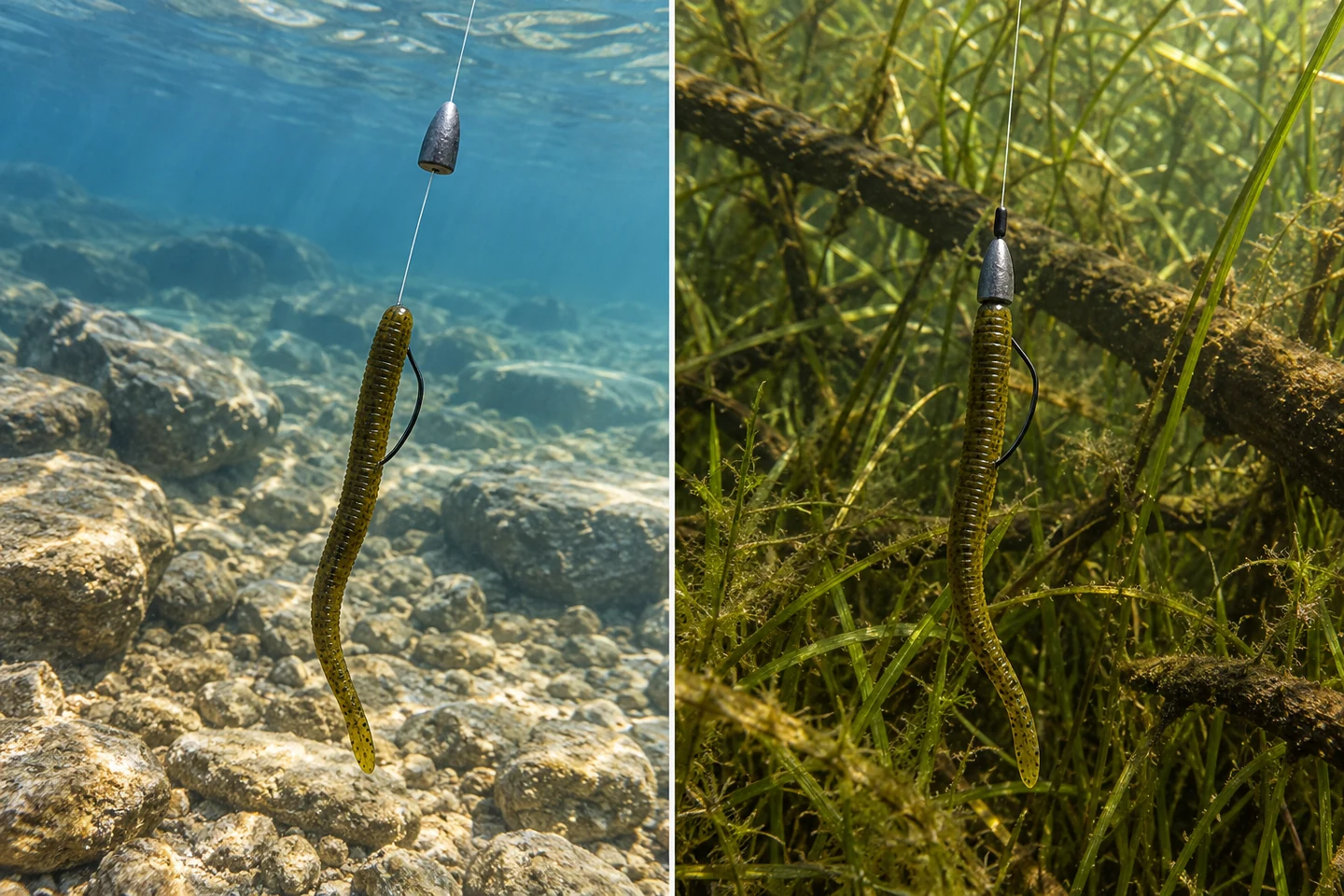
In open water and light cover, a sliding weight is usually the simpler starting point. The sinker can separate from the bait during the fall, which can preserve a softer, less compact presentation.
Peg the weight when separation becomes a problem. In thick grass, brush, laydowns or other dense cover, keeping the sinker against the bait can help the entire package follow the same path instead of letting the weight slip through first while the plastic hangs above the opening.
There is no reason to peg every Texas rig by default. Make the decision based on what the rig has to travel through.
Which soft plastic should you start with?
A straight worm or 5-inch stick bait is easy to rig and makes it obvious when the bait is sitting crooked. Craws and creature baits add bulk and appendages, which can be useful around cover but may require a wider hook gap or a little more weight to keep the same fall and control.
For learning the setup, the exact color matters less than getting the rig straight and choosing a weight that matches the conditions. Green pumpkin is a common neutral starting color because it fits a wide range of freshwater situations, but local water clarity, forage and fishing pressure can change what gets bites.
Where a Texas rig works best
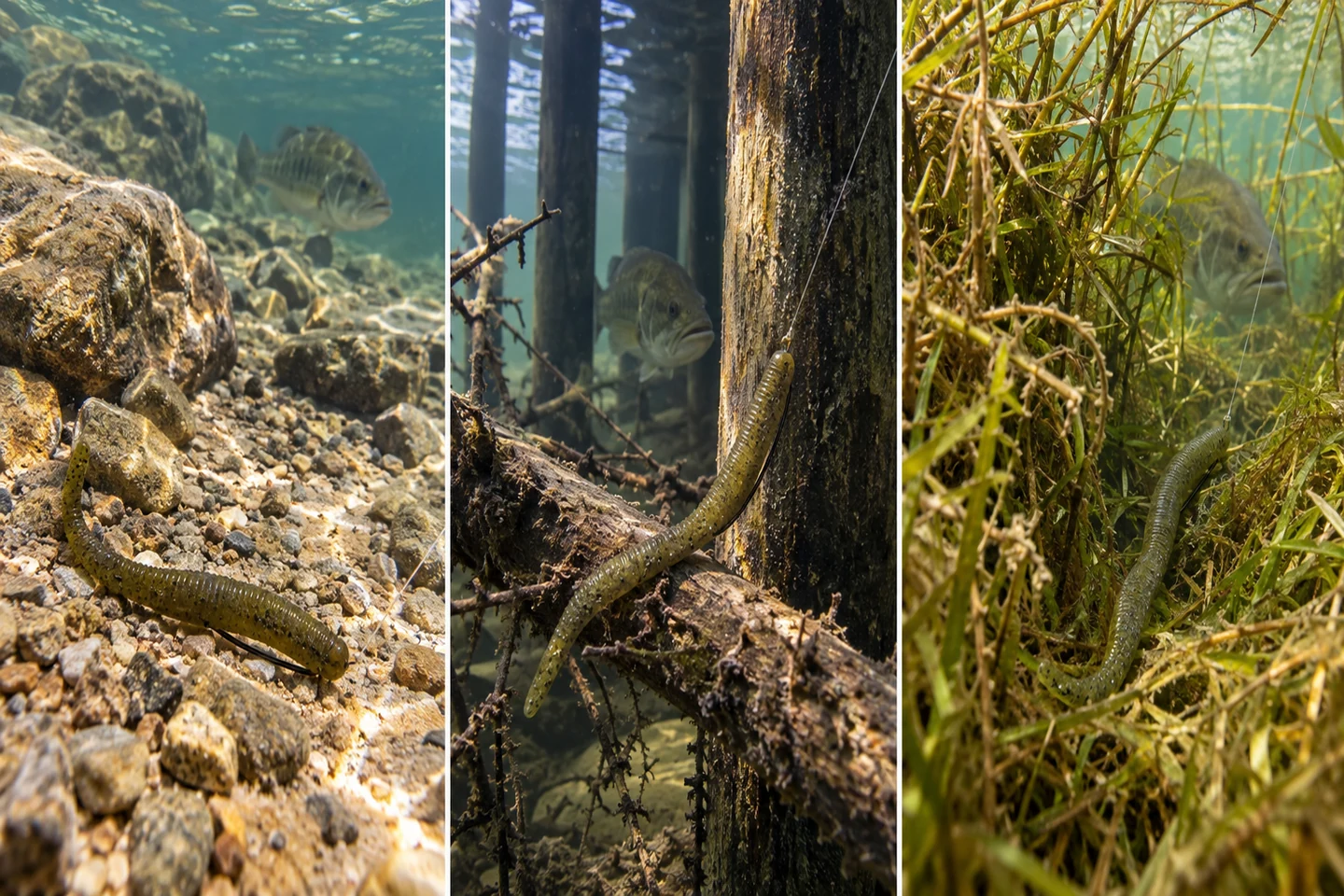
The rig earns its reputation around cover because the protected hook point lets you put a soft plastic into places where exposed hooks are more likely to hang up. Useful targets include:
- Grass edges and holes: cast or pitch to changes in vegetation and let the bait fall beside the edge.
- Laydowns and brush: work through branches slowly and pay attention when the rig drops off a limb.
- Docks: pitch to shade lines, posts and the edges of dock cover where a compact presentation can fall vertically.
- Rock and hard bottom: drag or hop the rig while distinguishing bottom contact from a bite.
- Matted vegetation: use a pegged, heavier version when the job is to break through the mat, then fish the bait below it.
The Texas rig is not limited to heavy cover. A lightly weighted or weightless version can also be useful around sparse targets when you want the weedless hook position without a fast fall.
How to fish a Texas rig
Let the first fall happen
Many bites come while the bait is falling beside the target. After the cast or pitch, follow the line with enough control to notice a jump, stop or sideways movement without pulling the bait unnaturally.
Drag it
Move the rod slowly so the rig crawls along bottom, then pause. This is a useful way to cover rock, points and less tangled bottom while learning what the weight feels like as it crosses different surfaces.
Hop it
Lift the rod tip enough to make the bait leave bottom, then let it settle again. Bigger hops create a more aggressive movement; shorter lifts keep the bait near one piece of cover longer.
Pitch it to targets
For docks, bushes, grass clumps and laydowns, make short controlled presentations and let the bait fall close to the target. A pegged sinker becomes more useful as the cover gets denser and the rig needs to stay compact.
Manage slack before the hookset
If the line jumps or starts moving in a way the bait should not, reel down quickly and remove excess slack before driving the hook. The exact force depends on hook wire, line, rod and cover. A heavy flipping setup needs a different hookset than a light-wire hook on lighter line.
Match the rod, line and hook to the cover
There is no single Texas-rig rod and line combination that covers everything from a weightless worm to a one-ounce punching setup. The same principle that guides hook and weight choice applies to the rest of the tackle: scale the system to the bait and cover.
- Open water and lighter rigs can use lighter line and a less powerful rod.
- General-purpose weighted Texas rigs are commonly fished on medium-heavy casting tackle.
- Heavy vegetation and punching call for stronger line, heavier hooks and more rod power.
Check the lure and line ratings printed on the rod, then keep the hook wire and line strength in the same general class. A very heavy hook on light line can make penetration and landing fish harder; a very light hook is a poor match for braid and heavy cover.
Common Texas rig mistakes
- Rigging the plastic crooked: re-rig it until the body rests in its natural shape.
- Using more weight than the situation needs: extra weight can make the bait fall too fast and reduce time in the strike zone.
- Using too little weight to stay in control: if wind, depth or cover prevents you from understanding where the bait is, add weight.
- Choosing hook size by bait length alone: body thickness and the amount of plastic that must clear the gap matter just as much.
- Pegging every rig: keep the weight sliding unless cover or presentation gives you a reason to pin it down.
- Ignoring the fall: the bait is fishing while it sinks, so watch the line instead of waiting until it reaches bottom.
- Fishing torn plastic too long: once the nose can no longer stay in position, the bait can slide down the hook and stop working cleanly.
Texas rig FAQ
What size weight should I use for a Texas rig?
Start with the lightest weight that still gives you control. Around 3/16 to 1/4 oz is a practical general starting range for many shallow to moderate-depth situations. Go lighter for a slower fall and sparse cover, or heavier for depth, wind and dense vegetation.
Should a Texas rig weight be pegged?
Not automatically. Leave it free-sliding in open water and light cover when you want more separation between the sinker and bait. Peg it in thick grass, brush and wood when the weight needs to pull the bait through cover as one compact package.
What hook size should I use with a 5-inch worm?
A 3/0 or 4/0 worm hook is a common starting point, but bait thickness matters more than length alone. The bait should sit straight and have enough hook gap to compress away from the point on a bite.
Can you fish a Texas rig without a weight?
Yes. A soft plastic can be Texas-rigged weedless without a sinker when you want a slower fall or a lighter presentation. The bait, hook and tackle still need to be balanced so the plastic stays straight.
What is the difference between a Texas rig and a Carolina rig?
A Texas rig keeps the weight close to the hook and soft plastic, whether the weight slides or is pegged. A Carolina rig separates the weight from the bait with a leader, which changes how the bait follows the sinker and how the rig covers bottom.


