
GearAndFish is reader-supported. As an Amazon Associate I earn from qualifying purchases. When you buy through links on our site, we may earn an affiliate commission, at no extra cost to you. Learn more.
There is no single fishing rod that is best for every species, lure, water type, and reel. The smart way to shop is to start with how you fish, then choose the power, action, length, and construction that fit that job. This guide narrows the field to five current rods that cover the most useful buying paths without pretending one rod can do everything.
The best all-around starting point is a medium, fast spinning rod
For a broad freshwater setup, our lead pick is the Daiwa Aird X AIRX662MFS. Its 6’6″ medium-power, fast-action blank, 6-15 lb line rating, 1/4-3/4 oz lure rating, and two-piece build make it a practical match for common freshwater techniques without creating a transport headache. If you want a more premium two-piece rod, move to the St. Croix Avid Series ASFS70MF2. If your fishing is bass casting, inshore saltwater, or travel-first, choose the purpose-built option below instead.
Research note: This is a research-based roundup using current manufacturer specifications where available, current retailer data where manufacturer pages are incomplete, live Amazon US variant checks, and current search-result intent. GearAndFish does not claim direct use of these rods.
Quick picks
Daiwa Aird X AIRX662MFS
A balanced 6’6″ medium-fast spinning rod with a two-piece build and a useful 1/4-3/4 oz lure range.
St. Croix Avid Series ASFS70MF2
A 7′ two-piece medium-fast spinning rod with SCIII+ carbon, premium cork, and a 15-year manufacturer warranty.
Abu Garcia Veritas VRPC70-6
A 7′ medium-heavy, extra-fast casting rod for anglers who need more power and direct lure control around cover.
PENN Battalion II BATINII1017S70
A 7′ medium-fast inshore spinning rod with a 10-17 lb line rating, 1/4-1 oz lure range, and saltwater-oriented components.
Daiwa Ardito-TR ARDT703MFS-TR
A 7′ medium-fast three-piece spinning rod with a travel case and a familiar 6-15 lb, 1/4-3/4 oz general-purpose range.
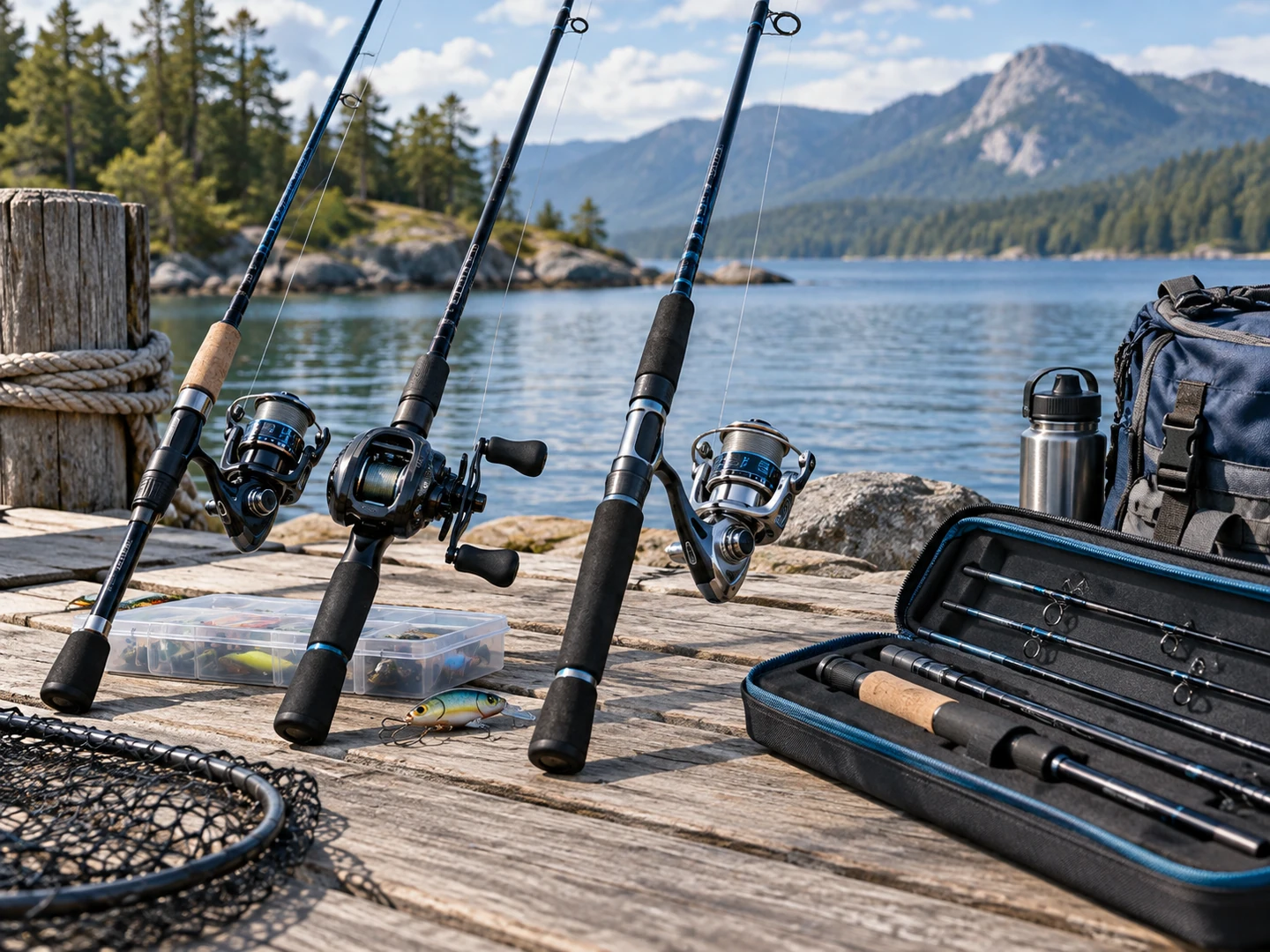
Best fishing rods comparison
The table compares the exact variants used for this roundup. Length, power, action, line rating, lure rating, and piece count apply to the listed model only, not every rod in the same series.
| Rod | Best for | Type | Length | Power / action | Line | Lure | Pieces | Buy |
|---|---|---|---|---|---|---|---|---|
| Daiwa Aird X AIRX662MFS | General freshwater value | Spinning | 6’6″ | Medium / Fast | 6-15 lb | 1/4-3/4 oz | 2 | Check Amazon |
| St. Croix Avid ASFS70MF2 | Premium freshwater upgrade | Spinning | 7′ | Medium / Fast | 6-12 lb | 3/16-5/8 oz | 2 | Check Amazon |
| Abu Garcia Veritas VRPC70-6 | Bass casting and cover | Casting | 7′ | Medium Heavy / Extra Fast | 12-20 lb | 1/4-1 oz | 1 | Check Amazon |
| PENN Battalion II BATINII1017S70 | Inshore saltwater | Spinning | 7′ | Medium / Fast | 10-17 lb | 1/4-1 oz | 1 | Check Amazon |
| Daiwa Ardito-TR ARDT703MFS-TR | Travel and packability | Spinning | 7′ | Medium / Fast | 6-15 lb | 1/4-3/4 oz | 3 | Check Amazon |
Daiwa Aird X AIRX662MFS
St. Croix Avid ASFS70MF2
Abu Garcia Veritas VRPC70-6
PENN Battalion II BATINII1017S70
Daiwa Ardito-TR ARDT703MFS-TR
Daiwa Aird X AIRX662MFS
A sensible first upgrade for anglers who want a versatile freshwater spinning rod without jumping into premium pricing.
#1
The Aird X earns the lead spot because its specification envelope is unusually useful for a general freshwater setup. Medium power and fast action sit in the middle of the range many anglers use for bass, walleye, larger panfish, and mixed-species fishing. The 1/4-3/4 oz lure rating covers common jigs, soft-plastic rigs, spinnerbaits, and many hard baits without pushing into ultralight or heavy-cover territory.
The two-piece build also matters. A one-piece rod can be attractive when transport is easy, but a 6’6″ two-piece blank is simpler to fit in smaller vehicles, closets, and travel storage. Current Aird X listings describe graphite construction, Braiding-X reinforcement, aluminum-oxide guide rings, and a split-grip EVA handle.
Why it made the shortlist
- Broad freshwater power and lure range.
- Two-piece construction is easier to transport.
- Fast action suits many single-hook and general lure presentations.
- Current Amazon child ASIN matches the exact model.
Trade-offs
- 6’6″ gives up some casting reach versus longer 7′ and 7’6″ rods.
- Medium-fast is not ideal for ultralight lures, heavy punching, or true surf duty.
- A multi-piece rod adds a ferrule connection that should be seated and checked properly.
St. Croix Avid Series ASFS70MF2
A premium two-piece choice for anglers who want a 7′ medium-fast spinning rod with higher-grade materials and long manufacturer warranty coverage.
#2
The Avid Series is the upgrade pick, not because every angler needs a premium rod, but because the exact ASFS70MF2 keeps the useful medium-fast freshwater formula while moving to St. Croix’s SCIII+ carbon fiber blank, aluminum-oxide guide rings in stainless frames, premium cork, and a 15-year manufacturer warranty.
Its 7′ length can provide a little more casting reach and line pickup than the 6’6″ Aird X, while the 3/16-5/8 oz lure range keeps the rod focused on lighter to midrange freshwater work rather than heavy power techniques. The two-piece layout makes the premium option easier to store than an equivalent one-piece rod.
Why it made the shortlist
- Current manufacturer model with clearly published specifications.
- SCIII+ carbon and premium cork construction.
- 7′ medium-fast layout fits many freshwater presentations.
- Two-piece version keeps transport manageable.
Trade-offs
- Costs substantially more than value-oriented general-purpose rods.
- Its 5/8 oz upper lure rating is not a match for heavier bass techniques.
- Premium construction offers less practical benefit if you fish only occasionally.
Abu Garcia Veritas VRPC70-6
A stronger, faster baitcasting option for bass anglers working jigs, Texas rigs, and other single-hook presentations around cover.
#3
This is the clearest departure from the spinning rods above. A medium-heavy, extra-fast baitcasting rod is a better fit when lure control, hook-setting power, and pulling fish away from cover matter more than light-lure forgiveness. The 1/4-1 oz range gives it room for common bass jigs, Texas rigs, spinnerbaits, and related techniques.
Abu Garcia’s current Veritas platform uses Powerlux 100 resin, a ROCS guide train, stainless steel guides with zirconium inserts, an ergonomic exposed-blank reel seat, and high-density EVA. The company states its Powerlux construction improves strength and reduces weight versus comparable prior Veritas construction under controlled lab conditions. We treat that as a manufacturer claim, not independent GearAndFish performance data.
Why it made the shortlist
- Purposeful medium-heavy, extra-fast casting setup.
- Wide 1/4-1 oz lure range for many bass power techniques.
- Current manufacturer model and exact Amazon child ASIN are aligned.
- One-piece blank avoids a ferrule joint.
Trade-offs
- Less forgiving than medium spinning gear with very light lures.
- Extra-fast action is not the first choice for every treble-hook presentation.
- One-piece 7′ construction is harder to transport in compact vehicles.
- Requires a baitcasting reel and the skill to manage it.
PENN Battalion II Inshore BATINII1017S70
A saltwater-oriented 7′ medium spinning rod for inshore anglers who need more lure range and tougher component choices than a typical freshwater generalist.
#4
The Battalion II is the inshore pick because its design is explicitly built around saltwater use rather than merely stretching a freshwater rod into coastal duty. PENN specifies SLC2 blank construction, Fuji Alconite guides, a graphite reel seat, and premium cork grips. The exact BATINII1017S70 variant carries a 1/4-1 oz lure range, which is useful for many jigs, soft plastics, plugs, and bait presentations used in protected coastal water.
There is a useful fact-checking lesson here: some retailer feeds describe this model’s action differently, while PENN’s current product page lists it as Fast. For this guide we use the manufacturer’s current specification.
Why it made the shortlist
- Designed as an inshore rod, not a generic freshwater compromise.
- 1/4-1 oz lure range gives it broader payload capacity than the two freshwater spinning picks.
- Fuji Alconite guides and SLC2 construction are current PENN-listed features.
- Exact child ASIN was verified rather than using the family parent ASIN.
Trade-offs
- One-piece 7′ blank takes more vehicle and storage space.
- More rod than many freshwater-only anglers need.
- Salt exposure still calls for routine rinsing and basic gear care.
Daiwa Ardito-TR ARDT703MFS-TR
A three-piece spinning rod for anglers who prioritize packability but still want familiar medium-fast freshwater specifications.
#5
The Ardito-TR makes sense when the first question is not maximum one-piece simplicity, but whether the rod fits the trip. The exact ARDT703MFS-TR breaks into three sections and is sold with a semi-hard travel case. Current product data also identifies HVF graphite, X45 Bias Graphite construction, V-Flex ferrules, and Fuji aluminum-oxide guides.
What makes this model useful in a broad roundup is that its core fishing specs are not exotic. At 7′, medium power, fast action, 6-15 lb line, and 1/4-3/4 oz lures, it covers a familiar general-purpose freshwater envelope while solving a very different transport problem.
Why it made the shortlist
- Three-piece format is substantially easier to pack than a one-piece 7′ rod.
- General-purpose medium-fast specifications remain familiar.
- Travel case is part of the current product package.
- Exact Amazon child ASIN is verified to the model number.
Trade-offs
- Multiple ferrules add connections that need correct assembly and periodic checking.
- Travel convenience is the reason to buy it, so a one-piece rod can be simpler when transport is irrelevant.
- It does not replace specialized surf, heavy saltwater, or ultralight rods.
How to choose the right fishing rod
The phrase “best fishing rod” is too broad until you define the job. Start with the water and technique, then choose power, action, length, reel type, lure range, and transport format. That sequence prevents a common mistake: buying a highly rated rod that is simply the wrong tool for your fishing.
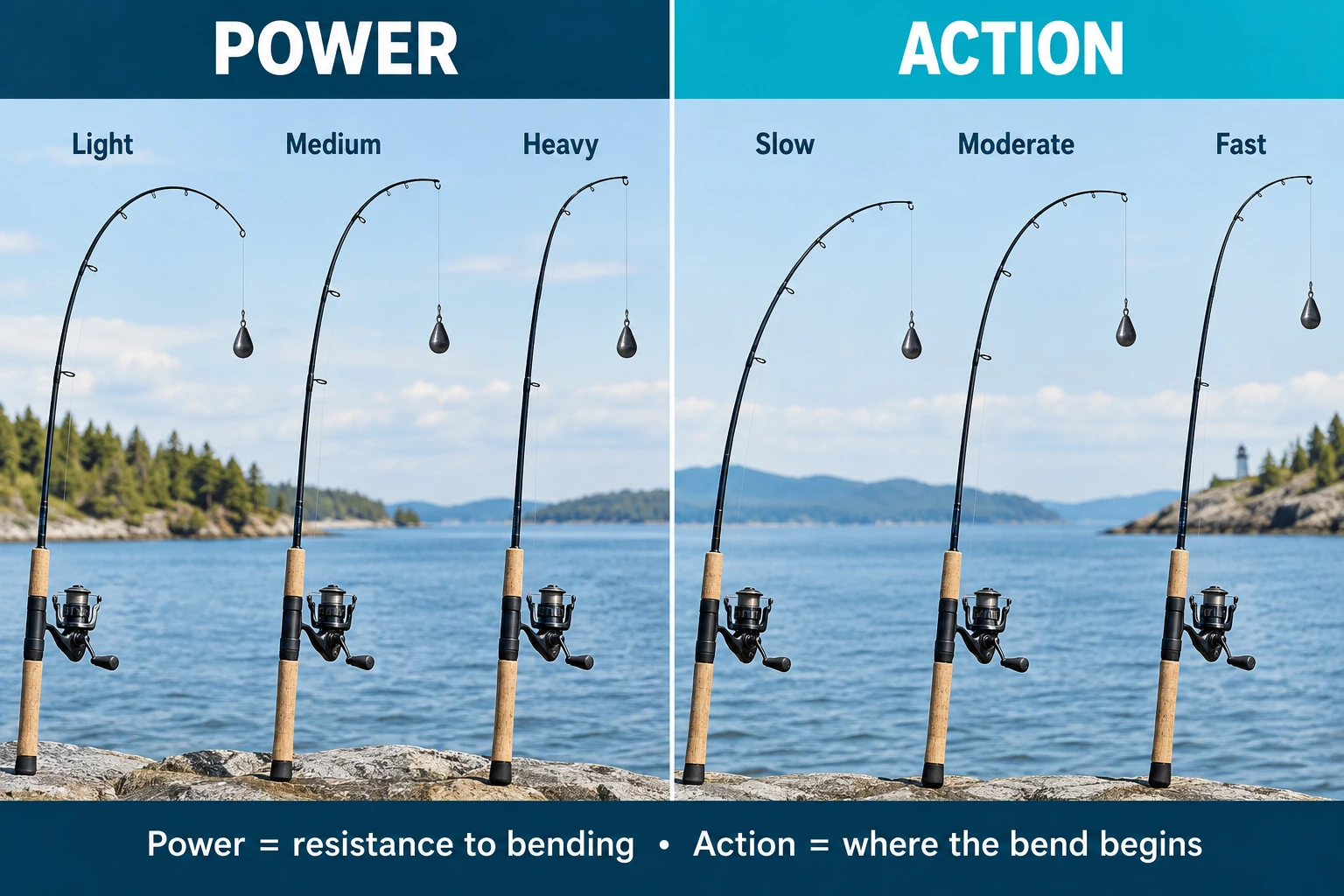
Power and action are different
Power describes how resistant the rod is to bending under load. Light, medium, medium-heavy, and heavy are relative classes, and manufacturers do not calibrate them identically. Action describes where the blank begins to bend. A faster action concentrates more flex toward the tip; a slower action bends farther down the blank.
That distinction changes how a rod behaves. Medium-fast spinning rods are common generalists because they balance lure control with some forgiveness. Medium-heavy, extra-fast casting rods shift toward power, quicker load transfer, and more direct single-hook work. Moderate and slower actions can be useful when keeping treble hooks pinned is more important than a sharp, fast response.
Match the lure rating before the species label
Species labels help, but the lure-rating window is often more useful. If most of your lures weigh 1/4 to 1/2 oz, a rod that comfortably covers that range is a better starting point than choosing by a broad “bass” or “multi-species” badge alone. Repeatedly casting outside the manufacturer’s lure range is not the intended use of the blank.
Choose spinning or casting by technique and skill
Spinning gear is generally easier to learn and works well with lighter lures and general freshwater fishing. Baitcasting gear offers different line control and is common for heavier bass techniques, especially around cover, but it asks more of the angler’s casting setup and spool control. There is no universal upgrade path where a baitcaster automatically becomes better than spinning gear.
One-piece versus multi-piece
A one-piece rod removes ferrule connections and is simple if you can transport and store the full length. Two-piece rods are much easier to live with in many cars and homes. Three-piece and four-piece rods make even more sense when travel size is a primary requirement. The right choice depends on your real transport constraint, not a blanket assumption that more pieces are always bad.
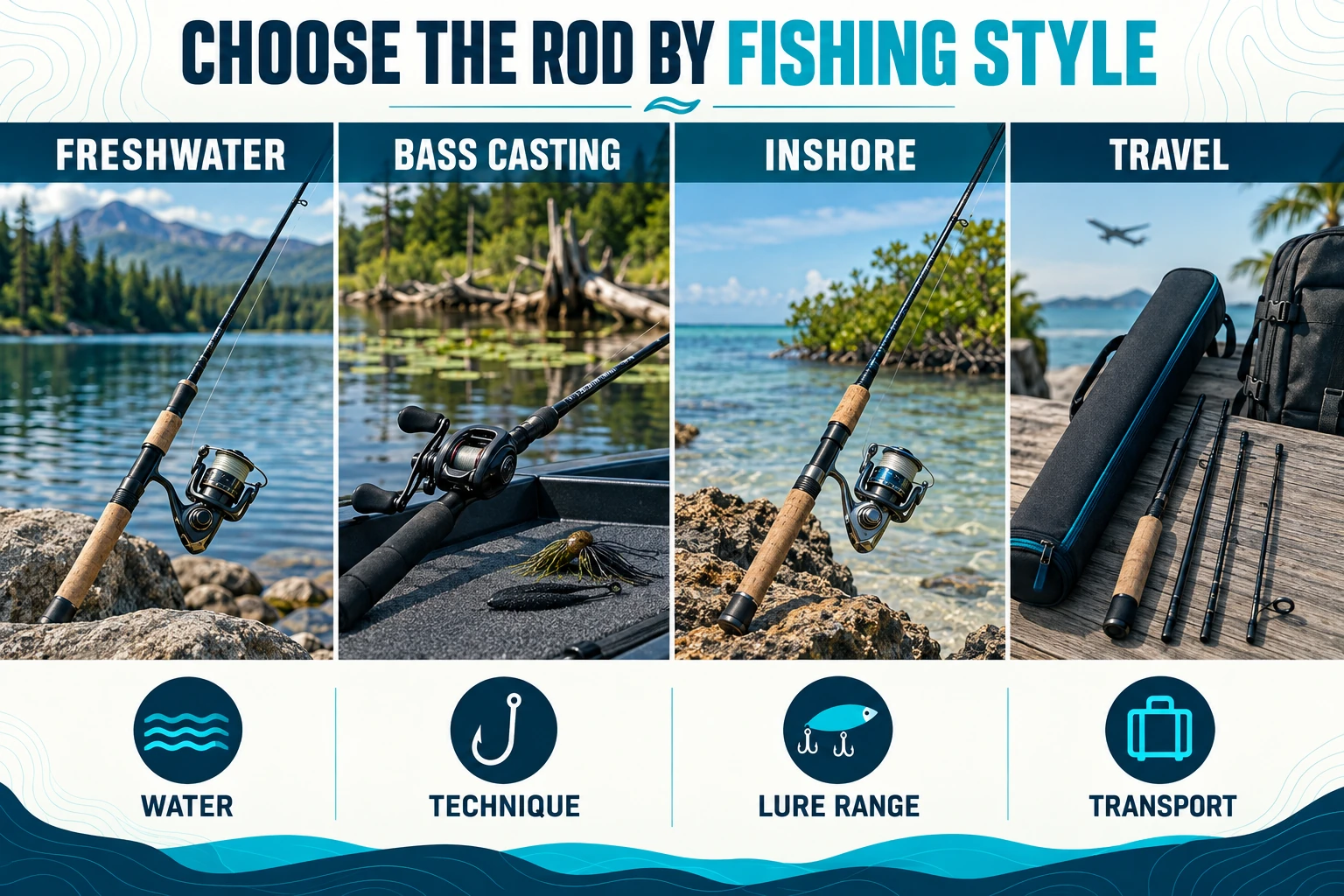
Pick the rod by fishing style
For general freshwater, a 6’6″ to 7′ medium-fast spinning rod is a strong baseline. For bass casting around weeds, wood, docks, and other cover, medium-heavy casting power becomes more useful. Inshore fishing adds corrosion exposure and often benefits from saltwater-oriented components. Travel changes the problem again: pack length and case protection can matter more than preserving a one-piece blank.
This broad roundup intentionally does not crown a surf rod, ultralight rod, fly rod, or heavy offshore rod. Those categories use different lengths, powers, lure or line systems, and buyer criteria. A specialized guide should answer those searches rather than this page duplicating them.
How we chose these rods
We built this shortlist to answer the current broad US search intent for “best fishing rods” as a cross-category buying decision. The goal was not to repeat a separate spinning, baitcasting, surf, travel, saltwater, or ultralight roundup inside one page.
Where retailer data conflicted with a current manufacturer specification, the manufacturer specification took priority. The PENN Battalion II action rating is one example: PENN currently lists BATINII1017S70 as Fast, so that is the value used here.
FAQ
What is the best all-around fishing rod length?
For many freshwater anglers, 6’6″ to 7′ is a useful general-purpose range. Shorter rods can be easier to control in tight spaces, while longer rods can add casting reach and line pickup. Technique, lure weight, cover, and transport still matter more than length alone.
Is medium power good for a general fishing rod?
Medium power is a practical middle ground for many freshwater techniques when the rod’s line and lure ratings match what you actually fish. It is not a universal answer for ultralight presentations, heavy cover, surf casting, or large offshore species.
Should a beginner choose a spinning rod or baitcasting rod?
A spinning rod is usually the simpler starting point because the reel system is easier to manage with common light-to-medium lures. A baitcasting setup can be a better fit for specific power techniques once the angler is comfortable with spool control and lure-weight matching.
Is a one-piece fishing rod better than a two-piece rod?
Not automatically. A one-piece rod removes a ferrule connection, while a two-piece rod is easier to transport and store. If your vehicle or storage space makes a full-length rod inconvenient, a well-designed multi-piece rod can be the more useful choice.
Can I use a freshwater fishing rod in saltwater?
Occasional crossover can be possible when the rod’s power, lure rating, guides, reel seat, and other components are appropriate, but repeated saltwater use is better matched to gear designed for that environment. Rinse salt-exposed gear with fresh water and follow the manufacturer’s care guidance.