
GearAndFish is reader-supported. As an Amazon Associate I earn from qualifying purchases. When you buy through links on our site, we may earn an affiliate commission, at no extra cost to you. Learn more.
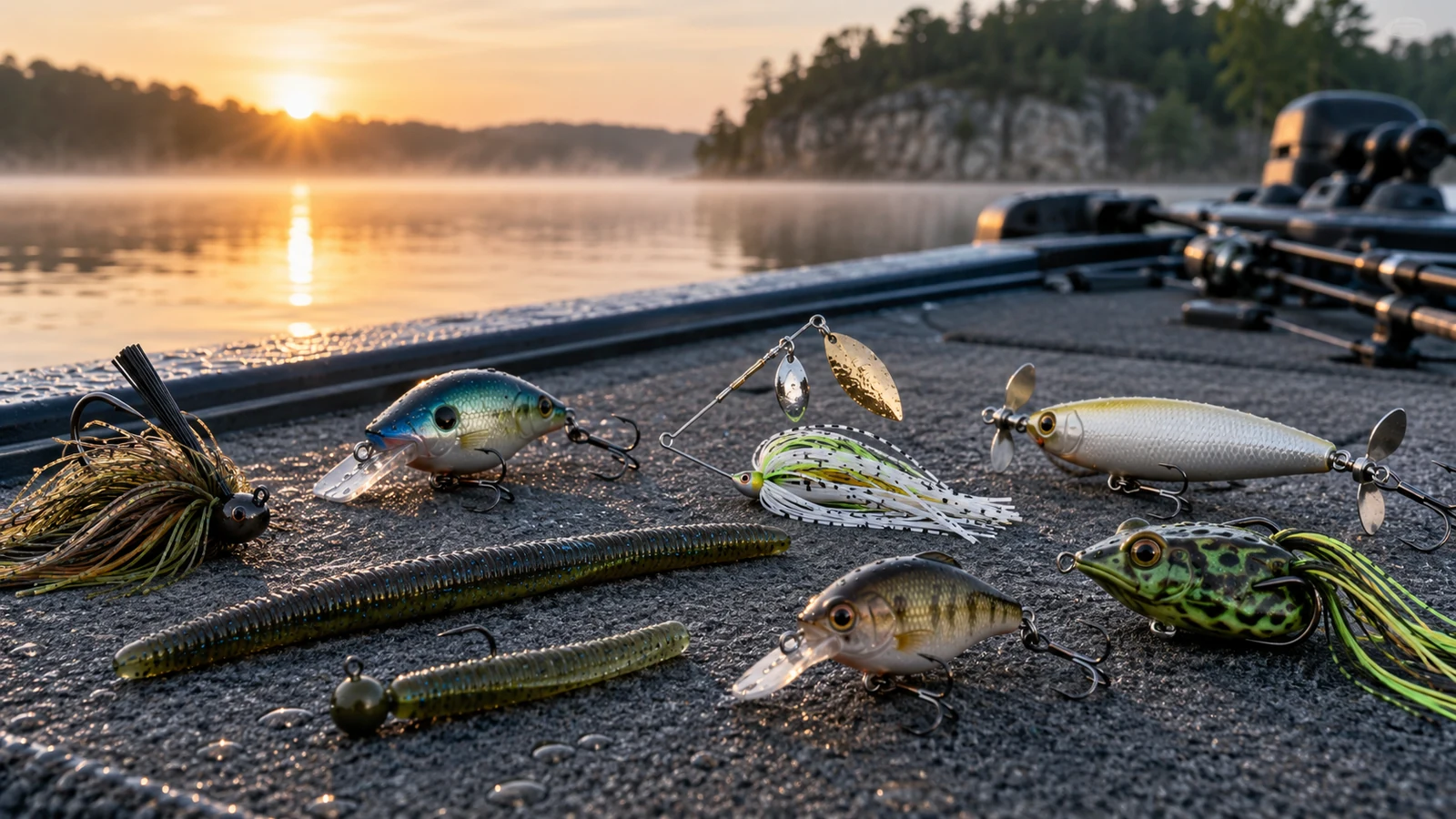
Bass anglers do not need a box full of nearly identical lures. They need a small set that can cover different depths, types of cover, water clarity, and fish activity. That is the idea behind this guide: eight bass lures with clearly different jobs, from a weightless soft stick bait for pressured fish to a heavy-cover jig for vegetation and wood.
The best bass lure for most anglers
The Yamamoto 5-inch Senko is our best overall starting point because it can be fished weightless, Texas-rigged, or wacky-rigged and can stay useful when bass are not willing to chase a fast-moving bait. It is not the best tool for every situation, though. Add a squarebill for shallow cover, a spinnerbait for stained water, a jig for heavy cover, and a topwater lure when fish are willing to feed up.
Best bass lures at a glance
Yamamoto 5-inch Senko
Versatile soft stick bait for pressured fish, docks, grass edges, and slower presentations.
Strike King KVD 1.5 Hard Knock
A shallow squarebill for covering wood, rock, and other deflection targets.
BOOYAH Pond Magic
Compact spinnerbait that combines flash and vibration without requiring a large profile.
Strike King Hack Attack Jig
A stout skirted jig built around a heavy wire hook and substantial weed guard.
Compare our bass lure picks
| Lure | Type | Best use | Key trait | Main limitation |
|---|---|---|---|---|
| Yamamoto 5-inch Senko | Soft stick bait | Pressured fish and versatile finesse | Multiple rigging options | Soft plastic gets used up |
| Strike King KVD 1.5 Hard Knock | Squarebill crankbait | Shallow wood and rock | 3/8 oz hard-knock squarebill | Not for thick surface vegetation |
| BOOYAH Pond Magic | Spinnerbait | Stained water and small water | Compact 3/16 oz profile | Less subtle in very clear water |
| Strike King Hack Attack Jig | Heavy-cover jig | Grass, wood, and dense cover | Heavy wire hook and weed guard | Requires deliberate contact with cover |
| Berkley Choppo 90 | Prop topwater | Open water and shallow cover | Floating 3.5-inch prop bait | Topwater window can be condition-dependent |
| Rapala Shad Rap 07 | Balsa crankbait | Clear water and slower cranking | 2.75-inch balsa body | Not a weedless presentation |
| Z-Man Finesse TRD | Ned-rig soft plastic | Tough bites and bottom finesse | 2.75-inch buoyant stick profile | Needs a separate jighead |
| BOOYAH Poppin’ Pad Crasher | Hollow-body frog | Mats, pads, and surface cover | Weedless double-hook frog | Not the first choice for deeper fish |
How to choose a bass lure without overcomplicating it
Start with the place you need the lure to work, not with the brand name. A lure that can reach a bass and move through its cover cleanly is usually a better choice than a popular bait that fights the environment on every cast.
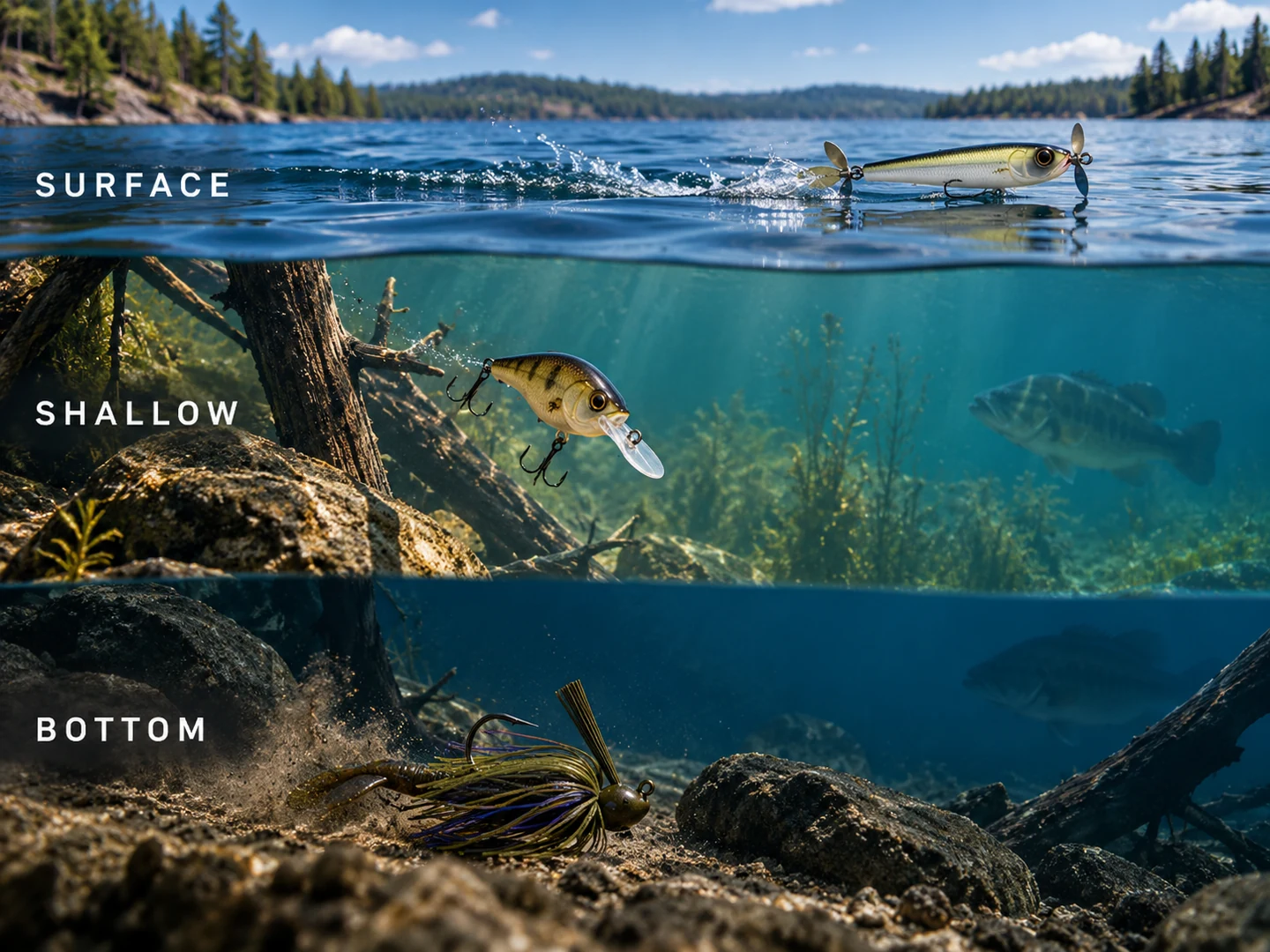
Match the lure to the water column
Topwater lures are useful when bass are willing to feed at the surface. Squarebills and spinnerbaits cover shallow to mid-depth water while staying efficient around many forms of cover. Jigs and Ned rigs are better when you need bottom contact or a slower presentation. A soft stick bait can bridge several of those roles because you can fish it weightless, wacky-rigged, or with added weight.
Match the lure to the cover
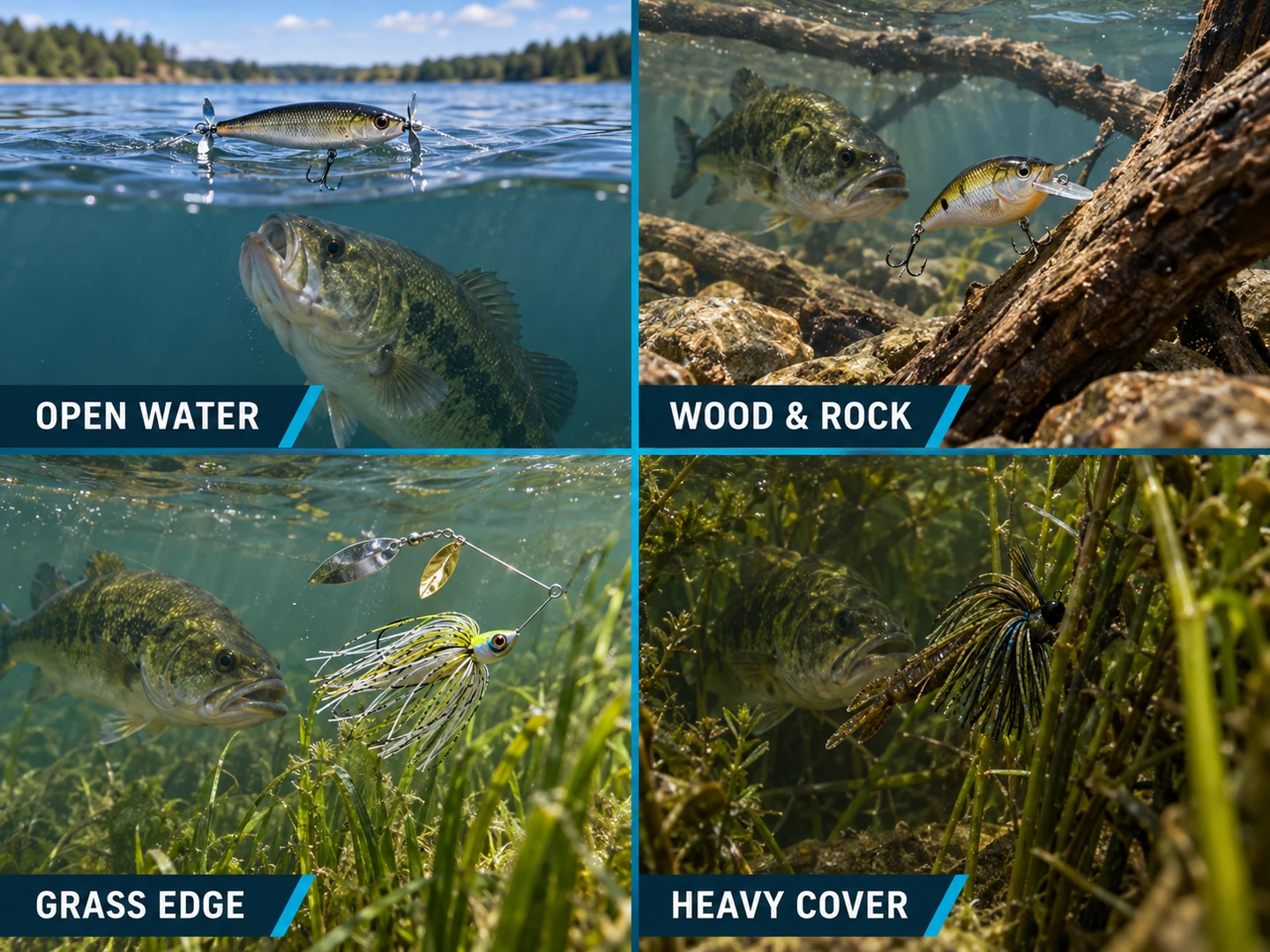
Open water gives treble-hook baits room to work. Wood and rock often favor a deflecting squarebill. Grass edges can be searched with a spinnerbait, while thick vegetation calls for more weed-resistant tools such as a heavy-cover jig or hollow-body frog. This is why a balanced tackle box matters more than owning many colors of one lure.
Use water clarity to adjust profile and speed
In clear water, a natural-looking profile and a less intrusive presentation can make sense, especially when fish are pressured. In stained water, vibration, flash, sound, or a stronger silhouette can help bass locate a lure. That does not mean one color rule works everywhere. Local forage, light, depth, and fishing pressure still matter.
Best bass lures for 2026
Yamamoto 5-inch Senko
The easiest single lure here to adapt to different bass situations.
The Senko earns the top spot because it solves a common bass-fishing problem: what to throw when you are not sure whether fish want a moving bait. Rig it weightless around docks and sparse grass, wacky-rig it for a slower fall, or Texas-rig it when you need better cover penetration. The simple profile does not lock you into one retrieve or one depth.
The trade-off is durability. A soft, heavily salted stick bait is a consumable, and a productive day can use several baits. It is also not the fastest option when you need to cover a large flat or bank quickly.
Why it stands out
- Works with several proven rigging styles
- Useful around docks, grass edges, and open pockets
- Easy to fish slowly without complex rod work
What to know
- Soft plastic can tear after fish or missed strikes
- Slower for searching large areas
Strike King KVD 1.5 Hard Knock
A compact squarebill for making repeated contact with shallow targets.
A squarebill is most valuable when it is contacting things. The KVD 1.5 Hard Knock is shaped for shallow power fishing, where hitting rock, wood, dock corners, or other targets can create the directional change that makes a crankbait useful. The internal hard-knock sound also gives it a more noticeable presence than a silent bait.
It is less appealing in matted vegetation or anywhere exposed trebles constantly foul. For those situations, move to a jig or frog rather than forcing a squarebill through cover it was not designed to handle.
Why it stands out
- Efficient shallow search bait
- Square bill suits deflection around hard cover
- Hard-knock sound adds presence
What to know
- Treble hooks collect vegetation
- Shallow role overlaps poorly with deep targets
BOOYAH Pond Magic
A small 3/16 oz spinnerbait for stained water, ponds, and compact forage.
Spinnerbaits remain useful because the wire frame, blades, skirt, and single hook give you flash and vibration without the snag profile of a treble-hook bait. The Pond Magic keeps that concept compact, which makes it especially sensible for ponds, creeks, smaller forage, and bank fishing where oversized presentations can feel out of place.
Its strongest case is when visibility is reduced and you want to keep moving. In very clear, calm water with fish inspecting a bait for a long time, a soft plastic or other subtle presentation may be easier to sell.
Why it stands out
- Compact 3/16 oz profile
- Flash and vibration for lower visibility
- Single-hook design handles many cover situations well
What to know
- Not as subtle as a soft plastic
- Small profile is not ideal when you specifically want a bulky meal
Strike King Hack Attack Heavy Cover Jig
A stout flipping jig for getting a single-hook presentation into dense cover.
This is the lure in the roundup for places where exposed treble hooks are a liability. The Hack Attack’s head, weed guard, and heavy wire hook are meant for dense shallow or deep cover and heavier tackle. Pair it with a trailer and work it through grass, wood, and other places where bass can use cover to stop a lighter setup.
The downside is that a heavy-cover jig is not a carefree search bait. It rewards accurate placement, bottom or cover contact, and a deliberate retrieve. If the entire point of the day is to cover miles of bank, a spinnerbait or crankbait is more efficient.
Why it stands out
- Heavy wire hook for stout tackle
- Weed guard and head shape suit dense cover
- Easy to change profile with different trailers
What to know
- More technique-dependent than a straight-retrieve bait
- Requires a trailer for many presentations
Berkley Choppo 90
A floating prop bait that turns a simple cast-and-retrieve presentation into surface commotion.
The Choppo gives anglers an easy way to cover water on top. The cupped propeller tail creates spray and sound while the floating body lets you work shallow cover and open lanes without managing a diving depth. It is especially useful when you want the fish to come up rather than follow a subsurface bait.
Topwater is still a situational choice. If fish are pinned to the bottom, suspended well below the surface, or refusing to rise, keeping a prop bait on top can waste time. Treat it as a high-impact surface tool, not an all-day rule.
Why it stands out
- Simple straight-retrieve topwater option
- Floating design works around shallow targets
- Prop tail creates both sound and spray
What to know
- Exposed hooks do not belong in thick mats
- Surface bite can disappear as conditions change
Rapala Shad Rap 07
A balsa crankbait for anglers who want a compact baitfish profile and controlled retrieve.
The Shad Rap 07 occupies a different role from the KVD squarebill. Instead of focusing on aggressive shallow deflection, it gives you a slimmer baitfish profile and a balsa body that can be worked across a wider mid-depth range. That makes it a useful choice when bass are relating to baitfish and a hard bait still makes sense but you want a more controlled look.
It is not weedless, and the relatively light weight is not ideal for every casting setup or windy bank. Anglers who fish thick vegetation more than open edges will get more utility from a spinnerbait, jig, or soft plastic.
Why it stands out
- Natural baitfish-style balsa profile
- Published SR07 running depth spans 5 to 11 ft
- Can be fished slower than many power-cranking options
What to know
- Treble hooks collect grass
- Light balsa crankbaits can be less convenient in wind
Z-Man Finesse TRD
A compact Ned-rig plastic when slowing down is more important than covering water.
The Finesse TRD is the specialist here for a small, bottom-oriented presentation. Put it on an appropriately sized mushroom-style jighead and it gives you the compact profile associated with the Ned rig. It is a useful reset when bass stop chasing faster baits or when you need to stay around a small piece of structure for longer.
The obvious limitation is pace. This is not the lure for burning down a bank. It also requires a separate jighead, and the stretchy ElaZtech material should be stored separately from conventional soft plastics to avoid material compatibility problems.
Why it stands out
- Compact 2.75-inch finesse profile
- Durable buoyant ElaZtech construction
- Simple match for mushroom-style Ned heads
What to know
- Requires a separate jighead
- Much slower way to search water
- Best stored away from conventional soft plastics
BOOYAH Poppin’ Pad Crasher
A hollow-body frog for mats, pads, and shallow cover where exposed trebles are a problem.
The Poppin’ Pad Crasher fills the topwater role that the Choppo cannot: crossing vegetation and working through clutter with a hook layout designed to stay protected. The cupped mouth adds chugging and surface disturbance, so the lure can be used across slop and also worked through open pockets.
A hollow-body frog is still a surface presentation. When bass are deeper or unwilling to rise, a jig, Texas-rigged soft plastic, or crankbait gives you access to fish the frog cannot reach.
Why it stands out
- Weed-resistant hollow-body layout
- Cupped mouth adds surface disturbance
- Can move across mats and into open pockets
What to know
- Surface-only role
- Hookup timing and tackle choice matter more than with some open-water baits
A practical 5-lure starter box for bass
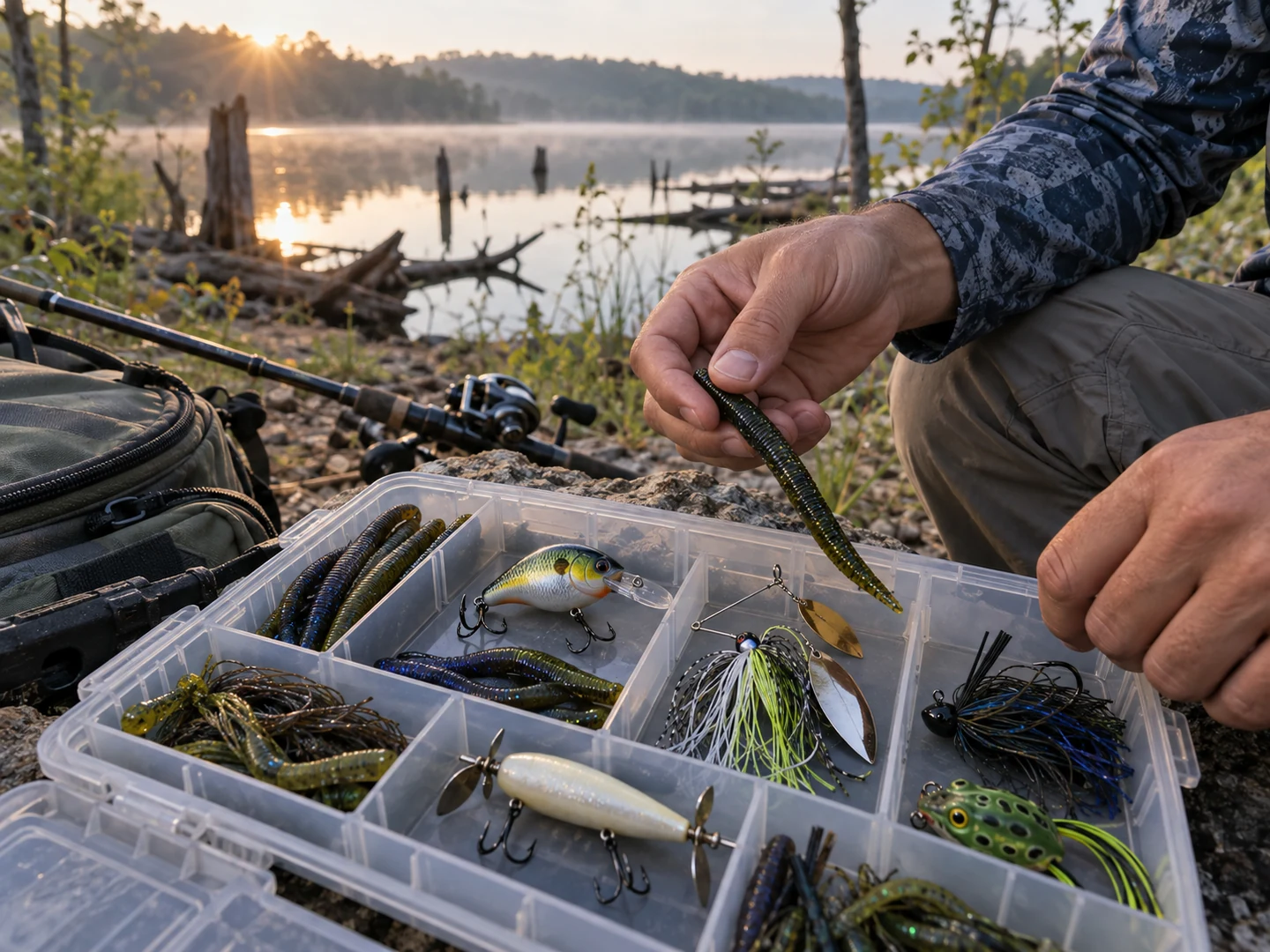
If you are trying to simplify rather than collect, start with five jobs: a Senko for slow and versatile soft-plastic fishing, a shallow squarebill for hard cover, a spinnerbait for stained water and searching, a heavy-cover jig for vegetation and wood, and either a Choppo or Pad Crasher for topwater. Add the Shad Rap when you need a more controlled baitfish crankbait and the Finesse TRD when the bite becomes difficult.
How we chose these bass lures
This is an editorial research roundup. The goal was not to stack eight similar baits in a ranked list. We first reviewed the current US search results for broad bass-lure intent and kept this page focused on different lure classes and fishing situations so it remains distinct from future dedicated guides to topwater lures, spinnerbaits, swimbaits, and other narrow categories.
FAQ
What is the best bass lure for beginners?
A 5-inch soft stick bait such as the Yamamoto Senko is one of the easiest starting points because it can be rigged several ways and does not require a fast or complicated retrieve. A small spinnerbait is another useful beginner option when the goal is simply to cover water.
What bass lure should I use in muddy or stained water?
Moving baits that create vibration, flash, sound, or a stronger silhouette are common starting points. A spinnerbait such as the BOOYAH Pond Magic or a hard-knock squarebill can make sense when visibility is limited, but local forage and cover still matter.
What is the best bass lure for heavy grass?
For grass on the surface, a hollow-body frog can travel where exposed treble hooks would foul. For punching, pitching, or working heavier subsurface cover, a stout jig or a weedless soft-plastic rig is generally a better category.
Do I need separate lures for largemouth and smallmouth bass?
Not necessarily. Several lure classes in this guide can catch both. The more important differences are usually forage size, depth, cover, current, water clarity, and how actively the fish are feeding.
How many bass lures does a new angler really need?
A small set that covers different jobs is enough to start. Five complementary categories can be more useful than dozens of near-duplicate baits: one soft plastic, one shallow hard bait, one spinnerbait, one bottom or cover bait, and one topwater lure.