
GearAndFish is reader-supported. As an Amazon Associate I earn from qualifying purchases. When you buy through links on our site, we may earn an affiliate commission, at no extra cost to you. Learn more.
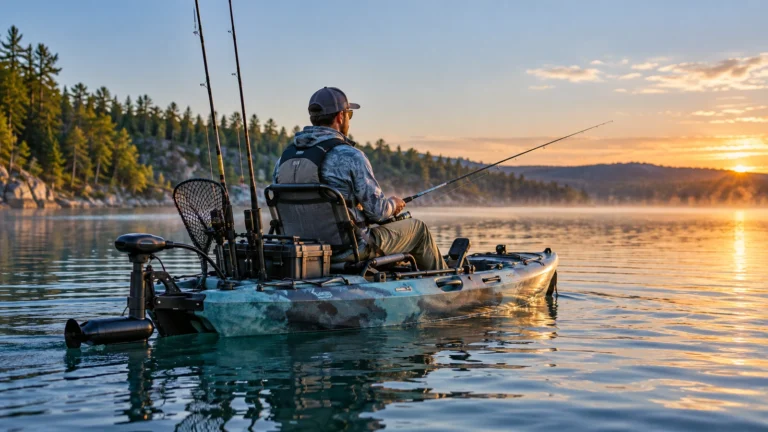
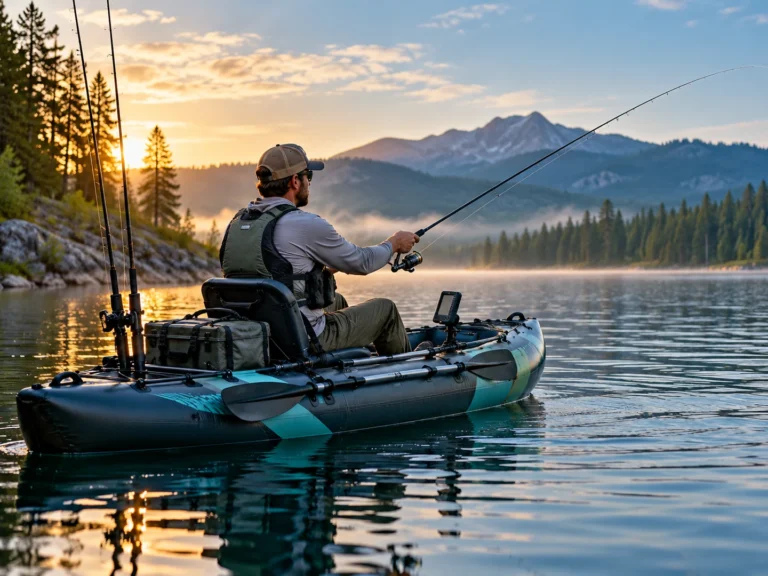
A fishing kayak is usually the better tool when angling is the main reason you are on the water. A regular recreational kayak is often lighter, simpler, and easier to paddle or transport. The right choice depends less on the label and more on how much fishing gear you carry, whether you need a stable working deck, and how far you plan to paddle.
Fishing kayak vs regular kayak: choose by your main activity
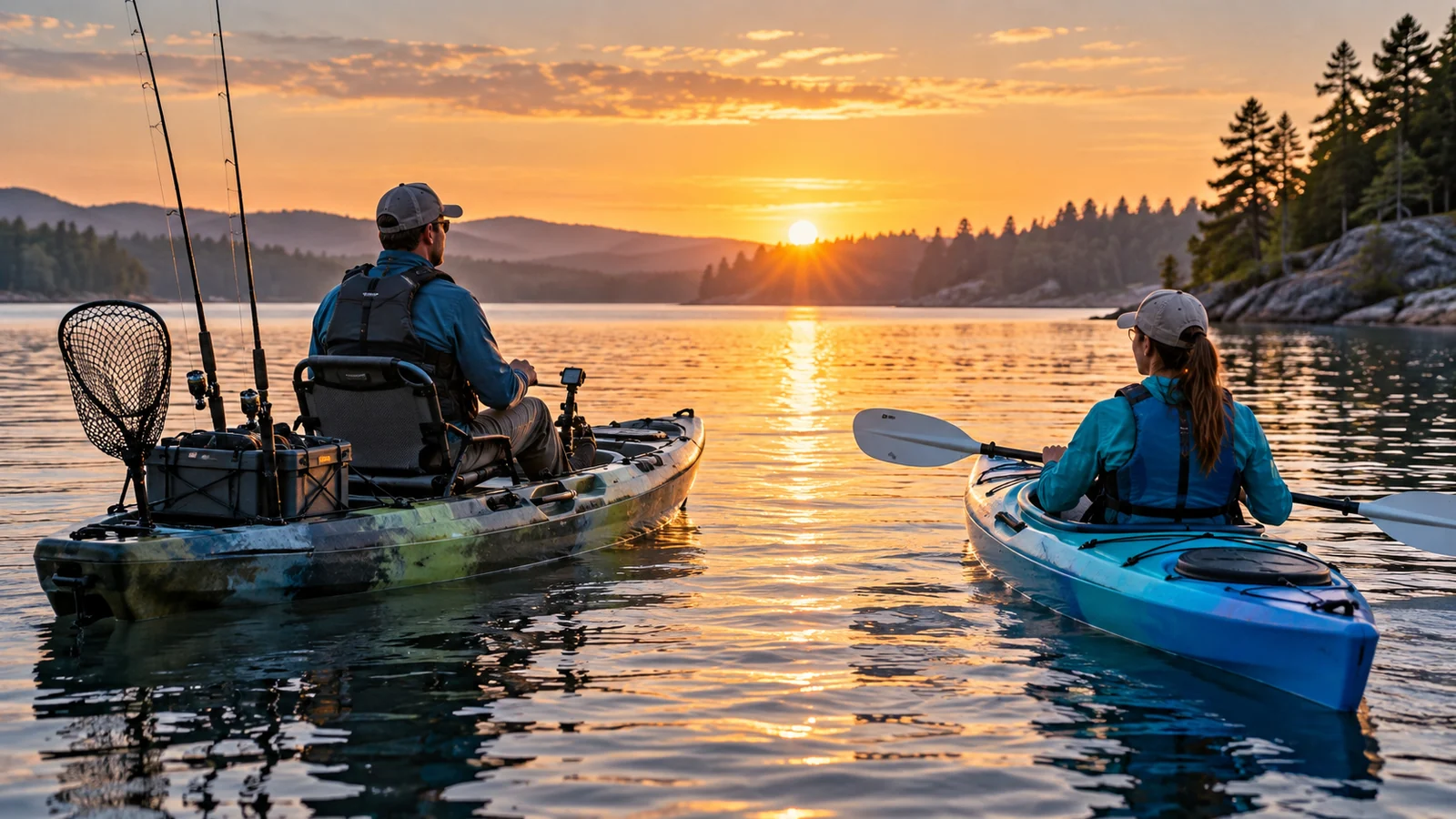
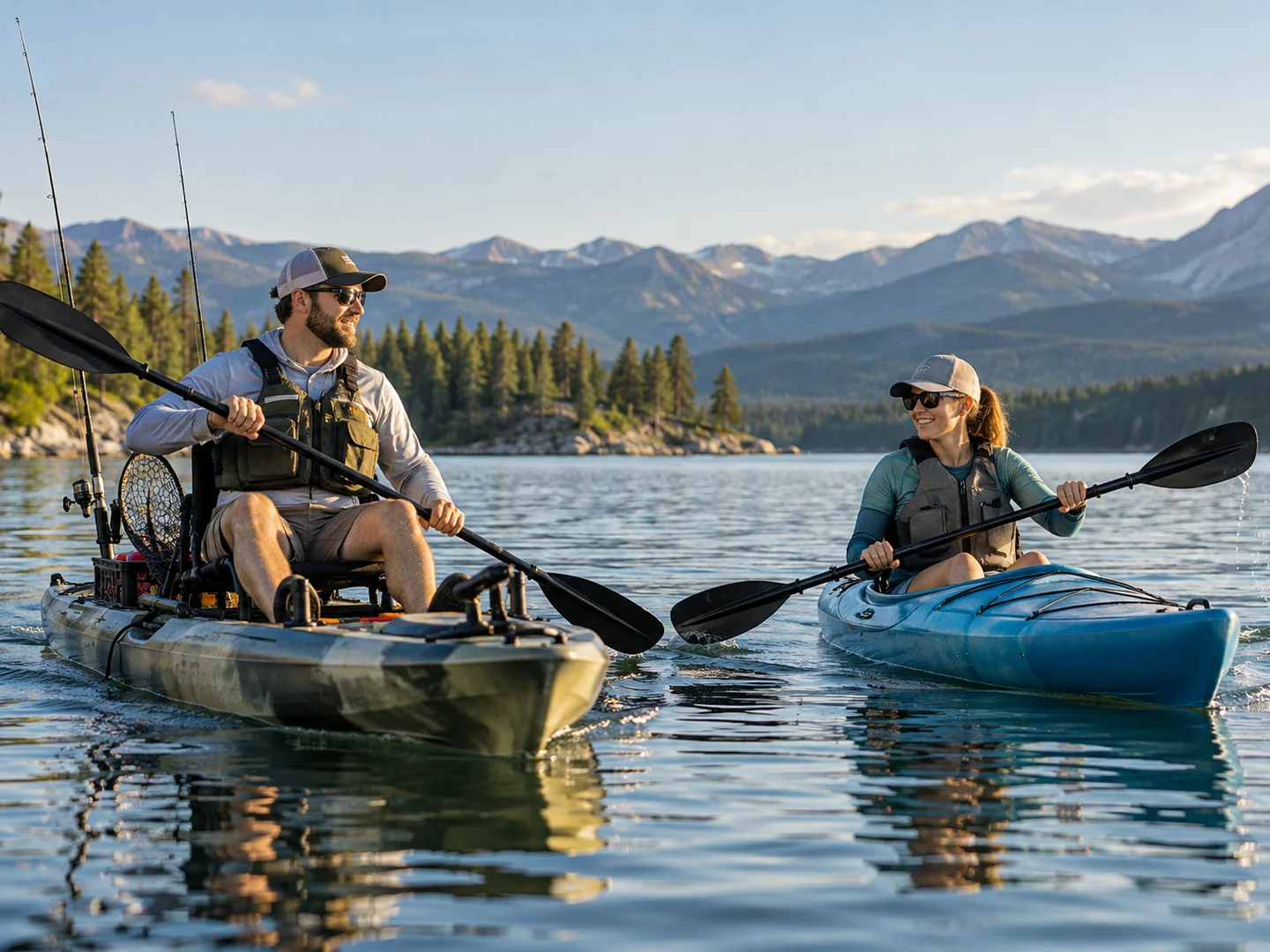
Choose a fishing kayak if you fish often, carry multiple rods or tackle, want gear tracks or rod storage, or need a wider deck and higher-capacity layout built around angling. Choose a regular recreational kayak if paddling is the main activity, fishing is occasional, and low weight, easy loading, and simple ownership matter more than specialized rigging.
Fishing kayak vs regular kayak: the key differences
| Decision factor | Fishing kayak | Regular recreational kayak |
|---|---|---|
| Primary job | Provide a workable platform for casting, tackle access, rod storage, and angling accessories | Provide straightforward recreational paddling on appropriate water |
| Hull and deck | Often wider, with more open deck space and stability-focused shapes | Often simpler and lighter, with less deck space devoted to gear |
| Seating | Many models use raised or frame-style seats for long sessions and easier gear access | Usually uses a simpler recreational seat or lower sit-inside position |
| Fishing storage | Rod holders, tank wells, crate space, tackle access, and gear tracks are common | General-purpose hatch, bungee, or day storage is more typical |
| Transport burden | Can be heavier because of wider hulls, seats, drives, tracks, and extra structure | Many basic models are lighter and easier to roof-load or carry |
| Propulsion options | Paddle, pedal, and some motor-compatible layouts | Usually paddle-first in the recreational category |
| Best fit | Frequent anglers who want gear organized and reachable | Casual paddlers and occasional anglers carrying minimal fishing gear |
Built around the angler
Stability, gear access, storage
Rod holders, tracks, tank wells
More weight and drag in many designs
Built around recreational paddling
Simplicity, portability, paddling
Basic storage and lighter outfitting
Less fishing-specific organization
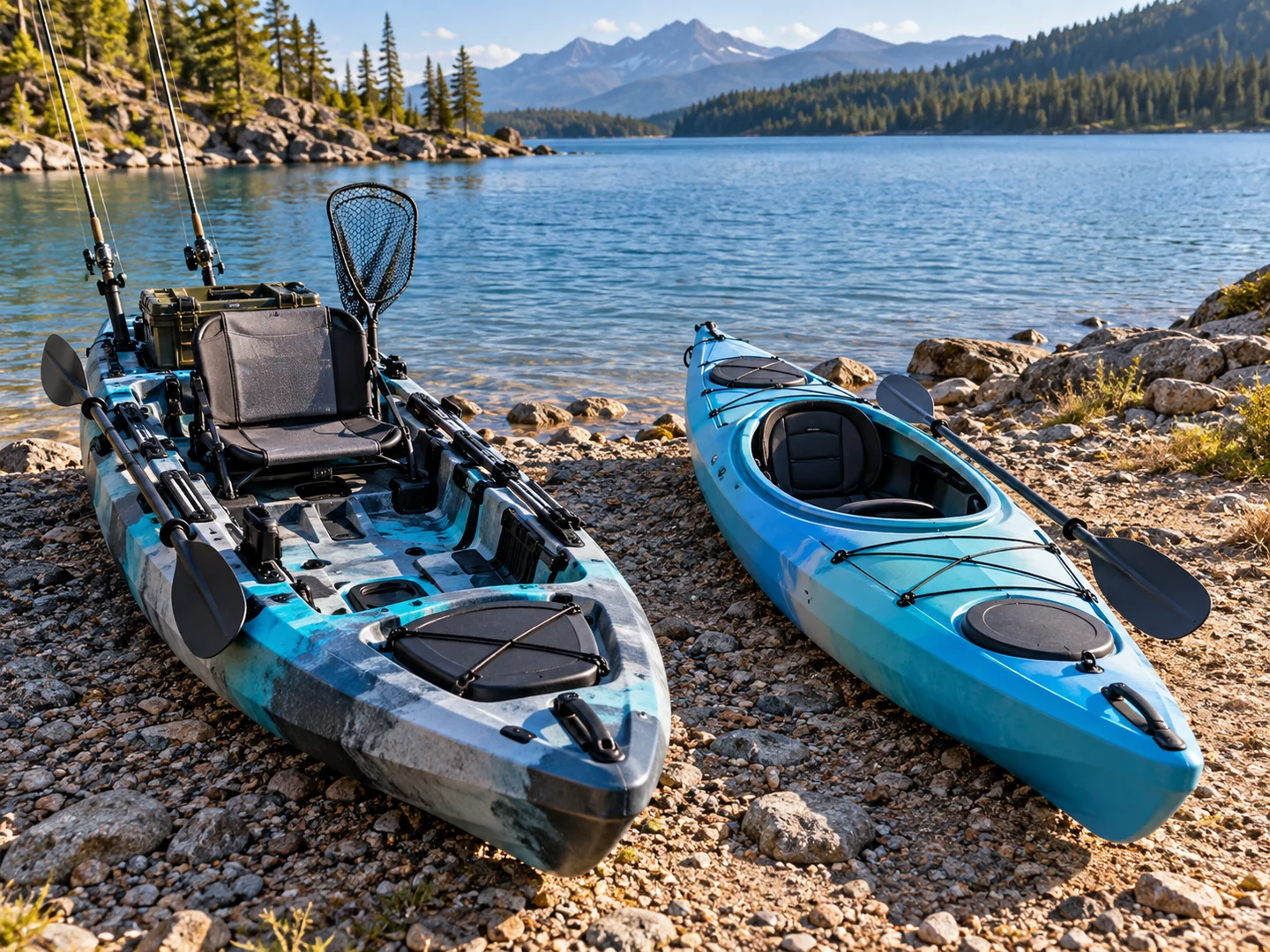
1. Fishing kayaks usually put more emphasis on stability and deck space
Fishing changes how you move in a kayak. You twist to reach tackle, turn to manage a landing net, lift rods from storage, and sometimes cast from a higher seating position. Many purpose-built fishing kayaks respond to those demands with wider hulls, flatter or more open decks, and layouts that keep equipment within reach.
That does not mean every fishing kayak is more stable than every recreational kayak. Hull shape, length, width, load, paddler position, and water conditions all matter. It also does not mean every fishing kayak is intended for standing. If stand-up casting matters, confirm that capability for the exact model instead of assuming the word fishing guarantees it.
2. The biggest practical difference is often gear organization
For occasional fishing, one rod and a small tackle box can work from a basic recreational kayak. The limitations become more obvious when you add a second rod, landing net, pliers, electronics, crate, cooler, anchor system, or battery. Fishing kayaks commonly provide dedicated rod holders, accessory tracks, open tank wells, paddle keepers, and storage positions designed to remain usable while seated.
That organization matters because loose gear is not just inconvenient. It can interfere with paddling, snag line, shift around the cockpit, or force you to reach awkwardly. A recreational kayak can be modified, but accessories do not change the underlying hull, payload, deck area, or seating position.
3. Regular kayaks often win on portability and simple paddling
A purpose-built fishing platform can be excellent on the water and frustrating in the parking lot. Wider hulls, elevated seats, pedal drives, rudders, mounts, and extra storage all add bulk or weight. That matters if you roof-load alone, carry the kayak down stairs, store it in a small garage, or walk a long distance from the vehicle to the launch.
Recreational kayaks vary widely, but many basic models are lighter and less cluttered. For someone who primarily wants to paddle and only occasionally carries a rod, that can be a better overall ownership experience. The kayak you can load and launch easily may get used more often than a feature-rich boat that is difficult to move.
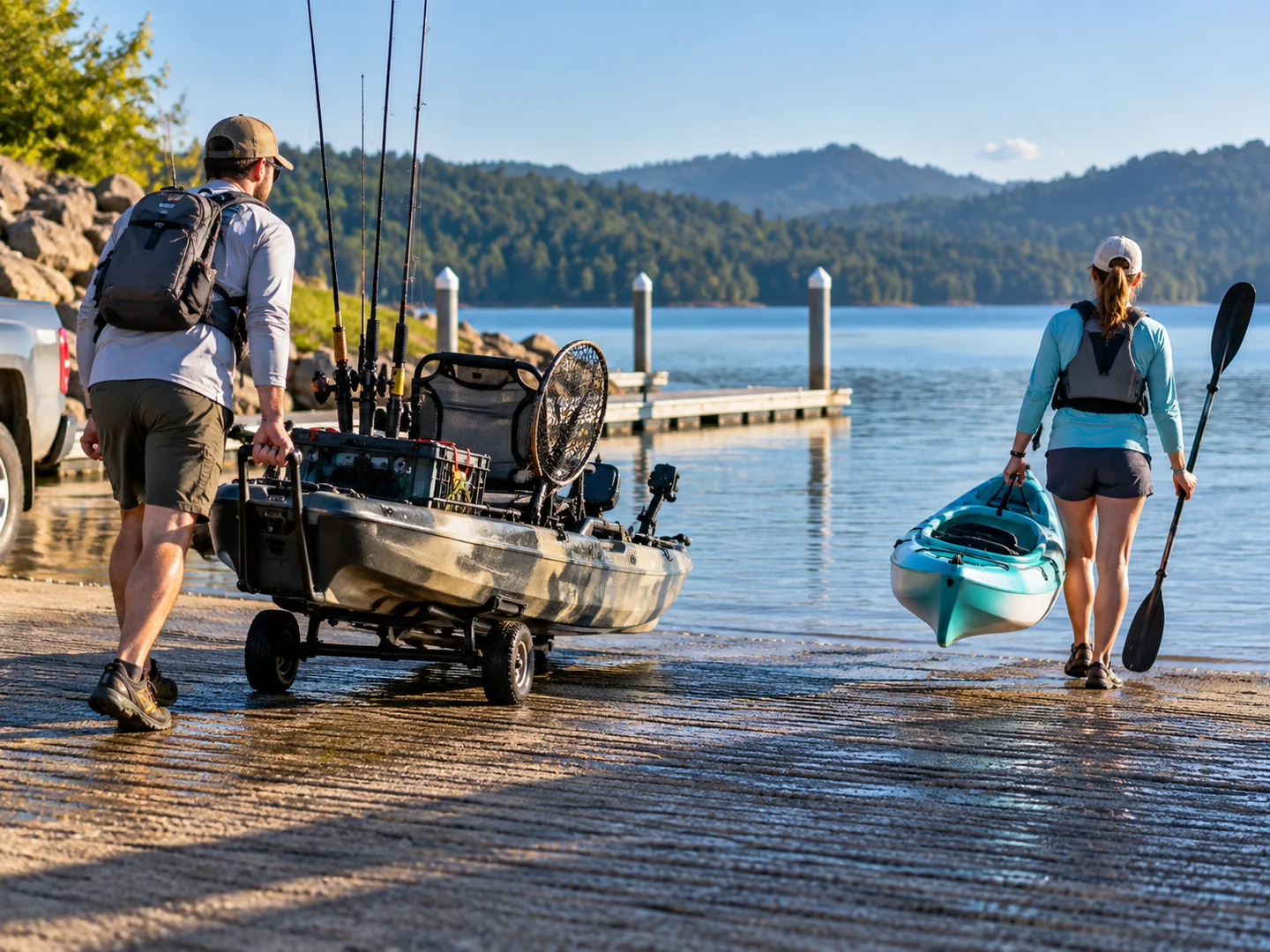
A concrete example: two Pelican kayaks show the trade-off clearly
These are not presented as universal winners. They are useful because the current Amazon US listings put a fishing model and a recreational model from the same brand side by side, making the class differences easier to see without mixing in a brand change.
Pelican Catch Mode 110 with Transom Mount
Purpose-built fishing
A wide, fishing-focused sit-on-top with a raised seat, rod storage, rigging tracks, and substantially more load capacity than the recreational example below.
The Catch Mode illustrates what the extra fishing specialization buys: more working space, integrated rigging, rod management, a higher-capacity platform, and an upgrade path for a compatible motor setup. The cost is obvious before you reach the water. It is 31 lb heavier and 6.5 inches wider than the Argo example below.
Good fit if you want
- A kayak designed around frequent fishing
- Integrated rod storage and accessory mounting
- More capacity for angler plus fishing load
Skip it if you need
- A light kayak for frequent solo roof loading
- A simple recreational boat with minimal rigging
- Maximum paddling efficiency for long non-fishing outings
Pelican Argo 100X EXO
Recreational paddling
A 10-foot sit-inside recreational kayak that keeps the design lighter and simpler, with far less fishing-specific hardware.
The Argo shows why a regular kayak can still be the better purchase for a casual paddler. It gives up integrated fishing organization, but the 36 lb listed weight is much easier to live with than many dedicated fishing platforms. If your fishing setup is one rod, a compact tackle box, and protected-water trips, that simplicity may be enough.
Good fit if you want
- A lighter hard-shell kayak for casual paddling
- Occasional fishing with a minimal setup
- Less hardware and an easier transport routine
Skip it if you need
- Factory rod holders and gear tracks
- A large open fishing deck or stand-up-focused platform
- Extra payload headroom for a heavily rigged fishing setup
Can you fish from a regular kayak?
Yes. You do not need a purpose-built fishing kayak to catch fish. A stable recreational kayak can work well when you keep the load simple and fish appropriate water. Current kayak-fishing discussions repeatedly show beginners starting with one rod, a small tackle bag, and a kayak they already own before deciding whether specialized storage or a different hull is worth paying for.
A regular kayak makes the most sense for fishing when you stay seated, carry limited gear, do not need electronics or multiple rod positions, and value easy transport. Start simple. If every trip turns into a struggle to store rods, manage the paddle, reach tackle, or keep gear secure, you have identified a real reason to move to a fishing-specific platform.
Can you turn a regular kayak into a fishing kayak?
You can make a recreational kayak more fishing-friendly with removable or properly installed rod holders, leashes, a small crate, paddle retention, and compact storage. Do not treat accessories as a substitute for hull design. Adding tracks or holders will not create more payload, deck space, or stand-up stability.
Before drilling a hull, check the kayak manufacturer’s guidance, confirm that the mounting area can support the hardware, and think about water entry, sealing, and access to fasteners. If you already own a suitable kayak, a minimal conversion can be a sensible way to learn what you actually need. If you are buying from scratch specifically to fish, a purpose-built fishing layout usually avoids more compromises.
Choose a fishing kayak if these are your priorities
- Fishing is the main activity. Most trips start with rods and tackle, not a casual paddle.
- You carry more than a minimal setup. Multiple rods, a net, electronics, crate, anchor, cooler, or battery all need secure positions.
- You want fishing-specific ergonomics. Raised seating, open deck access, paddle storage, rod holders, and gear tracks can reduce clutter.
- You want pedal or motor options. Those systems are much more common in the dedicated fishing category.
- You have solved transport. You can safely store, load, carry, or cart the extra weight and width.
If that sounds like your use case, our best fishing kayaks guide compares current options by propulsion, stability, weight, capacity, and transport burden instead of treating every fishing kayak as the same kind of boat.
Choose a regular recreational kayak if these are your priorities
- Paddling comes first. You want a kayak for relaxed lake or sheltered-water outings and may only fish occasionally.
- Low weight matters. Solo loading, stairs, storage space, or a long carry to the launch are major constraints.
- Your fishing kit is small. One rod and a compact tackle setup do not require a large rigging system.
- You prefer simplicity. Fewer mounts, drives, batteries, and accessories mean fewer things to transport and maintain.
- You do not need to stand. You are comfortable fishing seated and do not require a broad casting deck.
Common mistakes when choosing between the two
Buying a fishing kayak only because it looks more capable
Extra features are useful only when you use them. A heavy, wide fishing kayak can be a poor fit if most of your time is spent paddling with friends and only a few trips involve fishing.
Assuming a regular kayak cannot fish
Occasional fishing does not automatically require a fishing-specific hull. Start with the actual gear load and the water you use.
Ignoring the trip from garage to water
Listed hull weight, full rigged weight, vehicle height, storage, and launch access can matter as much as the on-water feature list.
Assuming every fishing kayak is safe to stand in
Standing capability is model-specific and condition-dependent. Confirm manufacturer guidance and use conservative judgment based on water, weather, load, and your own balance.
Adding electronics before solving the basic layout
A fish finder adds a display, transducer, mount, battery, and cables. If electronics are part of your plan, make sure the kayak has practical mounting and power space first. Our kayak fish finder guide goes deeper into screen size, power, transducer fit, and mounting trade-offs.
Bottom line: which kayak should you buy?
Buy a fishing kayak when the boat needs to function as a fishing workspace. Buy a regular recreational kayak when the boat’s first job is easy paddling and fishing is a secondary activity.
If you already own a stable recreational kayak, try a simple fishing setup before replacing it. If you are starting from zero and expect to fish on most outings, buying the fishing-specific layout from the beginning is usually the cleaner path.
How GearAndFish researched this comparison
Search results were checked for direct fishing-kayak versus recreational-kayak comparisons, confirming a distinct comparison intent rather than another product roundup.
Dimensions, listed weight, capacity, and product identity were checked against current manufacturer pages and exact current Amazon US listings.
Kayak-fishing discussions were reviewed for recurring questions about storage, stability, paddle management, transport, and upgrading from recreational boats.
GearAndFish did not claim on-water testing, catches, long-term ownership, or performance measurements that were not documented.
Fishing kayak vs regular kayak FAQ
Can you fish from a regular kayak?
Yes. A regular recreational kayak can work for occasional fishing when it is suitable for the water, stable enough for the paddler and load, and you keep the gear simple. A dedicated fishing kayak becomes more useful as rod count, tackle, electronics, storage, and rigging needs grow.
Are fishing kayaks more stable than regular kayaks?
Many fishing kayaks put more emphasis on initial stability and use wider hulls or open decks, but the label alone does not guarantee greater stability. Compare the exact hull design, dimensions, load, seating position, and manufacturer guidance for the models you are considering.
Are fishing kayaks harder to paddle?
Some are. Wide, heavy fishing platforms can require more effort to accelerate and move over distance than lighter recreational kayaks. More streamlined fishing models can paddle efficiently, so compare the exact hull and weight rather than assuming every fishing kayak is slow.
Can you convert a regular kayak into a fishing kayak?
You can add fishing-friendly storage, rod holders, paddle retention, and compatible mounts, but accessories do not change the kayak’s hull, payload, deck area, or underlying stability. A simple conversion is most sensible when you already own a suitable recreational kayak.
Is a fishing kayak worth it if I only fish occasionally?
Often not. If most trips are recreational paddling and you carry only one rod and minimal tackle, a suitable regular kayak may be simpler and easier to transport. A fishing kayak is easier to justify when angling is the main activity and its storage, seating, rigging, or propulsion features solve repeated problems.