
GearAndFish is reader-supported. As an Amazon Associate I earn from qualifying purchases. When you buy through links on our site, we may earn an affiliate commission, at no extra cost to you. Learn more.
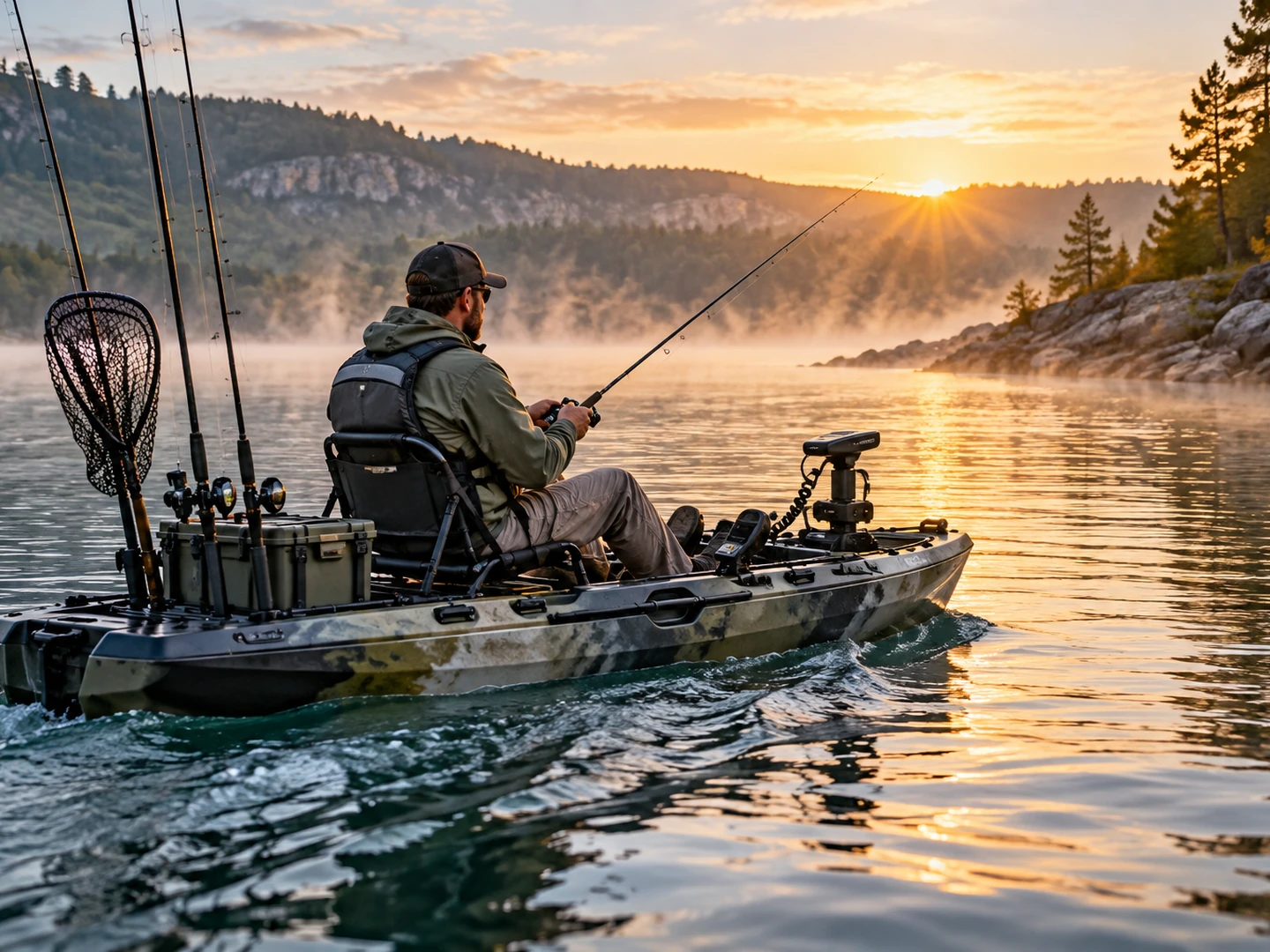
The best fishing kayaks with motors save energy on long runs, make boat positioning easier, and let you spend more of the day actually fishing. For most anglers shopping Amazon US right now, the strongest choice is the Old Town Sportsman 106 Powered by Minn Kota if you want a complete factory-powered setup. The BKC PK13 adds more carrying capacity and a longer platform, while the Pelican Catch PWR 100 is the lighter motor-ready option for anglers who want to choose their own motor.
How we chose: We compared current manufacturer specifications, direct Amazon US product pages, motor configuration, weight, capacity, fishing layout, and the practical cost of getting each kayak water-ready. We did not conduct personal on-water testing, and we excluded prominent models whose Amazon pages were unavailable during our October 2026 verification.
Which motorized fishing kayak should you buy?
Choose the Old Town Sportsman 106 Powered by Minn Kota if you want the simplest factory-integrated package with a 45 lb-thrust 12V Minn Kota motor, foot-brace steering, and a wide 37-inch fishing platform. Choose the BKC PK13 if carrying capacity and a longer fishing platform matter more than keeping weight down. Choose the Pelican Catch PWR 100 if you want a 75 lb hull that is pre-wired and motor-ready, but remember that its motor and battery are separate purchases.
Our picks at a glance
Old Town Sportsman 106 Powered by Minn Kota
A compact factory-powered fishing kayak with a proven 45 lb-thrust Minn Kota setup and straightforward foot-brace steering.
BKC PK13 with Trolling Motor
A long solo platform with a built-in trolling motor, 550 lb listed capacity, rod storage, dry storage, and a hand-operated rudder.
Pelican Catch PWR 100
A shorter, lighter pre-wired platform for anglers who prefer choosing and installing their own compatible motor.
Best fishing kayaks with motors compared
| Product | Best for | Motor setup | Weight / capacity | Main trade-off | Amazon |
|---|---|---|---|---|---|
| Old Town Sportsman 106 Powered by Minn Kota | Best overall factory-powered setup | Integrated 45 lb-thrust 12V Minn Kota | 121 lb assembled / 638 lb total capacity | Heavy for roof-top loading; battery not included | Check availability |
| BKC PK13 with Trolling Motor | Higher-capacity solo rig | Built-in trolling motor | 88 lb Amazon-listed weight / 550 lb capacity | Current BKC naming and specs have changed across PK13 revisions | Check availability |
| Pelican Catch PWR 100 | Lighter motor-ready build | Pre-wired stern motor-ready platform; motor sold separately | 75 lb / 450 lb capacity | Not a complete powered package out of the box | Check availability |
Old Town Sportsman 106 Powered by Minn Kota
45 lb-thrust 12V Minn Kota
121 lb
638 lb
BKC PK13 with Trolling Motor
Built-in trolling motor
88 lb
550 lb
Pelican Catch PWR 100
Sold separately
75 lb
450 lb
Old Town Sportsman 106 Powered by Minn Kota
Pick #1
The most convincing current Amazon choice if you want a complete motorized fishing kayak rather than a hull that still needs a motor installation.
The Sportsman 106 Powered by Minn Kota is the easiest recommendation here for an angler who wants to avoid piecing together a motor mount, steering system, wiring route, and hull compatibility plan. Its 45 lb-thrust motor is built into the boat’s propulsion system, and the removable motor console makes the package less awkward when you need to transport or service individual components.
The wide hull and high usable capacity also make sense for anglers carrying a crate, multiple rods, a fish finder, battery, tackle, and a cooler. The trade-off is obvious before the kayak ever touches water: 121 lb assembled is not a casual one-person roof-rack load for many owners. A trailer, pickup bed, cart, or very deliberate loading system becomes part of the purchase decision.
The 12V battery is not included, so budget for a compatible marine battery and charger. If GPS anchoring such as Spot-Lock is a must-have feature, this simpler powered 106 is not the same system as Old Town’s AutoPilot line. The advantage is a less complicated factory motor package at a lower level of system complexity.
Good fit if you want
- A factory-integrated motor rather than a DIY conversion.
- A compact 10 ft 6 in hull with a wide fishing platform.
- High carrying capacity for electronics and tackle.
Skip it if you need
- A lightweight kayak you can easily shoulder to the launch.
- GPS virtual anchoring built into the motor system.
- A battery included in the purchase price.
BKC PK13 with Trolling Motor
Pick #2
A roomy solo motorized option for anglers who prioritize carrying capacity, storage, and a longer hull over a truly lightweight setup.
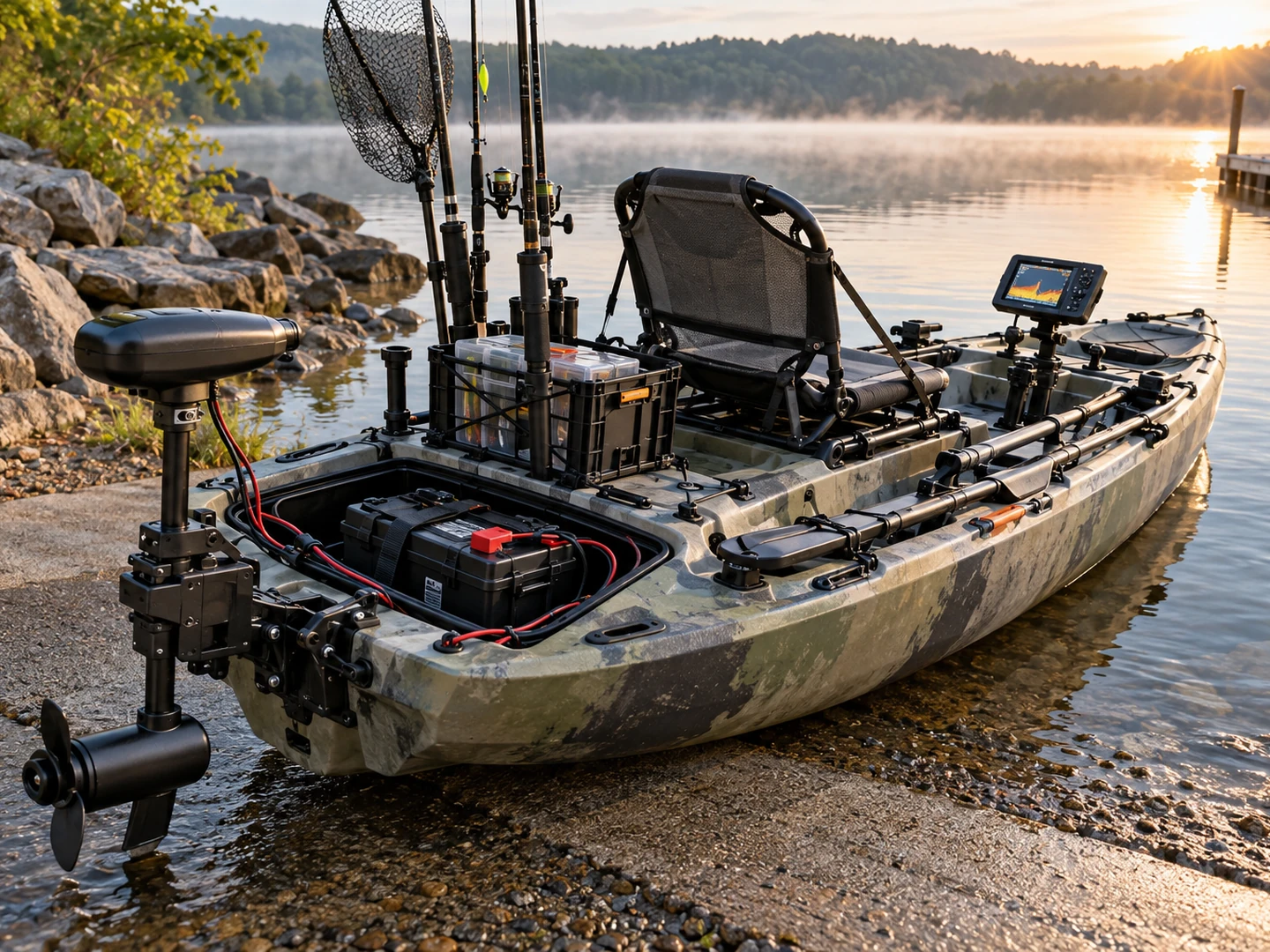
The PK13 makes the most sense for a solo angler who carries a lot of gear and wants the motor included instead of starting with a bare motor-ready hull. Its storage layout and capacity leave useful room for a battery, electronics, tackle, and larger cargo without immediately consuming the entire payload allowance.
There is one important model-year caveat. Brooklyn Kayak Company now markets an updated 12.5 Pro Motorized Single Kayak under the PK13 family name, while the Amazon listing still uses the PK13 naming and shows an 88 lb item weight. Because specifications can change between revisions and marketplace inventory, verify the exact dimensions and included hardware shown on the Amazon variant before ordering. That is more useful than pretending every PK13 sold over several model years is identical.
Compared with the Old Town, the BKC option is attractive for capacity and storage, but its propulsion package is less sophisticated. If your priority is a tightly integrated branded motor system and straightforward dealer documentation, the Old Town is the cleaner pick. If your priority is space and payload, the PK13 deserves the second spot.
Good fit if you want
- A high-capacity solo motorized platform.
- Built-in trolling-motor propulsion without a separate mount project.
- Dry storage, rear cargo space, rod holders, and rudder steering.
Skip it if you need
- One completely stable spec sheet across every marketplace revision.
- The lowest possible transport weight.
- GPS anchoring or a premium integrated electronics ecosystem.
Pelican Catch PWR 100
Pick #3
The best choice here if you want a lighter fishing hull that is already designed and wired for power, but you prefer to select the motor yourself.
The Catch PWR 100 solves a different problem than the first two picks. It is not sold as a complete powered package. Instead, it gives you a short, very wide fishing platform with the electrical routing and stern layout already prepared for a compatible motor. That can be a better fit if you already own a motor, want a specific thrust level, or prefer to keep the kayak usable without the propulsion system installed.
At 75 lb, it is still not featherweight, but it is noticeably easier to plan around than a 121 lb assembled Old Town. The compact length is also useful for garages, truck beds, and smaller launch areas. The penalty for the short, broad hull is that it is not the shape we would choose for covering long distances efficiently under paddle power.
Budget the complete system rather than the hull alone. You still need the motor, battery, compatible wiring connection, charger, and any required registration hardware. For shoppers comparing a motor-ready kayak against a complete powered model, this is the key apples-to-apples correction.
Good fit if you want
- A lighter and shorter motor-ready fishing kayak.
- Freedom to choose your own motor and battery.
- A wide standing platform with fishing-specific storage and tracks.
Skip it if you need
- A ready-to-run motorized package in one purchase.
- Maximum paddle efficiency over long distances.
- No extra decisions about motor, battery, or wiring.
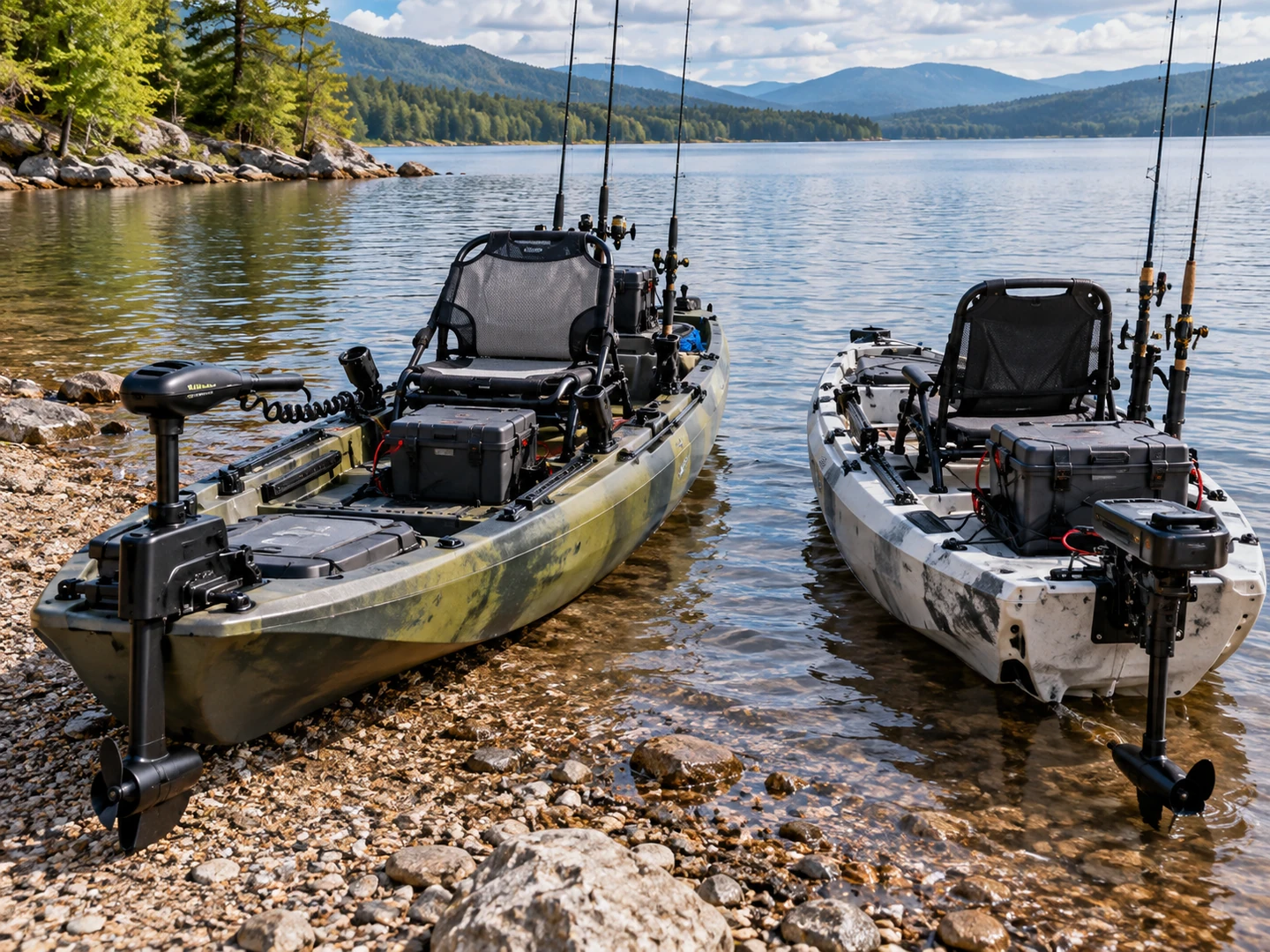
How to choose a fishing kayak with a motor
A motor changes more than speed. It changes the kayak’s weight, electrical system, steering, launch routine, legal status, and the amount of gear you can carry before reaching the manufacturer’s capacity. Start with the complete powered system rather than comparing hull prices alone.
Factory motorized vs motor-ready
A factory-motorized kayak arrives with the propulsion system designed into the boat. Steering controls, motor well or console, wiring, and hull geometry are already matched. That reduces installation uncertainty, which is why the Old Town 106 is our top pick.
A motor-ready kayak gives you more flexibility, but the motor is a separate project. Confirm the mount type, maximum motor rating, battery location, cable routing, steering method, and whether you can raise the prop quickly in shallow water. If you are starting with a motor-ready hull, our guide to the best kayak trolling motors helps narrow the propulsion side of the build.
Do the weight math before you buy
Published kayak weight is only the start. Add the motor or motor console, battery, seat, fish finder, crate, rods, tackle, safety gear, cooler, cart, and anything else you actually launch with. A 75 lb hull can become a much heavier loaded rig, while a factory-powered kayak can exceed 120 lb before the battery goes aboard.
Also separate total capacity from usable payload when a manufacturer provides both. The battery and removable propulsion components consume part of the real-world carrying allowance. More capacity is useful, but it does not make a badly trimmed kayak handle well. Heavy batteries and tackle should be positioned so the hull sits level and steering remains predictable.
Battery choice matters as much as motor thrust
Most kayak motors in this class rely on a 12V battery system. Check the motor maker’s battery guidance and the kayak’s battery-box dimensions before buying. A battery that technically powers the motor can still be a poor fit if it is too large for the compartment or pushes the loaded kayak beyond a sensible payload.
Do not use a marketing range estimate as a guarantee. Runtime changes with battery capacity, hull drag, speed setting, current, wind, total load, and how often you run at high power. Plan reserve capacity so the return trip does not depend on an optimistic best-case number.
Steering and shallow-water control
Motorized kayaks can steer through a rudder, foot braces, a hand control, or a motor that turns with the steering system. The ideal setup lets you control direction without giving up the rod every time the wind shifts. Just as important, make sure the motor can be raised or removed for launch ramps, shallow flats, vegetation, and transport.
Electronics and rigging space
A powered kayak often carries more electronics because the battery system is already part of the rig. Look for track space, a transducer solution, clean cable routing, and a place to mount the display without blocking the paddle stroke or motor controls. If sonar is part of the plan, compare current options in our best fish finders for kayaks guide.
Transport can be the deciding factor
Many motorized fishing kayaks are better treated like very small boats than lightweight recreational kayaks. Measure your garage, vehicle, trailer, bed extender, and launch access before ordering. A great fishing platform becomes a bad purchase if moving it from storage to water requires two people every trip and you usually fish alone.
Registration rules can change once you add a motor
Adding mechanical propulsion can change registration, numbering, and required-equipment rules. Requirements vary by state, so check your state boating agency before launch. Do not assume that a kayak remains exempt from vessel registration simply because the same hull is exempt when paddled.
When a non-motorized kayak makes more sense
If you fish small ponds, launch far from vehicle access, or regularly carry the boat over rough ground, the extra motor and battery weight may solve the wrong problem. Our broader best fishing kayaks roundup includes paddle and pedal options that are easier to transport and may be a better fit for short-water trips.
How we evaluated these motorized fishing kayaks
Every recommended product has a direct Amazon.com US ASIN checked for the exact current listing. We did not use a generic search-result URL as the affiliate destination.
Length, width, weight, capacity, propulsion type, steering, storage, and motor-readiness were checked against current manufacturer material where available.
We considered the motor, battery requirement, transport burden, rigging space, and whether the buyer receives a complete powered package or only a motor-ready hull.
GearAndFish did not claim personal water testing. Recommendations are editorial judgments based on verified current specifications, availability, and buyer-fit differences.
Research checked October 7, 2026. Amazon inventory and marketplace variants can change, so confirm the exact color, revision, included motor, and battery requirements on the product page before ordering.
Fishing kayak with motor FAQ
Is a motorized fishing kayak worth it?
It can be if you regularly cover long distances, fight wind or current, troll, or want to conserve energy for fishing. The trade-off is more weight, more electrical maintenance, higher cost, and potentially additional registration requirements.
Do fishing kayaks with motors come with the battery?
Often they do not. The Old Town Sportsman 106 Powered by Minn Kota requires a compatible 12V marine battery that is sold separately, and motor-ready kayaks such as the Pelican Catch PWR 100 require both the motor and battery to complete the system.
What is the difference between motorized and motor-ready?
A motorized kayak is sold with the motor as part of the package. A motor-ready kayak is designed to accept a motor but normally requires you to buy the motor, battery, and sometimes additional mounting or steering hardware separately.
Do you have to register a fishing kayak with a trolling motor?
Often yes, but the exact rule depends on the state. Several states require registration once a motor is added even when an unpowered kayak is exempt. Check your state boating agency before using the motor.
How much thrust does a fishing kayak need?
More thrust is not automatically better. Match the motor to the kayak manufacturer’s compatibility limits, total loaded weight, water conditions, and battery system. Factory packages remove much of this guesswork because the hull and propulsion system are designed together.