
GearAndFish is reader-supported. As an Amazon Associate I earn from qualifying purchases. When you buy through links on our site, we may earn an affiliate commission, at no extra cost to you. Learn more.
Walleye do not call for one magic lure. The right choice depends on whether fish are pinned to bottom, suspended over open water, holding on a weed edge, or reacting to a fast-moving bait. This guide narrows the field to six proven lure styles and current models that cover the situations most walleye anglers actually face.
Quick answer
For the broadest all-around starting point, use a 1/4 oz Northland Deep-Vee Jig with a minnow or soft plastic when fish are near bottom. For covering open water, the Bandit Walleye Deep is the more specialized deep-trolling choice. The Rapala Down Deep Husky Jerk adds a suspending minnow profile, the Berkley Flicker Shad 7 is a compact trolling crankbait, the Z-Man DieZel MinnowZ is a durable paddletail option, and the Rapala Rippin’ Rap gives you a fast-sinking lipless bait for vertical or cast-and-rip presentations.
Best walleye lures at a glance
A fast-falling keeled jig with a bait keeper, available in weights from 1/16 to 3/8 oz.
A long, slender minnow crankbait designed to reach roughly 27 feet while trolling.
A suspending deep diver for casting or trolling when a pause matters.
A 2 3/4 inch shad-profile crankbait with a listed swimming depth of 11 to 13 feet for this Amazon variant.
A durable 4 inch paddletail that can be rigged on a jighead or weedless hook.
A 2 1/2 inch, 1/2 oz sinking lure with strong vibration and variable running depth.
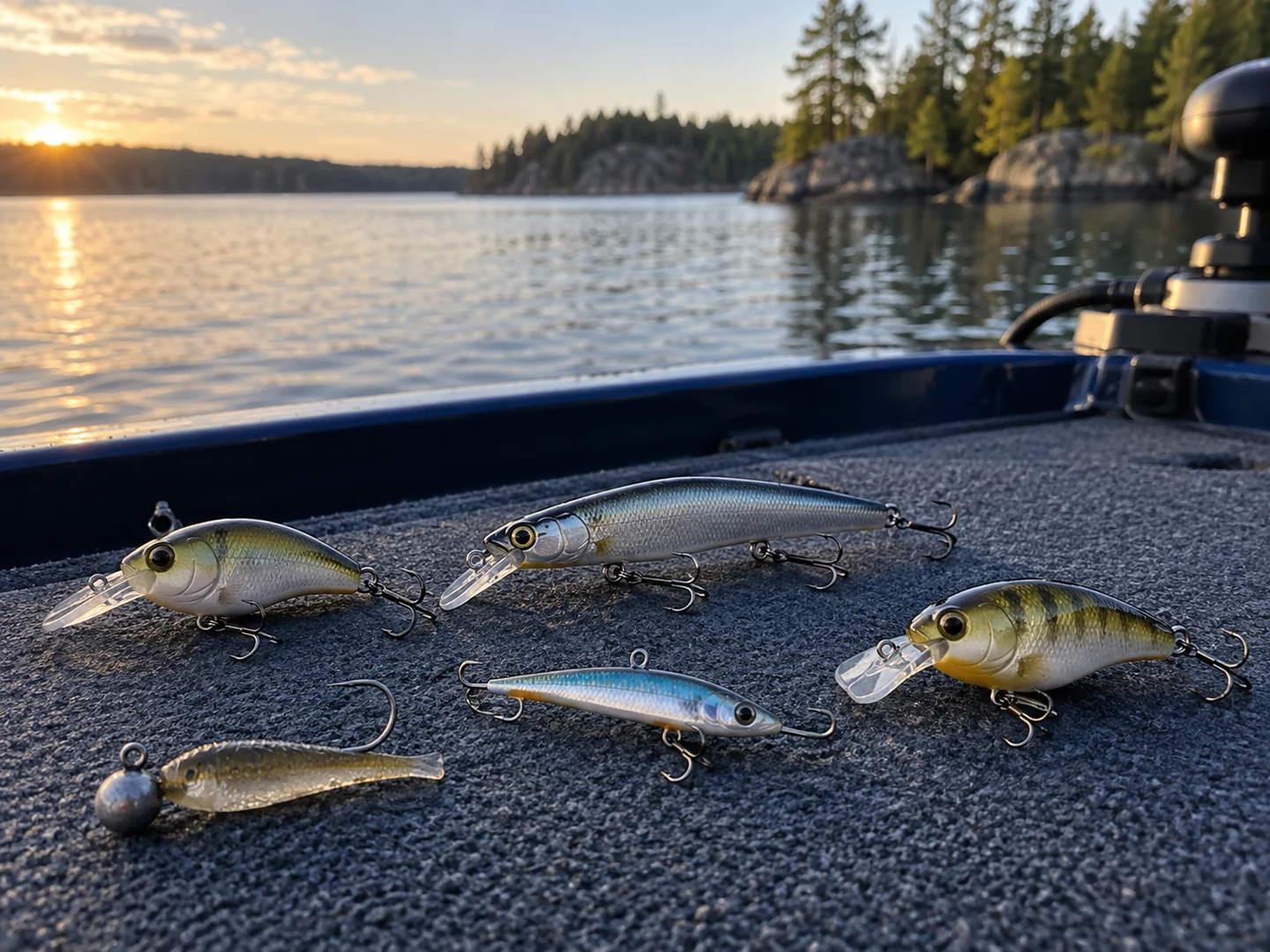
Walleye lure comparison
| Lure | Best use | Verified variant | Key depth or weight | Main trade-off |
|---|---|---|---|---|
| Northland Deep-Vee Jig | Bottom contact, vertical jigging, pitching | Walleye, 1/4 oz | 1/4 oz | Needs a trailer or live bait for a complete presentation |
| Bandit Walleye Deep | Deep trolling | Red Head, 4 3/4 in | 5/8 oz, trolls to about 27 ft | Too specialized for shallow casting |
| Rapala Down Deep Husky Jerk | Deep casting and trolling | DHJ14, Pink Clown | 5 1/2 in, 13/16 oz, 10 to 20 ft | Large profile is not the first choice when fish want tiny forage |
| Berkley Flicker Shad 7 | Mid-depth trolling and casting | HD Threadfin Shad, 2 3/4 in | 5/16 oz, listed 11 to 13 ft | Fixed diving profile is less flexible than a jig |
| Z-Man DieZel MinnowZ | Weed edges, jighead retrieves, weedless rigging | Pearl, 4 in | Soft bait, rigging determines depth | Requires a separate jighead or hook |
| Rapala Rippin’ Rap | Cold water, vertical work, cast-and-rip retrieves | RPR06, Firetiger | 2 1/2 in, 1/2 oz, sinking | Easy to snag if worked carelessly through heavy bottom cover |
How to choose a walleye lure by situation
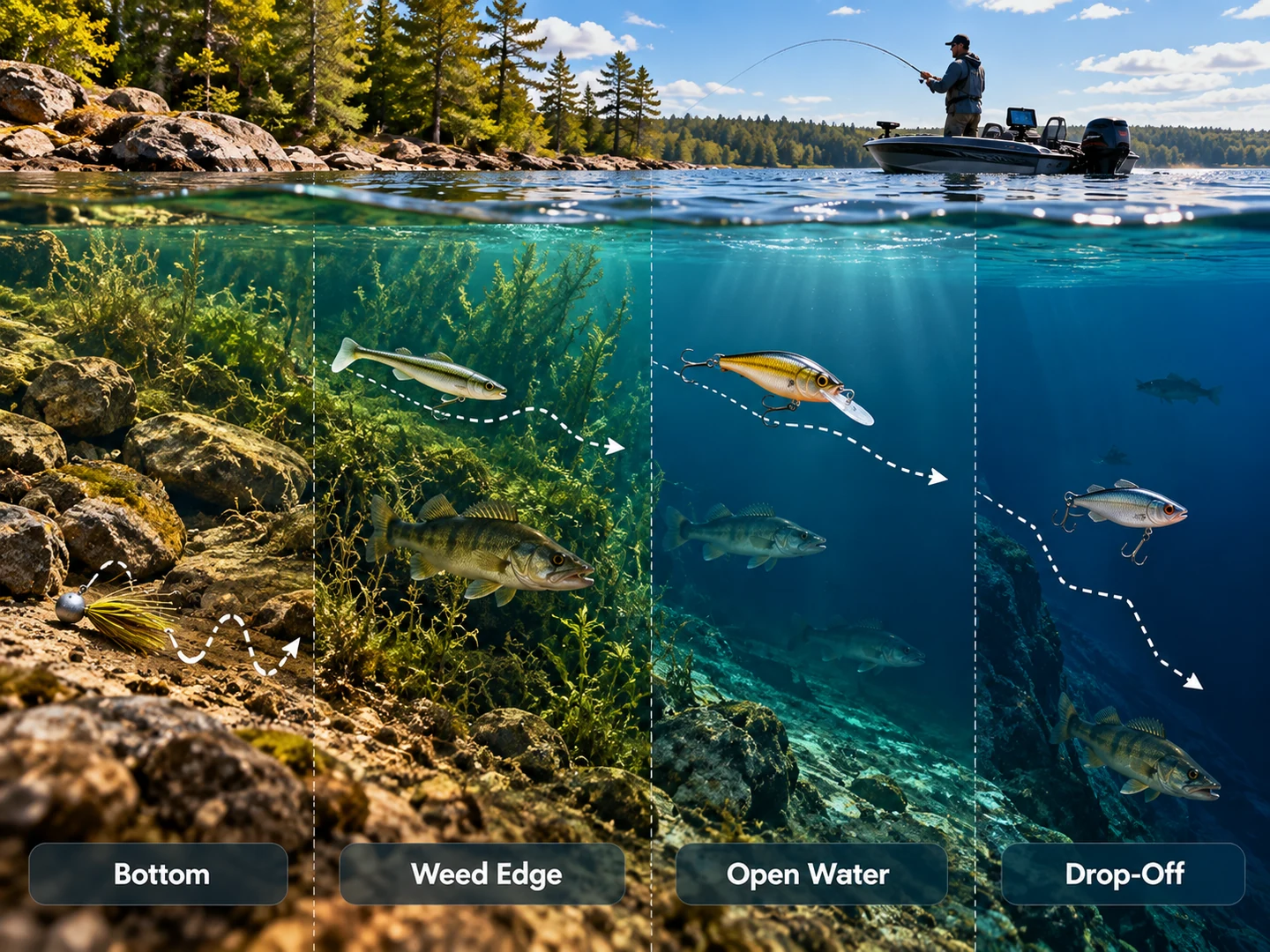
The fastest way to shrink a lure box is to choose by where the fish are holding and how you can keep a lure in that zone. Walleye anglers often move between bottom-oriented presentations, open-water trolling, weed-edge casting, and aggressive vertical work in the same season.
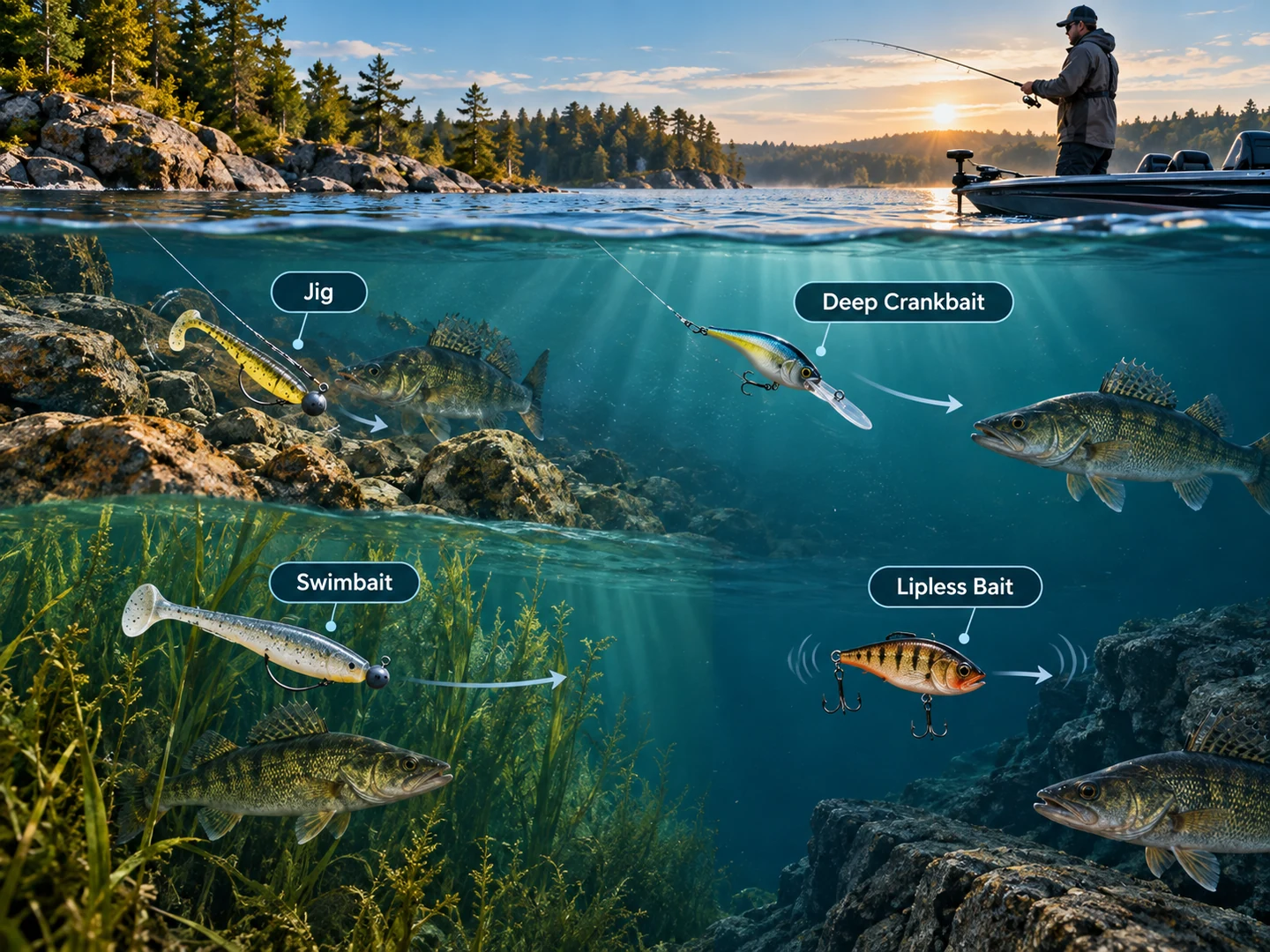
Fish tight to bottom: start with a jig
A jig is the simplest tool for maintaining bottom contact because you control both weight and trailer. Northland offers the Deep-Vee in 1/16, 1/8, 1/4 and 3/8 oz versions. The 1/4 oz option in this guide is a practical middle ground, but current, wind and depth can push you lighter or heavier. The keeled head is designed to track straight and fall quickly, while the Barb-Wire keeper is intended to hold soft plastics or live bait in place.
Suspended fish and open water: choose a trolling crankbait
When walleye are spread across a basin or holding away from obvious structure, a crankbait lets you cover water while keeping a repeatable presentation. The Bandit Walleye Deep is the most depth-focused lure here, with the manufacturer listing a 4 3/4 inch, 5/8 oz profile that can reach about 27 feet while trolling. The Berkley Flicker Shad 7 is more compact, and the current 2 3/4 inch Amazon variant is listed for an 11 to 13 foot swimming depth.
Fish that follow but do not commit: try a suspending minnow
The Down Deep Husky Jerk is useful when a stop or pause is part of the trigger. Rapala lists the DHJ14 as a 5 1/2 inch, 13/16 oz suspending lure with a 10 to 20 foot running-depth range. That does not mean it always runs at one exact depth, since speed, line, casting distance and trolling setup matter, but it gives the lure a clear role: a deep-running minnow that can hang during the pause instead of immediately rising or sinking.
Weed edges and adaptable rigging: use a paddletail
A soft paddletail earns space because the same body can be paired with different jighead weights or a weedless hook. The 4 inch Pearl DieZel MinnowZ Amazon variant uses Z-Man’s ElaZtech material and includes a molded hook slot and dorsal hook pocket. That makes it a flexible choice when you want to swim a bait over sparse grass, count it down beside a break, or change jighead weight without changing the entire lure style.
Cold water and reaction bites: use a sinking lipless bait
The Rippin’ Rap RPR06 is a 2 1/2 inch, 1/2 oz sinking lure with a lipless body, internal rattle and variable running depth. It can be cast and retrieved, yo-yoed, or worked vertically. Its strength is speed and vibration, not subtle hovering, so it fits best when you want a lure that can be snapped off bottom or ripped through an open lane.
The best walleye lures in detail
Best for jigging
Northland Deep-Vee Jig
Bottom contact
Pick this when your plan revolves around feeling bottom, pitching to structure, or pairing a jighead with live bait or plastics.
The Deep-Vee is a straightforward walleye tool rather than a highly specialized hard bait. The head is thicker on top and thinner on the bottom, a shape Northland says helps it track straight and fall fast. It also has large 3D eyes and the company’s Barb-Wire keeper for holding either a soft plastic or live bait.
The advantage is control. A jig can be kept close to bottom, snapped vertically, dragged, or pitched to a break. You can also change trailer size and action without replacing the head. The downside is equally simple: the jighead alone is not a complete lure presentation, so you need bait or a plastic and you need to choose weight for the actual current and depth.
- Four useful weight options across the family
- Keeled head is designed for fast fall and straight tracking
- Works with live bait or soft plastics
- Requires a separate trailer or bait
- One fixed weight will not cover every depth and current
Best for deep trolling
Bandit Walleye Deep
Deep water
Choose it when the job is to put a minnow-profile crankbait deep behind the boat and cover water efficiently.
The Bandit Walleye Deep has a narrow minnow profile and a large diving lip. Current Bandit information describes the Walleye Deep as a 4 3/4 inch, 5/8 oz lure designed for deep trolling, with a listed dive capability of about 27 feet. That gives it a very clear use case for suspended fish or structure that sits beyond the reach of shallower crankbaits.
It is less compelling if most of your fishing is from shore or in shallow spring water. A lure built around deep trolling is not automatically better just because it dives farther. Buy it when you have the water depth, trolling setup and fish location to use that capability.
- Purpose-built deep-trolling profile
- Long 4 3/4 inch minnow shape
- Many color options across the family
- Overkill for shallow presentations
- Depth still depends on line, speed and amount of line out
Best suspending deep minnow
Rapala Down Deep Husky Jerk DHJ14
Pause-friendly
A strong option when you want deep-diving reach plus neutral buoyancy that lets the bait suspend during a pause.
Rapala lists the DHJ14 as the largest standard Down Deep Husky Jerk in the family. It combines a deep-diving lip with suspending buoyancy, which separates it from floating cranks that begin to rise as soon as you stop them. That matters when fish follow a bait and the strike comes during a pause.
The 5 1/2 inch profile is also a real selection factor. It is a big bait compared with a compact Flicker Shad, so it makes the most sense when walleye are feeding on larger forage or when you want a pronounced target. If fish are keyed to small shad or young-of-year bait, step down rather than forcing a large profile.
- Suspends on the pause
- Designed for both casting and trolling
- Deep-diving DHJ14 reaches a useful mid-to-deep zone
- Large 5 1/2 inch profile can be too much for small forage situations
- Not as fast to the bottom as a heavy jig or lipless bait
Best compact trolling crankbait
Berkley Flicker Shad 7
Compact crank
A useful middle-depth crankbait when you want a smaller shad profile than the long deep-diving minnows above.
The Flicker Shad family is built around a shad profile and a pronounced rolling action. The exact Amazon variant mapped here is the 7 cm class bait, listed at 2 3/4 inches and 5/16 oz, with a listed 11 to 13 foot swimming depth and two size 6 hooks.
That makes it a useful contrast to the Bandit and DHJ14. Instead of a long minnow, you get a shorter, deeper-bodied bait that can fit smaller forage. The trade-off is depth ceiling. If fish are holding much deeper than the lure’s practical range, a deeper crank or weighted system makes more sense.
- Compact shad profile
- Weight-transfer design supports casting as well as trolling
- Fusion19 treble hooks on current versions
- Not the deepest lure in this group
- Crankbait depth changes with line diameter, speed and line out
Best paddletail
Z-Man DieZel MinnowZ 4 in
Rigging flexibility
Use it when you want one durable soft bait that can be paired with different jigheads or rigged weedless around vegetation.
The DieZel MinnowZ is a paddletail rather than a ready-to-fish hard bait. Z-Man currently offers the family in multiple sizes, and the Amazon ASIN used here is specifically the 4 inch Pearl version. The body includes a hook slot and dorsal pocket to support weedless rigging, and the ElaZtech material is designed for high stretch and durability.
Its main advantage is that depth is not locked into a molded diving lip. Change jighead weight and you change fall rate and working depth. Rig it weedless and it becomes more suitable for grass. The catch is that you need to supply the hook or jighead, and ElaZtech should be stored separately from many conventional soft plastics because different materials can react when left together.
- Durable soft-plastic material
- Can be jighead-rigged or weedless
- Paddletail works across slow and faster retrieves
- Not ready to fish without terminal tackle
- Requires careful storage away from incompatible soft plastics
Best lipless reaction bait
Rapala Rippin’ Rap RPR06
Vibration
A sinking 1/2 oz option for snapping, ripping, yo-yoing or working vertically when vibration and quick depth changes matter.
The Rippin’ Rap has no diving lip, so its running depth is controlled by sink time and retrieve rather than a fixed bill. Rapala lists the RPR06 at 2 1/2 inches and 1/2 oz, with a sinking body, loud BB rattle and variable running depth. It can be cast over flats, ripped around grass, or worked vertically over fish.
That versatility comes with a snag-management cost. A sinking lure with exposed trebles can reach bottom quickly, which is useful on clean rock and open edges but less forgiving in brush. Keep it moving through open lanes and use a more snag-resistant jig or soft bait when cover gets dense.
- Sinks quickly for vertical or deeper work
- Strong vibration and audible rattle
- Works with both casting and vertical retrieves
- Exposed trebles are snag-prone in heavy cover
- Aggressive vibration is not always ideal for neutral fish
Walleye lure buying guide
Choose depth before color
A color pattern cannot help much if the lure is consistently above or below feeding fish. Start with the lure category that can stay in the strike zone, then refine color for water clarity and local forage. For bottom fish, that usually means jig weight. For trollers, it means crankbait dive range plus line, speed and line-out adjustments.
Match profile to forage size
Walleye may feed on shad, shiners, perch, smelt and other forage depending on the water. A 5 1/2 inch minnow plug and a 2 3/4 inch shad crankbait are not interchangeable just because both catch walleye. Carry at least two profile sizes so you can shrink or enlarge the target without changing your entire technique.
Hard bait or soft plastic?
Hard baits provide a repeatable built-in action and, in diving models, a defined depth role. Soft plastics let you adjust hook style and jighead weight. If you fish mixed cover, a paddletail or jig often gives more control. If you need to search a broad basin, a crankbait is usually the more efficient tool.
A practical six-slot walleye box
If you are building from scratch, you do not need dozens of nearly identical colors. Start with a bottom jig, a deep trolling minnow, a suspending deep minnow, a compact shad crankbait, a 4 inch paddletail, and a sinking lipless bait. Then add colors and sizes only after your water and seasonal patterns show a real gap.
How these picks were selected
GearAndFish does not claim direct use of these products. This roundup was built from current manufacturer specifications, live Amazon.com US product listings, current US search-result intent, and cross-checking against current walleye lure roundups. Selection emphasized distinct use cases rather than six lures that all solve the same problem.
Jigging, deep trolling, suspending minnow work, compact crankbait trolling, soft-plastic swimming and lipless reaction fishing.
Each CTA maps to a specific Amazon.com US ASIN and a named size/color variant where Amazon exposed that detail.
Key size, weight, depth and construction claims were checked against current manufacturer pages or current Amazon listing details.
Prices change too quickly to make a durable editorial ranking, so the comparison focuses on use case and design instead.
FAQ
What lure is best for walleye?
There is no single best lure for every situation. A jig is the most adaptable starting point when walleye are near bottom, while crankbaits are better for covering water and targeting suspended fish. Soft swimbaits and lipless baits fill useful roles around weeds, open structure and reaction-bite situations.
What color lure is best for walleye?
Start with visibility and local forage rather than one universal color. Natural shad, perch and silver patterns make sense in clearer water, while brighter chartreuse, firetiger, pink or glow-influenced patterns can be useful in stained water or low light. Depth and presentation still matter more than color alone.
What size lure should I use for walleye?
Match the general size of the forage and the fish’s activity level. Compact 2 to 3 inch crankbaits can fit small baitfish situations, while 4 to 5 1/2 inch minnows and plastics create a larger target. Carry more than one size instead of treating a single length as universal.
Are jigs or crankbaits better for walleye?
Jigs are better when you need precise bottom contact, vertical control or easy weight changes. Crankbaits are better when you need to cover water horizontally or target suspended fish. Many walleye anglers need both categories rather than choosing only one.
How deep should a walleye lure run?
Deep enough to stay close to the level where fish are actually holding. A lure’s published dive range is a starting point, not a guarantee. Trolling speed, line type, line diameter, amount of line out, current and casting distance can all change actual running depth.