GearAndFish is reader-supported. As an Amazon Associate I earn from qualifying purchases. When you buy through links on our site, we may earn an affiliate commission, at no extra cost to you. Learn more.
A good BFS reel should start a light spool cleanly, control it without constant thumb corrections, and still feel composed when a bass or trout pulls against light line. For most anglers, that matters more than chasing the lightest reel on a spec sheet.
The Daiwa PX BF70 is our best overall pick because its very light A7075 Air spool, compact metal frame, and finely adjustable braking are purpose-built for true bait finesse work. The Shimano Curado BFS is the more practical value pick if you want a familiar bass-reel platform, while the KastKing Zephyr BFS is the lowest-cost entry in this shortlist.
The best BFS reel for most dedicated finesse anglers
Choose the Daiwa PX BF70 if your priority is light-line, light-lure control and you want a reel built around low spool inertia. In Tackle Warehouse’s current 2026 BFS comparison, the PX BF70 was their overall pick after a controlled comparison of 11 reels. Its main trade-off is price, and its shallow spool is intentionally specialized rather than versatile for heavy line.
Choose the Shimano Curado BFS instead if your BFS fishing leans toward bass presentations around roughly 3/32 to 1/8 ounce and you value a proven, easy-to-understand platform. For a lower-cost start, the KastKing Zephyr BFS remains a straightforward way to try the technique without buying into a premium reel immediately.
Quick picks
Daiwa PX BF70
Best fit for anglers who want a reel centered on light line, low spool inertia, and true BFS casting control.
Shimano Curado BFS
A familiar, metal-bodied option with FTB braking and a strong case for bass anglers moving from standard baitcasting into BFS.
Shimano Aldebaran BFS
For buyers who want a very light magnesium reel with Shimano’s MGL Spool III and FTB system, and are willing to pay for refinement.
KastKing Kestrel Carbon
A 4.5-ounce carbon-frame reel with a 5.6-gram shallow spool and adjustable finesse braking at a much lower cost than premium metal or magnesium reels.
KastKing Zephyr BFS
An older but still current BFS design with a carbon frame, drag clicker, and simple magnetic braking for anglers testing the category on a tighter budget.

BFS reel comparison
The numbers below are for the exact right-hand variants mapped in this article. Left-hand versions can use a different SKU or Amazon child listing, so verify orientation before ordering.
| Reel | Best for | Weight | Gear ratio | Max drag | Key BFS feature | Amazon |
|---|---|---|---|---|---|---|
| Daiwa PX BF70 XH | Dedicated light-line BFS | 5.6 oz | 8.6:1 | 7.7 lb | A7075 Air spool, T-Wing System | Check Amazon |
| Shimano Curado BFS XG | All-around bass BFS value | 6.2 oz | 8.2:1 | 8 lb | FTB braking, shallow spool | Check Amazon |
| Shimano Aldebaran BFS HG | Premium low weight | 4.6 oz | 7.8:1 | 8 lb | MGL Spool III, FTB braking | Check Amazon |
| KastKing Kestrel Carbon | Lightweight value | 4.5 oz | 8.4:1 | 12 lb | 5.6 g shallow spool, FAF brake | Check Amazon |
| KastKing Zephyr BFS | Low-cost BFS entry | 5.6 oz | 7.2:1 | 10 lb | Light BFS spool, 8-magnet brake | Check Amazon |
Daiwa PX BF70 XH
A7075 Air spool and a metal body for dedicated light-line BFS.
Shimano Curado BFS XG
FTB braking and a familiar bass-reel platform.
Shimano Aldebaran BFS HG
Magnesium frame, MGL Spool III, and FTB braking.
KastKing Kestrel Carbon
Very light carbon frame with a 5.6 g shallow spool.
KastKing Zephyr BFS
Simple magnetic braking and a BFS-specific lightweight spool.
Daiwa PX BF70: best for dedicated BFS
Top pick
The PX BF70 makes the most sense when BFS is not just a lighter baitcaster setup, but the actual job you want the reel to do.
Daiwa builds the PX BF70 around an A7075 Air spool, T-Wing System, Zero Adjuster, and an aluminum frame and side plate. The important part is not the feature count. It is that the reel is explicitly tuned around a very light spool and light line rather than trying to make one general-purpose baitcaster cover every situation.
That specialization lines up with independent comparison data. In Tackle Warehouse’s 2026 comparison of 11 BFS reels, the PX BF70 was their overall choice. Their results also showed the reel becoming more convincing as line diameter got lighter, which is exactly the direction a dedicated BFS buyer should care about.
Best for
- Anglers who regularly fish light fluorocarbon or thin braid.
- Small hard baits, finesse plastics, and other presentations that expose standard baitcaster spool inertia.
- Buyers who want a purpose-built BFS reel rather than a crossover reel.
Skip if
- You mostly throw conventional bass weights where a standard 70 or 100-size baitcaster already works.
- You want deep line capacity or heavier line.
- Your budget matters more than squeezing out the last bit of BFS-specific control.
Shimano Curado BFS: best all-around value for bass BFS
Curado BFS is the safer choice for a bass angler who wants a real BFS reel without jumping straight to the most specialized or expensive option.
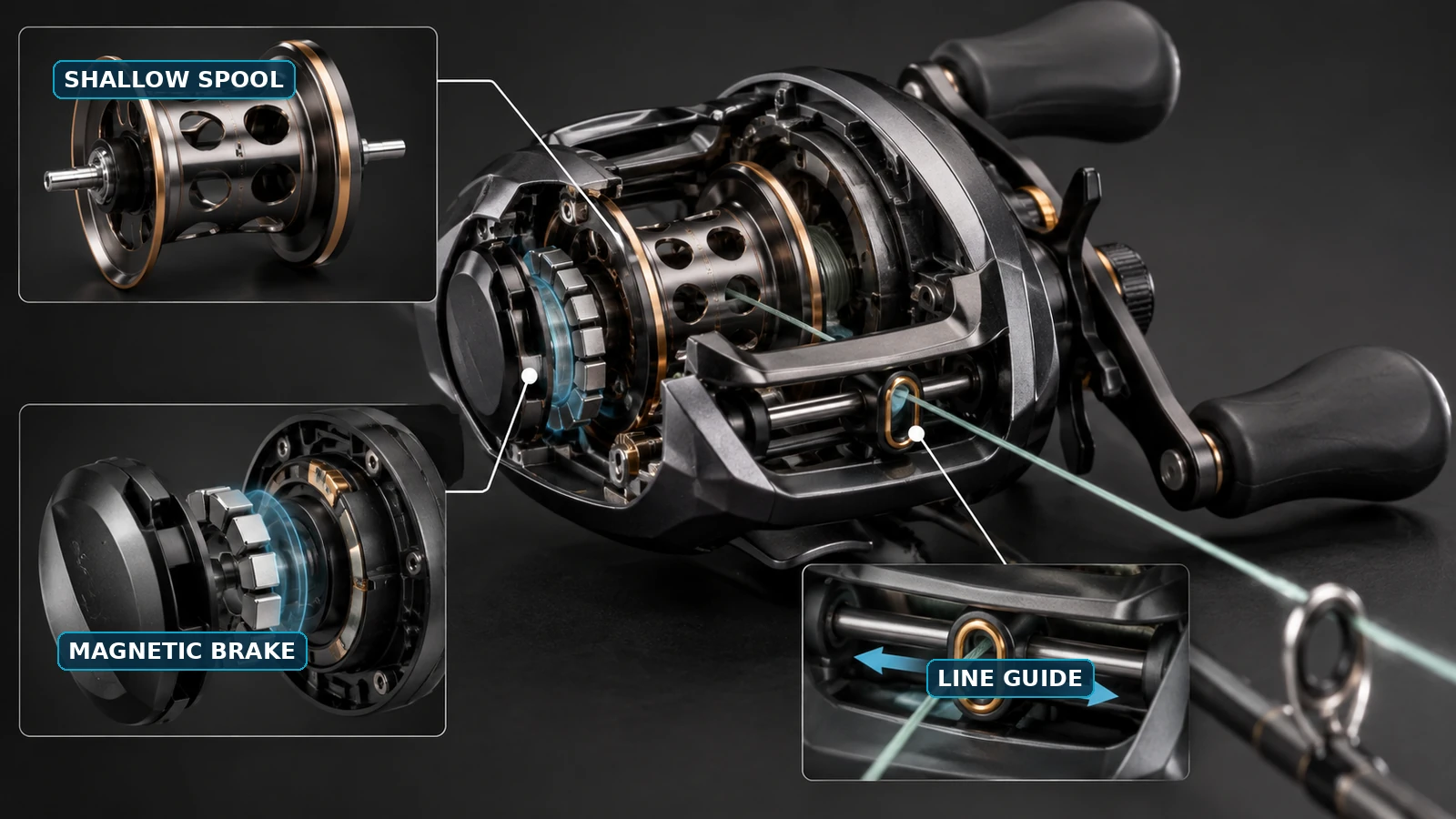
Shimano’s Curado BFS uses a shallow spool and Finesse Tune Brake system. FTB moves the braking hardware off the spool itself, reducing rotating mass, then changes magnetic braking as spool speed changes. The external dial keeps normal tuning straightforward.
The current Shimano US specification is an 8.2:1 reel at 6.2 ounces with 8 pounds of maximum drag. In Tackle Warehouse’s comparison, it was especially competitive with the slightly heavier end of true BFS weights and earned their value recommendation. That makes it a logical bridge for bass anglers who already understand standard baitcasters and want finesse capability without an extreme learning curve.
Best for
- Bass-focused BFS where presentations are light but not always microscopic.
- Anglers who prefer metal-bodied reels and familiar Shimano controls.
- Buyers who want one BFS reel to cover a broad range of common finesse casting work.
Skip if
- Your only goal is the lightest total reel weight.
- You routinely push the smallest possible lure and line combinations.
- You want the lowest possible entry price.
Shimano Aldebaran BFS: premium low-weight refinement
The Aldebaran BFS is for the angler who wants Shimano’s lightest, more refined BFS experience and is comfortable paying a substantial premium over Curado BFS.
Aldebaran BFS combines a magnesium frame with Shimano’s MGL Spool III and FTB braking. Shimano lists the HG right-hand model at 4.6 ounces, making it 1.6 ounces lighter than Curado BFS. That difference is noticeable in a compact rod-and-reel system where the rod itself may also be unusually light.
The reason to buy it is not maximum drag or a dramatic capacity advantage. It is low mass, low spool inertia, and a premium drivetrain in a dedicated finesse package. If you are building a balanced ultralight casting setup and the reel weight matters as much as price, Aldebaran belongs on the list.
Best for
- Premium creek, trout, and bass finesse builds where reel weight matters.
- Anglers who value compact balance and refined gearing.
- Buyers who already know they like BFS and want an upgrade rather than an experiment.
Skip if
- Value per dollar is your first priority.
- You need a reel for rough all-purpose duty rather than a specialized finesse setup.
- You are still deciding whether BFS suits your fishing.
KastKing Kestrel Carbon: very low weight without premium pricing
Kestrel Carbon is the shortlist’s weight-value play: a 4.5-ounce reel with a 5.6-gram shallow spool and an auto-adjusting finesse brake.
The standard Kestrel Carbon gets close to the mass of premium magnesium BFS reels using a carbon frame and side plates. KastKing’s current specifications list a 5.6-gram shallow spool, FAF magnetic braking, 11+1 bearings, and up to 12 pounds of drag. The mapped Amazon variant here is the right-hand 8.4:1 model.
The appeal is straightforward: light reel, very light spool, and a modern BFS-oriented brake without moving into high-end pricing. It also offers an audible drag clicker, which is useful feedback when light line is slipping under pressure.
Best for
- Anglers who want a light BFS combo without premium Shimano or Daiwa pricing.
- Braid-to-leader setups and common bass finesse presentations.
- Buyers who like a high-speed 8.4:1 retrieve.
Skip if
- You specifically want an aluminum or magnesium frame.
- You prefer a long-established service network over maximum spec value.
- You want the simplest possible first BFS reel and would rather spend less.
KastKing Zephyr BFS: a low-cost way to learn the technique
Zephyr BFS is not the newest or lightest spool design here, but it remains a current, dedicated BFS reel at a price that makes experimentation easier to justify.
Zephyr uses a carbon frame and side plates, a lightweight BFS spool, 6+1 bearings, and an externally adjustable magnetic brake. It also includes a drag clicker. Those are the right ingredients for learning BFS setup and casting without paying for a premium chassis.
Its limitation is equally clear. Newer reels such as the Kestrel Carbon use a lighter spool and more advanced braking concepts, while Shimano and Daiwa offer more refined premium systems. Zephyr is therefore strongest as a budget entry point, not as the reel to buy if you already know you want the highest-performing BFS setup you can afford.
Best for
- Trying BFS without a large initial spend.
- Creek, panfish, trout, and light bass setups where low line capacity is acceptable.
- Anglers who want a drag clicker and simple magnetic adjustment.
Skip if
- You already know you want premium spool control and refinement.
- You are comparing purely on lowest reel or spool weight.
- You want one baitcaster for both BFS and heavy conventional work.
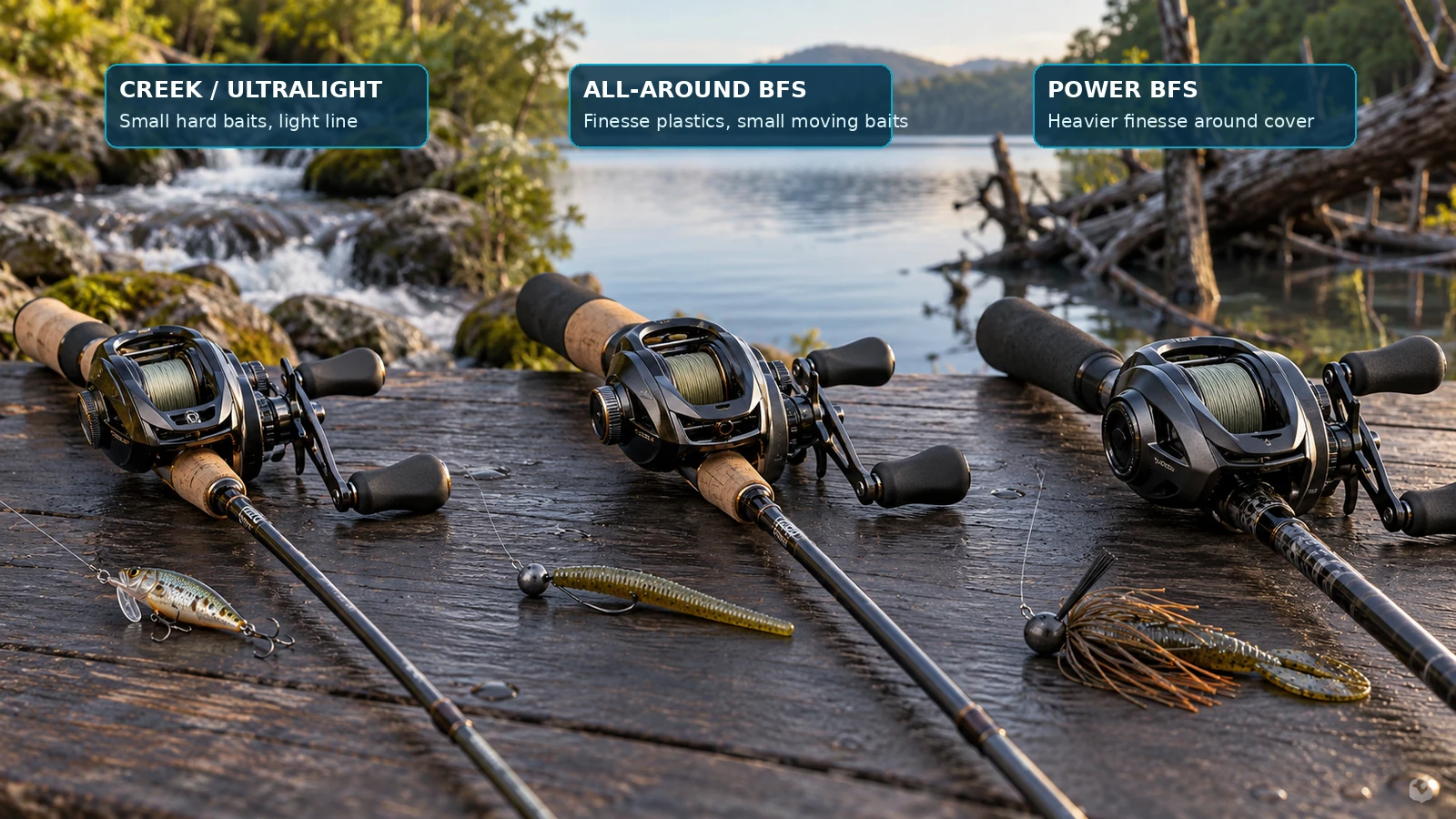
How to choose a BFS reel
Start with the actual lure range, not the BFS label
BFS is a system. The reel, rod, line, lure shape, and casting style all affect how light you can fish comfortably. A manufacturer may state that a reel can cast a very small lure, but that does not mean every rod-and-line combination will deliver the same result. If your normal finesse baits sit around the upper end of BFS, a Curado BFS can be more practical than buying the most specialized shallow-spool reel available.
Shallow spool and low startup inertia matter more than raw bearing count
A light, shallow spool needs less energy to accelerate. That is why the PX BF70, Kestrel Carbon, Aldebaran BFS, and Curado BFS all focus heavily on spool mass and braking architecture. Bearing count is easy to compare in a table, but it does not tell you how quickly a loaded spool starts, how evenly the brake controls it, or how forgiving the reel feels after a slightly imperfect cast.
Match braking style to how you fish
Shimano’s FTB and KastKing’s FAF systems both change braking behavior as the spool accelerates and slows, while Daiwa pairs a very light Air spool with its own magnetic control and Zero Adjuster. The practical question is not which acronym sounds more advanced. It is whether you want a reel that can be set conservatively and left alone, or whether you enjoy tuning for each lure, line, and casting style.
Use light line, but do not treat one line formula as universal
Current BFS buyer guidance commonly centers on light fluorocarbon or thin braid with a leader. Tackle Warehouse’s 2026 guide discusses fluorocarbon from 2 to 8 pounds and braid in roughly the 8 to 14 pound range as common examples. Cover, target species, rod power, hook gauge, and local abrasion risk can all move those numbers. The key is keeping line diameter appropriate for the shallow spool and the lure you are trying to cast.
Maximum drag is rarely the deciding BFS spec
Even the reels here vary from 7.7 to 12 pounds of listed maximum drag. With light line, you will normally set usable drag well below the reel’s maximum. Smooth startup, predictable pressure, and a rod that protects light line usually matter more than choosing the reel with the biggest drag number.
Check hand orientation and exact marketplace variant
BFS reels often have separate right- and left-hand SKUs, and Amazon can group several gear ratios or reel versions on one parent listing. The Amazon buttons in this article map to one verified right-hand variant each. Confirm hand orientation on the product page before placing an order.
Three common BFS setup directions
Creek and ultralight BFS: prioritize low spool inertia, light reel weight, and a rod that loads with tiny hard baits or small single-hook lures. PX BF70 and Aldebaran BFS fit this direction best.
All-around bass BFS: prioritize a manageable brake, fast pickup, and enough versatility for small jerkbaits, finesse plastics, and compact moving baits. Curado BFS is the easiest recommendation here, with Kestrel Carbon as the lighter value alternative.
Power BFS: move up slightly in rod power, line strength, and lure weight when fishing around cover. At that point the BFS reel still helps with compact presentations, but the whole setup should protect line and hooks while providing enough control to move fish away from trouble.
Research and selection methodology
This is an editorial research roundup based on current manufacturer specifications, current US search results, independent comparison data, owner feedback patterns, and late-stage Amazon.com US listing checks. GearAndFish did not generate original performance test data for this page.
FAQ
What does BFS mean in fishing?
BFS stands for Bait Finesse System. In practice, it means using a baitcasting setup designed around lighter lures, thinner line, a shallow low-inertia spool, and a rod that can load properly with those lighter presentations.
Can a BFS reel replace a spinning reel?
Sometimes, but not completely. A BFS setup can cover many light-lure jobs while giving you baitcaster-style line control and accuracy. Spinning gear can still be easier with very light, wind-resistant lures, long leaders, or situations where you want the simplest possible casting system.
What line is best for a BFS reel?
Light fluorocarbon and thin braid with a fluorocarbon leader are both common. Current buyer guidance often references roughly 2 to 8 pound fluorocarbon or 8 to 14 pound braid, but the correct choice depends on cover, target species, rod power, hook gauge, and the reel’s shallow-spool capacity.
Is a shallow spool better for BFS?
Usually, yes. A shallow spool reduces the amount of line the reel carries and can reduce rotating mass, helping the spool start more easily with a light lure. The trade-off is less line capacity, which is one reason a dedicated BFS reel is not automatically the best general-purpose baitcaster.
Are BFS reels hard to learn?
They can be less forgiving than spinning gear, especially with tiny lures, but a well-matched rod and conservative brake setting make the learning curve manageable. Start with a lure the rod loads easily, set more brake than you think you need, and reduce braking gradually as your cast gets smoother.
How light a lure can a BFS reel cast?
There is no single honest number for the reel alone. The rod, line diameter, lure aerodynamics, spool fill, brake setting, and casting motion all matter. Some current reels are marketed for extremely light lures, but treat those claims as system-dependent rather than a guaranteed minimum.