
GearAndFish is reader-supported. As an Amazon Associate I earn from qualifying purchases. When you buy through links on our site, we may earn an affiliate commission, at no extra cost to you. Learn more.
The best inshore spinning reel for most anglers is a 2500 to 4000 size reel that stays light enough for repeated casting, carries enough braid for shallow saltwater work, and has meaningful protection against spray and corrosion. For a balanced premium pick, the Shimano Stradic FM C3000XG is the strongest all-around choice here. The PENN Battle IV 3000 is the value workhorse, while the Daiwa Saltist MQ 4000D-XH makes more sense when salt exposure and hard-pulling fish matter more than minimum weight.
What is the best inshore spinning reel?
Choose the Shimano Stradic FM C3000XG if you want one versatile reel for redfish, speckled trout, snook, flounder, school-size stripers, and similar inshore work. At 7.9 ounces with a 6.4:1 ratio and 20-pound maximum drag, it sits in the useful middle ground between light all-day casting and enough capacity for typical 10 to 20-pound braid setups.
If budget and a rigid metal body matter more than low weight, the PENN Battle IV 3000 is the better value. If you fish kayaks, jetties, passes, or rougher water where repeated salt spray is normal, step up in protection before you step up in size.
Our inshore spinning reel picks at a glance
Shimano Stradic FM C3000XG
Light enough for repeated casts, fast line pickup, 20-pound drag, and a size that fits a wide range of medium-light and medium inshore rods.
PENN Battle IV 3000
A full-metal 3000-size reel with Hydro Armor protection around critical areas and straightforward line capacity for common 15 to 20-pound braid setups.
Daiwa BG2500
A 9.3-ounce aluminum-body option for anglers who want rigidity and a proven 2500-size platform without moving into premium pricing.
Daiwa Saltist MQ 4000D-XH
A 4000-size reel with a Monocoque aluminum body, Magsealed main shaft, and substantially more drag for heavier inshore duty.
PENN Slammer IV 4500
Heavier than most flats reels, but its IPX6-rated body and spool make the trade-off logical for kayaks, jetties, rough bays, and repeated spray.
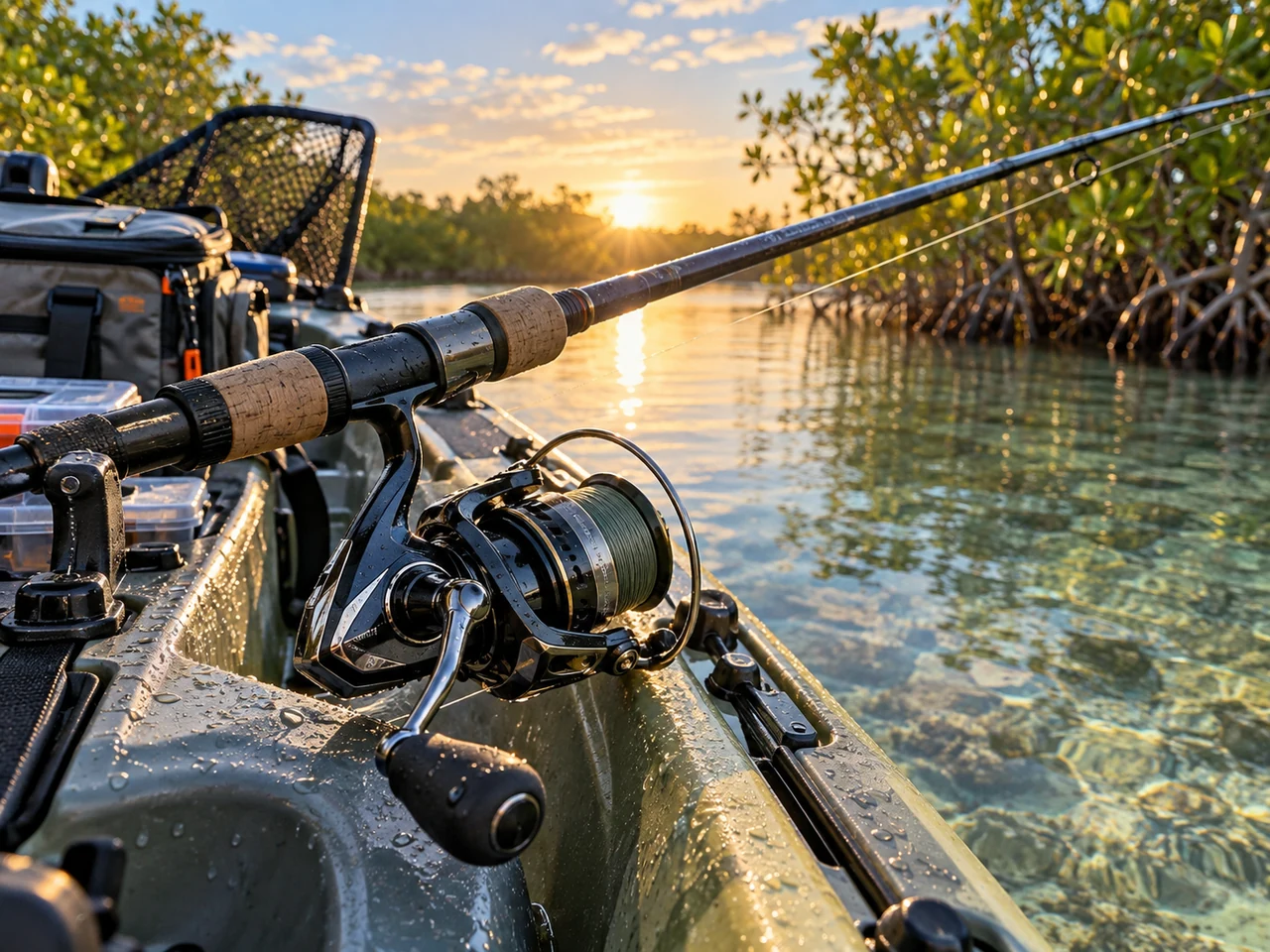
Best inshore spinning reel comparison
| Reel | Best for | Weight | Gear ratio | Max drag | Useful capacity reference | Amazon |
|---|---|---|---|---|---|---|
| Shimano Stradic FM C3000XG | Most inshore anglers | 7.9 oz | 6.4:1 | 20 lb | 20 lb PowerPro: 140 yd | Check availability |
| PENN Battle IV 3000 | Value and rigid metal body | 11.6 oz | 6.2:1 | 15 lb | 20 lb braid: 180 yd | Check availability |
| Daiwa BG2500 | Budget metal-body setup | 9.3 oz | 5.6:1 | 13.2 lb | 20 lb J-Braid: 170 yd | Check availability |
| Daiwa Saltist MQ 4000D-XH | Premium power and salt protection | 10.2 oz | 6.2:1 | 26.4 lb | 20 lb braid: 280 yd | Check availability |
| PENN Slammer IV 4500 | Rough water and frequent spray | 15.0 oz | 6.2:1 | 30 lb | 20 lb braid: 320 yd | Check availability |
Shimano Stradic FM C3000XG
7.9 oz
6.4:1
20 lb
PENN Battle IV 3000
11.6 oz
6.2:1
15 lb
Daiwa BG2500
9.3 oz
5.6:1
13.2 lb
Daiwa Saltist MQ 4000D-XH
10.2 oz
6.2:1
26.4 lb
PENN Slammer IV 4500
15.0 oz
6.2:1
30 lb
Why inshore reels deserve their own shortlist
Inshore fishing overlaps with general spinning and saltwater fishing, but the buying priorities are different enough to justify a narrower list. A general spinning reel guide has to cover bass, trout, panfish, and some light saltwater use. A broad saltwater list quickly reaches 4000 to 6000 size reels for surf, nearshore, and offshore work. Inshore fishing usually lives between those two extremes.
For flats, bays, marshes, docks, passes, and protected coastal water, repeated casting matters. A reel that is excellent for soaking bait in the surf can feel unnecessarily heavy on a 7-foot medium rod used for twitchbaits or soft plastics. At the same time, a freshwater-first reel with minimal corrosion protection may be a poor long-term match for regular salt exposure.
If you need a broader freshwater-to-inshore shortlist, see our best spinning reels guide. For surf, nearshore, offshore, and more severe salt exposure, the best saltwater spinning reels guide is the better starting point.
Shimano Stradic FM C3000XG
Pick #1
The C3000XG is the cleanest one-reel answer for anglers who spend more time casting artificials than soaking bait and want a premium reel without moving to an oversized saltwater platform.
The main appeal is balance. It is dramatically lighter than a heavy-duty 4000 or 4500 reel, yet it is not a tiny finesse reel. That matters when a normal day can mean hundreds of casts with paddletails, jerk shads, topwaters, small plugs, or popping corks.
The XG ratio is also useful when a lure needs to be picked up quickly after a missed strike or when line has to be recovered before a fish reaches grass, dock posts, or oyster structure. The trade-off is cost. You are paying for a more refined, lighter platform rather than simply buying more drag or more line capacity.
Good fit if you want
- A premium 3000-size reel for frequent lure casting
- Low weight without dropping to ultralight line capacity
- Fast pickup for moving baits and quick line control
Skip it if you need
- A budget-first reel with a full-metal body
- Maximum sealing for constant surf or kayak spray
- Large 4000 to 5000 class capacity for heavier nearshore duty
PENN Battle IV 3000
Pick #2
Choose the Battle IV 3000 when a rigid full-metal frame, familiar 3000-size capacity, and salt-oriented construction matter more than shaving several ounces.
The Battle IV is less about minimum weight and more about a sturdy chassis. Its 15-pound maximum drag is already plenty for many redfish, speckled trout, flounder, sheepshead, and school-size striper setups when the drag is set sensibly. The 180 yards of 20-pound braid capacity also lands in a useful range for a general 7-foot medium inshore rod.
The obvious compromise is weight. At 11.6 ounces, it is noticeably heavier than the Stradic. Anglers who cast all day with lighter lures may feel that difference. Anglers who prefer a metal-body reel and do not mind extra mass may see it as an acceptable trade.
Good fit if you want
- A full-metal 3000-size reel
- Simple inshore line capacity for 15 to 20-pound braid
- Critical-area water protection without premium pricing
Skip it if you need
- The lightest setup for repetitive casting
- A published full-body IPX rating
- More than 15 pounds of maximum drag
Daiwa BG2500
Pick #3
The BG2500 is a sensible lower-cost option for light-to-medium inshore rods when an aluminum body and compact size matter more than advanced sealing.
This is the size to consider when a 3000 feels larger than your actual fishing requires. For speckled trout, smaller redfish, flounder, school-size stripers, and general light inshore work, the 2500 class can keep a medium-light or medium setup comfortable without giving up practical braid capacity.
The caution is exposure. The BG is a durable saltwater-capable platform, but it should not be treated as equivalent to a reel with a stronger published sealing story. Rinse it gently after saltwater use, avoid forcing water into the reel, and move to a more protected design if the reel is regularly drenched.
Good fit if you want
- A compact aluminum-body reel at a lower price tier
- A 2500-size setup for lighter inshore work
- Useful 20-pound braid capacity without a bulky frame
Skip it if you need
- Frequent rough-water spray or surf exposure
- The lightest reel in this shortlist
- A high-speed 6.2:1 or 6.4:1 retrieve
Daiwa Saltist MQ 4000D-XH
Pick #4
The Saltist MQ 4000D-XH is the step-up choice for anglers who still cast actively but want more drag, more line capacity, and a saltwater-focused body and main-shaft protection package.
This reel makes more sense when the target and environment push beyond light flats fishing. Think larger redfish, snook around current and structure, kayak fishing where a longer run is possible, or anglers who want one inshore reel that can also cover light nearshore duty.
The key comparison is not simply 4000 versus 3000. It is whether the extra capacity and stronger saltwater orientation solve a real problem for you. If most of your fishing is shallow, protected water with small artificials, the Stradic’s lower weight is more useful. If exposure and fish size are higher, the Saltist MQ’s extra capability becomes easier to justify.
Good fit if you want
- More drag and line capacity without jumping to a 5000 or 6000 reel
- A premium aluminum Monocoque body
- Magsealed main-shaft protection for regular saltwater use
Skip it if you need
- The lowest possible weight for finesse casting
- A budget-first setup
- A reel used mostly in freshwater with occasional salt trips

PENN Slammer IV 4500
Pick #5
The Slammer IV 4500 is deliberately the heaviest pick here. Choose it because your reel gets wet often, not because a larger size number automatically makes a better inshore reel.
That level of construction is useful for anglers who launch through surf, fish exposed jetties, run kayaks in chop, or otherwise soak a reel more often than a typical skiff or wading setup. It is much less compelling if your reel sees only light spray and a freshwater rinse after calm bay trips.
The 15-ounce weight is the reason this is not the overall pick. Put it on a light 7-foot rod and the setup can become tiring. Pair it with a stronger rod and a job that actually demands the sealing, capacity, and drag, and the weight penalty has a purpose.
Good fit if you want
- IPX6-rated body and spool protection
- Heavy-duty construction for kayaks, jetties, and rougher water
- More drag and capacity for larger fish or heavier line
Skip it if you need
- A light reel for all-day flats casting
- A compact 2500 or 3000 balance on a light rod
- Only occasional, mild saltwater exposure
How to choose an inshore spinning reel
Start with 2500 to 4000, then verify the exact specs
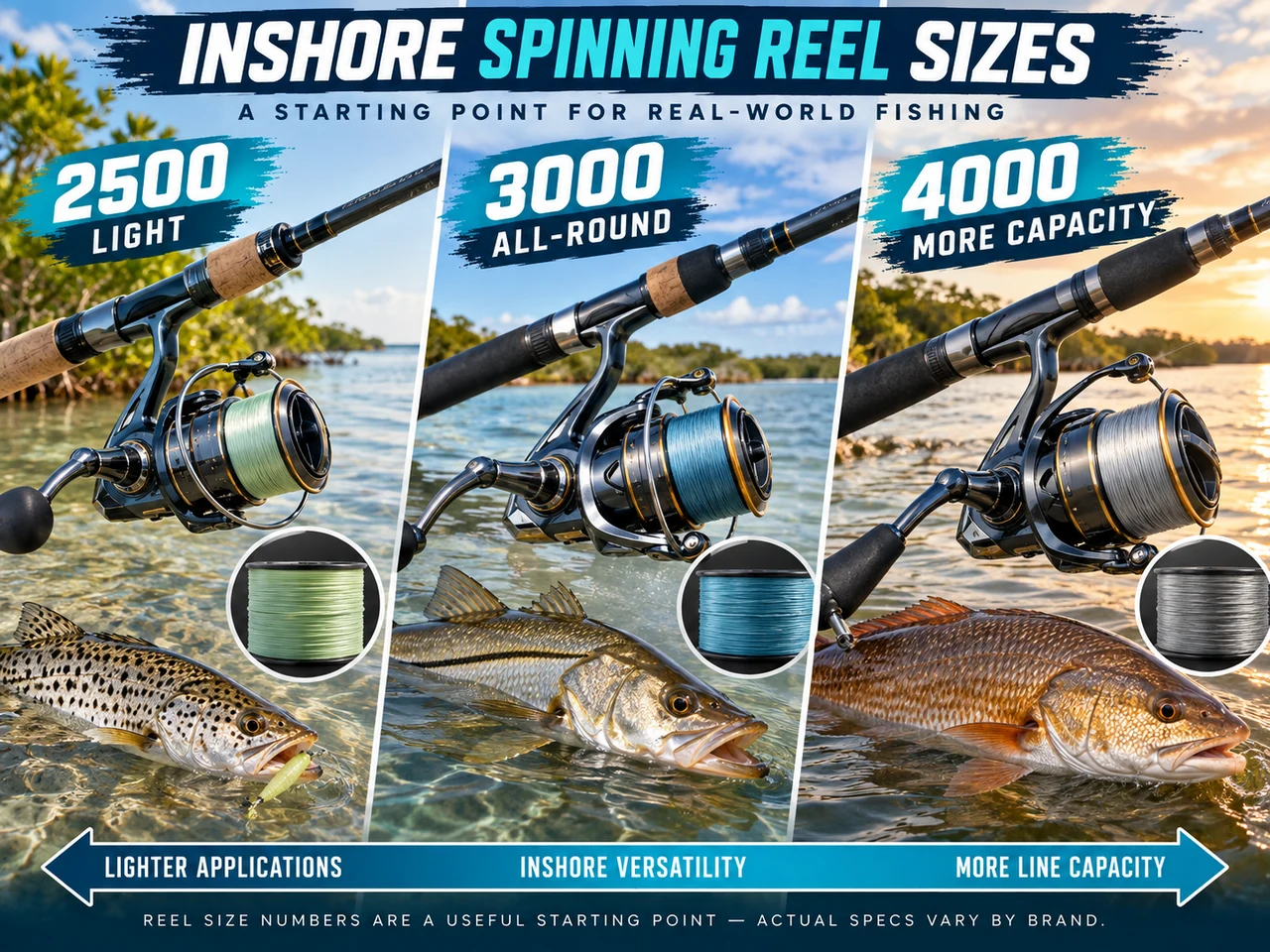
Reel size numbers are not standardized across brands, so do not assume every 3000 has the same body, spool, or capacity. For typical inshore lure fishing, 2500, 3000, and 4000 sizes are the most useful starting points. A 2500 often suits lighter rods and 10 to 15-pound braid. A 3000 is the broad all-around class. A 4000 can add capacity and power for heavier current, bigger fish, or a medium-heavy rod.
Our spinning reel size guide explains why the number on the reel should be treated as a category label, not a cross-brand measurement.
Weight matters more when you cast all day
A few ounces sounds small until it sits under your rod for a full tide cycle. If your day is built around sight-casting or covering shorelines with artificials, a sub-10-ounce reel can make the setup feel much more responsive. If you mostly fish bait from a holder or need a heavily sealed reel, extra weight may be worth accepting.
Match line capacity to the fishing, not the biggest fish story
Most shallow-water inshore fishing does not require massive spool capacity. Enough room for the braid you actually use, plus a sensible buffer for long runs and line loss, is more useful than carrying hundreds of extra yards that make the reel larger and heavier. A 3000 with around 140 to 180 yards of 20-pound braid is already a practical baseline for many common inshore targets.
Do not buy by maximum drag alone
Maximum drag is easy to compare but easy to overvalue. A reel with 25 or 30 pounds of maximum drag is not automatically better for speckled trout or slot redfish than a lighter reel rated for 15 or 20 pounds. Rod power, line strength, knots, leader, hook wire, and the amount of pressure a fish actually requires all matter. Drag smoothness and the reel’s overall construction are more important than chasing the largest number.
Gear ratio changes how quickly you control slack
Fast 6.2:1 to 6.4:1 reels are useful for quickly recovering line between twitches, keeping up with fish swimming toward you, or getting a lure back for another cast. A slower reel can still be a good choice for steady retrieves and often gives up nothing meaningful for many techniques. If you want the details, see our fishing reel gear ratio guide.
Salt protection should match actual exposure
There is a big difference between a reel that sees a few drops while wading a calm flat and one that gets hit by spray all day from a kayak or jetty. Stronger sealing usually costs money and can add weight. Buy enough protection for how the reel gets used. After saltwater fishing, follow the manufacturer’s care guidance and avoid blasting a reel with high-pressure water that can push salt and grit deeper into the body.
Three practical inshore reel setups
Light inshore: 2500 size
Pair a 2500-class reel with a 7-foot medium-light or medium rod and 10 to 15-pound braid for lighter jigheads, small paddletails, twitchbaits, popping corks, and similar presentations. The Daiwa BG2500 fits this role when you want a metal-body reel and do not expect constant heavy spray.
All-around inshore: 3000 size
A 3000-class reel on a 7-foot to 7-foot-6 medium rod is the easiest general recommendation for anglers who want one setup for redfish, trout, snook, flounder, and mixed bay fishing. The Stradic C3000XG prioritizes weight and refinement; the Battle IV 3000 prioritizes a full-metal chassis and value.
Heavy inshore: 4000 to 4500 size
Move up when you need more capacity, stronger drag, heavier line, or more salt protection for bridges, passes, large snook, bull reds, rough kayak water, jetties, or light nearshore crossover. The Saltist MQ 4000D-XH is the more casting-friendly step up. The Slammer IV 4500 is the protection-first option when regular drenching is part of the job.
How we chose these reels
We started with the current US search results for the best inshore spinning reel and separated the intent from broader pages about all-purpose spinning reels and heavier saltwater reels. The shortlist was then narrowed to current US models that cover distinct buyer needs rather than five nearly identical premium 3000s.
For specifications, manufacturer pages were the primary source whenever available. Amazon.com US listings were checked for exact model and ASIN mapping. We did not use customer star ratings as evidence of performance, did not infer specifications from neighboring reel sizes, and did not present editorial picks as personal testing results.
Selection criteria included exact reel size, weight, line capacity, maximum drag, gear ratio, construction, manufacturer-stated saltwater protection, and whether the extra weight or cost solves a real inshore use case.
Inshore spinning reel FAQ
What size spinning reel is best for inshore fishing?
For most inshore fishing, start with 2500 to 4000. A 3000 is the most versatile all-around size class, while 2500 suits lighter setups and 4000 gives more capacity and power. Always compare the exact specs because size labels are not standardized across brands.
Is a 3000 reel big enough for redfish and snook?
Yes for many common inshore situations. A quality 3000-size reel with suitable braid, a properly matched rod, and sensible drag can cover slot redfish and many snook applications. Larger fish around heavy current or abrasive structure may justify a 4000 or larger setup.
Is a 4000 reel too big for inshore fishing?
No, but it can be more reel than needed for light flats fishing. A 4000 makes sense for heavier current, larger fish, more line capacity, stronger rods, kayak fishing, and light nearshore crossover. Compare weight as well as capacity before moving up.
How much drag do I need for inshore fishing?
Most anglers do not need to fish anywhere near a reel’s published maximum drag. Reels in this guide range from 13.2 to 30 pounds of maximum drag, but actual fishing pressure should match the rod, line, leader, knots, hook, fish, and surrounding structure.
Can I use a freshwater spinning reel in saltwater?
Some general spinning reels are suitable for occasional inshore use, but saltwater adds corrosion and water-intrusion risk. Check the manufacturer’s intended use and protection features, rinse and maintain the reel as directed, and choose stronger sealing when salt exposure is frequent.
Should I use 10, 15, or 20-pound braid for inshore fishing?
Ten to 15-pound braid suits many lighter inshore setups, while 20-pound braid is a common all-around choice when fish, structure, or current demand more margin. Heavier line can be useful around bridges, jetties, mangroves, or larger fish, but it also changes capacity and casting behavior.