

GearAndFish is reader-supported. As an Amazon Associate I earn from qualifying purchases. When you buy through links on our site, we may earn an affiliate commission, at no extra cost to you. Learn more.
The best baitcasting rod is not the stiffest blank or the longest handle. It is the rod whose length, power, action, and lure rating match the presentations you actually fish. For a versatile bass setup, a 7-foot to 7-foot-3-inch casting rod with medium-heavy or comparable power and a fast action is the safest starting point, while crankbaits and other treble-hook lures usually benefit from a more forgiving taper.
This shortlist focuses on exact current rod variants rather than treating an entire rod family as one product. That matters because the same series can include everything from finesse casting models to heavy flipping sticks, and those versions are not interchangeable.
Best baitcasting rod for most bass anglers: Dobyns Fury FR734C
The 7’3″ FR734C gets the top spot because its 10-20 lb line rating and 1/4-1 oz lure range cover a broad mix of jigs, Texas rigs, spinnerbaits, buzzbaits, soft plastics, and small swimbaits. Dobyns rates this exact model Heavy/Fast, so buyers who want a softer treble-hook rod should look instead at the FR705CB or Lew’s CLSBC.
Quick picks
Dobyns Fury FR734C
A broad 1/4-1 oz working range and 7’3″ length make it the most versatile single-rod choice here for bass techniques built around single hooks.
Daiwa Tatula XT 731MHFB
Medium-heavy power, fast action, and a 1/4-1 oz rating give it an unusually useful spec window for a value-focused rod.
KastKing Perigee II 7′ M/MH Twin-Tip
A two-piece butt section with medium and medium-heavy tip options makes it practical for anglers who want easier transport and two useful power ranges.
Dobyns Fury FR705CB
The 7’0″ crankbait-specific model uses a more forgiving moderate-fast action and an 8-17 lb line range for moving baits with treble hooks.
Lew’s Custom Lite CLSBC
A compact 6’9″ length, medium-heavy power, and moderate-fast action suit accurate squarebill work around shallow cover.
Baitcasting rod comparison
The fastest way to narrow the list is to start with technique. Fast-action all-purpose rods dominate single-hook work, while the two crankbait picks trade some immediate stiffness for a deeper, more forgiving load.
| Pick | Exact model | Length | Power / action | Line rating | Lure rating | Best for | Amazon |
|---|---|---|---|---|---|---|---|
| Dobyns Fury | FR734C | 7’3″ | Heavy / Fast | 10-20 lb | 1/4-1 oz | Versatile bass techniques | Check availability on Amazon |
| Daiwa Tatula XT | TATULAXT731MHFB | 7’3″ | Medium Heavy / Fast | 10-20 lb | 1/4-1 oz | Value all-purpose setup | Check availability on Amazon |
| KastKing Perigee II | KRDCSTPG2-7MMH2 | 7’0″ | Medium + Medium Heavy / Fast | 10-17 / 10-20 lb | 1/4-5/8 / 3/8-3/4 oz | Two-piece transport flexibility | Check availability on Amazon |
| Dobyns Fury | FR705CB | 7’0″ | Medium Heavy / Moderate Fast | 8-17 lb | 1/4-1 oz | Crankbaits and treble-hook lures | Check availability on Amazon |
| Lew’s Custom Lite | CLSBC | 6’9″ | Medium Heavy / Moderate Fast | 8-14 lb | 1/4-3/4 oz | Squarebills around shallow cover | Check availability on Amazon |
Dobyns Fury FR734C
Best for a broad mix of single-hook bass techniques.
Daiwa Tatula XT 731MHFB
Best for buyers who want a versatile spec set without moving into a premium rod tier.
KastKing Perigee II 7′ M/MH
Best for easier transport and anglers who want two practical power options in one kit.
Dobyns Fury FR705CB
Best for crankbaits, lipless baits, jerkbaits, and other treble-hook presentations.
Lew’s Custom Lite CLSBC
Best for accurate shallow-water squarebill casting around targets.
Dobyns Fury FR734C
The strongest one-rod choice here for anglers who want a versatile casting setup built around jigs, Texas rigs, spinnerbaits, buzzbaits, soft plastics, and similar bass presentations.
#1
Why this exact variant: FR734C is the 7’3″ casting model in the Fury family. Its published application list includes spinnerbaits, buzzbaits, Senkos, toads, jigs, and small swimbaits, which lines up with the wide lure and line range.
A 7’3″ rod gives you useful casting distance and line control without going all the way to a long flipping stick. The key detail is that Dobyns labels this rod Heavy, not Medium Heavy. Do not assume power labels translate directly across brands. Judge the FR734C by its 10-20 lb line rating, 1/4-1 oz lure range, and intended techniques.
That makes it a good default when you want one baitcasting rod for single-hook bass fishing. It also gives you enough range to move from a weightless soft plastic or lighter jig up to a one-ounce presentation without immediately needing a second setup.
Why it works
- Broad 1/4-1 oz lure window
- 7’3″ length suits distance and line control
- Technique list spans moving baits and bottom contact
Trade-offs
- Dobyns rates it Heavy, so do not buy it expecting a soft crankbait taper
- One-piece 7’3″ construction is less convenient in small vehicles
Daiwa Tatula XT TATULAXT731MHFB
A clean 7’3″ medium-heavy, fast-action specification with a 10-20 lb line range and 1/4-1 oz lure rating makes this the value pick that asks for the fewest compromises on paper.
Value
Why this exact variant: TATULAXT731MHFB is the 7’3″ Medium Heavy/Fast model. Current retailer specifications match the 10-20 lb line and 1/4-1 oz lure ratings, while the Tatula XT platform uses Daiwa’s HVF graphite, X45 construction, and Braiding-X reinforcement.
The appeal is straightforward: the spec range looks like what many bass anglers are already trying to build around. A 7’3″ medium-heavy fast rod is long enough for line pickup and casting distance, yet still general enough for jigs, worms, spinnerbaits, and bladed jigs when the lure weight stays inside the rod’s rating.
It is not the rod to buy because of a technology acronym alone. The reason it makes this shortlist is that the exact 731MHFB variant lands in a very practical power, action, and lure window without forcing the buyer into a narrow technique rod.
Why it works
- Classic 7’3″ Medium Heavy/Fast all-purpose layout
- Useful 1/4-1 oz lure range
- Current model is easy to identify by exact part number
Trade-offs
- Fast action is less forgiving than a crankbait-specific taper
- One-piece length can be awkward for transport
KastKing Perigee II 7′ Medium / Medium Heavy Twin-Tip
The practical choice for anglers who need a two-piece casting rod and want two usable tip powers rather than a single fixed setup.
2-Pc
Why this exact variant: Amazon maps ASIN B07144ZN9C to the KRDCSTPG2-7MMH2 casting model with a 7-foot two-piece format and an extra tip. KastKing’s current Perigee II spec table continues to list the 7-foot casting twin-tip configuration with Medium and Medium Heavy fast-action tips.
The important advantage is logistical, not magical performance. A two-piece rod is easier to fit into a car, apartment, or travel loadout, and the second tip lets one butt section cover two nearby power ranges. The medium tip makes sense for lighter presentations, while the medium-heavy tip is the more conventional bass choice when lure weights move upward.
It is still one rod system, so do not treat the extra tip as a replacement for a full technique-specific arsenal. The value is flexibility and transport convenience.
Why it works
- Two-piece format is easier to transport
- Medium and Medium Heavy tip options broaden the useful range
- Fast actions keep it familiar for general casting techniques
Trade-offs
- More components to keep track of than a one-piece rod
- Not as purpose-built as a dedicated crankbait or heavy-cover model
Dobyns Fury FR705CB
A dedicated 7-foot crankbait model for anglers who want more bend and forgiveness than the fast-action all-purpose rods above.
Crank
Why this exact variant: Dobyns lists FR705CB as a crankbait-focused 7’0″ model for crankbaits, jerkbaits, topwaters, lipless baits, and related moving presentations. The current Amazon variation map ties the FR705CB selection to ASIN B00XUECXX0.
The moderate-fast action is the reason to choose it over the FR734C. With treble-hook baits, a rod that loads farther into the blank can absorb changes in line tension instead of transferring every surge directly to small hooks.
That makes the FR705CB a better fit when crankbaits are not an occasional side job but a major part of how you fish. Its 1/4-1 oz rating also covers a broad set of common hard-bait sizes without turning into a long deep-cranking specialty stick.
Why it works
- Technique-specific crankbait design
- Moderate-fast action is more forgiving with treble hooks
- Broad 1/4-1 oz lure range
Trade-offs
- Less direct than a fast-action rod for many bottom-contact techniques
- Buy it for moving baits, not simply because it shares the Fury name
Lew’s Custom Lite CLSBC
A compact squarebill-specific rod for target casting around shallow cover, with a moderate-fast action that gives treble hooks more cushion.
6’9″
Why this exact variant: CLSBC is the 6’9″ squarebill model in the Custom Lite crankbait group. Lew’s published spec table identifies it as Medium Heavy/Moderate Fast with 8-14 lb line and a 1/4-3/4 oz lure range, and Amazon maps the exact CLSBC identifier to ASIN B0CKLY6MTS.
The shorter length is the point. Around docks, laydowns, riprap, and shallow targets, a compact rod can be easier to direct than a 7’3″ general-purpose stick. The moderate-fast action also keeps the rod in the crankbait category rather than turning it into another jig rod with a different label.
Choose it when squarebills are a primary tool and casting accuracy around cover matters more than maximum line pickup or long-distance leverage.
Why it works
- 6’9″ length suits target-oriented shallow-water casting
- Moderate-fast action matches treble-hook duty
- Exact squarebill model is easy to identify by CLSBC
Trade-offs
- Shorter than the all-purpose picks for long casts and line control
- Narrower 8-14 lb line range than the general-purpose rods
How to choose a baitcasting rod
A baitcasting rod is easiest to choose when you work backward from lure weight and hook style instead of starting with a brand. Rod labels such as Medium Heavy or Heavy are useful within a model line, but they are not perfectly standardized across manufacturers.
Start with lure weight, not the power label
Check the printed lure range for the exact rod variant. If most of your baits live around 3/8 to 3/4 oz, a rod that comfortably covers that range gives you more useful information than the words Medium Heavy by themselves. The FR734C and Tatula XT 731MHFB both reach from 1/4 to 1 oz even though their manufacturers use different power labels.
Fast action for single hooks, more bend for trebles
Fast and extra-fast actions concentrate more of the initial bend near the tip, which suits techniques where the angler wants a direct response on a jig, Texas rig, spinnerbait, or similar single-hook bait. Moderate and moderate-fast actions load farther down the blank, which can help keep tension on treble-hook lures when a fish surges or changes direction.
Choose length around casting space and line control
For general bass fishing, 7’0″ to 7’3″ covers a lot of water. Longer rods usually give you more reach, casting leverage, and line pickup. Shorter rods can be easier to place accurately around close targets. That is why the 6’9″ Lew’s CLSBC makes sense for squarebills while the 7’3″ all-purpose rods make sense when you want a broader job description.
Do not ignore the reel seat and handle
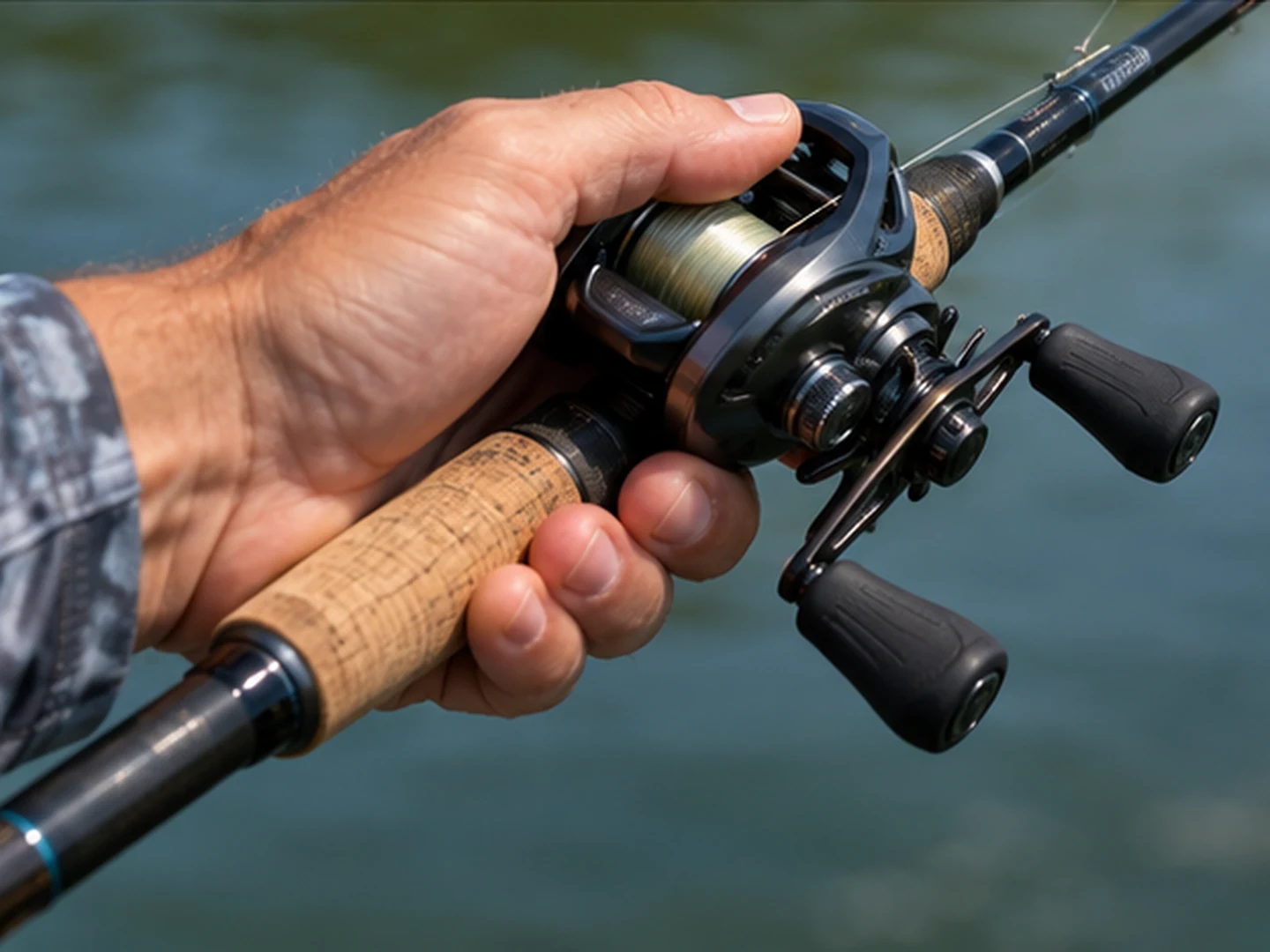
A casting setup is held around the reel and reel seat for long periods. Handle length also affects how a rod loads during a cast and whether the butt section interferes with clothing, a kayak seat, or a compact casting motion. If possible, pair the rod with the reel size you actually plan to use before assuming every 7-foot casting rod will balance the same way.
Match power and action to the technique
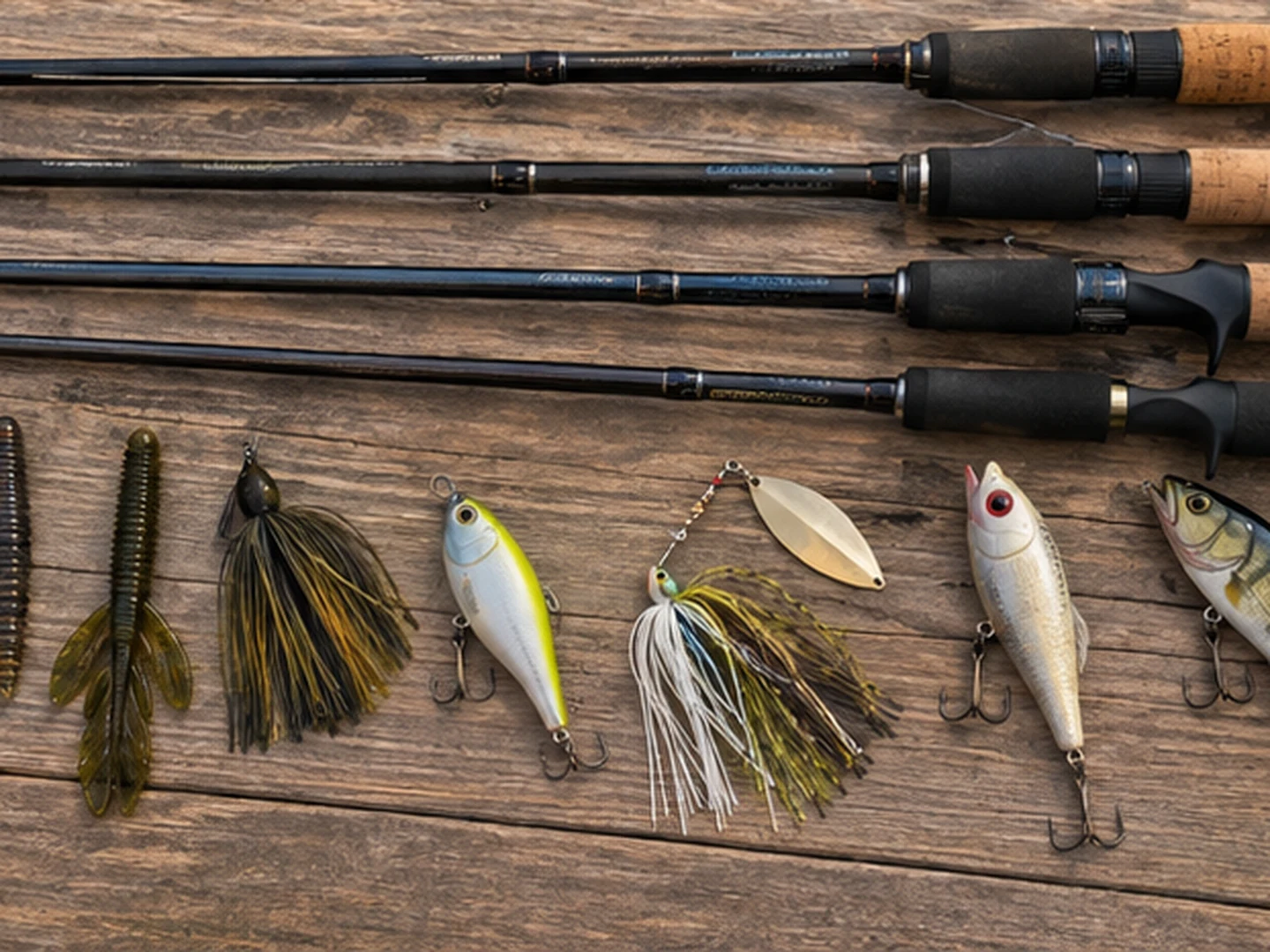
If you only remember one rule, remember that power and action solve different problems. Power describes how much force it takes to load the rod. Action describes where the blank bends first. Two rods can both be Medium Heavy and behave very differently if one is Fast and the other is Moderate Fast.
- Jigs and Texas rigs: favor a fast or extra-fast action and enough power for the cover and hook gauge.
- Spinnerbaits and bladed jigs: a versatile fast-action rod works well when its lure rating matches the bait; some anglers prefer a slightly more forgiving taper for bladed jigs.
- Crankbaits and squarebills: a moderate or moderate-fast action is easier to justify because treble hooks benefit from additional give.
- Frogs and heavy cover: move toward heavier power, longer rods, and higher line ratings than the general-purpose picks if the cover demands it.
- Travel or limited storage: a two-piece casting rod such as the Perigee II can solve a real transport problem even if a one-piece rod would otherwise be the simpler choice.
How we picked these baitcasting rods
This is an editorial research roundup, not a claim that GearAndFish personally fished every rod. The shortlist was built by matching current US search intent to exact rod variants, then checking manufacturer specifications, current US retailer data, Amazon.com model mapping, independent editorial coverage, and recurring owner feedback where it added useful context.
FAQ
What baitcasting rod length is most versatile?
For many bass anglers, roughly 7’0″ to 7’3″ is the useful middle ground. It gives enough length for casting distance and line control without moving into a specialized long flipping or deep-cranking rod.
Is a Medium Heavy Fast rod a good first baitcasting rod?
Usually, yes, if the exact lure and line ratings match what you fish. Medium Heavy/Fast is common because it covers many jigs, Texas rigs, spinnerbaits, bladed jigs, and soft-plastic techniques. Brand power labels are not perfectly standardized, so compare the printed ratings too.
Should a crankbait rod be Fast or Moderate Fast?
A more moderate action is generally easier to justify for crankbaits because it loads deeper into the blank and gives treble hooks more cushion. Fast-action rods are usually the more direct choice for many single-hook presentations.
Is a two-piece baitcasting rod worse than a one-piece rod?
Not automatically. A two-piece rod solves transport and storage problems, while a one-piece rod is simpler and removes a joint from the system. Choose based on how you travel and fish rather than assuming one format is universally better.
Can I use a spinning reel on a baitcasting rod?
It is not the intended pairing. Casting rods are designed around a reel mounted above the blank and use a casting reel seat and guide layout. A spinning reel belongs on a spinning rod designed for the reel to hang below the blank.


