


GearAndFish is reader-supported. As an Amazon Associate I earn from qualifying purchases. When you buy through links on our site, we may earn an affiliate commission, at no extra cost to you. Learn more.
A spinning rod is usually the easier choice for light lures, finesse presentations, and straightforward casting. A casting rod makes more sense when you want a baitcasting reel’s direct spool control, heavier line and lure capability, and efficient repeated casts around cover. Neither rod type is automatically stronger, more sensitive, or more accurate. The right choice depends on the reel system, lure weight, line, rod power and action, and the technique you plan to fish.
This guide compares mainstream freshwater spinning and baitcasting systems using current product listings, published rod and reel design information, and angler use cases. Specialty conventional, surf, and offshore rod layouts can differ from the examples below.
Spinning rod or casting rod?
Choose a spinning rod if you want the simpler learning curve, regularly throw lighter lures, fish finesse techniques, or want a setup that is forgiving when lure speed changes during a cast. Choose a casting rod if you already use a baitcaster or want direct thumb control of the spool for repeated target casts, heavier presentations, and power techniques around cover.
If you fish several techniques, there is no need to force one system to do everything. Many anglers use spinning tackle for finesse work and casting tackle for heavier or cover-oriented presentations.
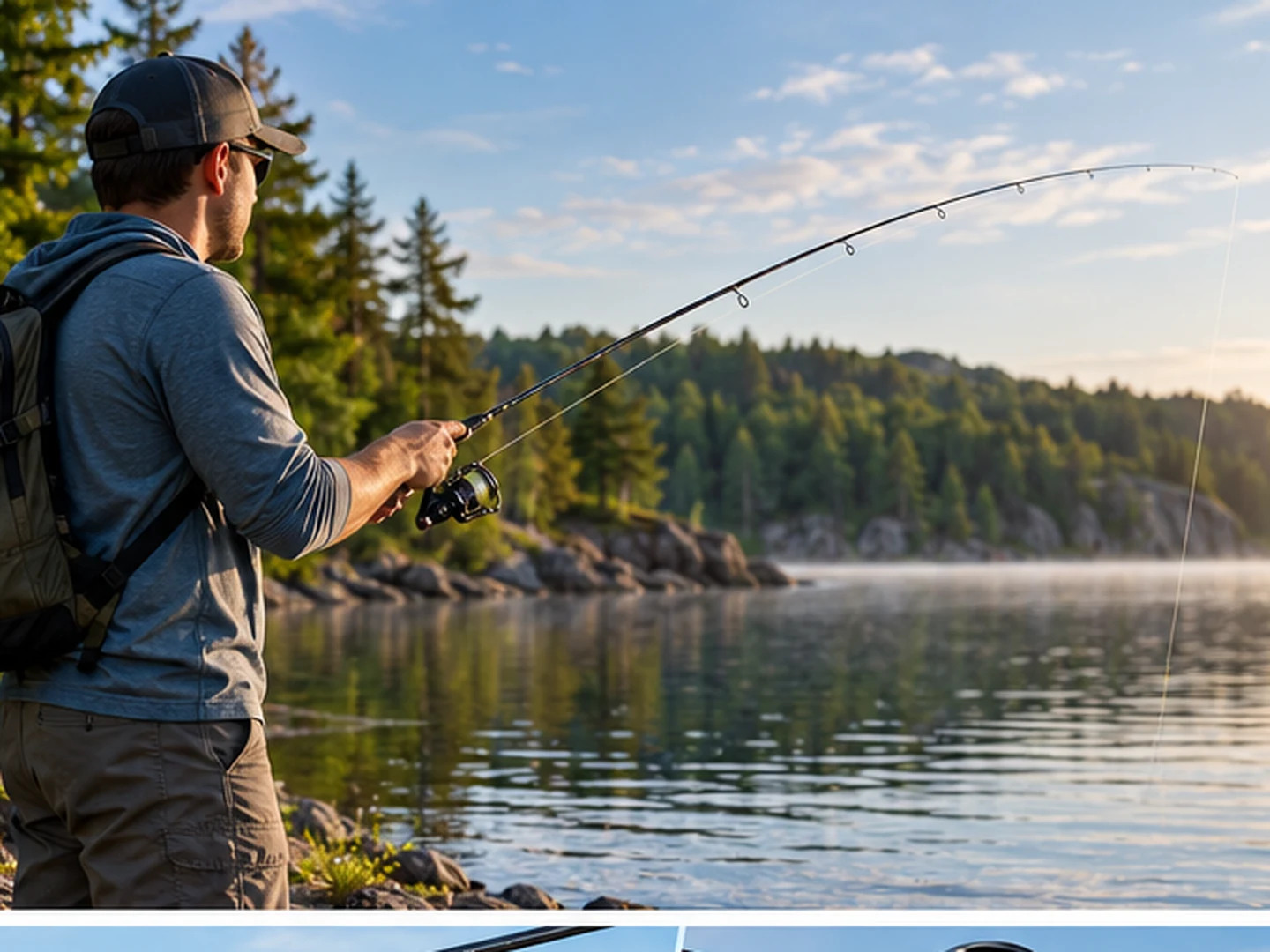
Spinning rod vs casting rod at a glance
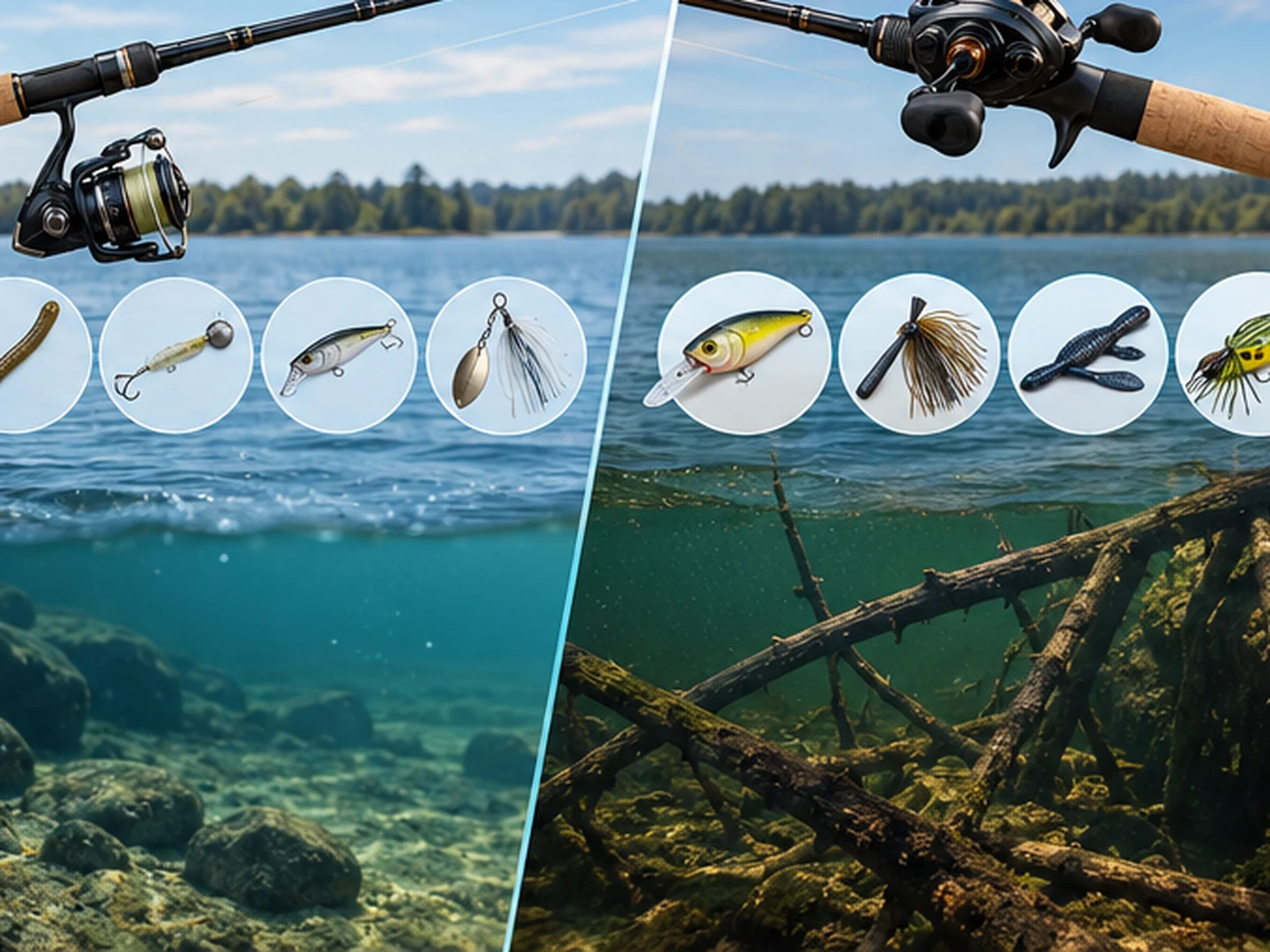
The easiest way to understand the difference is to start with reel position and line path. A spinning reel hangs below the rod and line comes off a fixed spool in coils, so the first guides are relatively large. A baitcasting reel sits above the rod and line leaves a rotating spool in a much straighter path, so the guides can be smaller and stay closer to the blank.
| Decision point | Spinning rod | Casting rod |
|---|---|---|
| Reel position | Reel hangs below the rod | Baitcasting reel sits above the rod |
| Guide layout | Larger first guide, then guides taper smaller toward the tip | Smaller guides on top of the blank, usually more uniform in diameter |
| Handle cue | Usually no casting trigger | Often has a trigger below the reel seat |
| Learning curve | Easier for most new anglers because the spool does not free-spin during the cast | Requires spool tension, braking, and thumb control to avoid backlash |
| Light lure use | Strong fit for many light and finesse presentations | Standard baitcasters favor moderate to heavier presentations, although BFS gear can handle much lighter lures |
| Heavy cover and power techniques | Available in powerful builds, but not the default choice for many bass power techniques | Common choice for jigs, frogs, heavy Texas rigs, spinnerbaits, and repeated casts around cover |
| Cast control | Line release is managed with the index finger and bail system | Thumb can directly slow or stop the rotating spool during the cast |
| Best simple default | New anglers, finesse fishing, light lures, versatile general use | Anglers comfortable with baitcasters, target casting, heavier line and lures, cover fishing |
Simpler and finesse-friendly
Below the rod
Large to small
Generally easier
Light lures and finesse
Direct spool control for power techniques
Above the rod
Smaller, on top
More technique required
Target casts and heavier presentations
How to tell a spinning rod from a casting rod
If the rod is sitting in a rack without a reel attached, look at the reel seat, guide orientation, guide size, and handle shape. Those clues are more reliable than trying to judge by rod length or blank thickness.
Spinning rod: reel and guides sit below the blank
On a spinning setup, the reel hangs underneath the rod. The line comes off the face of a fixed spool in coils. To manage those coils, the first guide near the reel is noticeably larger than the guides farther up the blank. The guide train then steps down in diameter toward the tip.
A spinning rod generally has a straight reel-seat area without the distinct finger trigger found on many baitcasting rods. When you hold it, the reel foot and stem naturally sit below your hand.
Casting rod: reel and guides sit above the blank
On a mainstream baitcasting setup, the reel mounts on top of the rod. Line leaves the rotating spool in a straighter path, so the rod can use smaller guides placed along the top of the blank. Many casting rods also have a trigger beneath the reel seat that gives your finger a stable grip around the reel.
The trigger is a useful visual clue, but it is not the only one. Specialty casting and conventional rods can use different handle designs, so reel position and guide layout still matter.

What actually changes on the water
The rod label alone does not determine performance. Much of the practical difference comes from the reel system attached to it. That is why a useful comparison has to look at the complete spinning or baitcasting setup rather than treating the blank as an isolated component.
1. Light lures are usually easier on spinning gear
A spinning reel’s spool stays fixed while line leaves from the front. That makes the system tolerant of light lure momentum because the lure does not have to accelerate a rotating spool. For small jigs, drop-shot weights, Ned rigs, small soft plastics, and many trout or panfish presentations, a spinning setup is usually the simpler route.
That does not mean casting gear cannot fish light. Bait Finesse System, commonly called BFS, uses specialized shallow spools and lighter components to cast much lighter presentations than a conventional baitcaster. BFS narrows the gap, but it adds another gear category and does not change the basic beginner advantage of conventional spinning tackle.
2. Baitcasters give you direct spool control
With a baitcaster, your thumb can touch the spool during the cast. That lets you slow the lure, shorten a cast, or stop it as it reaches a target. This is useful when you are pitching a jig beside a dock post, feathering a lure into a small opening, or making repeated casts to visible cover.
Direct spool control is not the same thing as guaranteed accuracy. A skilled angler can be very precise with either system, and some presentations such as skipping light soft plastics can feel easier on spinning gear. Think of the baitcaster as offering a different control interface, not an automatic accuracy upgrade.
3. Casting gear is common when line and lures get heavier
Mainstream baitcasting equipment is widely used for heavier bass presentations because rotating-spool reels pair well with thicker line, heavier lures, and repeated power casts. Frogs, larger jigs, heavy Texas rigs, spinnerbaits, and many crankbait setups are common examples.
Spinning rods also come in medium-heavy and heavy powers, and large spinning reels can handle substantial fish. The phrase “casting rod” does not mean “strong rod,” just as “spinning rod” does not mean “light rod.” Compare the exact rod’s power, action, line rating, and lure rating for the job.
4. Backlash changes the learning curve
A spinning reel does not have a spool that keeps rotating after the lure slows, so it does not create a baitcaster-style backlash. You still need to manage slack, line twist, wind knots, and bail operation, but basic casting is generally easier to learn.
A baitcaster needs its spool speed matched to the lure. Modern braking systems help, but the angler still has to set the reel correctly and use thumb pressure. Once that becomes automatic, the reel can be fast and efficient for repetitive casting.
Which rod should you choose?
Start with the technique, lure weight, and line you expect to use most often. Then choose the reel system. After that, select rod power, action, length, and ratings that fit the actual presentation.
You want the easiest all-around starting point
It is the safer default for a first artificial-lure setup, light and finesse fishing, and situations where you value simple casting over direct spool control.
You fish heavier presentations around targets and cover
It is a strong fit when you want a baitcaster’s thumb control, use moderate to heavy lures and line, and are willing to learn spool braking and backlash management.
Choose a spinning rod for these common situations
- Your first rod and reel for lure fishing: the casting motion is generally easier to learn and there is no rotating spool to overrun.
- Finesse bass techniques: drop-shot rigs, Ned rigs, small swimbaits, shaky heads, and other lighter presentations are natural spinning applications.
- Trout, panfish, and other light-tackle fishing: spinning tackle handles small lures and lighter line without needing a specialized BFS baitcaster.
- Open-water fishing where heavy cover is not the priority: there is less reason to accept the baitcaster learning curve if you do not need its control advantages.
- You only want one simple general-purpose setup: a medium-power spinning combo can cover a wide range of common freshwater techniques when matched to the correct lure and line ratings.
Choose a casting rod for these common situations
- Bass fishing around grass, wood, docks, or other cover: casting setups are common for repeated target casts with heavier presentations.
- Jigs, frogs, spinnerbaits, heavier Texas rigs, and many moving baits: these techniques often pair naturally with baitcasting reels and casting rods.
- You want to control the lure with your thumb during the cast: slowing the spool directly can help place a lure quietly and stop it close to the target.
- You regularly use thicker line: baitcasting systems are common when line diameter and lure weight move beyond finesse territory.
- You already know how to tune a baitcaster: once spool tension, brakes, and thumb timing are familiar, a casting setup can be very efficient for repeated casts.
Two current retail examples to make the difference concrete
This is not a head-to-head product test. These are simply two current Amazon.com US examples from the same mainstream combo family so you can see how the two systems are sold and labeled. Check the exact variant before ordering because rod length, reel size, power, piece count, and handedness can change between ASINs.
Ugly Stik GX2 Spinning Reel and Fishing Rod Combo
Current Amazon selection verified as the New Model with a 30 size reel, 6 ft medium-power rod, and 2-piece blank.
Use this listing as a recognizable example of the spinning layout described above: spinning reel below the rod and a guide train designed around line leaving a fixed spool.
Ugly Stik GX2 Low Profile Baitcast Reel and Fishing Rod Combo
Current Amazon selection verified as the New Model with a 6 ft 6 in medium-power, 2-piece casting rod.
This listing is a straightforward example of the casting layout: a low-profile baitcaster sits above the rod and pairs with a casting handle and guide train.
Can you put a spinning reel on a casting rod?
You may be able to physically clamp mismatched components together in some cases, but it is not a good setup. Spinning and casting rods are built around different reel positions, grips, and guide layouts. A spinning reel should be paired with a spinning rod, and a baitcasting reel should be paired with a casting rod.
Using the intended pairing keeps the line path, reel-seat ergonomics, and guide train working the way the rod was designed. If you already own a reel and are shopping for a rod, match the rod type first before comparing length, power, and action.
Buying checklist after you choose the rod type
“Spinning” or “casting” is only the first filter. Two rods of the same type can be built for completely different jobs. Before buying, check these specifications on the exact model and variant:
- Power: ultralight, light, medium-light, medium, medium-heavy, heavy, or another manufacturer rating. Match it to lure weight, line, cover, and target fish.
- Action: where the blank bends under load. Fast, moderate, and slower actions change lure control, hook-setting behavior, and how the rod loads.
- Lure rating: stay inside the manufacturer’s stated range for the rod instead of assuming every spinning rod is for light lures or every casting rod is for heavy lures.
- Line rating: check the exact rod and reel specifications, especially if you plan to use heavy braid or very light line.
- Length: longer and shorter rods trade casting leverage, maneuverability, and target control differently. Pick length for the water and technique rather than by rod type alone.
- Piece count: a 1-piece rod is simple, while 2-piece and travel rods are easier to transport. Confirm the exact Amazon variant because piece count often changes within the same product family.
- Reel compatibility: use a spinning reel on a spinning rod and a baitcaster on a casting rod unless the rod is explicitly designed for a specialty system.
Common mistakes when comparing spinning and casting rods
- Assuming casting rods are always stronger: rod power is a separate specification. Both systems are sold in multiple powers and actions.
- Assuming baitcasters are always more accurate: thumb control is useful, but actual accuracy depends heavily on angler skill, lure, rod, line, reel setup, and casting style.
- Choosing by fish species alone: the same species may be targeted with finesse spinning gear in open water and heavier casting gear around cover.
- Ignoring lure weight: a rod and reel system should be matched to the presentation. Very light lures often favor spinning gear unless you intentionally choose a BFS setup.
- Mixing rod and reel types: the physical reel seat may accept the reel, but the line path and ergonomics will be wrong for the intended design.
- Buying the product family without checking the variant: Amazon listings can group multiple lengths, powers, piece counts, reel sizes, and handedness options under one family.
Pick the reel system first, then match the rod to the technique
For most new anglers and light-lure fishing, a spinning rod is the easier default. For anglers who want a baitcaster’s direct spool control and regularly fish moderate to heavy presentations around targets or cover, a casting rod is usually the better system fit.
Do not treat either label as a quality grade. The final choice still comes down to the exact rod’s power, action, length, lure rating, line rating, and how those specifications match the way you fish.
FAQ
Is a casting rod better than a spinning rod?
No. A casting rod is often a better fit for baitcasting reels, heavier presentations, and direct spool control, while a spinning rod is often easier for light lures, finesse fishing, and new anglers. The better choice depends on the technique and exact rod specifications.
Which is better for a beginner, a spinning rod or casting rod?
A spinning rod paired with a spinning reel is generally the simpler starting point because the spool does not rotate freely during the cast, so there is no baitcaster-style backlash to manage.
Can I use a spinning reel on a casting rod?
It is not recommended. Spinning rods and casting rods use different reel positions, grips, and guide layouts. Pair a spinning reel with a spinning rod and a baitcasting reel with a casting rod.
Which casts farther, a spinning rod or a casting rod?
There is no universal winner. Distance depends on lure weight, rod length and action, line, reel setup, wind, and casting skill. Spinning gear is often easier with very light lures, while properly tuned baitcasting gear can be efficient with moderate and heavier lures.
Are casting rods stronger than spinning rods?
Not automatically. Strength and load capability depend on the rod’s blank, power rating, construction, and intended line and lure ranges. Both spinning and casting rods are available in light through heavy-duty configurations.
What is BFS, and does it change the spinning vs casting choice?
BFS means Bait Finesse System. It uses specialized baitcasting reels and rods designed for much lighter lures than conventional baitcasting tackle. BFS narrows the light-lure gap, but standard spinning gear remains a simpler and more widely available option for many finesse applications.


