
GearAndFish is reader-supported. As an Amazon Associate I earn from qualifying purchases. When you buy through links on our site, we may earn an affiliate commission, at no extra cost to you. Learn more.
Crappie fishing for beginners is easiest when you keep the first setup light and the first plan simple: use a light or ultralight spinning outfit, fish a small jig or minnow around cover, and treat depth as a variable you can change before you start changing everything else.
Crappie fishing for beginners: start with this simple plan
Use a light spinning rod with 4 to 6 lb monofilament, tie on a small jig in the 1/32 to 1/16 oz range, and fish it slowly beside brush, submerged wood, docks, weed edges, or marked fish attractors. A small float makes depth control easier. If you are not getting bites, change the depth in small steps and move to the next piece of cover instead of repeatedly changing colors and lures in the same empty water.
The simplest crappie setup for a beginner
You do not need a technique-specific collection of rods to start. A light spinning setup gives you enough casting control for small jigs, enough forgiveness for thin line, and enough sensitivity to notice the soft bites crappie are known for.
- Rod: roughly 6 to 7 feet, light or ultralight power, with a lure rating that includes the small jigs you plan to use.
- Reel: a small spinning reel that balances the rod. Reel-size labels are not standardized across brands, so do not buy on the number alone.
- Line: 4 to 6 lb monofilament is a forgiving beginner range. The Minnesota DNR specifically notes that six-pound mono works well for crappie.
- Jigs: 1/32, 1/16, and 1/8 oz are common crappie weights. A 1/16 oz jig is a useful middle starting point.
- Float: a small fixed float is simple in shallow water; a slip float is easier when you need to present a bait deeper while keeping the rig castable.
- Bait: a small soft plastic on the jig or a live minnow where local regulations allow it.
If your reel is new, set it up cleanly before the trip. Our guide to spooling a spinning reel without line twist covers line direction, tension, backing, and fill level.
If you would rather build the outfit one piece at a time, compare the ultralight options in our current spinning rod guide. For crappie, pay closer attention to the exact line and lure ratings than to a broad label such as “freshwater rod.”
Where beginners should look for crappie first
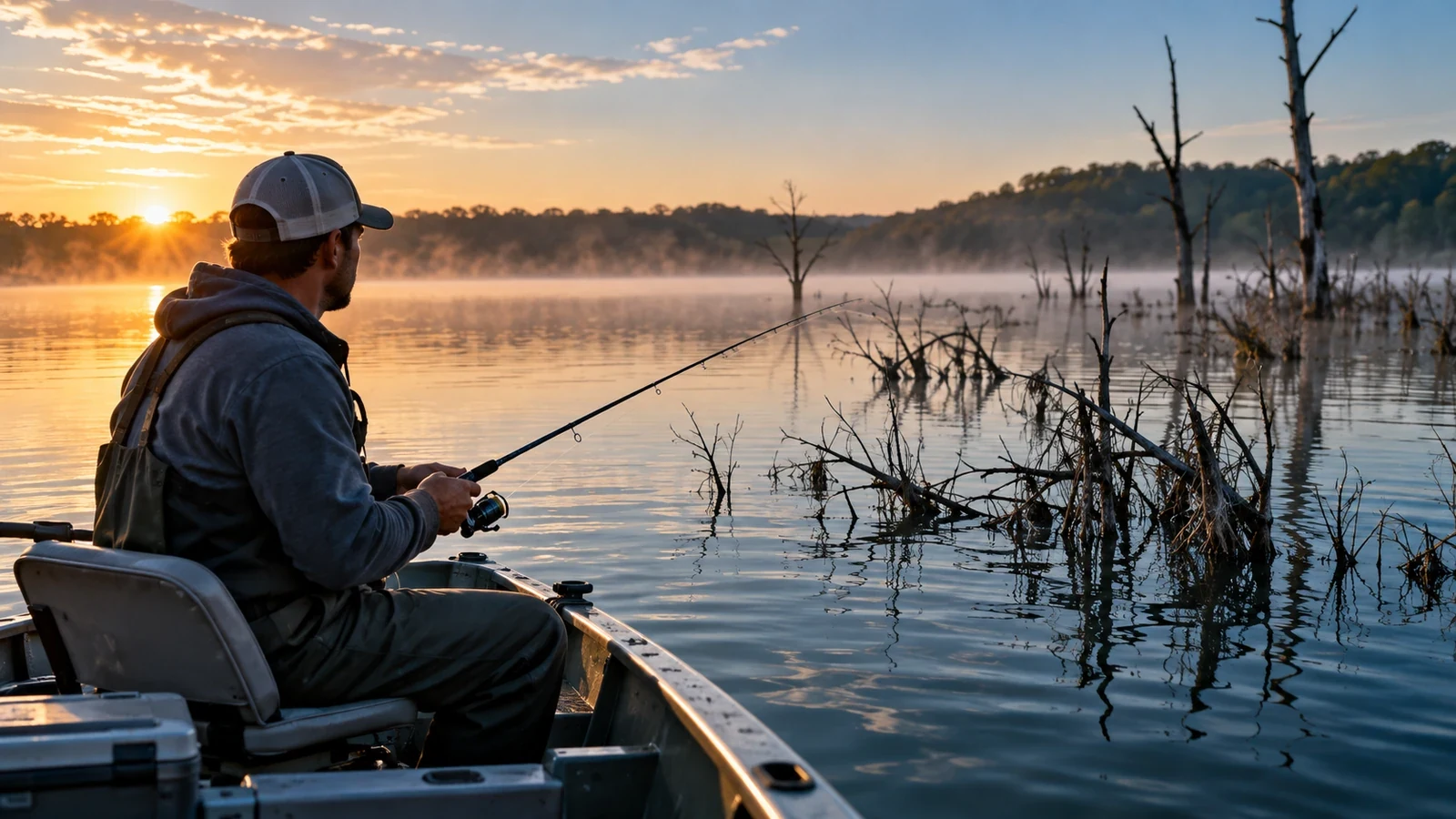
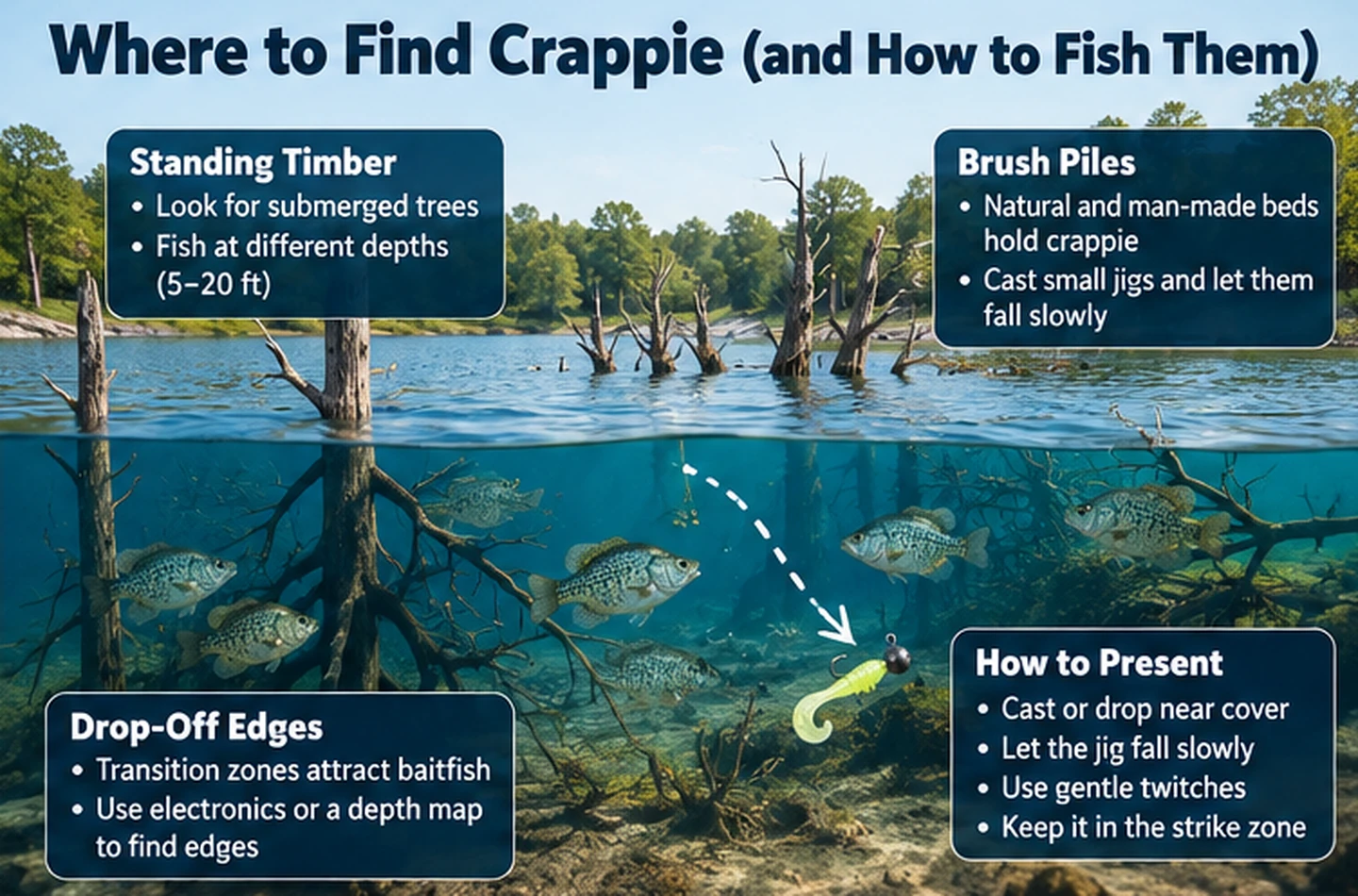
Crappie often relate to cover and frequently school. The U.S. Fish and Wildlife Service lists vegetation, fallen trees, and boulders among common cover, while the Minnesota DNR points beginners toward brush piles, sunken trees, cattails, deeper points, humps, and weedlines as the year progresses.
That does not mean every branch or dock holds fish. Think of each piece of cover as a short test. Make several controlled presentations at a few depths. If nothing happens, move. The beginner who covers five good pieces of structure usually learns more than the beginner who spends an hour changing jig colors beside one empty stump.
The easiest first method: jig or minnow under a float
A float is useful because it turns one of the hardest beginner variables, depth, into something visible and repeatable. You can set the rig at a known depth, cast it beside cover, and then change that setting in measured steps.
- Pick one piece of cover. Start beside brush, a dock edge, submerged timber, a weedline, or a marked attractor.
- Set the bait above the snag zone. You want the jig or minnow close enough to draw fish without hanging every cast in the branches.
- Cast beside or just beyond the target. Avoid throwing directly into the thickest wood until you understand how the rig sinks and drifts.
- Let the rig settle. Give the jig time to reach the set depth. Use only small twitches or a slow drift at first.
- Watch the float carefully. A bite can pull it under, tip it, make it move sideways, or simply stop a natural drift.
- Use a controlled hookset. Crappie have soft mouths. The Minnesota DNR recommends a slow, steady motion rather than a violent sweep.
- Change depth before changing lures. Move the bait up or down in roughly 1 to 2 foot steps until you contact fish or decide to move.
In shallow water, a fixed float is simple. In deeper water, a slip float lets the stop move through the guides during the cast and then holds the bait at the depth you selected. That is especially useful when the fish are well below the surface but you still want the bite visibility of a float.
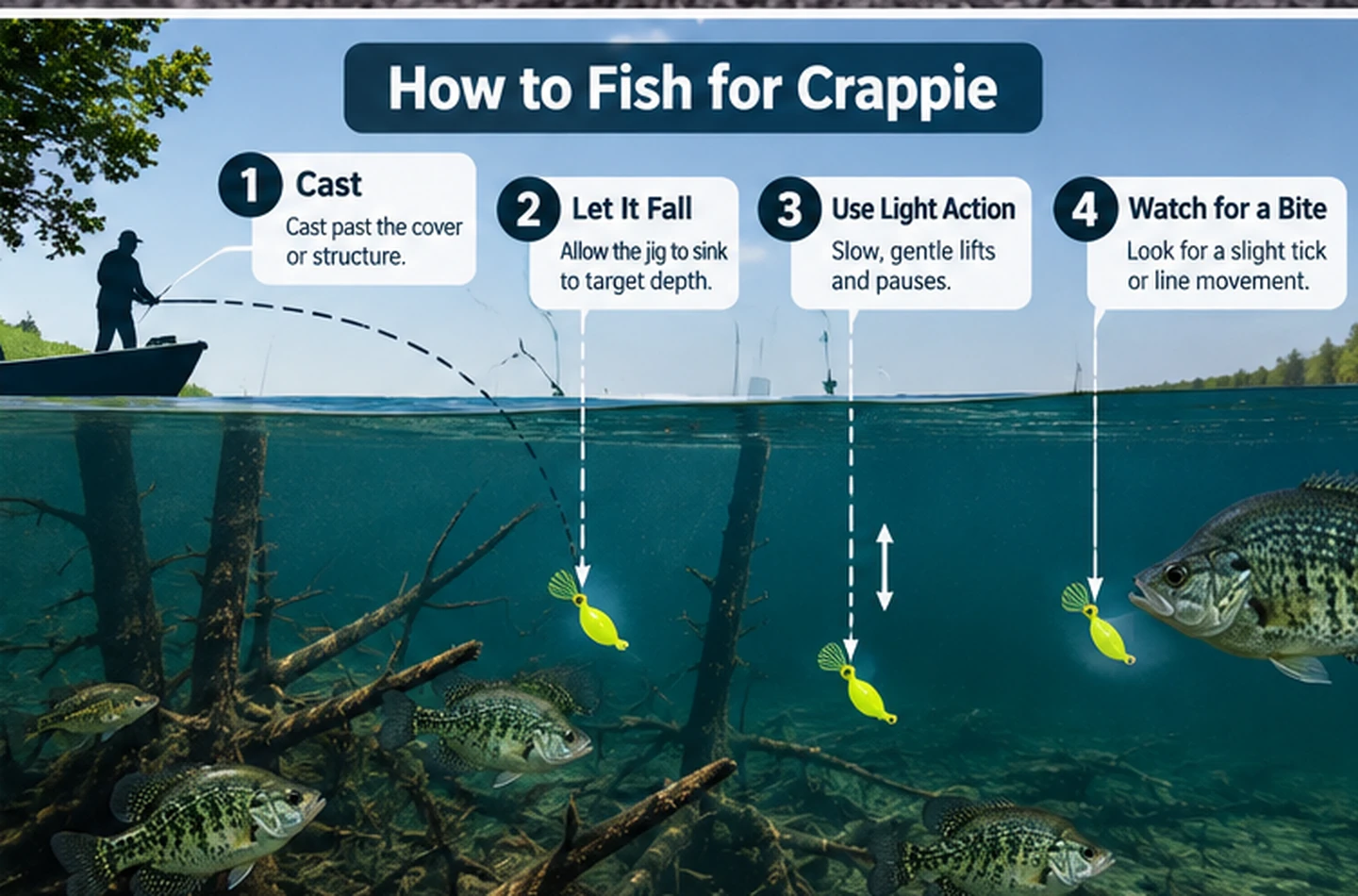
How to fish a crappie jig without a float
A bare jig is the next step once you can cast accurately and control slack line. The Minnesota DNR describes small jigs as one of the most common crappie lures and recommends a slow retrieve with occasional rod movement.
- Cast past the target instead of dropping the jig into the center of the cover.
- Let the jig fall on controlled slack. Watch the line because a bite can happen before you feel it.
- Begin a slow retrieve once the jig reaches the depth you want.
- Add small lifts or pulses with the rod tip rather than large snapping motions.
- If you tick branches, lift gently and keep moving. If you snag constantly, fish a little higher or use a lighter presentation.
The practical advantage is speed. You can search a dock face, weed edge, or brush pile faster than with a stationary float. The trade-off is that depth control is less obvious, so beginners should count the jig down consistently and change one variable at a time.
When a live minnow makes sense
A minnow under a bobber is one of the standard crappie methods described by fisheries agencies. It can be a very simple option when live bait is legal and easy to obtain. Use a hook and float sized for the bait, add only enough split shot to control the rig, and keep the presentation beside cover rather than buried inside it.
Local bait rules matter. Some states or individual waters restrict live bait, transport, baitfish species, hook types, or how bait can be collected. Check the current rules for the exact water you plan to fish before buying or moving live minnows.
A simple seasonal crappie plan
Seasonal movement is real, but fixed depth numbers are not portable from one lake to another. Latitude, water clarity, reservoir level, weather, forage, and available cover can all change where the fish set up. Use the seasonal pattern as a starting zone, then let your catches and electronics, if you have them, confirm the depth.
Depth matters more than color most days
Beginners often carry a dozen jig colors and still fish every one of them at the same wrong depth. Crappie can hold near cover, above cover, or suspend away from the bottom. A lure that never enters the fish’s zone will not improve because the tail changed from chartreuse to pink.
A better adjustment order is:
- Change the bait depth.
- Change retrieve speed or the amount of movement.
- Move to the next nearby piece of cover or structure.
- Then experiment with jig size, profile, or color.
This keeps the learning process clean. You will know which change actually produced the bite instead of changing depth, speed, lure, and location all at once.
Seven beginner mistakes that cost crappie bites
- Fishing the bottom by default. Crappie can suspend, so bottom contact is not always the goal.
- Using tackle that is too heavy. Heavy line and oversized lures make small presentations harder to cast and control.
- Staying too long on dead water. Crappie often school. Moving between good targets can be more productive than endlessly reworking one empty spot.
- Setting the hook too hard. A smooth lift is usually better than a bass-style power hookset.
- Throwing into the center of the snag. Start on the edge and learn how the rig tracks before probing the thickest branches.
- Changing too many variables at once. Adjust depth, then speed, then location, then lure details.
- Ignoring local regulations. Size limits, daily limits, special regulations, bait rules, and seasons can differ by state and by individual waterbody.
Troubleshooting when the crappie are not biting
Black crappie vs. white crappie
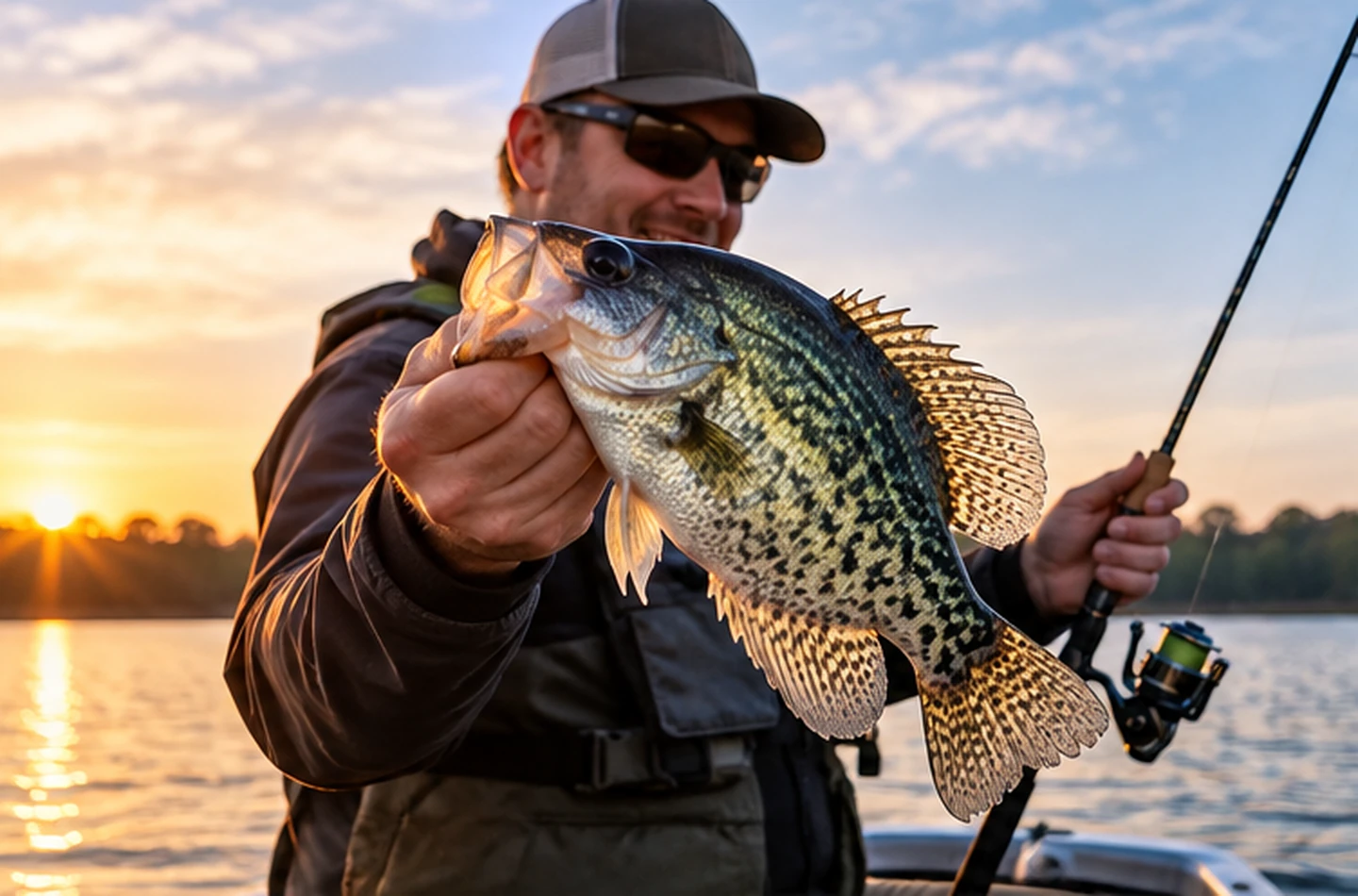
Many waters hold black crappie, white crappie, or both. Black crappie typically show irregular dark speckles and blotches, while white crappie show more regular vertical bars. Minnesota DNR guidance also notes that black crappie usually have seven or eight dorsal spines, while white crappie have five or six.
Identification matters most where species-specific regulations apply. If you are unsure, check your state agency’s identification guide and the rules for that water before keeping fish.
Regulations and basic safety
Before you fish, confirm license requirements, seasons, daily limits, size limits, special waterbody rules, and live-bait restrictions with the relevant state wildlife agency. Regulations can change, and a statewide rule may not apply to a lake that has a special regulation.
If you are fishing from a boat or kayak, use the required flotation equipment and follow local boating rules. Cold water deserves extra caution even on calm days.
How this beginner guide was researched
GearAndFish built this guide around current public fisheries guidance rather than personal-use claims. The main technique and biology references were the Minnesota Department of Natural Resources crappie guide and the U.S. Fish and Wildlife Service black crappie overview. Product mapping was checked against current manufacturer information and Amazon US on October 7, 2026.
The Amazon example is not presented as a universal “best” choice. It is included because its current published ratings fit the light-line and small-jig setup described in this article. Amazon availability and seller offers can change after publication.
Crappie fishing for beginners FAQ
What is the easiest way to catch crappie for beginners?
A small jig or live minnow under a float is one of the simplest methods. Start around brush, docks, sunken wood, weed edges, or marked fish attractors, then adjust the bait depth until you contact fish.
What line should a beginner use for crappie?
Four- to six-pound monofilament is a practical starting range for light spinning tackle. It is easy to manage, works with small crappie presentations, and gives a beginner enough flexibility to learn basic casting and float fishing.
What size jig should I start with for crappie?
A 1/16 oz jig is a useful default. Move to 1/32 oz when you want a slower fall and lighter presentation, or to 1/8 oz when you need more sink rate or control in deeper water or wind.
Do crappie stay on the bottom?
No. Crappie often school and can hold around cover or suspend away from the bottom. Treat depth as an adjustable variable instead of automatically dragging the bait along bottom.
Can you catch crappie from shore?
Yes. Shore anglers can target reachable docks, brush, submerged wood, weed edges, and other cover, especially when fish move shallow. When fish shift offshore or deeper, a pier, boat, or kayak can open more productive water.