
GearAndFish is reader-supported. As an Amazon Associate I earn from qualifying purchases. When you buy through links on our site, we may earn an affiliate commission, at no extra cost to you. Learn more.
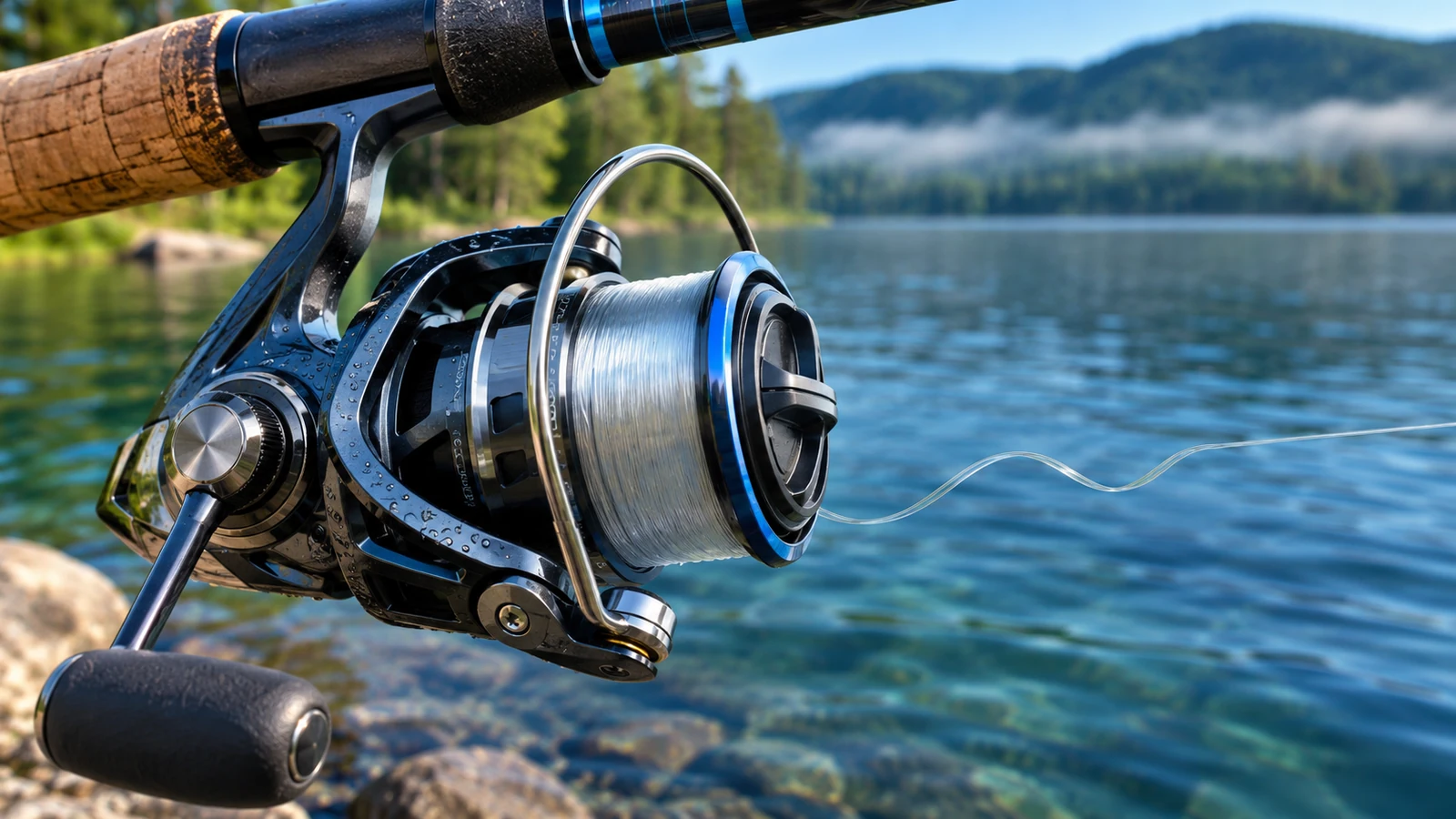
Line twist can turn an otherwise good spinning setup into a source of springy coils, surprise loops, and wind knots. The important question is not just how to straighten the line. It is what keeps twisting it in the first place.
Start with the lure, drag, and line roller before buying replacement line. If the line is already twisted, you can often release it without removing the whole spool. This guide covers problems that develop while you fish; for line-loading direction, backing, and fill level, see our spinning-reel spooling guide.
How to fix spinning reel line twist
Remove the lure, let a length of bare line unwind freely in safe open water or an unobstructed grassy area, then retrieve it with light, even tension. Before your next cast, check whether the lure spins, stop cranking against a slipping drag, close the bail by hand, and clear any loose loop before reeling. Persistent twist on multiple rigs can indicate a line-roller or bail problem.
Line twist, line memory, or a wind knot?
These problems can look similar, but treating them as the same thing wastes line.
| What you see | Likely issue | First check |
|---|---|---|
| Tight corkscrew coils form when the line goes slack | Accumulated line twist | Spinning lure, drag behavior, line roller |
| Broad, relaxed loops retain the shape of the spool | Line memory, especially with older or stiff mono/fluoro | Age and diameter of the line |
| A loop grabs another wrap and tightens during a cast | Wind knot / trapped loose loop | Slack line, overfill, existing twist |
| Several wraps leap off the spool when the bail opens | Overfill, memory, or excess twist | Spool fill first, then slack-line behavior |
Memory is the tendency of a line to retain a coil shape from storage. Twist is actual rotation built up along the line. Both may be present. A swivel helps with a rotating bait, but it cannot make old, stiff line supple again.
Remove line twist without respooling the entire reel
For mild or moderate twist, try releasing the rotations already stored in the line. The method works only if the free end can rotate. Never trail loose line near a boat propeller, swimmers, other anglers, or moving equipment.
- Stop and inspect. Open the bail and carefully remove any loop trapped under other wraps. Do not cast through a visible loop or yank a tightened knot.
- Remove the hook or lure. Cut off the rig so the bare line end can spin freely. Leaving a swivel or heavy lure attached may stop the line from fully untwisting.
- Pay out a manageable length. Roughly 25 to 30 yards is a useful starting point if space permits. Let the bare line trail into a safe current or behind a slow-moving boat well away from the propeller; from shore, use an open, clean grassy area where the line will not snag people, animals, or vegetation.
- Let the free end relax and turn. Give it time to release stored twist rather than immediately tightening the line again. Keep the line away from sharp surfaces.
- Retrieve slowly under gentle, consistent tension. Use a soft, clean cloth or your fingers carefully above the reel. Do not pinch thin braid hard against skin.
- Check the result. Pull a short length between the reel and first guide, briefly introduce slack, and watch for tight corkscrews. Repeat once if necessary, then find the cause before fishing again.
If the line still coils aggressively, has abrasions or hard kinks, or knots have damaged it, replace the affected section or respool. Untwisting is not a repair for compromised line strength.
Why a spinning reel keeps twisting line
1. Your lure or rig rotates on retrieve
Inline spinners are supposed to turn at the blade, but the lure body or an improperly mounted bait can also roll. Some soft plastics spin when rigged crooked or retrieved too fast. Pull the lure through clear water close to shore and watch it at your normal retrieve speed. If the whole bait spins, fix the rigging or retrieve first. Where rotation is part of the presentation, a properly sized swivel may help isolate it from the main line.
2. You reel while the drag is slipping
When a fish is pulling line off a spinning reel and you keep turning the handle, the rotor is wrapping line without making useful progress. That can add twist quickly. Let the drag do its job, keep tension with the rod, and resume reeling once you are gaining line. Do not crank through a drag run.
3. Slack loops are wound onto the spool
After a cast or during a stop-and-go retrieve, a loose strand can sit outside the proper wrap pattern. Turning the handle may bury it under fresh line; the next cast can turn that loop into a knot. Flip the bail closed by hand, place the line onto the roller, and take up obvious slack before winding. After a windy cast, inspect the spool face for an oversized loop.
4. The line roller binds or the bail is damaged
The small roller where line meets the bail should guide line smoothly. If it is seized, gritty, or deeply grooved, normal retrieval may create trouble even with a lure that runs straight. With the reel unloaded, inspect the roller and bail for dirt, cuts, and misalignment. Follow the model’s maintenance instructions; a damaged bearing, roller, or bent bail may require replacement or professional service. Do not force a bent bail back into shape without the manufacturer’s procedure.
5. The line went on twisted or is too stiff for the spool
If trouble started on the first casts after fresh line was installed, suspect loading direction, low tension, or excess fill before blaming the reel. Mono and fluorocarbon can also retain pronounced coils, particularly when a heavy diameter is forced onto a small reel. For a complete loading reset, use the step-by-step spooling instructions rather than repeating those steps here.
A two-minute diagnosis before you cut off more line
- Only one lure causes twist? Look closely for a bait that rolls. Fix its alignment or try a suitable swivel.
- Twist appears while fighting fish? Watch whether the reel handle is turning while drag pays out.
- Loose loops show up after casting? Check fill level, bail closure, and line tension.
- It happens with every lure, even after fresh line? Inspect the roller and bail for binding or damage.
- Fresh mono springs off the spool immediately? Check diameter and loading direction; line memory may be the bigger issue.
If you find a loop sitting under the top layers, stop immediately. Peel off line by hand until the loop is free, then wind it back on under control. Casting through a trapped loop usually tightens the tangle.
Prevent line twist on your next trip
- Close the bail yourself. After the lure lands, manually close it and make sure the line drops into the roller. This mainly prevents loose wraps rather than curing twist already stored in the line.
- Keep a little tension when retrieving. Windy slack line and weightless presentations need extra attention. Take up slack without grinding against a running drag.
- Check lure tracking. Inspect inline spinners, soft plastics, and trolling baits for unwanted body rotation. A bent blade or off-center bait can create twist every retrieve.
- Use swivels selectively. A small swivel is useful when the lure tends to rotate; it is not needed ahead of every jig, worm, or stationary-action bait. Keep the swivel out of the rod-tip guide when casting unless the setup is specifically designed for it.
- Respect reel capacity. If line floods over the spool lip, reduce the fill. If it is coiling tightly despite correct fill, try a more manageable diameter or line type.
- Look after the roller. Remove grit and salt according to your reel manual; deal with roughness or binding early rather than treating every tangle as a line problem.
When replacement line or a swivel actually helps
Buying something is not the first fix for line twist. These three examples are relevant only after you have identified a specific problem and checked that the line strength, diameter, and rig fit your own setup. Amazon links point to particular US listings, not generic product families.
For line with stubborn memory: Berkley Trilene XL monofilament
The linked example is 8 lb clear, 330 yards (model XLFS8-15). A manageable mono can be a sensible replacement when old or oversized line is springing into loops on a freshwater spinning reel. Replace the line if it is nicked or sharply kinked; new mono still needs to be installed without adding twist. Check the capacity printed on your reel.
For less line memory: PowerPro Spectra braid
The linked example is 15 lb Moss Green, 150 yards. Braid does not retain the same spool-shaped coils as mono, but it can still accumulate true twist and cause wind knots if loaded loosely. This is a possible line-type change, not a guaranteed fix for a damaged roller or spinning lure. Use backing or a braid-ready arbor as specified by the reel maker.
Check PowerPro braid on Amazon
For a bait that rotates: Eagle Claw barrel swivel with interlock snap
The linked product is the Eagle Claw Barrel Swivel with Interlock Snap, size 7. It combines a rotating connection with a snap for changing suitable lures. A barrel swivel can reduce the twist passed from a rotating lure to your main line, although it may not spin freely under every load. Match size and rated strength to the presentation, and do not choose a bulky snap for a delicate lure merely because it is convenient.
Check Eagle Claw swivel on Amazon
Not sure whether changing line is worthwhile? Our braided-line buying guide explains handling differences without promising that braid eliminates all tangles.
When to service the reel instead of respooling again
A reel that twists every fresh line, with several non-spinning baits, deserves a mechanical check. Carefully look for a roller that will not turn, sharp edges on the roller or bail, irregular line lay, and a bail arm that does not fully seat. Refer to the exact reel’s service instructions or a qualified reel technician. Repeatedly replacing otherwise sound line will not resolve a jammed line roller.
For context on bail, drag, rotor, and roller function, see our beginner spinning-reel guide.
How this guide was prepared
This is a researched troubleshooting guide, not a claim of personal fishing or equipment tests. Diagnosis and untwisting guidance was checked against Lew’s technical support, Zebco’s spinning-reel troubleshooting, and New York State DEC’s introductory fishing instructions. The examples above were matched to specific Amazon.com US product pages and manufacturer or retailer model information. Availability may change.
Spinning reel line twist FAQ
Can I remove line twist without taking the line off my reel?
Often, yes. Remove the lure, allow a length of bare line to unwind freely in a safe open area or current, then wind it back on under light tension. Replace line that remains badly twisted or has damaged sections.
Does a swivel stop spinning reel line twist?
A suitable swivel can reduce twist transferred by a rotating lure or rig. It will not fix a jammed line roller, incorrect spooling, an overfilled spool, or reeling against a slipping drag.
Why does my new fishing line keep coiling?
New mono or fluorocarbon may have memory, and line may also have been wound on with extra twist or too much fill. Check the reel’s recommended diameter, loading direction, and fill level before replacing it again.
Does braided fishing line get twisted?
Yes. Braid usually has less spool memory than mono, but lure rotation, drag misuse, and reel problems can still twist it. Loose wraps can create wind knots even without pronounced line memory.
Why does my spinning reel twist line even with no spinning lure?
Check whether you are turning the handle against a slipping drag, winding slack loops, or using a line roller that binds. If it persists after a careful respool with several lures, inspect the reel mechanically.