
GearAndFish is reader-supported. As an Amazon Associate I earn from qualifying purchases. When you buy through links on our site, we may earn an affiliate commission, at no extra cost to you. Learn more.
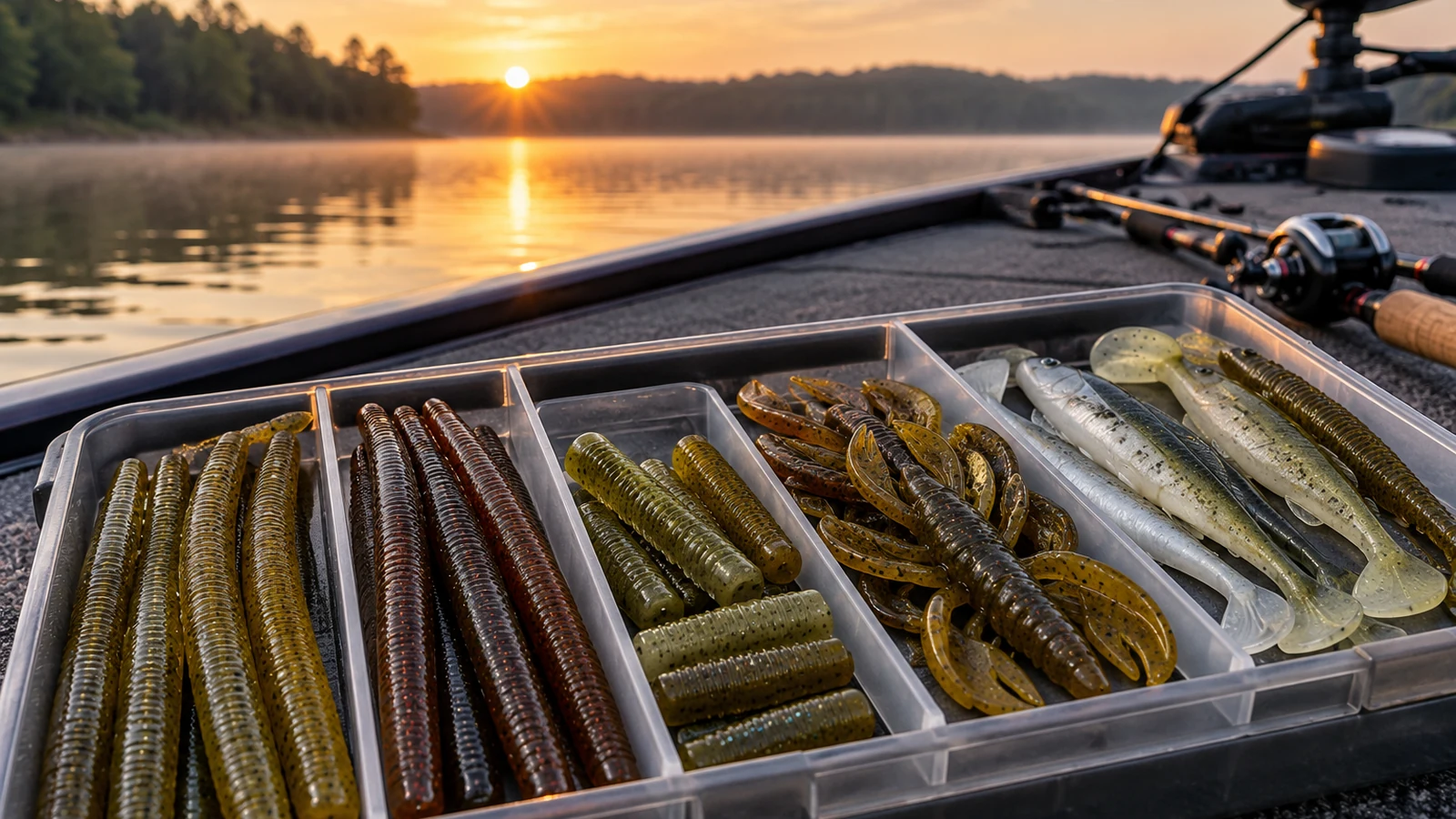
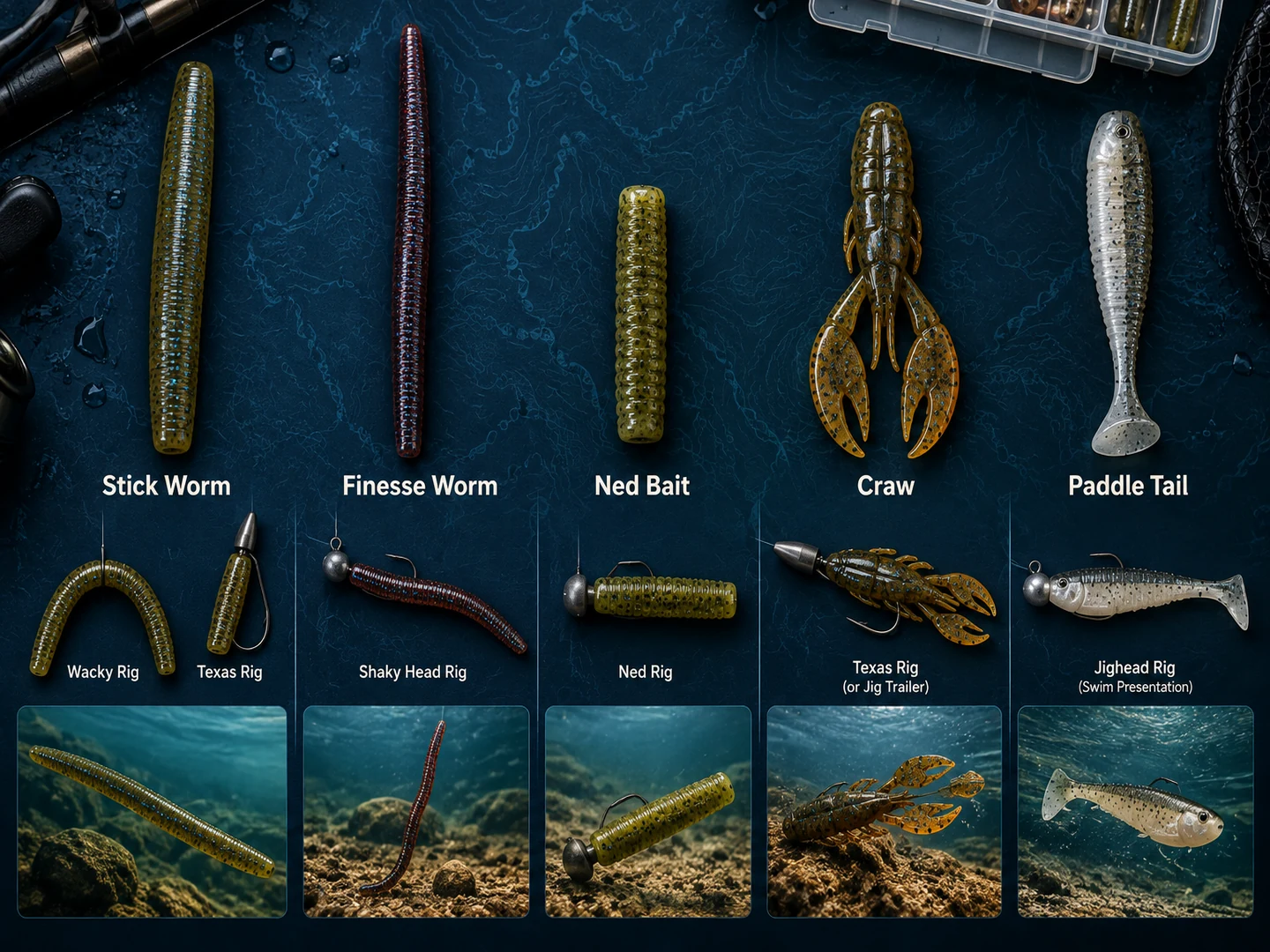
The best soft plastic baits for bass are not five versions of the same worm. A useful box covers different jobs: a stick bait for slow horizontal falls, a straight worm for finesse, a compact Ned bait for pressured fish, a craw for cover and bottom contact, and a paddle tail for swimming through open water.
How we chose: This guide is research-based, not a personal field report. We compared the current US search results, manufacturer specifications, current Amazon.com US listings, and the role each bait fills. Prices and seller availability change, so the Amazon buttons below point to the verified listing rather than quoting a price.
What are the best soft plastic baits for bass?
Start with the Yamamoto 5-inch Senko if you want one soft plastic that can cover the most situations. Add a Zoom Trick Worm for finesse worm presentations, a Z-Man Finesse TRD for Ned rig fishing, a Strike King Rage Craw for cover and jig-trailer duty, and a Keitech Fat Swing Impact 3.8 for a compact swimming profile.
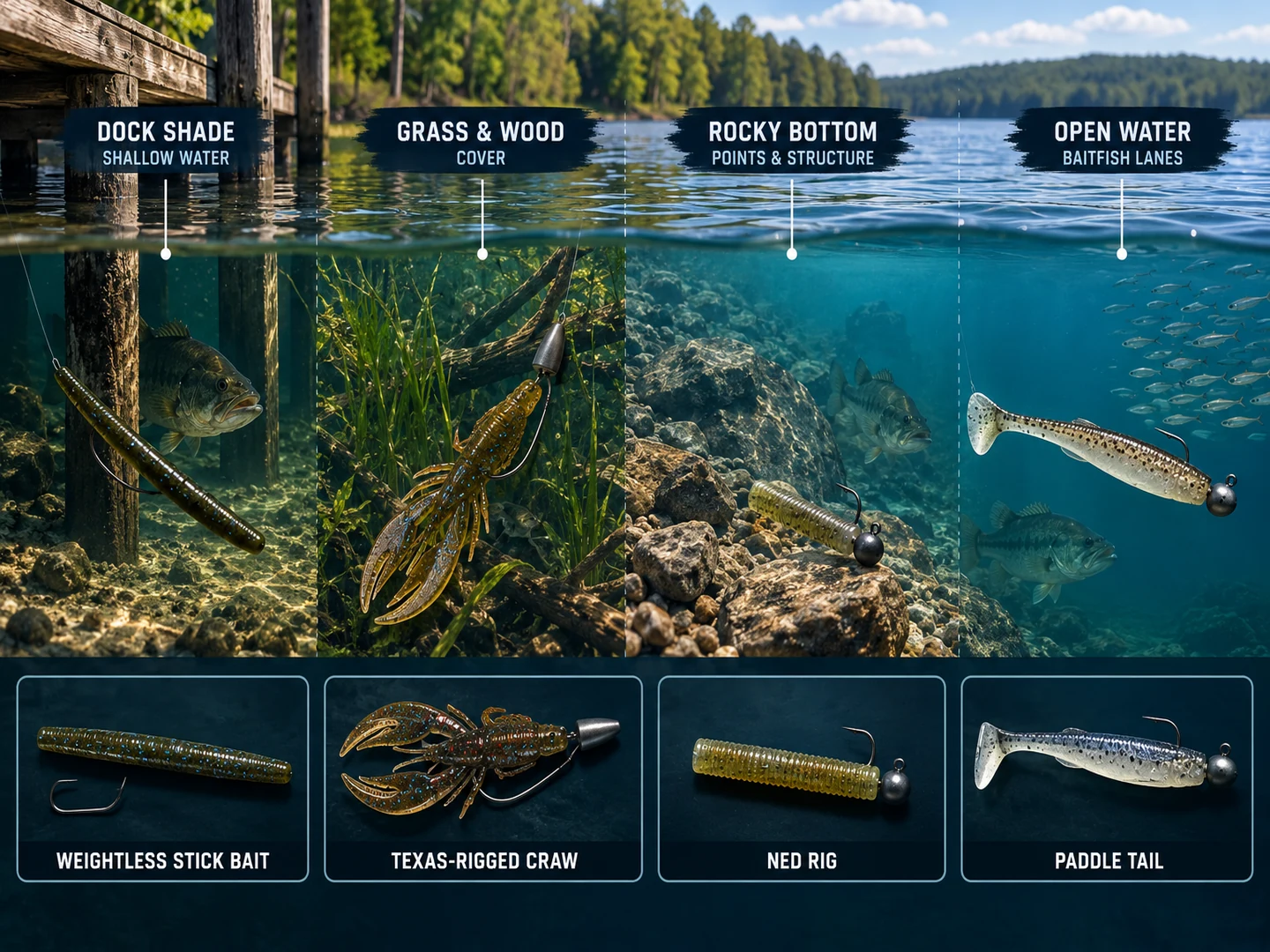
The key is matching the bait to the presentation. A slower, subtle fall around docks is a different job from dragging rock, punching vegetation, or swimming above grass.
Our picks at a glance
Yamamoto 5-inch Senko
The most versatile choice here for weightless, wacky, Texas, Neko, Carolina, and other simple bass presentations.
Zoom Trick Worm 6.5
A long, straight-tail worm that gives you an inexpensive way to cover shaky-head, Texas-rig, Carolina-rig, and weightless finesse work.
Z-Man Finesse TRD 2.75
A compact floating ElaZtech stick bait designed around Midwest finesse and the Ned rig.
Strike King Rage Craw 4
A 4-inch craw profile that works as a Texas-rigged bait, Carolina-rigged bait, or active jig trailer.
Keitech Fat Swing Impact 3.8
A compact paddle tail for swimming through open water, over grass, or on a jighead when bass are tracking baitfish.
Best soft plastic baits for bass compared
| Product | Best for | Size | Main presentation | Trade-off | Amazon |
|---|---|---|---|---|---|
| Yamamoto 5-inch Senko | All-around versatility | 5 in | Weightless, wacky, Texas rig | Soft body can go through baits faster | Check availability |
| Zoom Trick Worm 6.5 | Finesse worm fishing | 6.5 in | Shaky head, Texas rig, weightless | Less bulk and vibration than a craw | Check availability |
| Z-Man Finesse TRD 2.75 | Ned rig fishing | 2.75 in | Ned rig | Purpose-built for small, subtle presentations | Check availability |
| Strike King Rage Craw 4 | Cover and bottom contact | 4 in | Texas rig, Carolina rig, jig trailer | More action than you may want in ultra-cold or very pressured water | Check availability |
| Keitech Fat Swing Impact 3.8 | Swimming and baitfish profiles | 3.8 in | Jighead, weighted hook, swim presentation | Not the first choice for dead-sticking on bottom | Check availability |
Yamamoto 5-inch Senko
All-around versatility
5 in
Weightless, wacky, Texas rig
Zoom Trick Worm 6.5
Finesse worm fishing
6.5 in
Shaky head, Texas rig, weightless
Z-Man Finesse TRD 2.75
Ned rig fishing
2.75 in
Ned rig
Strike King Rage Craw 4
Cover and bottom contact
4 in
Texas rig or jig trailer
Keitech Fat Swing Impact 3.8
Swimming and baitfish profiles
3.8 in
Jighead or weighted hook
Choose the profile before the brand
Soft plastics are unusually easy to overbuy because the category contains hundreds of colors, lengths, appendages, and formulas. A better first decision is the presentation you need. Once that is clear, color and exact size become secondary adjustments.
Yamamoto 5-inch Senko
Pick #1
Buy this first if you want one proven soft-plastic profile that can move between shallow cover, docks, open water, and several different rigs without changing the bait family.
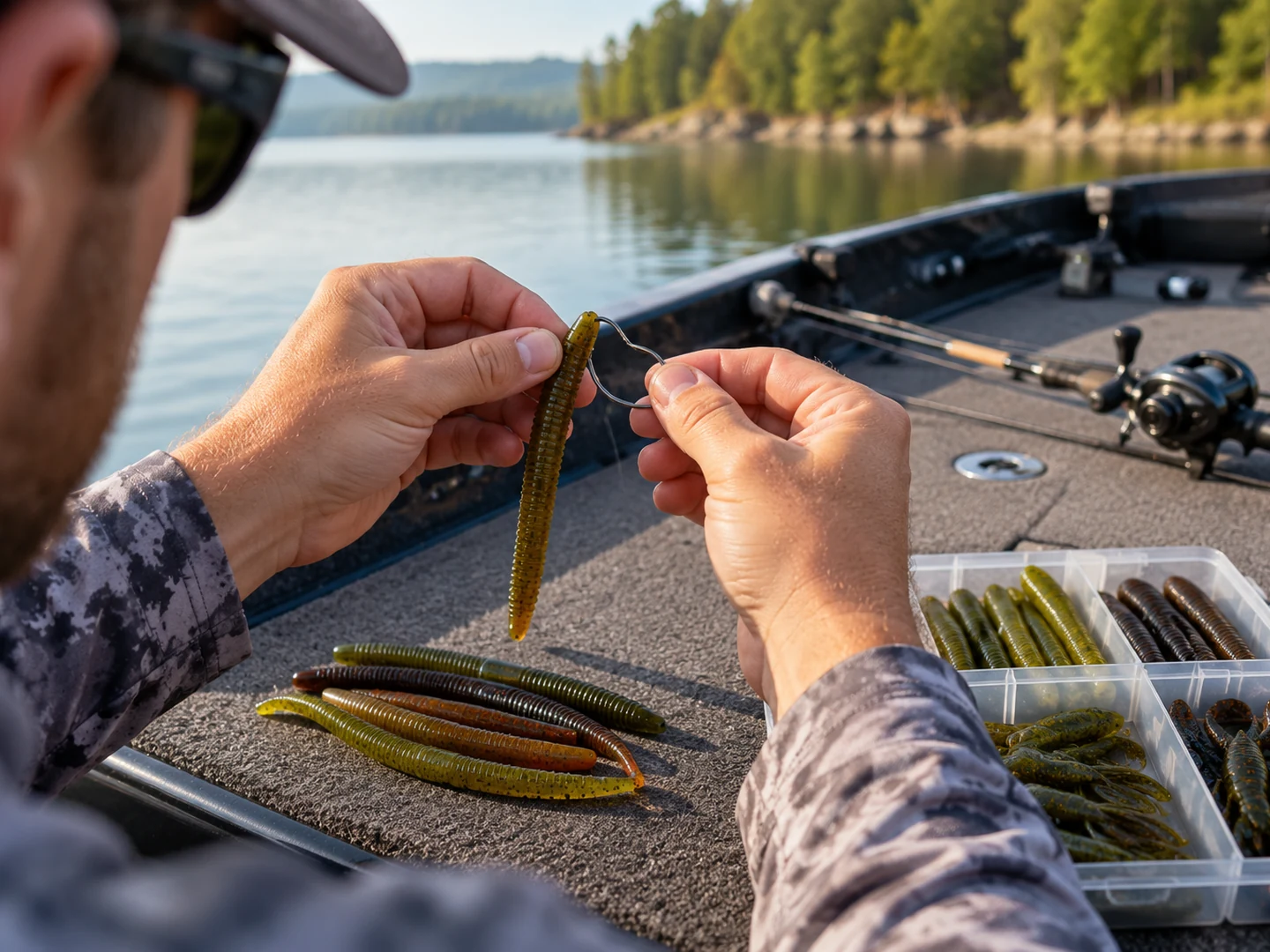
The advantage is simplicity. A stick bait does not need a dramatic tail or appendages to create a useful presentation. Weightless, it can fall slowly beside a dock or laydown. Wacky rigged, the hook position changes the fall and movement. Texas rigged, it becomes easier to work around cover. Yamamoto also supports the Senko across Neko, Carolina, shaky-head, and other common approaches.
That makes the 5-inch size a sensible default for an angler who wants fewer bags in the boat. You can change the hook, weight, or rig before you change the bait. The main trade-off is durability: a softer stick bait is a consumable item, especially when hooked through the middle.
If you are specifically building a weedless bottom-contact setup, our Texas rig guide covers hook placement, weight choice, and when to peg the sinker.
Good fit if you want
- One soft plastic that works with several rigging styles
- A natural, slower presentation around shallow targets
- A simple starting point for bass soft plastics
Skip it if you need
- A bait designed primarily for fast horizontal swimming
- Maximum durability per individual bait
Zoom Trick Worm 6.5
Pick #2
A strong choice when you want a long straight-tail worm for shaky-head, Texas-rig, Carolina-rig, or weightless presentations without paying a premium per bait.
The Trick Worm fills a different job from a stick bait. Its long, narrow body is useful when you want a worm profile that can be twitched, shaken, dragged, or worked slowly while keeping the presentation relatively subtle. That is why it makes sense on a shaky head and also transitions well to Texas or Carolina rigs.
For buyers, the practical appeal is the combination of a familiar profile and a larger pack count. If you go through plastics quickly around brush, rock, or dock cover, a 20-pack is easier to treat as tackle rather than something precious. The trade-off is that it does not give you the same compact bottom-standing presentation as a Ned bait or the kick of a craw or paddle tail.
If you want to move the worm away from the weight and cover more bottom with a leader, see our Carolina rig guide.
Good fit if you want
- A straight worm for shaky-head and light Texas-rig fishing
- A high-count pack for regular use
- A subtle profile that can still cover several rigs
Skip it if you need
- A compact Ned-specific bait
- A lot of tail thump or claw action
Z-Man Finesse TRD 2.75
Pick #3
The focused pick for anglers who want the compact Midwest finesse profile that the modern Ned rig is built around.
The TRD earns its place by being purpose-built rather than broadly versatile. On a mushroom-style jighead, the short body keeps the package compact and easy to work slowly across rock, gravel, and sparse cover. The floating material also changes how the bait rests compared with many conventional soft plastics.
This is the bait to add when the fish are not rewarding a larger or faster presentation and you want to slow down without using an oversized worm. It is especially useful when the task is bottom contact and subtle movement rather than covering a lot of water.
Rigging details matter more than color here. Our Ned rig guide explains jig weights, setup, retrieves, and the situations where this compact presentation makes sense.
Good fit if you want
- A dedicated Ned rig profile
- A small bait for pressured or less aggressive bass
- A floating soft plastic that can stand up off bottom
Skip it if you need
- A large silhouette for heavy cover
- A fast search bait for covering open water
Strike King Rage Craw 4
Pick #4
Pick the Rage Craw when you need more bulk and active appendage movement around grass, wood, rock, or on the back of a jig.
A craw gives you more water movement than a straight worm, so it belongs in the box when a restrained stick-bait profile feels too quiet. It can be pitched or flipped into cover on a Texas rig, dragged on bottom, or shortened and used as a jig trailer. That makes it the most natural step up in action from the worm-focused picks above.
The extra movement is also the reason not to treat it as a universal replacement. In very cold water or when bass are reacting better to minimal motion, a straight worm or compact Ned bait can be easier to control. Think of the Rage Craw as the cover and action specialist in this five-bait set.
Good fit if you want
- A 4-inch craw for Texas-rigged cover fishing
- A soft-plastic jig trailer with noticeable action
- One craw that can also move to a Carolina rig
Skip it if you need
- A nearly motionless finesse presentation
- A baitfish-shaped lure for steady swimming
Keitech Fat Swing Impact 3.8
Pick #5
The choice here for a compact soft-plastic baitfish presentation that can be reeled through open water or above cover instead of worked mainly on bottom.
This pick expands the box beyond bottom-oriented soft plastics. A paddle tail is a better fit when bass are positioned around baitfish, roaming outside cover, or feeding above submerged grass. The tail supplies its own movement during a steady retrieve, so the presentation is more horizontal than a Senko, worm, or Ned bait.
The 3.8-inch size is compact enough to remain broadly useful without becoming a specialty big-swimbait purchase. It can be rigged on a jighead for open water or on a weighted weedless hook where grass and cover make an exposed hook less convenient.
This article intentionally keeps paddle tails to one representative pick. A dedicated swimbait roundup is a different shopping intent and should compare a much deeper set of swimbait-specific options rather than turning this soft-plastics guide into a duplicate.
Good fit if you want
- A baitfish profile for steady swimming retrieves
- A compact paddle tail for jigheads or weighted hooks
- A soft plastic that covers water faster than a worm
Skip it if you need
- A dead-stick or bottom-standing finesse bait
- A bulky craw profile for flipping heavy cover
Match the bait to cover and depth
Buying by brand alone misses the biggest decision. Bass position changes throughout the day and across seasons, and each profile becomes easier to use when it matches the cover and depth in front of you.
| Situation | Start with | Why | Adjustment |
|---|---|---|---|
| Docks and isolated shallow targets | 5-inch stick bait | Easy to fish weightless with a slow fall | Go Texas rig if snag resistance becomes more important |
| Rocky points and pressured fish | Ned bait | Compact bottom-contact presentation | Use the lightest jighead that still maintains useful bottom contact |
| Brush, grass, and wood | Craw or straight worm | Both adapt well to weedless Texas-rigging | Choose the craw for more action, worm for a quieter profile |
| Open water and baitfish activity | Paddle tail | Built for a horizontal swimming retrieve | Change jighead or hook weight to control depth |
How many colors do you actually need?
You do not need a wall of colors to start. A practical small kit can cover most situations with a natural dark-green or brown option, a darker high-contrast option, and a baitfish tone for swimming presentations. Exact shade matters less than having the correct profile, rig, fall rate, and depth for the situation.
Simple starting rule: use natural greens and browns around clear to moderately stained water and common bottom or vegetation colors. Keep a darker option for lower visibility. For paddle tails, add a shad or translucent baitfish pattern when bass are feeding on small fish.
Color can matter, but it is easy to use color as a substitute for changing something more important. Before buying another shade, ask whether the fish are actually asking for a different depth, speed, profile, or rig.
A five-bag soft-plastic starter kit
If you are building a bass box from scratch, you can cover a lot of water without buying dozens of bags. One bag from each category in this guide gives you a useful progression from slow and subtle to active and mobile.
- 5-inch stick bait: your default around docks, laydowns, edges, and shallow targets.
- Straight worm: for shaky heads and finesse presentations when you want a longer profile.
- Ned bait: for compact bottom contact on rock, gravel, and pressured water.
- Craw: for pitching, flipping, Texas rigs, and jig-trailer duty around cover.
- Paddle tail: for swimming above grass, along edges, and through baitfish zones.
That mix is deliberately broader than a bag full of five similar stick worms. Once you learn which presentation you use most, then it makes sense to add alternative sizes, colors, and brands within that profile.
How we researched these picks
Manufacturer references used for current specs include Yamamoto’s 5-inch Senko page, Z-Man’s Finesse TRD page, and Keitech’s 3.8-inch Fat Swing Impact catalog. Product availability can change after publication.
Soft plastic bass bait FAQ
What soft plastic should a beginner use for bass?
A 5-inch stick bait is the simplest all-around starting point because it can be fished weightless, wacky rigged, or Texas rigged. Once you are comfortable with that, add a Ned bait for finesse and a craw or paddle tail for more specialized situations.
What color soft plastic is best for bass?
There is no single best color everywhere. Natural greens and browns are useful starting choices in many clear to moderately stained waters, while darker colors can add contrast in lower visibility. For paddle tails, a shad or baitfish pattern is a logical option when bass are feeding on small fish.
Is a Senko better Texas rigged or wacky rigged?
Neither is universally better. Wacky rigging emphasizes a slow, exposed-hook fall and is useful around relatively open targets. Texas rigging is more weedless and easier to work through grass, wood, and other snag-prone cover.
When should I use a Ned rig instead of a Texas rig?
Use a Ned rig when you want a smaller, more subtle bottom-contact presentation, especially on rock, gravel, or pressured water. Use a Texas rig when you need better weedlessness, a larger profile, or more flexibility around grass, brush, and wood.
Can a paddle-tail swimbait count as a soft plastic bait?
Yes. A paddle-tail swimbait is a soft plastic profile designed mainly for horizontal swimming. It belongs in a broad soft-plastics kit, but a dedicated swimbait buying guide should compare many more swimbait-specific designs and sizes.