
GearAndFish is reader-supported. As an Amazon Associate I earn from qualifying purchases. When you buy through links on our site, we may earn an affiliate commission, at no extra cost to you. Learn more.
The best trolling reels for most freshwater boat anglers are line-counter conventional reels that make a productive lead length easy to repeat. For an all-around walleye, salmon, and trout setup, the Okuma Cold Water CW-203D is our first choice; heavier spreads, left-hand retrieve, and lower-cost rod banks each point to a different reel.
Best trolling reels: which one fits your spread?
Choose the Okuma Cold Water CW-203D for the broadest freshwater fit. It combines a mechanical line counter, manageable 203-size capacity, 18-pound drag rating, and a right-hand retrieve without the mass of a heavy boat reel. Step up to the PENN Squall II 30LWLC when capacity and 33 pounds of rated drag matter more than compact size. Left-hand anglers who want a more refined premium option should look at the Shimano Tekota 601HG LC A. The Shakespeare ATS 20 LC is the lower-cost way to build several matching trolling setups.
Our trolling reel picks at a glance
Okuma Cold Water CW-203D
A balanced 203-size line-counter reel for walleye, salmon, trout, boards, and general Great Lakes trolling.
PENN Squall II Level Wind 30LWLC
Much more capacity and 33 pounds of rated drag for heavier lines, deeper work, and more demanding boat setups.
Shimano Tekota 601HG LC A
A left-hand 600-size line counter with a 38-inch retrieve and a rigid, refined platform for serious trolling spreads.
Shakespeare ATS 20 LC
A simple 20-size line-counter reel that keeps the cost of building a multi-rod trolling spread under control.
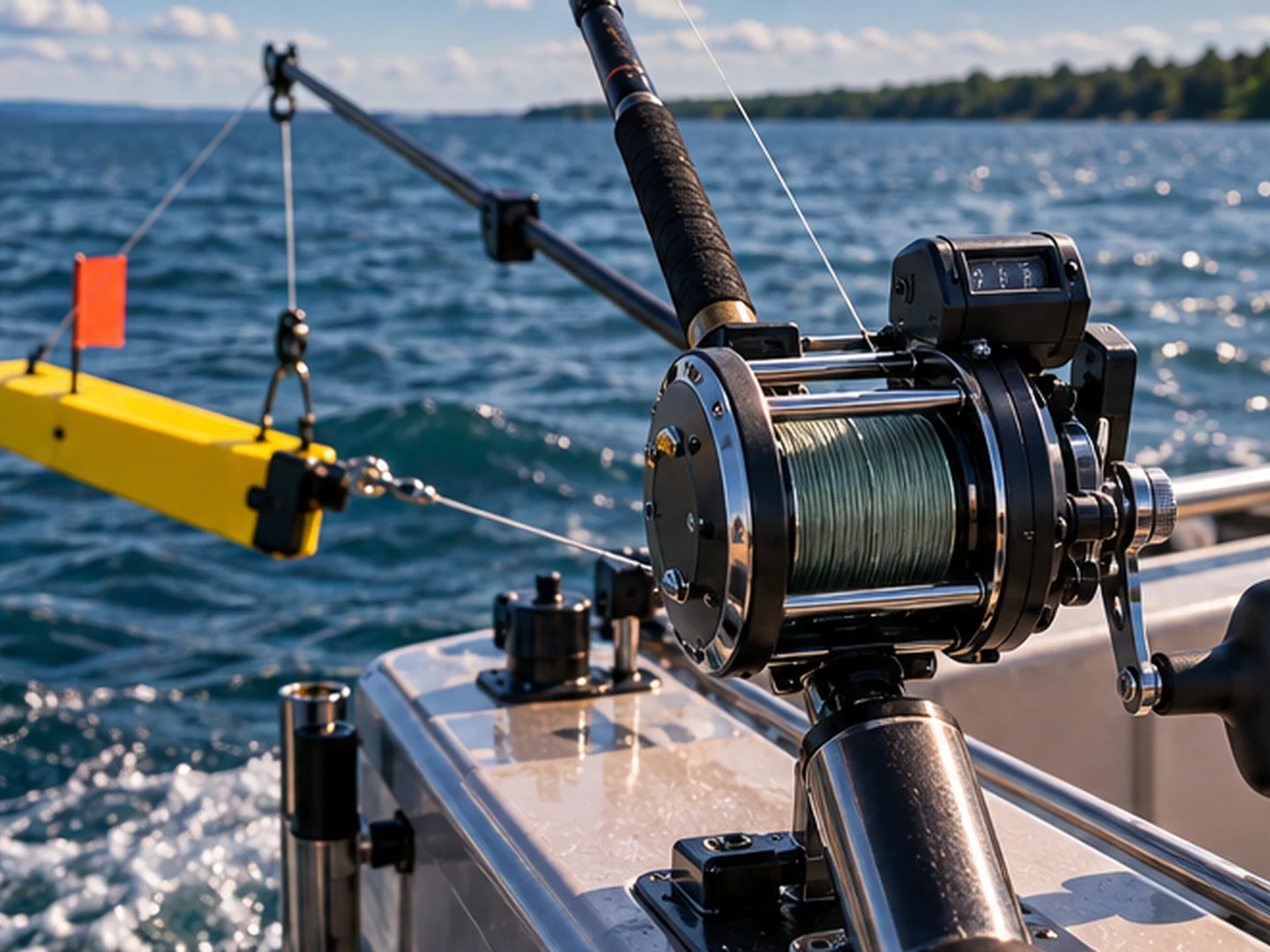
Best trolling reels comparison
| Reel | Best for | Hand | Rated max drag | Weight | Amazon |
|---|---|---|---|---|---|
| Okuma Cold Water CW-203D | All-around freshwater trolling | Right | 18 lb | 14.6 oz | Check availability |
| PENN Squall II 30LWLC | Heavy lines and boat trolling | Right | 33 lb | 22.3 oz | Check availability |
| Shimano Tekota 601HG LC A | Premium left-hand setups | Left | 24 lb | 17.1 oz | Check availability |
| Shakespeare ATS 20 LC | Budget multi-rod spreads | Right | 15 lb | 12.5 oz | Check availability |
Okuma Cold Water CW-203D
All-around freshwater trolling
Right
18 lb
PENN Squall II 30LWLC
Heavy lines and boat trolling
Right
33 lb
Shimano Tekota 601HG LC A
Premium left-hand setups
Left
24 lb
Shakespeare ATS 20 LC
Budget multi-rod spreads
Right
15 lb
Okuma Cold Water CW-203D
Pick #1
The CW-203D is the easiest recommendation here for anglers who want one sensible reel size for mainstream freshwater trolling instead of buying the biggest reel on the shelf.
The 203 size is the key. It holds enough mono for common trolling jobs without turning every rod into a heavy offshore setup. That makes it well suited to walleye crankbaits, planer boards, salmon and trout work, and other situations where you may be clearing or resetting several rods over a day.
Okuma uses a mechanical counter that reads in feet, plus a levelwind and a multi-disc Carbonite drag system. The reel is not the lightest possible way to troll, but its 14.6-ounce weight is still far easier to live with than the 22.3-ounce PENN below when you do not need that extra capacity.
Good fit if you want
- A general-purpose 203-size line counter for walleye, trout, or Great Lakes salmon.
- Enough capacity for mainstream board, downrigger, and crankbait setups without excess bulk.
- A current right-hand Amazon variant with a clearly matched model number.
Skip it if you need
- A left-hand retrieve in this exact Amazon variant.
- Very heavy braid capacity or maximum drag for larger saltwater work.
- A premium metal-bodied reel with the most refined feel available.
PENN Squall II Level Wind 30LWLC
Pick #2
Choose the 30LWLC when line capacity and drag headroom matter more than low weight. It is a much larger reel than the typical walleye board setup.
PENN’s size 30 line-counter version is for a different workload than the compact reels in this roundup. Its listed braid capacity reaches 685 yards of 50-pound line and 495 yards of 80-pound line. That is useful when the spread uses heavy backing, deeper presentations, or larger fish, but it is wasted capacity if your main job is pulling small crankbaits for inland walleye.
The levelwind reduces manual line management during repeated resets, and the line counter helps reproduce a productive distance. The trade-off is obvious in the hand and rod holder: at 22.3 ounces, this reel is substantially heavier than the Okuma or Shakespeare.
Good fit if you want
- More drag and substantially more capacity than a compact freshwater line counter.
- A line-counter levelwind for heavier boat trolling or deep presentations.
- A right-hand conventional reel that can cover freshwater and more demanding coastal boat use.
Skip it if you need
- A light reel for a large bank of walleye trolling rods.
- A left-hand retrieve.
- The compact feel of a 20- or 200-size reel.
Shimano Tekota 601HG LC A
Pick #3
This exact 601 model is the left-hand choice in the roundup, with fast 38-inch pickup and enough capacity for serious salmon, diver, and long-lead work.
The 601HG LC A makes the most sense for anglers who specifically want left-hand retrieve and are willing to pay for a more premium conventional platform. Its 600-size capacity is ample for heavier Great Lakes setups, but it stays well below the PENN 30LWLC in overall listed weight.
The 38-inch retrieve is also useful when you need to clear a long lead quickly after a missed fish or before turning the boat. That speed is not a reason by itself to buy the Shimano, but it matters on a multi-rod spread where resets add up all day.
Good fit if you want
- A verified left-hand line-counter model.
- Fast pickup for clearing and resetting long leads.
- 600-size capacity for salmon, trout, divers, and downriggers.
Skip it if you need
- The lowest-cost way to build six or eight matching setups.
- A compact reel primarily for light inland trolling.
- A right-hand reel in this exact product mapping.
Shakespeare ATS 20 LC
Pick #4
The ATS20LCX is the straightforward budget pick for anglers who need several line counters more than they need premium materials or a high bearing count.
Trolling is one of the few techniques where a modest per-reel price difference multiplies quickly. If you are outfitting four, six, or eight rods, the ATS 20 LC can make more financial sense than putting a premium reel on every holder.
It is also the lightest reel in this group. The compromise is a simpler two-bearing design and less drag and capacity than the larger alternatives. For routine walleye and lighter freshwater work, that can be a sensible trade. For heavy divers, large salmon spreads, or coastal work, move up in size and construction.
Good fit if you want
- A lower-cost way to build multiple matching line-counter rods.
- Compact size and low weight for crankbait or planer-board trolling.
- Simple right-hand operation with a levelwind and counter.
Skip it if you need
- Heavy drag or very large line capacity.
- A left-hand retrieve.
- Premium construction for hard charter-style use.
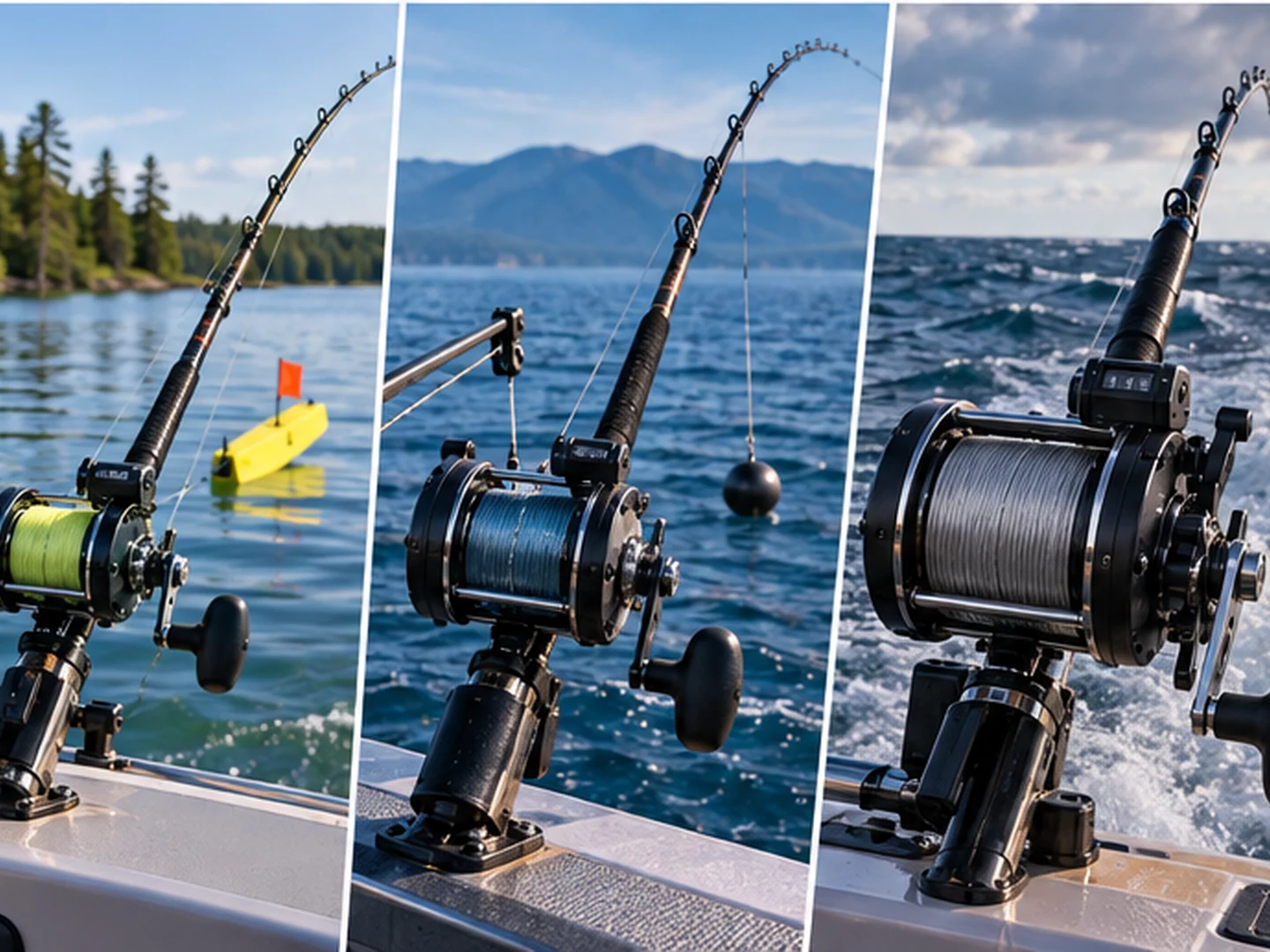
How to choose a trolling reel by the spread you actually run
The most useful distinction is not cheap versus expensive. It is whether the reel matches the line, hardware, target fish, and amount of line you routinely deploy.
Planer boards and crankbaits for walleye
Start with a compact line counter. You need repeatable lead lengths, enough capacity for your longest deployment, and a drag that starts smoothly when a fish hits behind the board. The Okuma CW-203D is the balanced choice here; the Shakespeare ATS 20 LC is the lower-cost alternative when you are building several identical rods. If you are choosing baits at the same time, our guide to the best walleye lures separates trolling options from jigging and casting choices.
Downriggers, divers, lead core, and longer Great Lakes spreads
Capacity and retrieve speed become more important as presentations get longer and heavier. A 600-size Tekota has more room for these jobs than a compact 20-size reel, while its 38-inch pickup reduces the time spent clearing a long line. Match the exact spool fill to the presentation rather than buying extra capacity just because the reel number is larger.
Heavier lines and demanding boat trolling
The PENN 30LWLC stands apart because its 33-pound drag rating and large braid capacities put it into a heavier workload. That does not make it automatically better for every angler. It makes it the better fit when the rest of the tackle actually uses that capacity. If braid is part of the system, compare line diameter and strength in our best braided fishing line guide rather than choosing only by pound-test label.
If you meant the motor, not the reel
Trolling reels and trolling motors solve completely different problems. A reel controls line and fights the fish; the motor controls boat movement and positioning. For propulsion and boat-control picks, go to our best trolling motors guide.

What matters most in the best trolling reels
Line-counter repeatability
A line counter is valuable because it gives you a repeatable reference. If 87 feet behind a planer board produces strikes, you can reset to 87 and reproduce the presentation. The number does not tell you exact lure depth by itself.
Spool fill and calibration
Mechanical counters are influenced by the effective circumference of the filled spool. A reel that is underfilled can show a different amount of line out than an identically calibrated reel with a full spool. For a multi-rod spread, spool matching matters almost as much as the reel model. Measure a known distance, note any offset, and keep the fill level consistent across matching setups.
Capacity without unnecessary bulk
Extra capacity is useful only if your backing, main line, lead core, copper, diver, or long lead needs it. Bigger reels add weight and take up more room in rod lockers. For walleye, buying a massive saltwater reel can make the whole spread less pleasant without improving presentation.
Drag quality and usable range
Maximum drag is only one number. Trolling often asks for a controlled setting that lets a fish load the rod without instantly breaking a leader or ripping hooks free. The PENN’s 33-pound specification matters for heavier jobs, while an 18-pound Okuma or 15-pound Shakespeare can already cover common freshwater presentations when the rest of the system is matched correctly.
Retrieve speed
Fast line pickup matters most when you clear a spread or reset a long lead. Shimano lists 38 inches per crank for the TEK601HGLCA, compared with 26 inches for the ATS20LCX. That difference can save time, but it should not outweigh capacity, hand orientation, and the type of line you actually run.
Levelwind convenience and maintenance
All four picks use line-management systems suited to repetitive trolling work. A levelwind reduces the need to guide line manually, but it also adds moving parts. Keep the worm gear and guide clean, watch for roughness, and treat a sticking counter or reluctant engagement as a maintenance problem rather than ignoring it until a trip.
How we researched these trolling reels
Search intent
We reviewed the current US results for “best trolling reels” and closely related line-counter queries. The commercial intent is roundup-led, with strong emphasis on conventional line-counter reels for walleye, salmon, trout, and other multi-line trolling applications.
Exact models
We matched specifications to the exact variant rather than borrowing specs from another size in the family. Hand orientation, capacity, drag, weight, and retrieve figures were kept variant-specific.
Amazon verification
Each CTA maps to a clean Amazon.com US product URL and a 10-character ASIN. We rechecked the PENN and Shimano product pages on September 28, 2026 and cross-checked the Okuma and Shakespeare mappings against current Amazon pages and current retail product data.
Owner feedback
Owner and forum feedback was used to identify recurring practical themes such as counter maintenance, reel bulk, drag behavior, and the reason many Great Lakes anglers prefer compact 200-size reels for general trolling. Individual anecdotes were not treated as controlled testing.
Editorial boundary: GearAndFish did not claim personal use, catches, durability testing, or instrumented drag testing for these reels. Dynamic Amazon price, stock, rating, and review-count data were intentionally left out because they can change.
Best trolling reels FAQ
Do I need a line-counter reel for trolling?
Not for every technique, but it is extremely useful when repeatable lead length matters. A line counter lets you return a lure, planer board, diver, or downrigger presentation to the same amount of line out after a productive pass.
Does the number on a line counter equal lure depth?
No. The counter reports line out, not actual lure depth. Running depth also depends on lure design, speed, line diameter, added weight, current, and the angle of the line. Use the counter as a repeatable reference, then pair it with a dive chart or your own recorded setup.
How do I keep a trolling reel line counter accurate?
Fill the spool consistently, use the line diameter you plan to fish, and check the reel against a measured distance such as 100 feet. A partially filled spool changes effective spool circumference, so two reels showing the same counter number can deploy different real lengths if they are spooled differently.
What size trolling reel is best for walleye?
A compact line-counter reel with enough capacity for your backing, main line, leader, and the longest lead you expect to run is usually the practical choice. Oversizing adds bulk without helping a typical crankbait or planer-board spread.
Can I use a trolling reel in saltwater?
Some conventional trolling reels are built with corrosion-resistant components and enough capacity for coastal use, but saltwater exposure still calls for careful rinsing and maintenance. Check the exact manufacturer’s intended use and do not assume every freshwater line-counter reel is a saltwater reel.
Should I choose right-hand or left-hand retrieve?
Choose the side that matches how you want to fight and reset fish, and verify the exact model before buying. Trolling reel families often use different model numbers for left- and right-hand variants, and the Amazon listing can change when you select another size or hand.