

GearAndFish is reader-supported. As an Amazon Associate I earn from qualifying purchases. When you buy through links on our site, we may earn an affiliate commission, at no extra cost to you. Learn more.
A pompano rig is a simple surf-fishing high-low rig: a sinker holds the bottom while two baited hooks fish just above it. The setup works because it keeps small baits visible in the wash without asking you to constantly work the rod.
Pompano rig setup at a glance
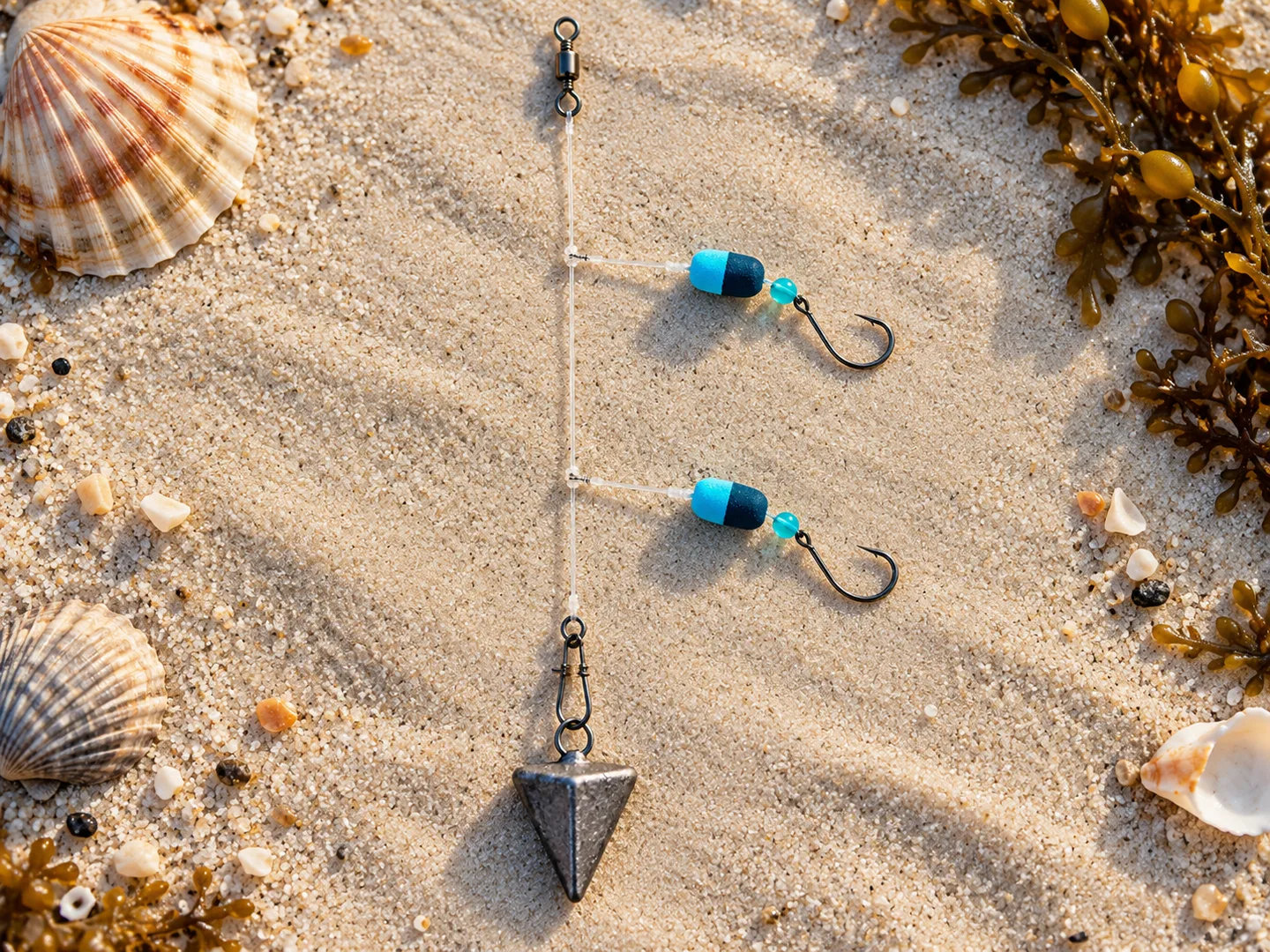
Start with roughly 3 to 4 feet of 20 to 30 lb mono or fluorocarbon leader, two short droppers, #1 to 2/0 circle hooks, small floats or beads, a swivel at the top, and a sinker clip at the bottom. Use the lightest pyramid or anchor-style sinker that will hold in the surf without exceeding your rod’s rated casting weight.

What is a pompano rig?
A pompano rig is a bottom rig built for surf fishing. It is also commonly described as a high-low rig, hi-lo rig, or double-dropper rig. The sinker sits at the bottom of the leader, with one or more hooks positioned above it on short droppers.
The feature that most clearly separates a typical pompano rig from a plain high-low rig is the use of small floats, beads, or other attractors near the hooks. Those additions can lift a bait slightly off the sand and make it easier to see in turbulent water. They are useful, but they are not magic. A clean, compact rig with the right hook size and enough weight to hold bottom matters more than chasing a specific float color.
What you need to tie a pompano rig
| Part | Practical starting point | What it does |
|---|---|---|
| Leader | 20 to 30 lb mono or fluorocarbon | Forms the main rig body and droppers |
| Hooks | #1 to 2/0 circle hooks | Fits small surf baits without overwhelming them |
| Floats and beads | Small, lightweight components | Add visibility and can lift the bait slightly |
| Top connection | Barrel swivel | Connects the rig to the main line and helps manage twist |
| Bottom connection | Snap or sinker clip | Makes sinker changes faster as surf conditions change |
| Sinker | Pyramid for easier conditions, anchor-style when more grip is needed | Keeps the baits fishing in one zone instead of rolling down the beach |
If hook-number conventions are unfamiliar, our fishing hook size chart explains why a #1 hook is smaller than a 1/0 or 2/0.
How to tie a pompano rig step by step
- Cut the leader. Start with about 3 to 4 feet so you have enough line for two droppers plus top and bottom connections.
- Tie the bottom snap or sinker clip. Use a secure knot you already tie consistently well.
- Make the lower dropper. Place it roughly 8 to 12 inches above the sinker connection and keep the branch short, usually around 3 to 5 inches.
- Make the upper dropper. Space it far enough above the first that the two baits are unlikely to foul each other during the cast.
- Add a float and bead if you want them. Keep the dressing compact. Large, bulky components create more drag and can make the rig harder to cast cleanly.
- Attach the hooks. A #1, 1/0, or 2/0 circle hook covers most common pompano-rig uses. Match the hook to the bait and the actual fish you are targeting.
- Tie a swivel at the top. This becomes the connection between the rig and your main line or shock leader.
- Add the sinker last. Choose the sinker only after you see the real surf and current.
Do not obsess over exact inch measurements. The important layout is simple: sinker at the bottom, two short droppers above it, enough separation to reduce tangles, and a top connection to the main line.
Leader strength and hook size
A 20 to 30 lb leader is a sensible starting range for a dedicated pompano rig because it is easy to tie, compact enough to cast, and stronger than the light leaders used for many inshore presentations. You can move heavier when rough surf, shells, mixed-species fishing, or repeated casting puts more stress on the rig.
For hooks, smaller is often better than first-time surf anglers expect. Pompano and whiting do not need oversized hardware. #1 and 1/0 circle hooks are good places to start when baits are small. A 2/0 circle hook is still common on pre-tied rigs and can make sense with a slightly larger bait or when other surf species are likely to eat the same presentation.
Choose the sinker by whether it holds bottom
The best sinker is not a fixed ounce number. It is the lightest sinker that stays where you put it under the current conditions and remains within your rod’s rated casting weight.
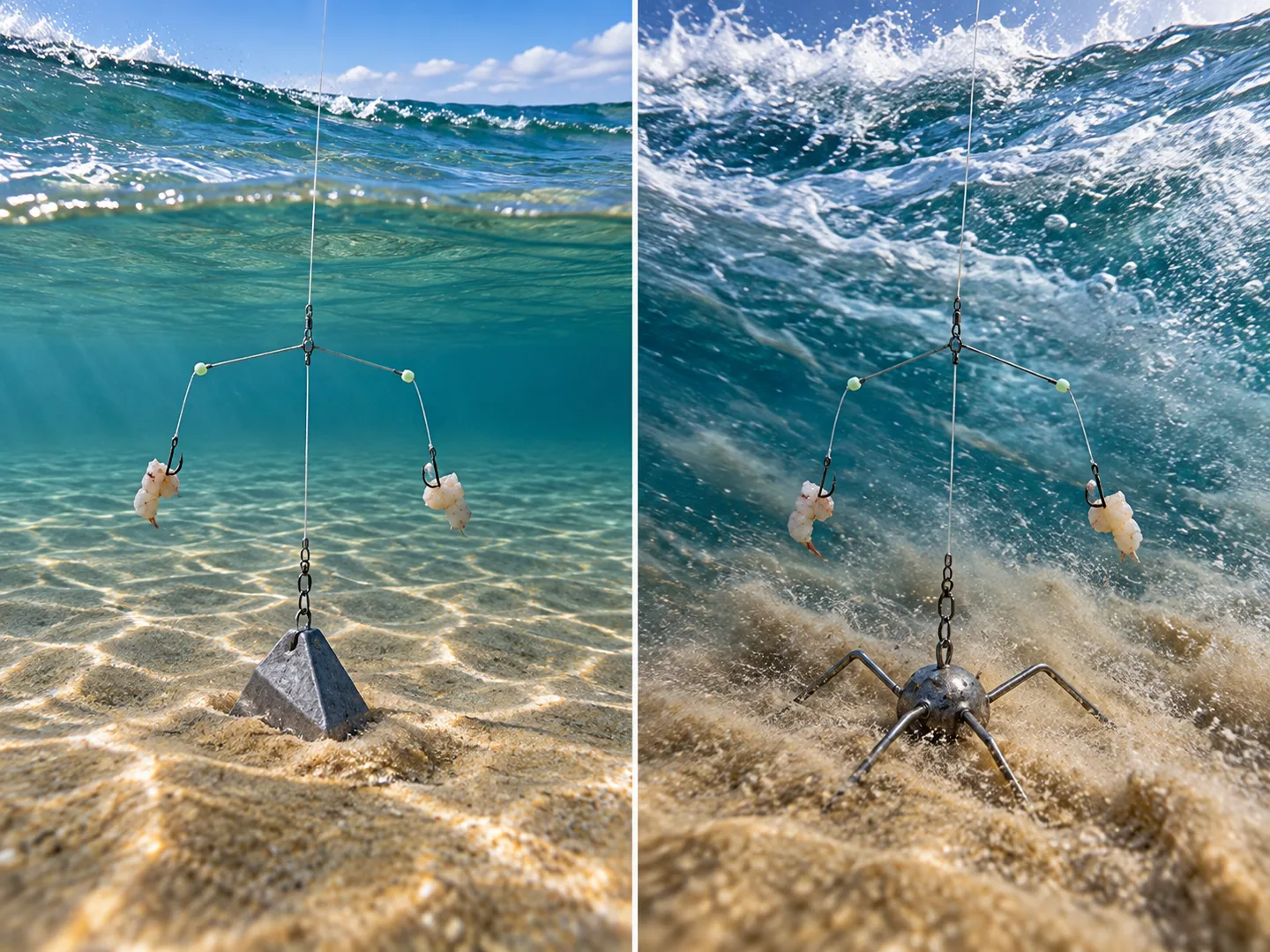
A pyramid sinker is a practical first choice in calm to moderate surf because its shape digs into sand better than a round sinker. If the rig keeps washing sideways, stepping up one weight size may solve the problem. When extra weight still rolls, an anchor-style sinker such as a Sputnik or spider design can add much more grip without relying only on mass.
Do not keep adding lead indefinitely. A heavier sinker increases casting load, can exceed the rod’s rating, and may make the whole setup less pleasant to fish. If the beach is too rough for the tackle you brought, changing location or waiting for better conditions is often the smarter move.
Do pompano rigs need floats and beads?
No. Pompano can be caught on a plain high-low rig with small hooks and good bait. Floats and beads are useful because they can add color and keep a bait from lying directly on the sand, but there is no single color that works everywhere.
Orange, chartreuse, pink, white, and combinations of those colors are all common. Rather than treating color as a rule, carry a few variations. If one rig is not getting touched, changing bait, casting distance, sinker hold, or hook size is usually more important than swapping from one bright float color to another.
Best bait for a pompano rig
Sand fleas are the classic pompano bait, but small pieces of shrimp, clam, and durable synthetic bait strips are also widely used. The common thread is size: keep the bait compact enough that the hook point and gap can work.
- Sand fleas: Natural forage on many Atlantic and Gulf beaches and an obvious first choice when they are available.
- Shrimp: Easy to source and useful for pompano, whiting, croaker, and other surf fish that may share the same water.
- Clam: A useful natural-bait alternative in areas where it is locally productive and legal to use.
- Synthetic bait strips: Useful for adding scent and for keeping something on the hook when soft natural bait is getting picked apart quickly.
Thread or bait elastic can help secure soft bait for a hard cast, but the goal is not to wrap the entire hook into a bulky package.
How to fish a pompano rig from the beach
- Read the water before casting. Look for troughs, cuts, sandbar edges, and sections where moving water concentrates food.
- Do not assume the longest cast is best. Pompano can travel surprisingly close to shore. If you have two rods, stagger them at different distances instead of putting both casts in the same place.
- Let the sinker set. After the cast, take up slack gradually until the rod tip has a little load. If the sinker immediately skates sideways, change weight or sinker style.
- Use a sand spike. A secure rod holder lets the rig soak while you watch the tip and keeps the reel away from abrasive sand.
- With circle hooks, reel instead of striking hard. When the rod loads and a fish moves off, maintain tension and begin reeling rather than making a sharp hook-set.
- Move when the water is dead. If bait comes back untouched for repeated casts, change distance, move along the beach, or target a more obvious cut or trough.
A pompano rig is a search tool as much as a bait holder. The better you get at changing distance and finding feeding lanes, the less important small cosmetic rig changes become.
Pre-tied pompano rig or tie your own?
Both approaches are valid. A pre-tied rig is convenient when you want to get fishing immediately. Tying your own makes it easier to change hook size, leader strength, float color, and spacing for local conditions.
Ready-made option: Dovesun pre-rigged pompano rigs
The currently verified Amazon variant uses a two-hook surf-rig layout with floats and beads and a 2/0 circle-hook option. It is useful if you want to see the basic architecture before tying a batch yourself.
DIY option: Dr.Fish 200-piece pompano rig kit
This kit packages floats, beads, circle hooks, swivels, and snaps together, so you only need to supply leader material and sinkers. The manufacturer lists #1 and 2/0 circle hooks in the E1 kit, which makes it useful for experimenting with two practical hook sizes.
If you already own terminal tackle, buying another kit is unnecessary. Good fishing pliers, a small spool of leader, hooks, swivels, snaps, and a handful of sinkers are enough to build and repair rigs at the beach.
Common pompano rig problems
The rig keeps tangling
Shorten the droppers, increase the spacing between them, reduce oversized floats and beads, and use a smoother cast. A long, whippy dropper is much more likely to wrap around the leader.
The sinker keeps rolling
First increase sinker weight within the rod’s rating. If that still does not hold, switch from a pyramid to an anchor-style sinker. Strong cross-current may also mean you should move to a different section of beach.
Bait disappears but you do not hook fish
Downsize the bait, check that the hook point is exposed, and consider a smaller hook. Crabs and tiny fish can strip soft bait, so a small synthetic strip or bait elastic can help keep the presentation fishing longer.
You get no bites at all
Change casting distance before rebuilding the rig. Then change location. A perfectly tied pompano rig still cannot catch fish that are not moving through that stretch of water.
Rod, reel, and main line basics
You do not need a specialized pompano reel. What matters is a surf-capable setup that can safely cast the sinker you need, hold enough line, and tolerate saltwater exposure. A spinning setup is the simplest choice for most anglers.
If you are building a new saltwater setup, our guides to saltwater spinning reels and braided fishing line cover the larger system around the rig.
Check local regulations before you keep pompano
Size limits, bag limits, seasons, licenses, and gear rules vary by state and can change. If you are fishing in Florida, the Florida Fish and Wildlife Conservation Commission currently lists an 11-inch minimum fork length and a daily bag limit of 6 Florida pompano per harvester. Always verify the current rule before fishing because regulations can change.
Current Florida reference: FWC Permit, Florida Pompano and African Pompano regulations. FWC also recommends maintaining tension rather than making a hard hook-set when fishing circle hooks.
The bottom line
A reliable pompano rig does not need to be complicated. Build a clean two-dropper leader, use small circle hooks, keep the bait compact, and choose the sinker by one question: does it hold where you cast it? Once those basics are right, spend more attention on reading the beach and changing casting distance than on adding more hardware.
Pompano rig FAQ
What size hooks should I use on a pompano rig?
#1 to 2/0 circle hooks cover most common pompano-rig uses. Start smaller when using small pieces of shrimp or sand fleas, and move up only when the bait or mixed-species target justifies it.
How much weight should I use for a pompano rig?
Use the lightest sinker that reliably holds bottom and stays within your rod’s rated casting weight. A pyramid sinker is a good starting point, while a Sputnik or spider-style sinker can add grip when stronger current keeps rolling the rig.
Do I need floats on a pompano rig?
No. Floats can lift the bait slightly and add visibility, but a plain high-low rig can still catch pompano. Hook size, bait, sinker hold, and finding the right water are more important.
What bait works best for surf fishing with a pompano rig?
Sand fleas are a classic choice. Small pieces of shrimp, clam, and durable synthetic bait strips are also common. Keep the bait compact enough that the hook point and gap can work properly.
How far should I cast a pompano rig?
There is no single distance. Fish the troughs, cuts, and sandbar edges you can identify, and vary your casting distance. Pompano can feed close to shore, so maximum distance is not automatically better.


