
GearAndFish is reader-supported. As an Amazon Associate I earn from qualifying purchases. When you buy through links on our site, we may earn an affiliate commission, at no extra cost to you. Learn more.
The Palomar knot is a simple terminal knot for attaching fishing line to a hook, lure, snap, or swivel. The motion is easy to learn: double the line, tie a loose overhand knot, pass the tackle through the large loop, then wet and cinch the knot cleanly. The biggest mistakes are crossed strands, tightening too early, and failing to pass the entire hook or lure through the loop.
How to tie a Palomar knot in 5 steps
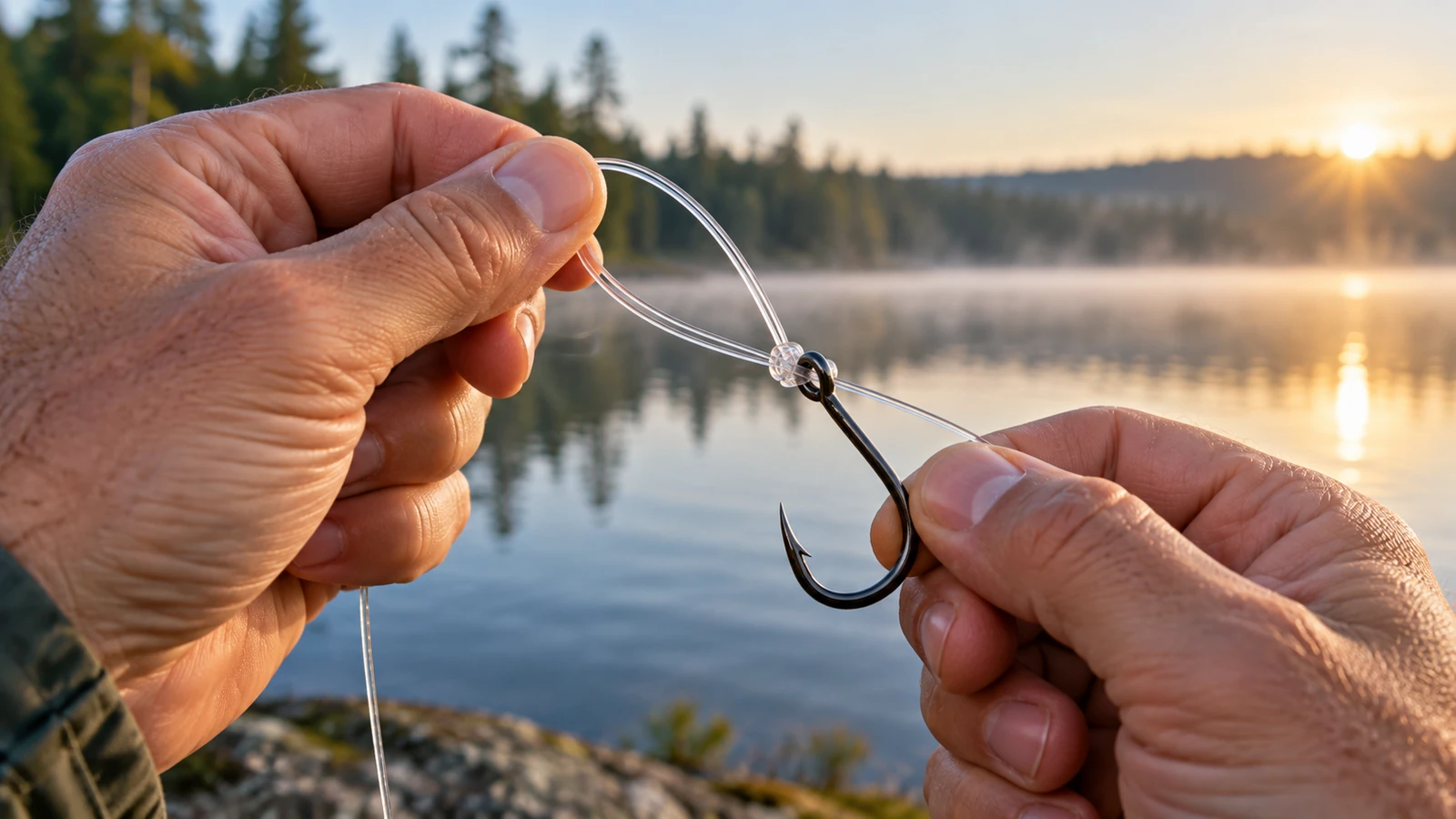
- Double 6 to 8 inches of line. Form a loop and pass that doubled loop through the eye of the hook, lure, snap, or swivel.
- Tie a loose overhand knot. Use the doubled line and leave plenty of room below the knot.
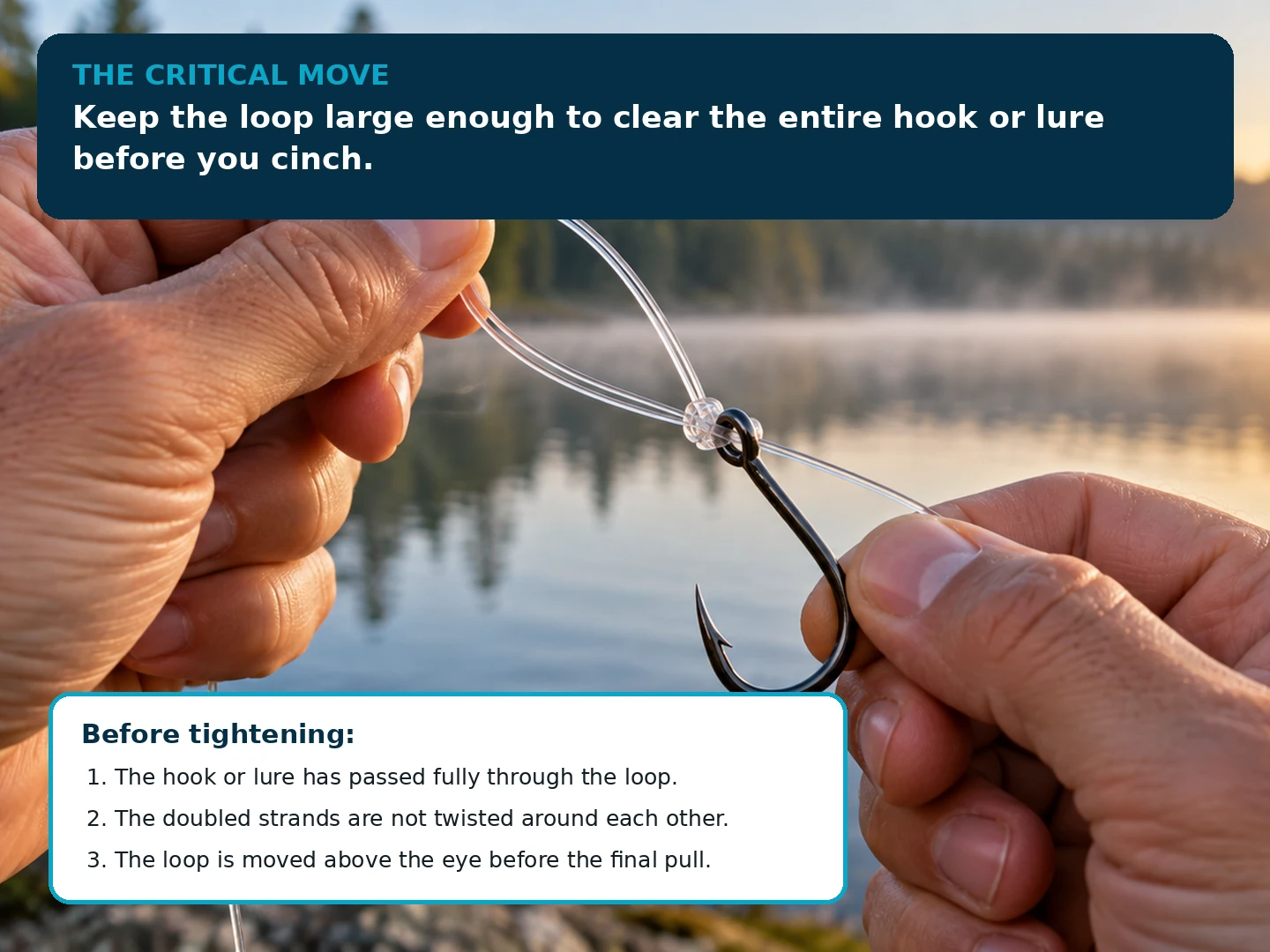
- Pass the tackle through the loop. The entire hook, lure, or swivel must go through the large doubled loop.
- Move the loop above the eye and moisten the knot. Check that the two strands are not crossed or twisted.
- Pull both the standing line and tag end steadily. Seat the knot against the eye, test it with a firm pull, then trim the tag end.
Why the Palomar knot is so useful
The Palomar earns its reputation because it combines a short tying sequence with a doubled section of line around the connection. Fishing education sources including Take Me Fishing, Berkley, Sufix, and Animated Knots all describe it as a strong, reliable terminal knot when it is tied correctly.
That does not mean every Palomar tied on every line automatically delivers the same percentage of breaking strength. Published knot tests vary by line material, diameter, brand, knot geometry, and how the knot is cinched. Treat any single strength percentage as a test result for a particular setup, not a universal promise.
Palomar knot instructions, step by step
1. Double the line and go through the eye
Fold enough line back on itself to create a generous doubled loop. About 6 inches is a useful starting point for a bare hook or small terminal component, but a larger lure needs more line because the entire lure must pass through the loop later.
If the hook eye is too small for a folded loop, pass the tag end through the eye once, double it back, and pass it through the eye again from the opposite direction. The goal is the same: two parallel strands through the eye before you form the overhand knot.
2. Tie a loose overhand knot
With the hook hanging below, tie a basic overhand knot in the doubled line. Do not cinch it yet. You need a large open loop below the knot for the next move.
3. Pass the entire hook or lure through the loop
Open the doubled loop and pass the whole piece of terminal tackle through it. This is the defining move of the Palomar. If the loop catches on the hook point or only partly clears a lure, stop and reset before tightening.
4. Check the line path and moisten
Slide the loop up so it sits above the hook eye, then make sure the doubled strands lie flat instead of crossing over each other. Moisten monofilament or fluorocarbon before the final pull so the knot can draw down more smoothly. Many knot guides recommend moistening the connection before cinching.
5. Cinch evenly, test, and trim
Pull the standing line and tag end steadily until the knot seats snugly against the eye. Do not use a sharp jerk. Inspect the finished knot, give it a firm test pull, then trim the tag end with line cutters or fishing pliers.
Does the Palomar knot work with braid, mono, and fluorocarbon?
Braid: This is one of the Palomar knot’s most common applications. The doubled line gives a compact terminal connection without requiring a long series of wraps. Keep the strands flat and leave enough working line to pass the terminal tackle through the loop comfortably.
Monofilament: The knot can work well with mono. Moisten before cinching, pull steadily, and inspect the finished knot for a clean seat rather than a crushed or kinked section. If you are still choosing line, our best braided fishing line guide explains where braid fits, while the spinning-reel spooling guide covers setup after you choose a line.
Fluorocarbon: The Palomar is also used with fluorocarbon, but clean tying matters. Moisten the knot, avoid crossed strands, and retie if the line shows visible damage after cinching. For line selection, see our fluorocarbon fishing line guide.

Two simple line options for practicing the knot
You do not need special tools to learn a Palomar knot. A larger hook and a visible line make the motion easier to see at home, then you can repeat the same sequence with your fishing setup.
For braid practice: PowerPro Spectra Fiber Braided Fishing Line in the 15 lb, 300 yd, Hi-Vis Yellow Amazon US variant gives you a bright strand that is easy to follow while you learn the doubled-line path.
For mono practice: Berkley Trilene XL in the 8 lb, 330 yd, Low-Vis Green Amazon US variant is a current monofilament option if you would rather practice with mono.
Those are practice examples, not requirements. Use the line you actually fish whenever possible so your practice matches its handling and diameter.

5 Palomar knot mistakes that cause problems
- Cinching the overhand knot too early. Keep it loose until the hook or lure has passed through the large loop.
- Letting the doubled strands cross. Crossed strands can make the knot bunch instead of seating evenly.
- Leaving too little working line. A short loop becomes awkward with jigs, plugs, and larger terminal components.
- Forgetting to move the loop above the eye. The finished loop should not be trapped against the hook shank.
- Using damaged line. If the line is nicked, abraded, flattened, or visibly kinked near the knot, cut back to undamaged line and retie.
When the Palomar knot is not the easiest choice
The Palomar is a terminal knot, not a line-to-line connection. If you are joining braid to a fluorocarbon or monofilament leader, use a dedicated line-to-line knot instead.
It can also be awkward with a large lure because the lure has to pass through the loop. When that means pulling a bulky hardbait, treble hooks, or a long rig through a large loop, another terminal knot may be faster and waste less leader material.
For hooks and rigs, size and shape still matter independently of the knot. Our fishing hook size chart covers hook sizing, while the Texas rig, Carolina rig, and Ned rig guides explain how terminal tackle choices change by technique.
How this guide was researched
GearAndFish did not perform original knot-strength testing for this article. The tying sequence and line-handling guidance were cross-checked against current instructions from Take Me Fishing, Berkley, Sufix/Rapala, Animated Knots, NetKnots, and Outdoor Life. We also reviewed a published braid knot comparison from Salt Strong to avoid presenting a single strength percentage as universal.
Primary references: Take Me Fishing Palomar guide, Berkley Fishing Knots 101, Sufix knot guides, Animated Knots Palomar guide, NetKnots Palomar guide, and Outdoor Life.
Palomar knot FAQ
Is the Palomar knot good for braided fishing line?
Yes. Multiple fishing-knot references specifically recommend the Palomar for braid. The key is tying it cleanly with the doubled strands flat and the knot seated correctly.
Can you use a Palomar knot with fluorocarbon?
Yes. The Palomar is used with fluorocarbon as well as mono and braid. Moisten the knot before cinching, tighten steadily, and retie if the line looks damaged or kinked.
How much line should you leave for a Palomar knot?
About 6 to 8 inches is a useful starting point for a bare hook or small terminal component. Use more when the lure or rig is large because the entire item must pass through the doubled loop.
Can a Palomar knot join braid to a leader?
No. The Palomar is primarily a line-to-terminal-tackle knot. Use a dedicated line-to-line connection when joining braid to a mono or fluorocarbon leader.
Why does my Palomar knot look bulky or uneven?
The most common causes are crossed doubled strands, tightening the overhand knot too early, or failing to move the large loop above the eye before cinching. Cut it off and retie rather than fishing a knot that does not seat cleanly.


